Archived: 17 November 2026
Abstract
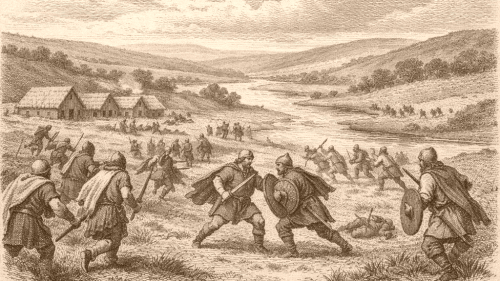
Annals UlsterIn the Annals of Ulster, the notice group with identifier U543.0 carries the printed AD heading 542. In that group, the Kalends entry is followed by the battle of Tortu, said to have been won by the Laigin, and by the death of Mac Erca son of Ailill Molt. The same heading then contains the battle of Slicech, where Eógan Bél, king of Connacht, fell, and where Forgus and Domnall, two sons of Mac Erca, together with Ainmire son of Sétna and Ninnid son of Sétna, are named as victors.The Ulster notices do not stand alone in the same
Read Article
Archived: 17 November 2026
Abstract
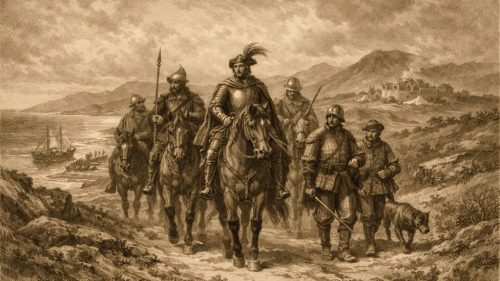
James FitzMaurice FitzGerald was an Irish rebel leader in the sixteenth century whose career became closely tied to the Desmond rebellions and to efforts to secure foreign support against Elizabeth I’s authority in Ireland. Following a failed rebellion in 1565, he submitted to Elizabeth I’s authority and was pardoned. He also lost all his holdings to the English and was removed from the stewardship of the Earl of Desmond’s territories.Submission YearsAfter that submission, he did not disappear from the political scene. The record states that he lost his holdings and was deprived of his role in the Desmond territories, but
Read Article
Archived: 17 November 2026
Abstract
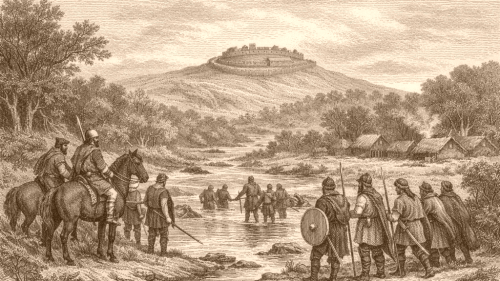
Year FrameThe year frame is not uniform across the annalistic witnesses, and the notices have to be read by each source’s own headings rather than by assuming a single converted date. In the Annals of Ulster, U543.0 is printed under AD 542 and U544.0 under AD 543, while U542.0 is printed under AD 541 and U545.0 under AD 544. The chronology table explicitly warns that identifiers are source labels, not converted CE dates, and that missing dates should not be inferred.Other annals place comparable notices under their own headings. Chronicon Scotorum has CS543 with A.D.543 and records the battles of
Read Article
Archived: 17 November 2026
Abstract
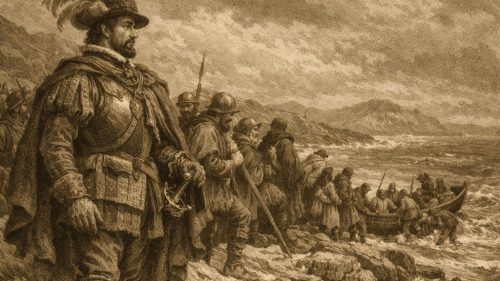
Donal Cam O'Sullivan Beare, known in Irish as Domhnall Cam Ó Súileabháin Bhéara, was an Irish nobleman and soldier who was born in 1560 and died on 16 July 1618 in Madrid. He was the last independent Chief of the Name of Clan O'Sullivan, and he was also described as the last O'Sullivan Beare. In the southwest of Ireland he held the lordship of the Beara Peninsula during a period when the English Crown was seeking to extend its rule across the island.Early LifeO'Sullivan Beare was born in 1560. His father was killed in 1563, but he was considered too
Read Article
Archived: 17 November 2026
Abstract
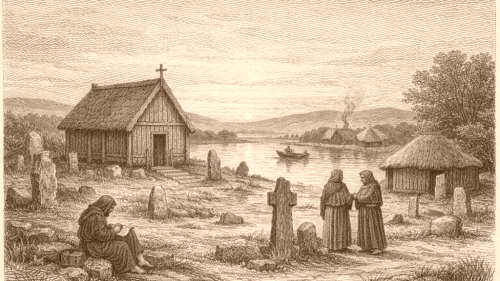
The annals place several notices under 544, but they do not give a single uniform record. The Annals of Ulster assign printed AD 544 to a first mortality called bléfed, the death of Mo-Bí Clárainech, Diarmait son of Fergus Cerrbél’s beginning of rule, and an alternative notice that Gregory was born. The Annals of the Four Masters place under 544 the death of Mobhi Claraineach and the battle of Cuil Conaire. Chronicon Scotorum places under A.D.544 the death of Tuathal Maelgarbh, the accession of Diarmait Mac Cerbhaill, and the death of Ciaran. Other annals preserve overlapping or displaced notices nearby.
Read Article
Archived: 17 November 2026
Abstract
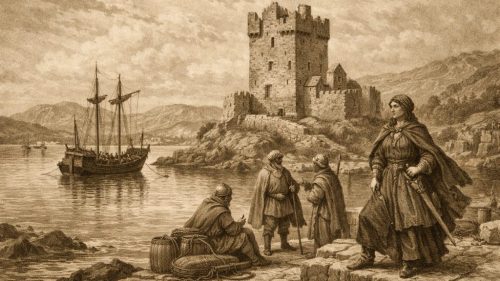
Grace O'Malley, also called Gráinne Ní Mháille and Granuaile in the source material, is identified with Rockfleet Castle in County Mayo. The castle is described as a four-storey tower house, rising from bedrock at the mouth of a small river where it flows into a sheltered inlet on Clew Bay's northeastern edge. It was built as a stronghold of the Burke clan, descendants of the Anglo-Norman de Burgos, and its plain exterior is said to conceal a carefully arranged interior with spiral staircases, a garderobe that empties into the sea below, and a principal chamber on the top floor with
Read Article
Archived: 17 November 2026
Abstract
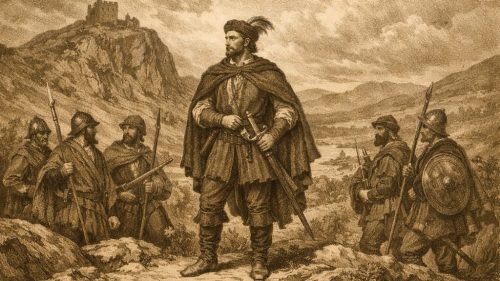
Ulster LordshipCahir O'Doherty is identified in the record as an Irish chieftain and as Lord of Inishowen. The same source gives his life dates as 1587 to 1608. It also states that he was knighted for his bravery in the Battle of Augher. These details place him among the Irish figures whose status in Ulster was shaped by both local authority and royal recognition.The available evidence records that he was received in London by Queen Elizabeth I. It says that his territorial rights were confirmed at that time. After his return to Ireland, he was made Justice of the Peace
Read Article
Archived: 17 November 2026
Abstract
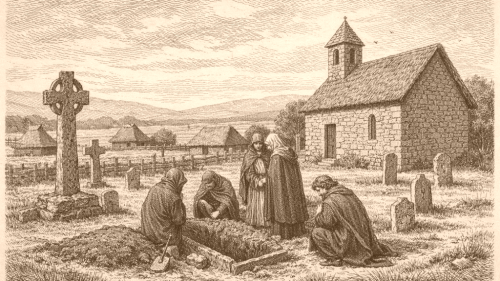
Year NoticeThe notices relevant to 548 are not all presented in the same way. In the Annals of Ulster, the printed heading reads AD 548 under identifier U549.0, and the entries that follow include Ciarán’s falling asleep, Tigernach’s repose, and a great mortality. The Annals of the Four Masters also give 548 as the Age of Christ, while the Annals of Inisfallen mark AI548 and add a later cross-reference to AU 549; these forms show that the year is handled differently across the texts.The evidence here is limited to the wording of the notices and their printed headings. The Annals
Read Article
Archived: 16 November 2026
Abstract
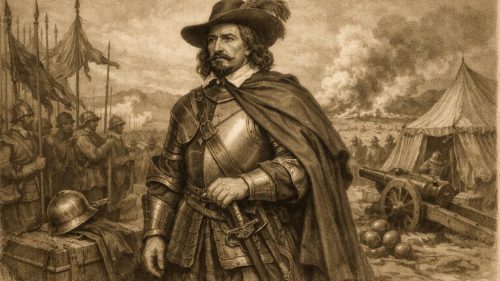
Owen Roe O'Neill was a Gaelic Irish soldier and one of the most famous figures of the O'Neill dynasty of Ulster. He left Ireland at a young age and spent most of his life as a mercenary in the Spanish Army. In that service he fought against the Dutch in Flanders during the Eighty Years' War. His career later returned him to Ireland, where he took command of the Irish Confederate Ulster Army after the Irish Rebellion of 1641.Early YearsHis year of birth is unknown, though it is likely to have been around 1585. The exact place of his birth
Read Article
Archived: 16 November 2026
Abstract
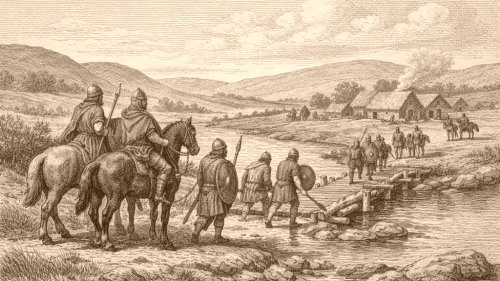
Year ScopeThe year 549 CE is represented most clearly by one battle notice. In the Annals of Ulster, the printed AD heading 549 accompanies the entry for the battle of Cúil Conaire in Cera, so the notice is directly tied to that year in the source’s own presentation. The same source places this battle under identifier U550.1, but the printed heading is the part used here for the year. The record gives a battle, named place, and named dead and victors, without adding further explanation.In the Annals of Tigernach, the notice appears under T549.1 and records the battle of Cúil
Read Article
