
Archived: 7 October 2026
Abstract
About 30,138 BCE, Ireland experienced fluctuating Late Pleistocene conditions during Marine Isotope Stage 3, before the Last Glacial Maximum. Ice, tundra, wetlands and meltwater varied regionally; lower sea levels did not guarantee a permanent land bridge to Britain. Derryvree, County Fermanagh, preserves a radiocarbon-dated freshwater deposit indicating ice-free, treeless tundra and diverse wetland plants. Castlepook, or Mammoth Cave, near Doneraile, yielded reindeer, mammoth, giant deer and other cold-adapted fauna. A marked reindeer femur may record Ireland’s earliest human butchery, but proves neither settlement nor continuous occupation. These sites offer a tentative environmental and archaeological horizon, not a conventional historical event.
Read Article

Archived: 7 October 2026
Abstract
Around 30,139 BCE, Ireland was a climatically unstable Late Pleistocene landscape approaching extensive glaciation. Ice was advancing unevenly, while lower sea levels connected the island ecologically to wider north-west Europe. Castlepook Cave near Doneraile yielded reindeer, mammoth, giant deer, predators and cold-adapted smaller mammals, indicating open steppe-tundra habitats and complex food webs. A marked reindeer bone may indicate human butchery about 33,000 years ago, but poor excavation records and absent associated artefacts preclude claims of settlement. Any visitors were likely mobile foragers. Glaciation reshaped terrain and obscured earlier evidence, leaving uncertainty central to this period’s history and its interpretation today.
Read Article
Archived: 7 October 2026
Abstract
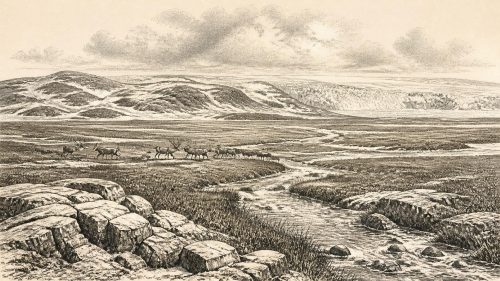
Around 30,140 BCE, Ireland faced severe climatic deterioration as the British–Irish Ice Sheet expanded, although local conditions varied. Later glaciation and changing seas destroyed or obscured much evidence, preventing precise reconstruction. Exposed areas supported treeless tundra, grassland and sparse scrub inhabited by mammoth, reindeer, giant deer, predators and smaller cold-adapted animals. Castlepook Cave in County Cork preserves important faunal remains and a debated cut-marked reindeer bone, possibly indicating brief Upper Palaeolithic human activity. However, no settlement, tools, human remains or cultural assemblage confirms permanent occupation. Travel routes remained uncertain and hazardous. Ireland’s environment is better documented than its possible visitors.
Read Article

Archived: 7 October 2026
Abstract
About 30,141 BCE, Ireland’s record permits environmental reconstruction rather than annual history. At Derryvree, County Fermanagh, freshwater organic sediments between glacial tills, broadly dated to 36,900–31,700 calibrated years BP, show an ice-free interval before later ice returned. Plant, insect and aquatic remains reveal treeless tundra-like wetlands, with sedges, mosses, bogbean and shallow pools. Ireland’s ice cover and coastal geography varied greatly during this unstable period. Castlepook Cave preserves wider Pleistocene fauna, including mammoth, reindeer, giant deer and predators, but not a single contemporary community. A cut-marked reindeer bone suggests an early human visit, although permanent settlement there remains unproven archaeologically.
Read Article

Archived: 7 October 2026
Abstract
30,142 BCE is a modern chronological label, not a recoverable Irish historical year. During Marine Isotope Stage 3, Ireland experienced uneven climatic change, with expanding ice, exposed land, wetlands and animal routes preceding the Last Glacial Maximum. Derryvree, County Fermanagh, preserves a radiocarbon-dated tundra-like wetland between till layers, demonstrating cold but temporarily ice-free conditions. Castlepook Cave, County Cork, contains MIS 3 fauna including mammoth, reindeer, giant deer and hyaena, although deposits span different periods. A cut-marked reindeer bone suggests possible Upper Palaeolithic visitors, but no secure settlement evidence exists. Environmental uncertainty and fragmentary preservation define this deep past in Ireland.
Read Article
Archived: 7 October 2026
Abstract
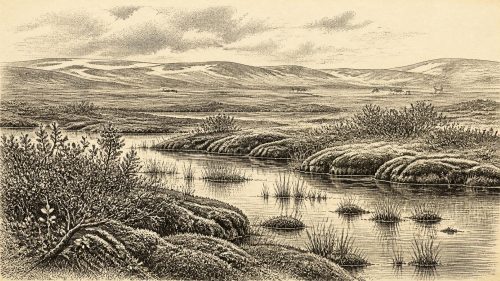
Although 30,143 BCE is a modern, imprecise conversion, Derryvree, County Fermanagh, provides Ireland’s strongest evidence for conditions within this later Pleistocene interval. Freshwater sediments, dated broadly to 36,900–31,700 calibrated BP, lay between glacial tills, recording open water, marsh, tundra vegetation and severe periglacial climate before renewed ice advance. Castlepook Cave, County Cork, preserves a mixed fauna including mammoth, reindeer, giant deer, predators and smaller cold-adapted animals, demonstrating ecological links beyond Ireland. No secure human settlement is known. A possibly cut-marked reindeer bone suggests brief human presence, but remains uncertain. Together, sites reveal regionally varied, unstable environments, not fixed political history.
Read Article

Archived: 7 October 2026
Abstract
At the notional date of 30,144 BCE, Ireland’s past is reconstructed from fragmentary environmental evidence rather than historical events. Derryvree, County Fermanagh, preserves freshwater silts formed during an ice-free interval, indicating treeless tundra, wetlands and severe periglacial conditions before renewed glaciation. Castlepook Cave, County Cork, contains remains of reindeer, mammoth, giant deer, hyaena and other cold-climate fauna, demonstrating varied open-country ecosystems and continental connections. A marked reindeer bone may indicate early human carcass processing, but no secure settlement or population is known. Ice extent, coastlines and chronology remain uncertain; later ice advances destroyed much evidence across Ireland over subsequent millennia.
Read Article

Archived: 7 October 2026
Abstract
Around 30,145 BCE, Ireland was a cold, unstable Late Pleistocene landscape approaching maximum glaciation, not a dated historical moment. Marine Isotope Stage 3 evidence, especially from Castlepook Cave, records reindeer, giant deer, mammoth, predators, lemmings and fauna, although bones accumulated across millennia and cannot represent one community. Revised radiocarbon dating confirms southern Irish animals before the Last Glacial Maximum. A marked reindeer femur may show Upper Palaeolithic butchery, suggesting brief human visits. It does not prove settlement, society or continuity of occupation. Changing coasts, ice and erosion obscure access routes and camps. Evidence supports uncertainty rather than a prehistoric chronicle.
Read Article
Archived: 7 October 2026
Abstract
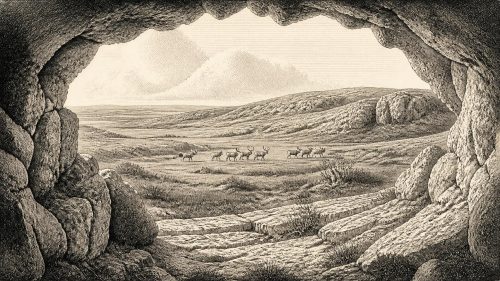
Thirty thousand years BCE is a notional marker within Ireland’s Late Pleistocene, not a securely datable historical event. Amid unstable pre-Last Glacial Maximum conditions, ice, periglacial processes, altered sea levels and open habitats shaped a landscape. Castlepook Cave, County Cork, preserves Ireland’s vertebrate record, including mammoth, giant deer, reindeer, bears, hyenas and later cold-adapted fauna, although its deposits span millennia and are disturbed. A cut-marked reindeer femur, perhaps 33,000 radiocarbon years old, may indicate human carcass processing with a stone tool. It cannot prove settlement, continuity or society. Later glaciation likely destroyed evidence; research may clarify tentative early human presence.
Read Article

Archived: 7 October 2026
Abstract
Around 30,147 BCE, Ireland was entering major glacial expansion during Marine Isotope Stage 3, although dating and ice limits remain uncertain. Growing upland glaciers merged towards the British–Irish Ice Sheet, particularly around the North Channel and northern Ireland, while southern ice remained more localised. Ice and meltwater reshaped bedrock and sediments, contributing to landscapes formed through repeated glaciations. Ice-free areas supported cold, open, variable vegetation and, at different times, fauna including reindeer, mammoth and giant deer. Cave evidence requires reassessment through improved dating. No secure human occupation exists; a modified reindeer bone suggests only an unproven, transient Upper Palaeolithic visit.
Read Article
