
Archived: 9 October 2026
Abstract
In 1910, two British general elections made John Redmond’s Irish Parliamentary Party essential to Liberal government, increasing prospects for Home Rule without securing it. The Lords’ veto remained intact, while nationalist and unionist divisions persisted. Land reforms strengthened the Congested Districts Board’s capacity to address western poverty, and old-age pensions exposed disputes over proof of age. James Connolly returned from America, reinforcing developing socialist and trade-union politics. The Abbey Theatre, after Annie Horniman withdrew support, faced financial uncertainty while asserting independence. Meanwhile, Kalem filmed The Lad from Old Ireland, linking rural Ireland, emigration and modern transatlantic visual culture for audiences.
Read Article
Archived: 9 October 2026
Abstract
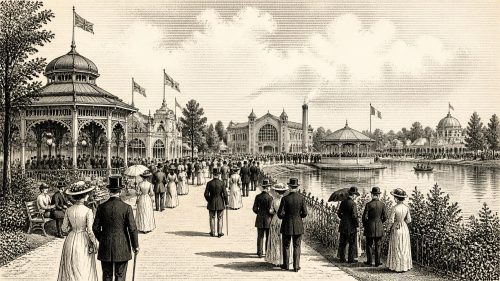
In 1907 Ireland displayed contrasting modernities. Dublin’s Irish International Exhibition at Herbert Park celebrated industry, art and entertainment, while Belfast labour unrest, led by James Larkin, brought transport and docks near paralysis, prompted military intervention and police mutiny. Synge’s Playboy riots exposed disputes over national culture. Birrell’s limited Irish Council Bill collapsed after nationalist rejection, encouraging separatist alternatives. The Evicted Tenants Act and cooperative movement addressed rural hardship, though poverty persisted. Dublin Castle’s Crown Jewels vanished. Marconi’s Clifden station opened wireless links to Canada, illustrating Ireland’s role in technology. Overall, the year revealed stalled constitutional reform, competing visions of progress.
Read Article
Archived: 9 October 2026
Abstract
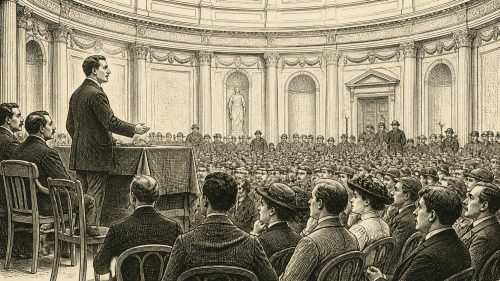
In 1905, Irish politics exposed divisions over government and national identity. George Wyndham resigned after devolution proposals alienated both unionists and nationalists, while the Ulster Unionist Council strengthened northern organisation. On 28 November, the National Council adopted Arthur Griffith’s Sinn Féin policy, advocating Irish institutions, economic self-reliance and withdrawal from Westminster, though not yet republicanism. Land purchase continued, but emigration remained. Disputes over Irish teaching and postal usage demonstrated cultural revival’s political reach. Abbey Theatre productions, scholarly recovery and Belfast’s Presbyterian Assembly Buildings reflected institutional confidence. The A5 submarine disaster at Haulbowline killed six crewmen, bringing naval modernity’s dangers locally.
Read Article
Archived: 9 October 2026
Abstract
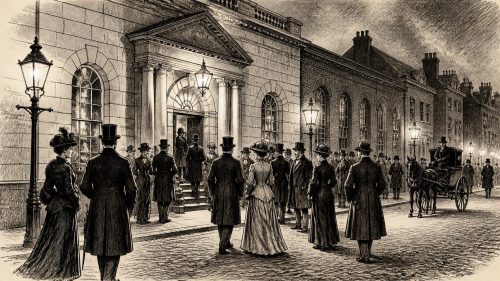
In 1904, Ireland remained under Westminster rule, yet political, economic and cultural initiatives widened debate over its future. Dunraven’s Irish Reform Association advocated limited administrative devolution, while the Irish Parliamentary Party pursued Home Rule and Arthur Griffith promoted Hungarian-inspired national self-reliance. The 1903 Land Act began transferring estates to tenants, alongside co-operative schemes and continuing hardship in congested districts. Gaelic League activities, the first official public camogie match, and the Oireachtas advanced cultural revival. On 27 December the Abbey Theatre opened in Dublin, establishing a permanent national stage. Industrial Belfast contrasted sharply with the mainly agricultural south and west regions.
Read Article




