Archived: 26 October 2026
Abstract
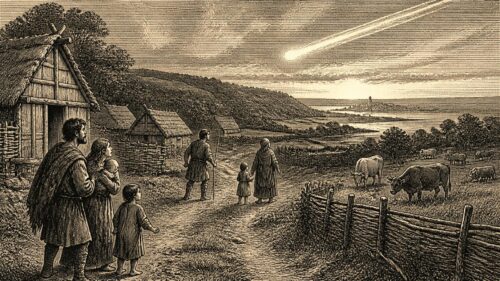
Conventionally assigned to 961, though annalistic chronologies differ, the year is chiefly marked by a reported fiery arrow travelling across Leinster from the south-west towards Áth Cliath, killing people and livestock. Its nature and stated thousand deaths remain unverifiable, but the notice records an exceptional environmental shock affecting agrarian communities and Dublin’s hinterland. The annals also note deaths of rulers in Uí Briúin Seóla, Dartraige and Cashel, the latter two killed by their own people, revealing unstable regional lordship. Ecclesiastical leaders at Clogher, Cork and Lismore died, underscoring churches’ institutional importance. Together, the entries depict politically fragmented, interconnected tenth-century Ireland.
Read Article
Archived: 27 October 2026
Abstract
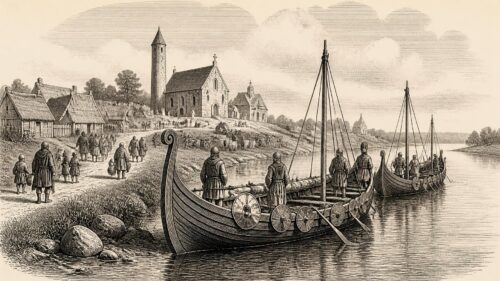
In 936, Dublin-based foreigners plundered Clonmacnoise and occupied it for two nights, an exceptional affront to the major Shannon ecclesiastical and trading settlement. Chronicon Scotorum also records a further plundering by Cellachán of Cashel and Munster men. Foreign crews from Lough Erne reached Lough Ree, demonstrating waterways’ strategic value and exposing central Ireland to prolonged raiding. Donnchad Donn, king of Temair, burned Dublin, illustrating contested rather than centralised power. Armagh lost two successive senior church leaders, Ioseph and Máel Pátraic, while Aniudán, king of Corcu Modruad, died. These events reveal competing regional powers, vulnerable churches, and insecure communications throughout Ireland.
Read Article
Archived: 27 October 2026
Abstract
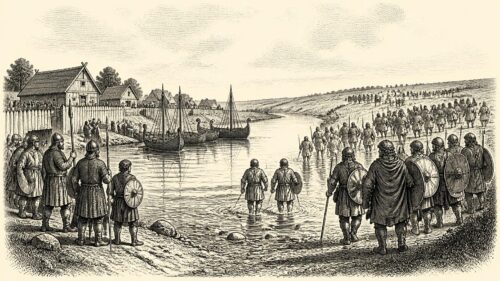
In 919, the struggle for Dublin produced one of the most consequential defeats of early medieval Irish politics. Niall Glúndub, king of Tara and leading figure of the northern Uí Néill, was killed when an Irish coalition attacked the Scandinavian rulers of the reoccupied settlement at Áth Cliath. The annals’ stark notice of a battle conceals a disaster of unusual scale: regional kings, royal heirs and noblemen from several northern dynasties died alongside him. Dublin’s rulers, led by Sitriuc Cáech, survived the assault. Their success did not make Ireland a Scandinavian kingdom, but it secured a major coastal power at
Read Article




