Archived: 12 October 2026
Abstract
In 1787, Ireland’s Dublin parliament responded to agrarian unrest by passing the general Riot Act, amid Rightboy disturbances and attacks on property, tolls and officials. It also promoted manufactures, linen, trade and maritime regulation, while fiscal measures extended state oversight. Thomas Orde’s proposed nationwide school system, including free parish education, failed amid confessional distrust. John Butler, Catholic bishop of Cork and heir to Dunboyne, conformed to the Church of Ireland, an exceptional conversion reflecting Protestant privilege. Lord Lieutenant Rutland died in October, disrupting Castle politics. Cultural life saw Dublin theatre reorganisation and Prince William Henry’s visit to Curraghmore in December.
Read Article
Archived: 12 October 2026
Abstract
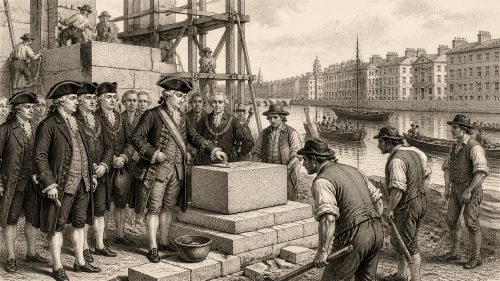
In 1786, Ireland combined constitutional autonomy with entrenched exclusion. The Dublin parliament, dominated by Protestant elites under Lord Lieutenant Rutland, operated after Pitt’s failed commercial proposals. In Dublin, Rutland laid the Four Courts foundation stone, while the Dublin Port Act created the Ballast Board to improve harbour administration and trade. These projects symbolised state infrastructure and employment. Meanwhile, Munster Rightboys protested tithes, rents and religious charges through intimidation and violence, exposing rural insecurity despite Catholic relief. The execution of George Robert FitzGerald demonstrated limits upon landed privilege. Declining Volunteers and restricted political participation underscored Ireland’s deep confessional and economic tensions.
Read Article

Archived: 12 October 2026
Abstract
In 1785, proposed commercial reforms exposed the limits of Ireland’s post-1782 legislative independence. Thomas Orde’s initial trade bargain, approved in modified form by the Irish Commons, was altered in Britain to require Irish conformity with British navigation and colonial legislation. Opposition led by Henry Grattan and Henry Flood defeated the revised scheme, leaving trade relations unresolved. Debate also highlighted restricted parliamentary representation, while William Drennan’s pamphlet urged Catholic-Protestant reform. Dublin’s Irish Academy was founded, reflecting learned and civic institutions. Richard Crosbie’s balloon flight thrilled Dublin, whereas a balloon-linked fire devastated Tullamore, demonstrating urban vulnerability and contrasting scientific excitement and disaster.
Read Article

Archived: 12 October 2026
Abstract
In 1784, Rutland’s new administration resisted Irish parliamentary reform, and Henry Flood’s measure was defeated, exposing the limits of legislative independence under Anglican patronage. Reform meetings and Volunteer delegates continued to demand broader representation, while Catholic leaders debated whether further relief risked existing gains. In County Armagh, raids by Peep o’ Day Boys amid competition for land, linen work and security prompted the first organised Defenders near Ballymacnab. Expanding linen exports and the Grand Canal service to Robertstown indicated commercial growth, yet insecurity and inequality persisted. The year ended without settlement, revealing divisions of power, religion, property and livelihood throughout.
Read Article




