
Archived: 11 October 2026
Abstract
In 1819, Ireland faced continuing fever, hunger and unemployment after the post-war downturn and bad seasons. Sir John Newport’s Commons committee investigated contagious disease and labouring poverty, linking epidemic conditions to destitution while favouring regulated charity, fever hospitals and work over an Irish poor law. The Fisheries Act sought employment and food through managed fisheries, but offered limited immediate relief. Henry Grattan’s Catholic emancipation motion narrowly failed, confirming enduring political exclusion. John Devereux recruited an Irish Legion for Bolívar’s cause, though recruits suffered overseas. Belfast founded the Irish Harp Society, while Ribbonism reflected rural tension. The year exposed persistent insecurity.
Read Article
Archived: 11 October 2026
Abstract
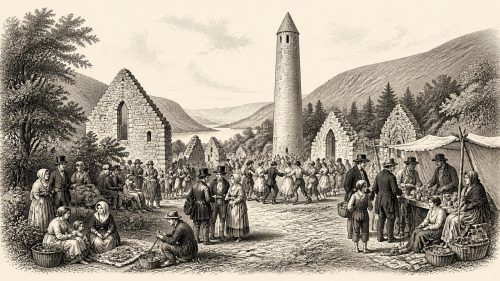
In 1813, Catholic emancipation dominated Irish politics as Henry Grattan’s relief bill advanced at Westminster before collapsing over parliamentary admission and proposed state influence on episcopal appointments, opposed by bishops and Daniel O’Connell. Sectarian tension erupted at Garvagh, County Londonderry, where armed Protestants and Orangemen repelled Ribbonmen during a fair. An unsuccessful census initiative reflected administrative uncertainty, while observations of poverty, fever and education highlighted social pressures. Cultural life included Hugh Porter’s poetry and Glendalough’s patron festival. In September, the Limerick meteorite fell near Adare, becoming Ireland’s largest recorded meteorite fall and was preserved for scientific study as material evidence.
Read Article
Archived: 11 October 2026
Abstract
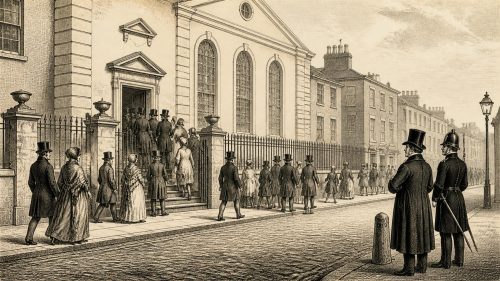
In 1811, Irish politics centred on Catholic emancipation and the legality of organised petitioning. Edward Hay’s plan for county-appointed petition managers prompted Chief Secretary Wellesley-Pole’s circular, invoking the Convention Act to restrain the Dublin Catholic Committee. The ensuing controversy exposed tensions between constitutional petitioning, representative organisation and Dublin Castle’s authority after the Union. Henry Grattan presented a Catholic petition at Westminster, but emancipation failed; nevertheless, Catholic activists developed safer organisational methods, influencing Daniel O’Connell’s later strategy. The year also saw the foundation of the Kildare Place Society, cultural works by Owenson and Knowles, and HMS Saldanha’s wreck at Lough Swilly.
Read Article
Archived: 11 October 2026
Abstract
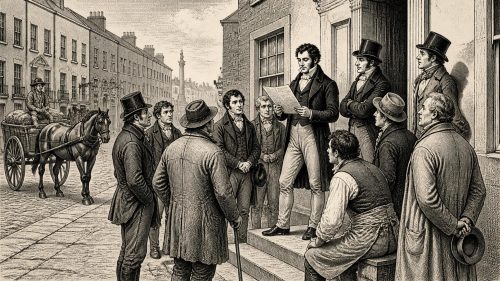
In 1810, nine years after Union, Ireland’s Catholics remained excluded from Parliament and offices despite earlier relief. Henry Grattan’s unsuccessful Westminster initiative exposed disputes over a proposed veto on episcopal appointments. Daniel O’Connell, opposing such control, issued a Dublin circular encouraging county committees to correspond with the Catholic Committee, strengthening constitutional, national organisation. Authorities nevertheless feared representative associations under the Convention Act. Parliament’s Unlawful Oaths (Ireland) Act punished coercive combinations amid rural insecurity. Meanwhile, agriculture dominated livelihoods, while Ulster linen connected production and Belfast commerce to wartime markets. Print, learned culture and Irish historical interests accompanied a contested public life.
Read Article
Archived: 11 October 2026
Abstract
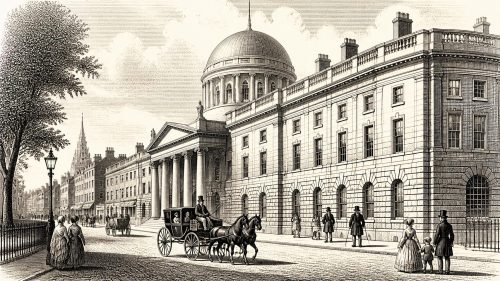
In 1808, seven years after the Union, Ireland experienced political subordination, wartime economic activity and Catholic institution-building. The Bank of Ireland opened in Dublin's former Parliament House, symbolising the loss of domestic legislature and the growing importance of finance and commerce. Catholic petitions, presented by Henry Grattan, sought equality but were overwhelmingly rejected at Westminster; controversy over a proposed royal veto on bishops deepened divisions. Meanwhile, the Patrician and Presentation Brothers were founded, and Cork's North Cathedral was dedicated. Cork Harbour dispatched Wellesley's expedition to Iberia, while Nelson's Pillar foundation and Mary Leadbeater's poetry reflected imperial commemoration and cultural life.
Read Article

Archived: 11 October 2026
Abstract
In 1805, Irish Catholics petitioned Westminster for equal political rights after the Union abolished Dublin’s parliament. Introduced by Charles James Fox and Lord Grenville, the loyal, constitutional appeal sought admission to Parliament and major offices, while rejecting papal temporal authority and threats to the Protestant establishment. Parliament decisively rejected it, exposing Catholic exclusion and establishing a pattern of failed emancipation campaigns until 1829. The state simultaneously transported Wicklow insurgent Michael Dwyer and companions to New South Wales. Ireland shared in Napoleonic war’s consequences after Trafalgar, while cultural life included Mary Tighe’s Psyche, William Rowan Hamilton’s birth, and Brian Merriman’s death.
Read Article
Archived: 11 October 2026
Abstract
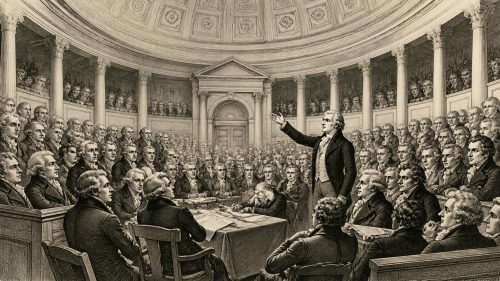
In 1800, Ireland remained a separate kingdom with its own parliament, courts and administration, but the Acts of Union passed in Dublin and London, ending its legislature from 1 January 1801. Cornwallis and Castlereagh secured support amid patronage, compensation and opposition led by Henry Grattan. The Union transferred limited Irish representation to Westminster, preserved the established Protestant church, and left Catholic emancipation unresolved. Post-rebellion repression continued, including Roddy McCorley’s execution, while food scarcity prompted controls on distilling and exports. Parliament also regulated trade, institutions and local improvements. Dublin retained political activity yet faced loss of its resident legislature and disruption.
Read Article
Archived: 12 October 2026
Abstract
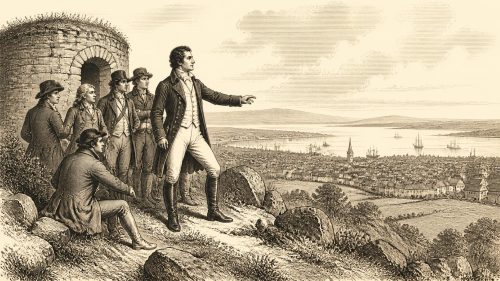
In 1795, wartime Ireland experienced reform, concession and sectarian conflict within its subordinate relationship to Britain. Lord Fitzwilliam’s arrival encouraged Catholic hopes of parliamentary admission, but London recalled him and defeated Grattan’s bill, undermining constitutional reform. United Irish leaders consequently moved further towards clandestine republicanism; Wolfe Tone departed for America seeking French support. Parliament nevertheless founded St Patrick’s College, Maynooth, to train Catholic clergy domestically. In County Armagh, the Battle of the Diamond confirmed Protestant dominance and prompted the formation of the Orange Order, followed by expulsions of Catholics. Routine infrastructure, legal and trade measures continued amid insecurity and polarisation.
Read Article

Archived: 12 October 2026
Abstract
In 1790, Ireland combined institutional development with deep political and social exclusion. Parliament was dissolved and elections returned 300 MPs, yet power remained Protestant, propertied and shaped by patronage. John Keogh’s Catholic Committee revived constitutional campaigning for relief. Commercial improvement advanced through Royal Canal construction, Boyne navigation legislation and substantial linen exports, while Dublin’s Roomkeepers’ Society exposed severe urban poverty. Armagh Observatory opened under Archbishop Robinson, and work began on Emo Court. Although no national rebellion occurred, official concern over disorder reflected persistent agrarian and economic tensions. The year’s canals, charitable initiatives and learned institutions coexisted with inequality, foreshadowing turmoil.
Read Article
Archived: 12 October 2026
Abstract
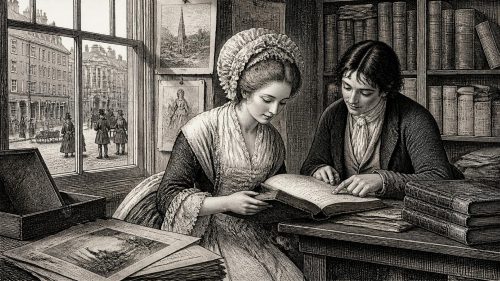
In 1789, George III’s incapacity prompted Ireland’s parliament to invite the Prince of Wales to govern as unrestricted regent, asserting constitutional judgement distinct from Westminster before the king’s recovery ended the crisis. The episode exposed parliament’s Protestant, elite and unrepresentative character, while the Irish Whig Club reflected growing reform organisation. Rural proclamations recorded conflicts over land, tithes and authority amid an unequal agricultural economy. Charlotte Brooke’s Reliques of Irish Poetry made Irish-language literature accessible through English paraphrases and Irish texts, demonstrating scholarly networks despite women’s exclusion from institutions. News from France widened debate, foreshadowing 1790s upheavals without determining Irish politics.
Read Article

Archived: 12 October 2026
Abstract
In 1788, Ireland’s post-1782 settlement revealed both reforming ambition and entrenched exclusion. Parliament, dominated by Protestant property and patronage, rejected Henry Grattan’s proposal to regularise tithes, while considering compensation for clergy whose payments had been withheld amid agrarian unrest. It also supported linen, hemp, transport, courts, gaols and urban works, reflecting practical governmental intervention. Cork Corporation opened the English Market, improving organised food provisioning. Belfast tradesmen founded the subscription-based Reading Society, later Linen Hall Library, promoting shared learning. George III’s illness created a regency crisis, foreshadowing constitutional conflict between Ireland and Britain in 1789 and exposing limits of parliamentary representation.
Read Article

Archived: 12 October 2026
Abstract
In 1785, proposed commercial reforms exposed the limits of Ireland’s post-1782 legislative independence. Thomas Orde’s initial trade bargain, approved in modified form by the Irish Commons, was altered in Britain to require Irish conformity with British navigation and colonial legislation. Opposition led by Henry Grattan and Henry Flood defeated the revised scheme, leaving trade relations unresolved. Debate also highlighted restricted parliamentary representation, while William Drennan’s pamphlet urged Catholic-Protestant reform. Dublin’s Irish Academy was founded, reflecting learned and civic institutions. Richard Crosbie’s balloon flight thrilled Dublin, whereas a balloon-linked fire devastated Tullamore, demonstrating urban vulnerability and contrasting scientific excitement and disaster.
Read Article

Archived: 12 October 2026
Abstract
In 1783, Ireland secured confirmation of legislative and judicial autonomy through the Renunciation Act, ending British appellate jurisdiction. Yet its parliament remained Protestant, property-based and controlled by patronage. Volunteers pressed for reform, convening in Dublin at the Rotunda under Lord Charlemont. Their Protestant-focused programme excluded Catholic enfranchisement and sought electoral reform, curbs on office-holders, regular parliaments and anti-corruption measures. Henry Flood’s Volunteer-backed bill was rejected by the Commons, while Grattan resisted armed pressure. The convention adjourned peacefully, exposing constitutional limits. Harvest failures caused scarcity and food prices, while the Bank of Ireland opened and Dublin’s commercial and ceremonial life continued.
Read Article
Archived: 12 October 2026
Abstract
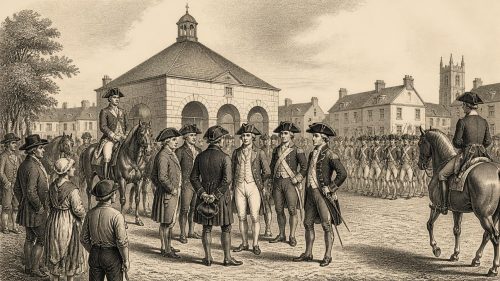
In 1782, Irish Patriots, supported by the predominantly Protestant Volunteer movement, secured major constitutional concessions during Britain’s wartime weakness. Dungannon resolutions, Henry Grattan’s parliamentary campaign and public mobilisation helped win repeal of the Declaratory Act, weakening British legislative supremacy, while Yelverton’s Act reformed Poynings’ Law and expanded Irish parliamentary initiative. The Catholic Relief Act eased property, educational and worship restrictions but withheld political equality. The settlement, later termed Grattan’s Parliament, preserved crown, empire, patronage and a narrow Protestant electorate. Meanwhile, poor harvests, rising prices and an export embargo revealed widespread insecurity. Ireland gained qualified legislative autonomy, not fully democratic self-government.
Read Article

Archived: 12 October 2026
Abstract
In 1781, wartime pressures, commercial controls and constitutional unrest shaped Ireland. James Gandon began Dublin's Custom House, a decade-long project intended to strengthen revenue collection and redirect trade eastwards along the Liffey. Embargoes, quarantine measures and maritime crime exposed ports to imperial conflict. The Protestant-led Volunteers, initially raised for defence, increasingly demanded commercial freedom and Irish legislative autonomy, while parliament acknowledged influence without granting settlement. An Armagh meeting prepared the 1782 Dungannon convention. Meanwhile, Granard founded its harp festival, supporting endangered traditional musicians. Measures associated with the parliamentary session did not establish the Bank of Ireland, which opened in 1783.
Read Article

Archived: 12 October 2026
Abstract
In 1780, Irish commercial concessions eased some restrictions on trade, but their dependence on Westminster reinforced Patriot demands for legislative authority. Henry Grattan’s April motion declaring that only Ireland’s King, Lords and Commons could legislate for the kingdom was defeated. On 13 July, 2,700 Ulster Volunteers assembled at Belfast and publicly endorsed the principle, transforming a defence force into a political movement. Volunteers connected civic organisation, commerce and constitutional agitation, although they were Protestant and excluded most Catholics. War, economic uncertainty and reform shaped the year. Administrative change brought Carlisle as lord lieutenant, but Ireland entered 1781 without legislative independence.
Read Article
Archived: 12 October 2026
Abstract
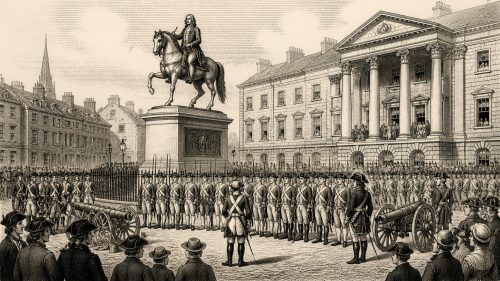
During 1779, war with France and Spain exposed Ireland’s defences, encouraging the growth of locally organised, predominantly Protestant Volunteers. Their armed presence strengthened a campaign for freer trade, prompted by imperial restrictions, falling agricultural prices and impaired credit. Merchants, producers and Patriot MPs, notably Henry Grattan, pressed the Irish Commons to seek commercial relief and use control of supply against government. On 4 November, Dublin Volunteers paraded artillery outside Parliament House, demanding free trade. Crowds added disorderly pressure. Britain promised concessions, although legislation followed later. The agitation linked popular mobilisation with parliamentary action and anticipated demands for Irish legislative independence.
Read Article
Archived: 12 October 2026
Abstract
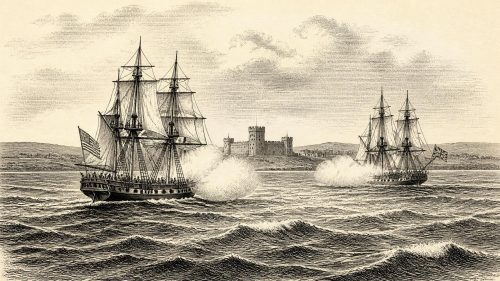
In 1778, Captain John Paul Jones’s Ranger captured HMS Drake off Carrickfergus, exposing Ireland’s weak coastal defences amid imperial war. Fear of attack encouraged Belfast’s first Volunteer company and similar locally organised Protestant corps, which later strengthened demands for political and commercial influence. Wartime disruption prompted limited trade concessions, though these fell far short of free trade and intensified Patriot dissatisfaction. Gardiner’s Catholic Relief Act improved property rights for qualifying Catholics but preserved political exclusion and most penal restrictions. Road building, cultivation, mapping and Dublin’s changing streetscape also reflected gradual improvement. Together, these developments revealed mounting pressures for Irish change.
Read Article
Archived: 12 October 2026
Abstract
In 1775, the American war exposed tensions within Ireland’s restricted Protestant political order. Troop departures depleted the garrison, while authorities pragmatically tolerated Catholic recruitment despite penal disabilities. Atlantic links encouraged both loyalism and sympathy for the colonists, expressed in Dublin and Edmund Burke’s conciliation arguments. Henry Flood accepted office, weakening the Patriot interest, while Henry Grattan entered parliament through Charlemont patronage. Parliament managed supply and revenue under strong British influence. Catholics and Presbyterians remained disadvantaged, and debate connected religion, trade and constitutional constraints. War threatened linen markets and sharpened commercial grievances. Cultural life and tower damage reflected wider uncertainty locally.
Read Article




