Archived: 9 October 2026
Abstract
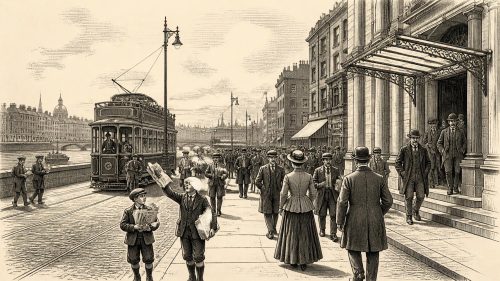
In 1931 the Irish Free State gained legislative autonomy through the Statute of Westminster, while unresolved Treaty issues, partition and political rivalry persisted. Cosgrave’s government faced Fianna Fáil’s growing constitutional challenge, republican fears and economic depression affecting farming, exports, employment and emigration. The Public Safety Act introduced emergency powers after Saor Éire’s congress, revealing anxieties about violence. The Four Courts reopened, symbolising post-Civil War recovery. Flooding struck Cork, while An Óige encouraged rural travel. The Irish Press began publication, strengthening nationalist political communication. Dublin’s first state-sponsored St Patrick’s Day parade projected order, although industrial unemployment remained severe in Northern Ireland.
Read Article
Archived: 9 October 2026
Abstract
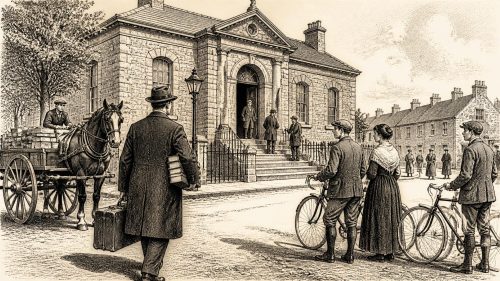
In 1930, the Irish Free State combined consolidation with unresolved social and economic strains. Its election to the League of Nations Council asserted an independent diplomatic role, while John Dulanty’s London appointment strengthened relations with Britain. Cosgrave’s government and Fianna Fáil maintained parliamentary rivalry, passing measures on constitutional procedure, monuments, pensions and administration. Mayo’s rejection of Protestant librarian Letitia Dunbar-Harrison exposed religious prejudice, cultural nationalism and conflict between local and central authority. Falling agricultural export values revealed dependence on British markets as depression advanced. Northern industry suffered unemployment. Cultural developments included Beckett’s Whoroscope and film censorship, highlighting creativity and regulation.
Read Article
Archived: 9 October 2026
Abstract
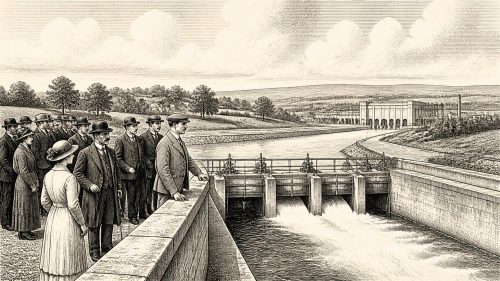
In 1929, the Irish Free State opened the Shannon hydroelectric scheme at Ardnacrusha, demonstrating ambition, engineering capacity and national electricity supply, although rural electrification remained distant. The project transformed landscapes, including Friar’s Island’s medieval oratory. Agriculture, dependence on British markets, emigration, tuberculosis and limited medical certification exposed continuing economic and social fragility. Cumann na nGaedheal governed while Fianna Fáil developed as a parliamentary opposition; Seán Mac Eoin moved from army leadership into politics. The Censorship of Publications Act established lasting controls on print and contraception. In Northern Ireland, electoral reform ended proportional representation for most Stormont seats, strengthening institutional division.
Read Article
Archived: 9 October 2026
Abstract
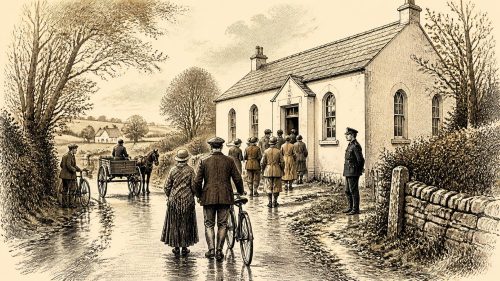
In 1927, Irish Free State politics moved decisively towards parliamentary competition. Fianna Fáil won 44 seats in June but initially refused the Oath of Allegiance. Kevin O’Higgins’s assassination at Booterstown exposed continuing republican violence, prompting the Public Safety Act. In August, de Valera and his deputies entered the Dáil, treating the oath as a political formula; September’s election established Fianna Fáil as the principal opposition. Government advanced land reform, liquor regulation, jury law and electrification. Partition remained entrenched, while diplomatic activity strengthened international status. Joyce’s Pomes Penyeach reflected Irish culture’s international reach. Unresolved divisions remained, but conflict shifted towards elections.
Read Article
Archived: 9 October 2026
Abstract
In 1926, the Irish Free State consolidated its institutions amid demographic decline, political division and economic change. The first Free State census counted 2,971,992 people, confirming rural depopulation, emigration, agricultural dependence, Catholic predominance and limited Irish-language knowledge. Legislation addressed allotments, school attendance and shop hours while accommodating farm labour. Construction of the Shannon hydro-electric scheme at Ardnacrusha demonstrated technological ambition, though reliant on foreign expertise. Éamon de Valera’s break with Sinn Féin produced Fianna Fáil, establishing a new republican organisation. Partition endured, while Cosgrave’s government asserted greater Commonwealth equality at the Imperial Conference. Women participated in political and peace activism.
Read Article




