Archived: 13 October 2026
Abstract
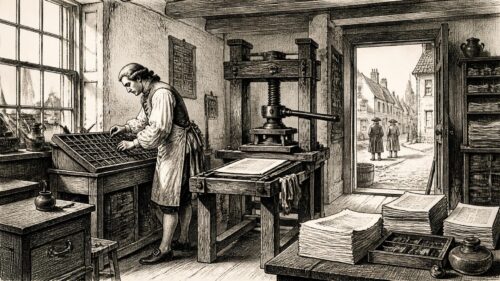
In 1737, William Cavendish, third duke of Devonshire, became lord lieutenant, linking Dublin administration to Walpole’s London government as Parliament convened under Protestant landed dominance. Proclamations addressed gold, silver and copper currency, crime, riots, vagrancy and begging, revealing official dependence on magistrates, rewards and local knowledge. George Berkeley’s Querist advocated economic improvement while reflecting elite assumptions about poverty and labour. Francis Joy founded the Belfast News-Letter, creating a provincial news channel despite limited readership. Religious divisions persisted under penal laws, while trade, linen and agriculture connected Ireland unequally to British and Atlantic markets. The year exposed social vulnerability without crisis.
Read Article
Archived: 13 October 2026
Abstract
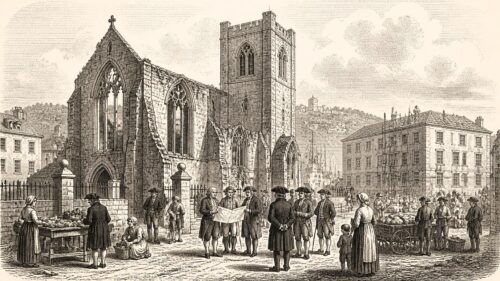
In 1735, Ireland’s Protestant governing system addressed poverty, security and economic improvement through parliamentary proposals, proclamations and print. Dublin’s parliament, constrained by Poynings’ Law and dominated by property-owning Protestants, considered measures reinforcing Catholic exclusion from juries and restricting mixed marriages. Cork advanced plans for St Fin Barre’s reconstruction and a workhouse combining relief, labour discipline, foundling care and Protestant instruction; legislation passed in 1736. Road schemes and liquor-credit regulation reflected social concerns. Proclamations pursued robbers across counties. George Berkeley’s Querist promoted debate on employment, consumption and national resources, while Protestant schooling and Ulster Scots print illustrated confessional and cultural currents.
Read Article

Archived: 13 October 2026
Abstract
In 1734, Ireland’s Protestant governing order reinforced religious exclusion while managing finance, charity and urban growth. Parliament, restricted by property, Protestant franchise and Poynings’ Law, aided creditors after the failure of Burton’s banking partnerships and barred Catholic-connected converts from magistracy. George Berkeley became bishop of Cloyne, beginning an episcopate later associated with social concerns. Dublin’s Mercer’s Hospital opened ten beds for sick poor people, supported by voluntary philanthropy and unpaid medical service. Cultural life expanded through Faulkner’s Swift edition, newspapers and the Aungier Street theatre, after damage at Smock Alley. Official proclamations against crime indicated anxieties over security and disorder.
Read Article
Archived: 13 October 2026
Abstract
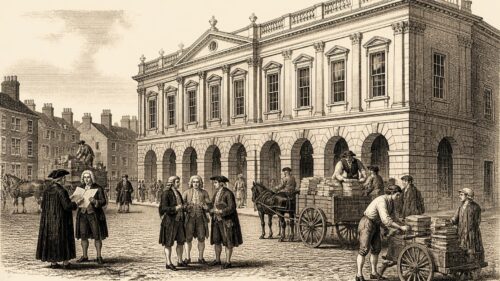
In 1732, Irish institutions revealed tensions within a Protestant-governed, predominantly Catholic society. Hugh Boulter’s Lords’ inquiry counted extensive Catholic clergy, worship, schools and religious houses, prompting renewed enforcement of penal laws, while also exposing uneven local practice. Parliament reduced the maximum interest rate to six per cent, reflecting an expanding but unequal commercial economy. Trinity College Dublin’s Burgh-designed Library was completed, symbolising privileged Protestant learning. George Grierson became king’s printer, but Constantia Grierson’s death diminished Dublin letters. In Paris, Begley and MacCurtin published the first comprehensive English–Irish dictionary. Dublin also published Berkeley’s Christian defence, Alciphron, illustrating religious and intellectual debate.
Read Article




