Archived: 12 October 2026
Abstract
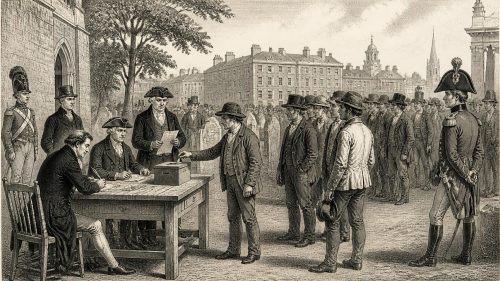
In 1793, Ireland combined Catholic relief with intensified state control amid war with revolutionary France. Following John Keogh’s Catholic Convention petition, the Roman Catholic Relief Act enfranchised qualified Catholic forty-shilling freeholders and opened certain employment and educational opportunities, while retaining exclusion from parliament, senior offices and Trinity fellowships. The Gunpowder Act regulated weapons, while the Irish Militia Act introduced parish enrolment and ballots, incorporating Catholics and Presbyterians into government service. The Convention Act restricted representative political assemblies, constraining reformers and United Irishmen. Economic pressures, militia obligations and print culture shaped daily life. The year broadened participation whilst strengthening coercive administration.
Read Article
Archived: 12 October 2026
Abstract
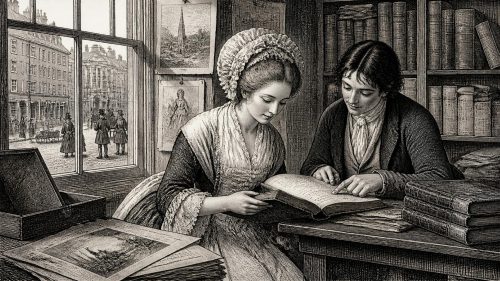
In 1789, George III’s incapacity prompted Ireland’s parliament to invite the Prince of Wales to govern as unrestricted regent, asserting constitutional judgement distinct from Westminster before the king’s recovery ended the crisis. The episode exposed parliament’s Protestant, elite and unrepresentative character, while the Irish Whig Club reflected growing reform organisation. Rural proclamations recorded conflicts over land, tithes and authority amid an unequal agricultural economy. Charlotte Brooke’s Reliques of Irish Poetry made Irish-language literature accessible through English paraphrases and Irish texts, demonstrating scholarly networks despite women’s exclusion from institutions. News from France widened debate, foreshadowing 1790s upheavals without determining Irish politics.
Read Article
Archived: 12 October 2026
Abstract
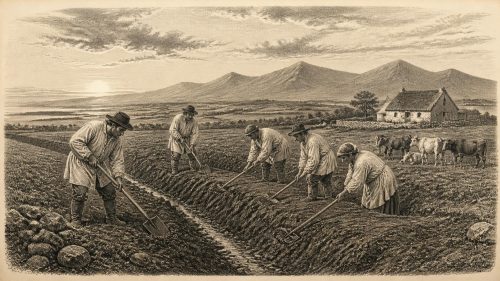
In 1762, Spain’s entry into the Seven Years’ War heightened fears of invasion, prompting Lord Lieutenant Halifax to review Irish defences amid privateering and controls on provisioning. Dublin’s Protestant parliament considered, but London rejected, septennial parliaments; legislation reinforced Protestant land titles while regulating commerce, roads and urban services. In Munster, Whiteboy protest spread against enclosure, rents, tithes and exactions, provoking troops and arrests but reflecting agrarian distress rather than a sectarian conspiracy. Dublin also saw church building, civic regulations and Macklin’s comedy. Halifax left in May; a December Anglo-Spanish armistice reduced danger without resolving Ireland’s religious, constitutional or rural inequalities.
Read Article
Archived: 12 October 2026
Abstract
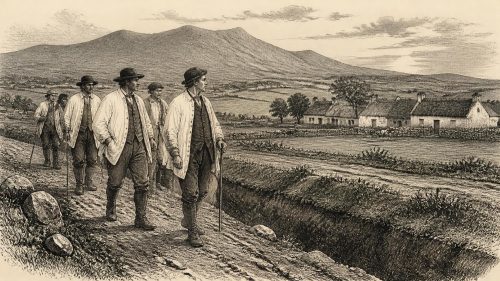
In 1761, George III’s accession prompted Ireland’s first general election since 1727 and a new parliament, where Charles Lucas and other patriots challenged restrictions on legislative control of revenue. Yet the year’s most significant development began in southern Tipperary, where Whiteboys around Ballyporeen resisted enclosures, tithe demands and local exactions through nocturnal, disguised collective action. Initially called Levellers, they established methods later rural movements adopted. Galway’s Protestant corporation sought to restrict Catholic commercial activity through the Black Petition. Meanwhile, the Seven Years’ War brought naval impressment. The year exposed constitutional weakness, confessional exclusion and rural insecurity without producing national rebellion.
Read Article




