Archived: 19 October 2026
Abstract
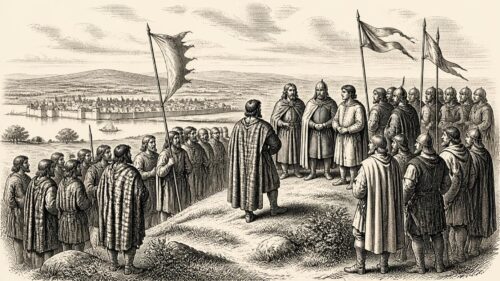
In 1504, Gerald FitzGerald, eighth earl of Kildare and king’s deputy, led a broad Gaelic and settler-descended coalition against Uilleag Fionn Burke of Clanricard and Turlough Donn O’Brien. The conflict arose from Burke’s attacks on O’Kelly territory and seizure of Galway, but reflected wider struggles for Connacht. At Knockdoe near Galway on 19 August, Kildare’s army won a devastating battle, with annals reporting nine gallowglass battalions almost destroyed. Burke surrendered hostages, restoring Kildare’s influence without securing lasting royal control. The year’s annals also commemorate clerics, scholars, physicians and patrons, revealing religious, learned and hospitable networks alongside warfare across medieval Ireland.
Read Article
Archived: 20 October 2026
Abstract
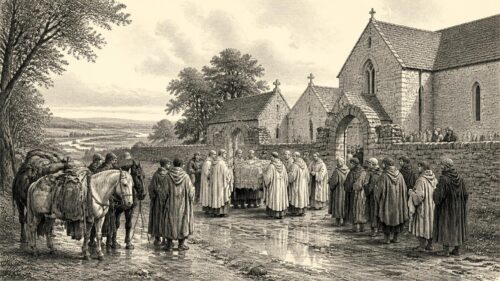
In 1437, Ireland’s annals recorded regional transitions rather than a national event. Seoan Mac Peorais, Archbishop of Tuam, died, opening a contested ecclesiastical vacancy resolved neither quickly nor simply. Gormlaith Ó Duibgeannáin, wife of Brian Mac Aodhagáin, died as an anchorite at Loch Key, linking learned kinship and religious life. Ulster notices named three deaths, while a cautiously dated peace between Niall Garbh Ó Domhnaill and his brother Neachtan reflected strained northern lordship. Farming, trade and uneven royal authority shaped everyday life. News of James I of Scotland’s assassination demonstrated Ireland’s continuing Irish Sea connections across a politically fragmented island.
Read Article
Archived: 24 October 2026
Abstract
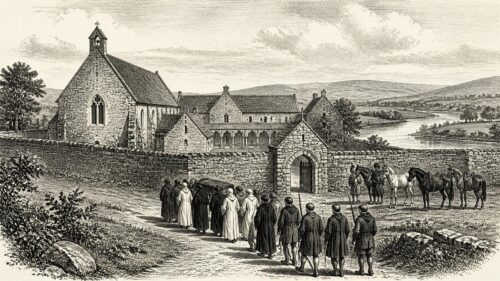
Richard de Burgh, the Red Earl of Ulster and lord of Connacht, died at Athassel on 29 July 1326, ending a powerful four-decade lordship. His fourteen-year-old grandson William inherited vast but vulnerable estates, exposing Ulster and Connacht to guardians, rivals and local conflict. Munster saw fighting between Maurice FitzGerald of Desmond and Arnold le Poer, temporarily restrained by Justiciar John Darcy. Royal administration continued through travelling chancery business and financial enforcement. Local records note Ímar Mag Ragnaill’s killing and the succession at Elphin. Meanwhile, English political crisis unsettled Ireland, making 1326 a pivotal year of insecure lordship and contested authority.
Read Article

Archived: 25 October 2026
Abstract
In 1267, Connacht and neighbouring districts experienced raids, destruction and political uncertainty rather than a single campaign. Drumcliff, an important ecclesiastical centre and settlement in present-day County Sligo, was completely burned with its churches, although attackers and casualties remain unknown. West Connacht Foreigners raided Carbury and Ballysadare, while Mac William Burke plundered Áed Ó Conchobair’s lands. Murchad Mac Suibne was captured in Umhall, delivered to Walter de Burgh, and died in prison. Áed recovered from grave illness amid several dynastic deaths. Bishop Romanus of Clonfert sought the pope, while annals also noted Munster murder and England’s continuing baronial civil war.
Read Article





