Archived: 17 October 2026
Abstract
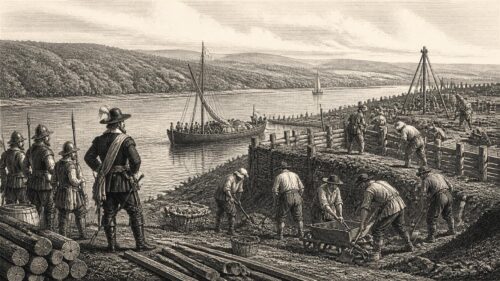
In 1600, the Nine Years’ War shifted strategically without decisive resolution. Lord Mountjoy and Sir George Carew restored English military organisation and recovered much of Munster through garrisons, raiding and coercion, while Ormond’s capture exposed continuing instability. Hugh O’Neill’s southern expedition demonstrated confederate reach but cost him Hugh Maguire and intensified internal disputes. Sir Henry Docwra’s landing at Lough Foyle created a vulnerable but enduring northern bridgehead, strengthened by Niall Garbh O’Donnell’s defection. At Moyry Pass, O’Neill blocked Mountjoy’s advance into Ulster. By year’s end, pressure on the confederacy had grown, making Spanish intervention at Kinsale increasingly urgent in 1601.
Read Article
Archived: 17 October 2026
Abstract
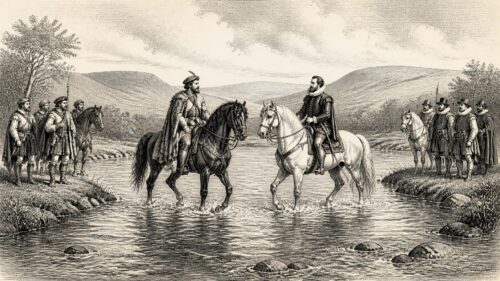
In 1599, Elizabeth I sent the earl of Essex to Ireland with an unprecedented army to suppress the Nine Years’ War. Despite capturing Cahir Castle and campaigning through Munster, his forces were weakened by supply difficulties, resistance, sickness and garrison demands. Sir Conyers Clifford’s defeat and death at Curlew Pass strengthened Hugh Roe O’Donnell’s confederates. Essex’s September river meeting with Hugh O’Neill at Bellaclinthe produced only a temporary truce. Essex then left Ireland without permission, provoking a court crisis. O’Neill subsequently appealed to Pale Catholics, while the year demonstrated that Tudor authority faced intertwined military, religious, political and economic challenges.
Read Article

Archived: 17 October 2026
Abstract
In 1591, Tudor authority pressed unevenly upon Gaelic Ireland through military, legal and administrative measures. Brian na Múrtha O’Rourke, lord of West Bréifne, fled to Scotland after invasion, was surrendered to England, tried for treason and executed at Tyburn, demonstrating the crown’s expanding reach. Monaghan’s contested settlement and mass pardons revealed efforts to reorganise lordship and land. Hugh O’Neill’s marriage to Mabel Bagenal intensified Ulster rivalries. Catholic appointments and continental contacts sustained religious networks and official fears of foreign intervention. Annalistic deaths and praise for lords preserved Gaelic values. Although no rebellion began, distrust and dispossession sharpened conditions preceding war.
Read Article




