

Related Archive: John Mitchel

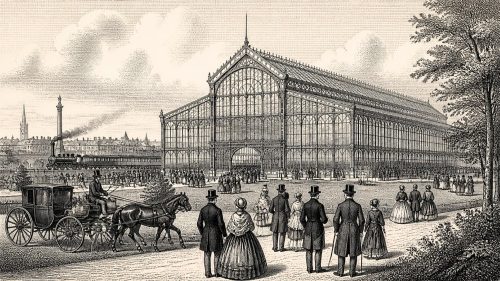
Dargan’s Glass Palace

Dargan’s Glass Palace

Archived: 10 October 2026

Abstract

Dublin’s Great Industrial Exhibition opened on Leinster Lawn in May 1853, funded largely by railway contractor William Dargan and organised with the Royal Dublin Society. Its glass-and-iron halls displayed art, manufacture, machinery and Irish antiquities, projecting modernity after the Famine, though access remained socially limited. Queen Victoria’s August visit amplified its civic and imperial significance. Meanwhile, population decline, emigration, workhouses and estate sales showed continuing hardship. Tenant Right politics fractured as leading advocates accepted office. Gladstone extended income tax to Ireland despite objections. Plans for a gallery and Catholic university developed, while John Mitchel escaped transportation, symbolising enduring nationalist exile.


Read Article

The Irish Felon’s Last Issue

The Irish Felon’s Last Issue

Archived: 10 October 2026

Abstract

In 1848, renewed potato blight shattered hopes of Irish recovery after the catastrophic famine year of 1847, deepening hunger, disease and regional inequality. With soup kitchens closed, Poor Law unions, overcrowded workhouses and restricted outdoor relief became central, often forcing destitute tenants to surrender land. Cholera’s arrival foreshadowed mortality. Meanwhile, European revolutions inspired Young Ireland militants. John Mitchel’s United Irishman prompted the Treason Felony Act and his transportation; The Irish Felon briefly continued radical journalism. After habeas corpus was suspended, Smith O’Brien’s poorly supplied rising collapsed at Ballingarry. Subsequent trials created nationalist martyrs, while emigration, eviction and death devastated communities.

Read Article

