Archived: 18 October 2026
Abstract
In 1550, Sir Anthony St Leger restored negotiation to Tudor Irish policy, promoting surrender and regrant despite disputes favouring military coercion. French approaches in Ulster exposed fragmented lordships and competing dynastic interests rather than a united anti-English alliance. The crown ordered surveys and proposed leasing in Leix and Offaly, beginning systematic plans for territorial intervention without securing control. A proposed Irish mint reflected fiscal ambitions. Humphrey Powell received funding for a Dublin printing press, linking Edwardian religious reform with state communication, though printing and the English liturgy began later. Language, local power and limited resources constrained government ambitions across Ireland.
Read Article
Archived: 18 October 2026
Abstract
In 1544, Tudor authority in Ireland depended on negotiation rather than uniform control. During Sir Anthony St Leger’s absence, Lord Justice William Brabazon managed finance, military levies and invasion rumours, while Irish kern joined Henry VIII’s war against France and Scotland. Local conflicts persisted: English forces aided O’Donnell’s siege at Lifford, and warfare engulfed Ulster through raids, castles, hostages and Scottish mercenaries. At Limerick, a council addressed the Clanricarde succession after Ulick Burke’s death, recognising Richard Burke but empowering a rival custodian, leaving conflict unresolved. Former monastic property passed to crown servants, illustrating primarily economic, rather than immediate religious, transformation.
Read Article

Archived: 18 October 2026
Abstract
In 1540 Ireland remained divided between Tudor authority and powerful Gaelic lordships. Leonard Grey left office and was arrested, while Sir Anthony St Leger became Lord Deputy, pursuing cooperation rather than immediate universal warfare. Manus Ó Domhnaill sent Henry VIII an apologetic letter via Bristol, signalling negotiation without submission. Crown commissioners surveyed dissolved monasteries, redirecting wealth where English power reached, while Franciscan patronage survived in Thomond and violence accompanied suppression at Monaghan. Gaelic rulers built castles, conducted campaigns, took hostages and fought dynastic conflicts. Thus, administrative reform, religious change, Irish Sea diplomacy and regional warfare coexisted, leaving Tudor control incomplete.
Read Article
Archived: 18 October 2026
Abstract
In 1532 Gerald FitzGerald, ninth earl of Kildare, regained the deputyship, yet royal authority remained dependent on alliances with Anglo-Irish and Gaelic lords. Campaigning in Ulster, disputed in date between 1531 and 1532, devastated Tír Eógain through burning, plunder and cattle seizure. In Ely, Kildare supported his son-in-law Ferganainm Ó Carroll during the Birr succession struggle, where he was seriously wounded by gunfire. Feuds continued across Ossory, Connacht and the north-west, occasionally violating sanctuary. Amid violence, Manus Ó Domhnaill compiled Betha Colaim Chille at Lifford, affirming Catholic learning, Irish vernacular culture, dynastic prestige and Colum Cille’s regional importance, lasting significance.
Read Article
Archived: 18 October 2026
Abstract
In 1527, Ireland remained divided among the Dublin administration, Anglo-Irish magnates and Gaelic lordships. Gerald FitzGerald, earl of Kildare, and James Butler travelled to England amid rivalry, while fighting continued between Desmond and Butler interests in Munster. Manus O’Donnell completed Lifford Castle during war with Con Bacach O’Neill, strengthening a contested Ulster frontier. O’Donnell’s coalition ravaged Moylurg and captured several castles; Castlereagh later surrendered after a prolonged siege and famine. Successions in Fermanagh and Tirerrill demonstrated contested lordship. Annals also commemorated scholars, physicians, charitable women and Edmund Butler’s consecration as archbishop of Cashel, revealing cultural and ecclesiastical institutions amid warfare.
Read Article
Archived: 18 October 2026
Abstract
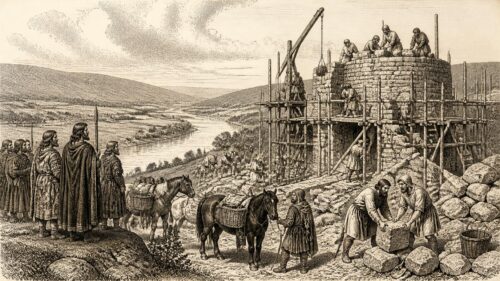
In 1526, Ireland’s fragmented political order was shaped by failed diplomacy, raiding, fortification and contested successions. Gerald FitzGerald, earl of Kildare, unsuccessfully mediated between Conn Bacach O’Neill and Manus O’Donnell, whose rivalry centred on the Tír Chonaill–Tír Eóghain frontier and O’Donnell’s castle at Port na dTri Namhad. O’Donnell forces raided Tír Eóghain and defeated opponents in Connacht, securing hostages and destroying castles while warfare devastated crops and communities. Succession disputes followed deaths among O’Reilly, O’Dochartaigh and O’Rourke kindreds; church office also provoked violence. Severe weather killed raiders. Kildare’s English summons weakened mediation, leaving conflicts unresolved across the island’s competing lordships.
Read Article





