Archived: 9 October 2026
Abstract
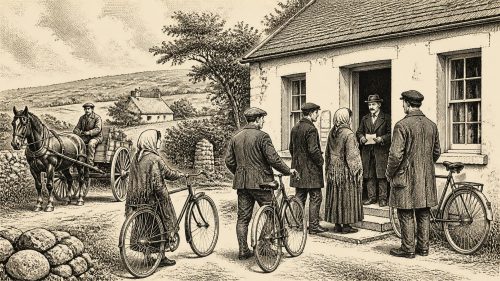
In 1937, Éamon de Valera’s government drafted, debated and submitted a Constitution to voters, replacing much of the Irish Free State’s imperial framework. Approved by the Dáil and endorsed in the 1 July plebiscite by 685,105 votes to 526,945, it came into force on 29 December, naming the State Éire/Ireland. It established the presidency, Taoiseach, reconstituted Seanad and Supreme Court, while asserting an all-island claim. Its Catholic-inflected provisions on religion and family prompted criticism. Fianna Fáil retained power without a majority. Amid poverty, emigration and dependence on Britain, legislation addressed housing and welfare, while Spain and insecurity shaped foreign policy.
Read Article
Archived: 10 October 2026
Abstract
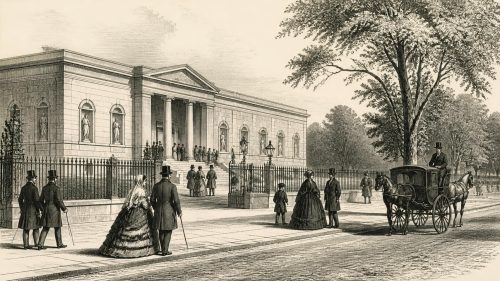
In 1864, Ireland saw expanding state and cultural institutions alongside social and political division. Civil registration of births, deaths and marriages began, while Dublin’s National Gallery opened and scientific collecting continued. A memorial tower to Daniel O’Connell was begun at Glasnevin, affirming Catholic nationalist memory. Post-famine agricultural consolidation, livestock growth, emigration and the foundation of Cork’s Munster Bank indicated uneven economic change. Belfast’s August sectarian riots caused deaths, injuries and controversy over policing, prompting a royal commission. Meanwhile, the Irish Republican Brotherhood organised clandestinely through The Irish People, and Archbishop Cullen founded the Irish Ecclesiastical Record, strengthening Catholic institutional authority.
Read Article
Archived: 20 October 2026
Abstract
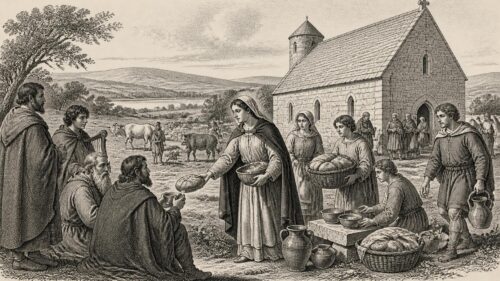
For Ireland, 1451 is not a year dominated by one island-wide campaign or governmental act. Its surviving record is instead a set of sharply local episodes: the death of a renowned midland patron, a fire in a Franciscan friary at Cavan, a return from Rome, murders and hostage agreements, and the building of a castle in Connacht. Read together, they show an Ireland of overlapping lordships rather than a single political community: Gaelic rulers, Anglo-Irish families, religious houses and learned networks all exercised authority in particular places.The evidence has limits. The principal narratives were written or compiled in monastic and
Read Article

Archived: 24 October 2026
Abstract
In 1313, Thomond faced a contested O’Brien succession after Diarmait Cléirech Ó Briain died and was buried in the Franciscan habit at Ennis. Donnchad Ó Briain asserted his claim through destructive campaigns in Uaithne and Ara, while Muirchertach Ó Briain entered from Connacht, defeated his rivals and ravaged the Limerick district. Their conflict ended in a territorial partition, though warfare resumed in 1314. Regional struggles involved O’Brien factions, Mac Conmaras and Anglo-Irish magnates, notably Richard de Clare and the de Burghs. In Dublin, acting justiciar Edmund Butler held a feast and knighted thirty men, asserting royal authority amid political instability.
Read Article




