Holdings Enlarged

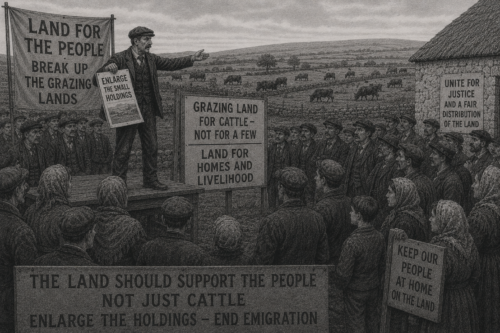
Campaigners are demanding that uneconomic smallholdings be enlarged through the redistribution of extensive grazing land. The United Irish League argues that thousands of rural families remain confined to farms too small or too poor to provide a secure livelihood while nearby grasslands support cattle but comparatively few people. Its organisers want owners and large occupiers to release untenanted land so that neighbouring holdings may be expanded. In County Limerick, where the size and quality of a farm often determine whether a family can remain at home, the proposal will be judged as both an agricultural reform and a defence against emigration.
Wyndham Appointed

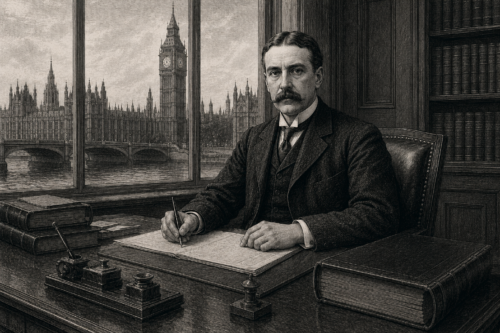
George Wyndham has been appointed Chief Secretary for Ireland in succession to Gerald Balfour, placing a younger Conservative minister in charge of Irish administration at a moment of renewed nationalist organisation and growing agitation over the land. His appointment will be watched closely throughout Limerick city and county, where tenant ownership, congested holdings, rural poverty and the position of evicted families remain pressing political concerns. Wyndham enters office after the reunited Irish Parliamentary Party secured seventy-seven seats at the general election, although Lord Salisbury’s government remains firmly opposed to Home Rule and possesses a substantial Westminster majority.

O’Connell Street, 1937

This 1937 view of O’Connell Street, historically known as George’s Street, captures Limerick’s principal commercial thoroughfare during a period of urban transition. Georgian façades, prominent shopfronts and the landmark clock tower frame a busy scene of pedestrians, cyclists, motorcars and public transport. Heavy coats and formal dress reflect everyday life before the Second World War, while traditional businesses line both sides of the street. Several buildings and upper storeys shown here were later altered or demolished during redevelopment. Despite extensive modernisation and pedestrianisation, O’Connell Street remains central to Limerick’s commercial, architectural and social identity within the changing modern city today.

Thomond Bridge and Castle, 1881

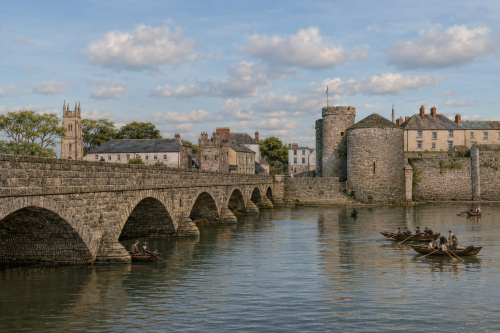
This 1881 reconstructed image is based on an engraving and depicts Thomond Bridge and King John’s Castle overlooking the River Shannon in Limerick, County Limerick. The original was published in Élisée Reclus’s geographical work The Earth and Its Inhabitants, the image presents one of the city’s most recognisable historic views. The medieval castle dominates the riverbank, while the bridge connects the city across the Shannon. Boats, buildings, and figures add detail to the busy riverside setting. The engraving reflects both the architectural importance of the castle and the strategic role of the crossing, preserving a valuable nineteenth-century representation of Limerick’s urban landscape and historic waterfront for future generations to appreciate.

Ireland Votes

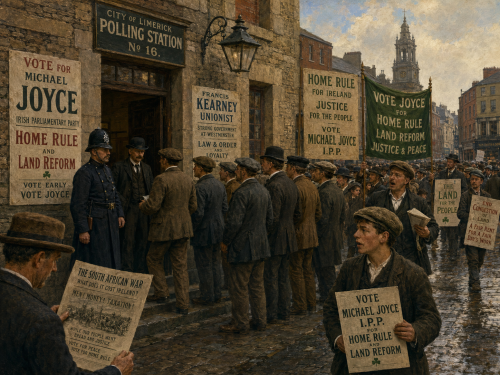
Electors in Limerick City are voting today as the United Kingdom general election continues across Ireland and Britain. The local contest places Michael Joyce of the reunited Irish Parliamentary Party against Francis Kearney, the Unionist candidate, and offers voters a direct choice between Home Rule nationalism and continued government from Westminster. Campaigning throughout the city has centred upon Irish self-government, land reform, the South African War and the ability of the newly reunited nationalist party to act with discipline. Across Ireland, polling is occurring on different days between late September and October rather than through one national election day.

National Programme

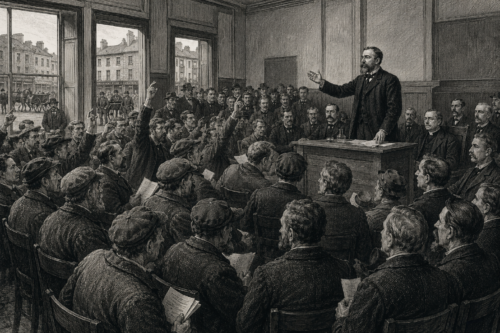
The reunited Irish Parliamenme Rule, land reform and the restoration of an Irish legislature responsible for domestic affairs. The programme places constitutional self-government and the condition of tenant farmers at the centre of nationalist politics following years of damaging division. In Limerick city and county, supporters are expected to welcome a policy connecting representation at Westminster with demands concerning land purchase, evicted tenants and overcrowded rural holdings. The agreement gives John Redmond’s leadership a defined political purpose while allowing the United Irish League to organise popular support through local branches, conventions and public meetings.

George Street, Limerick

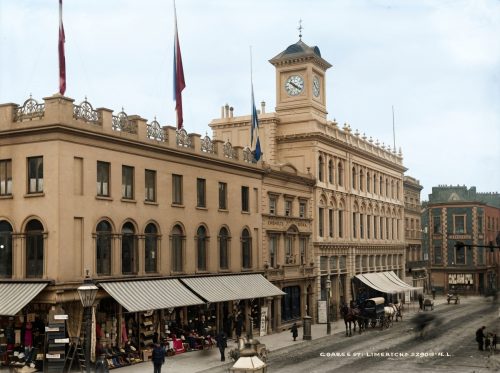
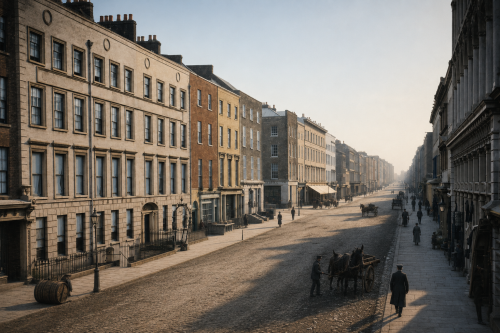
In 1900, George Street, now O’Connell Street, formed the commercial heart of Edwardian Limerick. Its broad thoroughfare was lined with elegant Georgian buildings, busy shops, hotels and offices, while horse-drawn carts, carriages and pedestrians filled the roadway. Street traders added colour and activity to the city’s principal avenue. Among its notable establishments were the Cruises Royal Hotel, MacMahon’s Temperance Hotel and respected merchants such as O’Mahony & Company. The street reflected Limerick’s growing prosperity at the opening of the twentieth century, combining refined architecture with energetic daily commerce and serving as a central meeting place for residents, visitors and travellers alike.

Jaunting Car On O’Connell Street

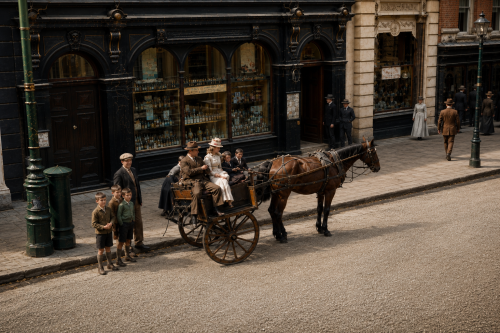
By 1937, O'Connell Street stood as Limerick's principal commercial thoroughfare, its Victorian and Georgian frontages housing chemists, drapers, and grocers that served the city's daily life. Ireland was still finding its footing after the Economic War with Britain, which had strained trade and agriculture through much of the decade, while the country prepared to adopt a new Constitution that same year. Horse-drawn jaunting cars remained a familiar sight on Limerick's streets even as motor vehicles grew more common, reflecting a city balancing older rhythms of trade and transport with the slow arrival of modern urban life in provincial Ireland.

Limerick Boat Club

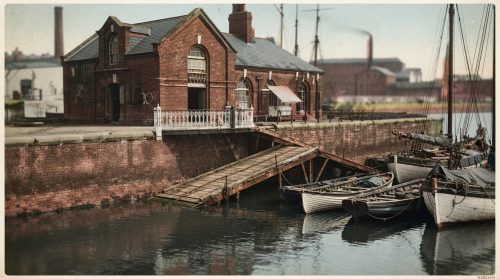
Limerick Boat Club, established in 1870, is one of the city’s oldest and most distinctive rowing institutions. Situated on the western side of Wellesley Pier beside Sarsfield Bridge, the club occupies a handsome Victorian red-brick clubhouse overlooking the River Shannon. As the second oldest rowing club in Limerick, it has played an important role in the city’s sporting and social life for generations. The club is particularly associated with recreational rowing, welcoming members who enjoy the river for exercise, companionship and leisure. Its historic setting and continuing community presence make it a familiar landmark on Limerick’s waterfront within the city.

A Busy Day On George Street

George Street, now O’Connell Street, formed the bustling commercial and social heart of Limerick around 1900. Elegant Georgian and Victorian façades lined the thoroughfare, their ornate shopfronts illuminated by gaslight and filled with goods for local shoppers. Horse-drawn carriages, jaunting cars and merchant carts crowded the roadway, while pedestrians in heavy coats and hats moved between businesses and hotels. The grand Cruises Royal Hotel stood among the street’s most prominent landmarks, welcoming merchants, travellers and visitors. This scene reflects the energy of late-Victorian Limerick before motor traffic transformed the city’s principal shopping street and historic urban centre during a changing era.

Now Sharing: Articles (154) Images (306) Total Items Archived (460)
Our Mission: 100,000 Items Total Percentage Achieved (0.46%)