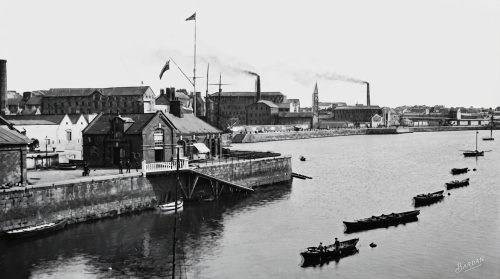
Adare Manor Colour Print

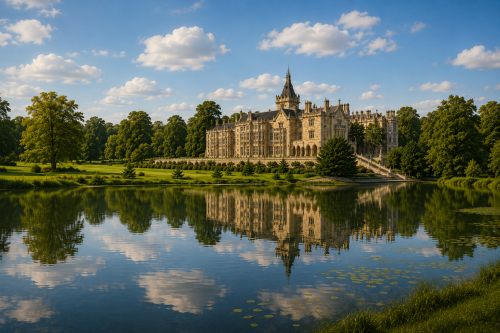
This variation of a colour print depicts Adare Manor beside the River Maigue in Adare, County Limerick. The imposing Gothic Revival residence is shown within landscaped grounds, reflected in the calm water and framed by mature trees. Often described as a calendar house, the manor is associated with 365 windows and 52 chimneys, representing the days and weeks of the year. Published in Francis Orpen Morris’s A Series of Picturesque Views of Seats of the Noblemen and Gentlemen of Great Britain and Ireland, the image celebrates the architecture, setting, and aristocratic character of one of County Limerick’s most recognisable historic estates and landmarks.
Nationalist Victory

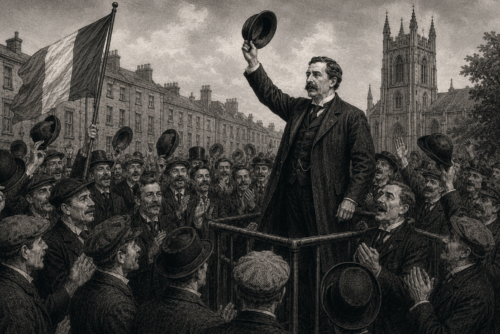
The reunited Irish Parliamentary Party has emerged from the general election holding seventy-seven of Ireland’s 103 seats at Westminster, confirming constitutional nationalism as the country’s dominant electoral force. The result will be welcomed in Limerick, where Michael Joyce has captured the city constituency by a decisive majority and joined John Redmond’s restored parliamentary organisation. Although the Conservative and Liberal Unionist alliance retains power throughout the United Kingdom, Irish voters have again returned an overwhelming majority of representatives committed to Home Rule. The figures demonstrate that nearly a decade of nationalist division has not destroyed support for parliamentary self-government.

Grange House And Georgian Estate Life

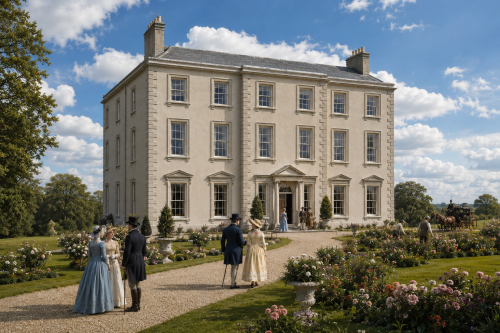
This reconstructed scene evokes the life of a prosperous Georgian country estate around the turn of the nineteenth century. The imposing house, formal gardens and gravel approach reflect the architectural taste and social order of the period. Elegantly dressed visitors, household servants, gardeners and horse-drawn carriages suggest activity surrounding such residences, where family life, hospitality and estate management met. Although idealised, the image offers a vivid historical impression of how the property may once have appeared when newly built, occupied and maintained, before decline altered its character and left only fragments of its former grandeur for future generations to study.

Fisheries Alarm

The Limerick Fishery Conservators intensified their opposition to the Shannon Water and Electric Power Bill when the Board of Public Works failed to provide the clear assurance they sought. At the board’s monthly meeting, Secretary Mr Hosford read a reply stating that the Commissioners would take whatever steps were necessary to protect their responsibilities for Shannon navigation, drainage, revenue and property. Members considered the answer carefully worded but inadequate. It did not state whether the Board would oppose the proposed lowering of Lough Derg or whether the fisheries would receive protection independent of the navigation interests under its direct control.

O’Connell Street, 1937

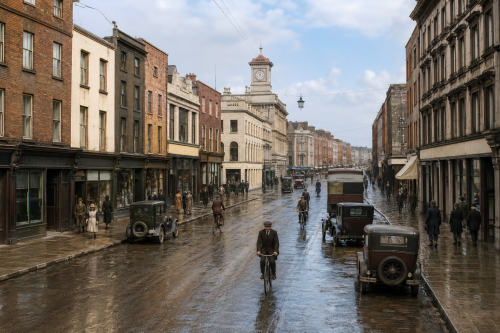
This 1937 view of O’Connell Street, historically known as George’s Street, captures Limerick’s principal commercial thoroughfare during a period of urban transition. Georgian façades, prominent shopfronts and the landmark clock tower frame a busy scene of pedestrians, cyclists, motorcars and public transport. Heavy coats and formal dress reflect everyday life before the Second World War, while traditional businesses line both sides of the street. Several buildings and upper storeys shown here were later altered or demolished during redevelopment. Despite extensive modernisation and pedestrianisation, O’Connell Street remains central to Limerick’s commercial, architectural and social identity within the changing modern city today.

Press Demands

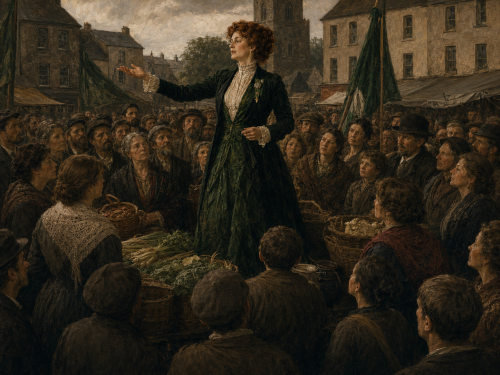
Nationalist newspapers increasingly presented reunion as essential if Ireland was to recover influence at Westminster after almost a decade of parliamentary division. Since the split over Charles Stewart Parnell’s leadership in 1890, rival Parnellite, anti-Parnellite and Healyite groups had competed for authority, funds and constituencies while claiming allegiance to the same national cause. Editorials and political reports warned that British governments could disregard Irish demands when nationalist MPs lacked common leadership and discipline. Reunion was consequently framed not simply as reconciliation between prominent personalities, but as the practical means by which Ireland might again act as a recognisable parliamentary force.

Potato Findings

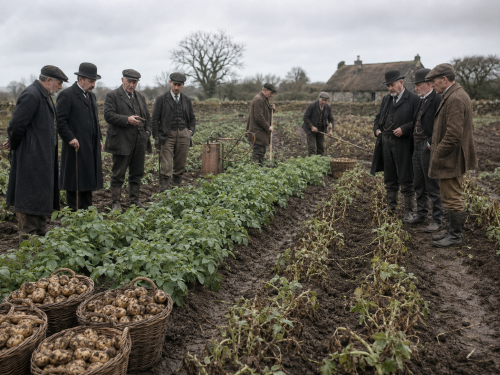
Important results from agricultural experiments conducted across County Limerick were reported on 23 January 1900. The trials examined whether a copper-sulphate solution could protect potato crops against disease and whether freshly introduced seed performed better than potatoes repeatedly grown on the same farms. The findings were encouraging. Even during a season when blight had been comparatively limited, treated plots produced sufficient improvement to repay the expense of spraying. For farmers whose income and household food supply depended heavily upon the potato harvest, the experiments offered practical evidence that preventive treatment could reduce risk rather than merely respond after disease had appeared.

Royal Dublin

Queen Victoria arrived in Ireland today for what will become the final Irish visit of her long reign. The royal programme is centred principally upon Dublin, where streets, public buildings, railway approaches and the route towards the Viceregal Lodge have been extensively decorated. Crowds gathered at Kingstown and throughout the capital to witness the arrival and procession. Although Limerick is not included prominently in the itinerary, reports of the ceremonies are being followed closely throughout the city and county by loyalists, nationalists, soldiers’ families, clergy, merchants and political organisations.

Shannon Bridge Under Construction (1987)

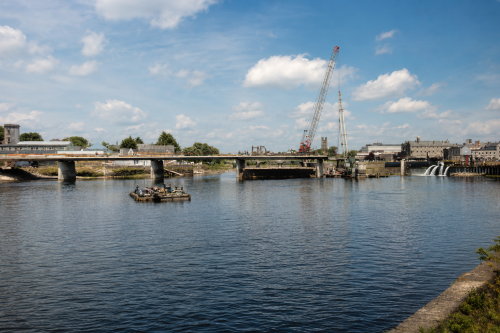
Shannon Bridge, opened on 30 May 1988, remains widely known in Limerick as the “New Bridge”, despite now being several decades old. This four-lane concrete girder crossing connects the Dock Road and Mallow Street area with the North Circular Road and Clancy Strand, providing an important inner-city relief route across the River Shannon. Soon after opening, it acquired another memorable nickname, the “Whistling Bridge”. Strong winds travelling up the Shannon Estuary passed through gaps in the original railings, producing a loud, eerie shrill sound. The problem was later reduced by fitting mesh grilles over the railings along the exposed crossing.

Now Sharing: Articles (154) Images (306) Total Items Archived (460)
Our Mission: 100,000 Items Total Percentage Achieved (0.46%)