Glenduff Castle Restored

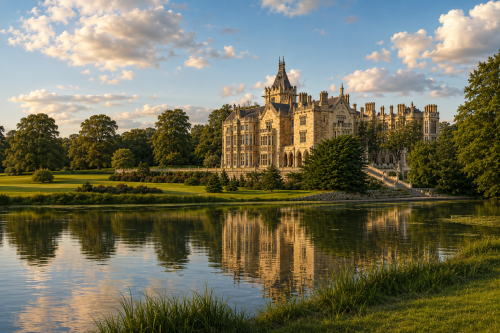
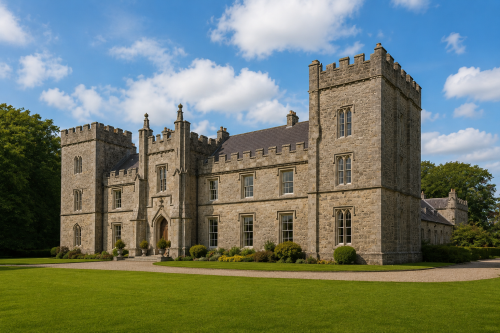
This reconstructed view presents Glenduff Castle in County Limerick as it may have appeared before its destruction in 1922. The imposing residence combines the fortified character of an earlier seventeenth-century tower house with the Gothic Revival additions created for the Ievers family around 1840. Tall crenellated towers, pointed windows, battlements and a formal central entrance give the building a commanding presence. Set within carefully maintained lawns and mature woodland, the castle reflects the scale and confidence of a nineteenth-century Irish country estate. The image offers a plausible visual impression rather than a definitive record of its original appearance or grandeur.

Birth of Jack O’Brien

On 3 February 1900, John Patrick “Jack” O’Brien was born in Ballyporeen, County Tipperary, an event that would eventually leave its mark on Ireland’s tourism sector. Though his arrival passed quietly at the time, O’Brien would become known in later decades as a visionary promoter of Irish tourism, helping to shape the country’s reputation as a destination for visitors from Britain, Europe, and America.

Dutch Billy Houses, Mary Street

Dutch Billy houses were once a distinctive feature of Limerick’s Englishtown and Irishtown districts. Characterised by narrow brick façades, steeply pitched gables and tall windows, the style developed in Irish towns during the late seventeenth and early eighteenth centuries. Many examples survived along Mary Street into the early twentieth century, preserving the appearance of Limerick’s merchant quarters. Their name is traditionally associated with King William III, although the term was applied broadly to gabled urban houses of the period. By around 1900, these buildings stood as reminders of the city’s commercial growth, architectural character and changing streetscape across previous centuries.

Barricades In Limerick

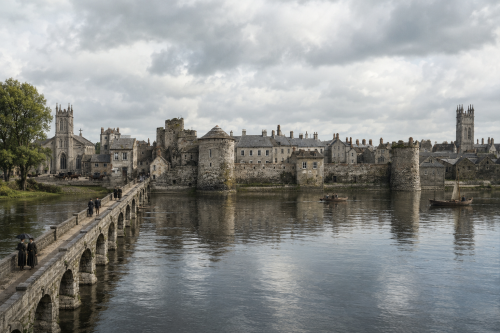
At Thomond Bridge in Limerick in 1923, a soldier stands guard beside a rough barricade near the Treaty Stone, a symbolic landmark now overshadowed by civil conflict. The scene evokes the tense aftermath of the Treaty split, when Anti-Treaty IRA forces and pro-Treaty National Army troops fought for control of the city. Sandbags, timber, stone, and street debris suggest hurried urban fortification, while the soldier’s watchful posture conveys danger and uncertainty. The bridge becomes both military checkpoint and historic threshold, linking Limerick’s medieval memory with the bitter street warfare that marked the Irish Civil War in the city that summer.

Busy Day On O’Connell Street

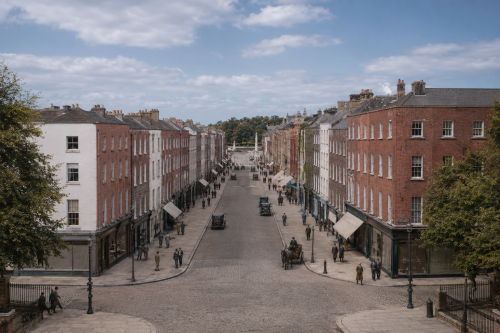
O'Connell Street is Limerick's main thoroughfare, stretching one mile from Arthur's Quay to The Crescent. Originally called George's Street, it was built in the late 1700s as the backbone of the Georgian "Newtown Pery" expansion. The street features elegant red-brick townhouses, many built around the year 1867.The city renamed the street in the 1920s to honor Daniel O'Connell, an Irish leader who fought for Catholic rights. The Crescent at the south end of the street features a famous monument dedicated to him. Throughout its history, the street has served as the city's primary center for shopping and commerce. This image 1940.

Adare Manor Colour Print

This variation of a colour print depicts Adare Manor beside the River Maigue in Adare, County Limerick. The imposing Gothic Revival residence is shown within landscaped grounds, reflected in the calm water and framed by mature trees. Often described as a calendar house, the manor is associated with 365 windows and 52 chimneys, representing the days and weeks of the year. Published in Francis Orpen Morris’s A Series of Picturesque Views of Seats of the Noblemen and Gentlemen of Great Britain and Ireland, the image celebrates the architecture, setting, and aristocratic character of one of County Limerick’s most recognisable historic estates and landmarks.

William Street Through Time

William Street stands among Limerick City’s most important commercial thoroughfares, laid out in 1789 as part of Edmund Sexton Pery’s planned Newtown Pery expansion. Named for his brother, William Cecil Pery, the street developed into a striking Georgian avenue of red-brick terraces, fanlight doorways, shops and residences. Beneath its pavements lie old cellars and drainage vaults dating from its earliest construction. Fires in 1860 and 1913 caused tragedy and prompted improvements to the city’s fire service. During the twentieth century, William Street evolved into a busy retail and transport artery serving generations of Limerick citizens and businesses across the city.

The Treaty Stone

The Treaty Stone stands on Clancy’s Strand, facing King John’s Castle across the River Shannon. Tradition holds that the Treaty of Limerick was signed upon this limestone block on 3 October 1691, ending the Williamite War in Ireland. Once used as a horse-mounting stone near Thomond Bridge, it was raised onto an ornate pedestal in 1865 by Mayor John Rickard Tinslay. The monument commemorates both surrender and betrayal, since promised protections for Catholics were later broken. Its military terms enabled thousands of Irish soldiers to leave for France and serve in Europe in the celebrated Flight of the Wild Geese.

Limerick from the Shannon, c. 1850s

By the mid-nineteenth century, Limerick remained one of Ireland's most strategically significant river cities, its fortunes long tied to the Shannon as a route for trade, defence, and settlement. The medieval walls and towers still visible in this period recalled centuries of contested history, from Norman fortification to the sieges of the seventeenth century that shaped the city's identity. Alphonse Dousseau's romanticised depiction reflects a wider mid-Victorian fascination among European artists with Ireland's older townscapes, capturing Limerick at a moment when its historic core coexisted with the pressures of modernisation, emigration, and post-Famine recovery reshaping much of the country during this era.

Dutch Billy Houses, Mary Street

Dutch Billy houses were once a distinctive feature of Limerick’s Englishtown and Irishtown districts. Characterised by narrow brick façades, steeply pitched gables and tall windows, the style developed in Irish towns during the late seventeenth and early eighteenth centuries. Many examples survived along Mary Street into the early twentieth century, preserving the appearance of Limerick’s merchant quarters. Their name is traditionally associated with King William III, although the term was applied broadly to gabled urban houses of the period. By around 1900, these buildings stood as reminders of the city’s commercial growth, architectural character and changing streetscape across previous centuries.

Now Sharing: Articles (182) Images (603) Total Items Archived (785)
Our Mission: 100,000 Items Total Percentage Achieved (0.78%)