Archived: 30 October 2026
Abstract
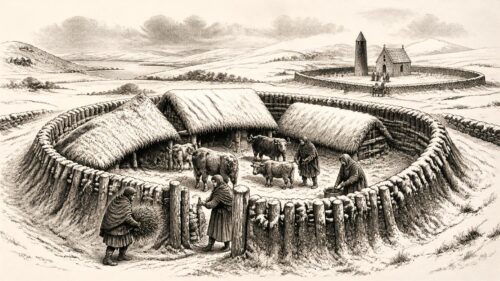
In 799, as conventionally dated despite annalistic chronological differences, Ireland’s fragmented politics intertwined warfare, dynastic rivalry, ecclesiastical authority and environmental hardship. Muirgius son of Tomaltach won the internal Connacht battle of Dún Ganiba, while Ailill of Uí Maine died. At Finnabair in Tethba, Murchad son of Domnall defeated forces including two Cenél Cairpri kings. Clann Cholmáin kinsmen killed Abbot Blathmac and treacherously slew Domnall son of Donnchad. Heavy snowfall killed people and cattle. Numerous abbots died, and Gormgal promulgated Patrick’s law in Connacht, affirming church influence. No Viking raid was recorded; domestic conflict and vulnerability dominated the year across Ireland.
Read Article
Archived: 30 October 2026
Abstract
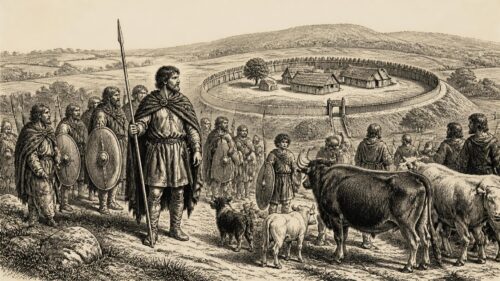
In 798, according to the Annals of Ulster’s chronology, Muirgius son of Tommaltach defeated fellow Connacht forces at Dún Ganiba, strengthening Uí Briúin Aí authority without securing permanent provincial control. Elsewhere, Murchad son of Domnall won at Finnabair in Tethba, where several rulers died. The annals also record kin-slaying, the murder of Abbot Blathmac, deaths among secular and ecclesiastical leaders, and severe snowfall that killed people and cattle. Gormgal son of Dindathach proclaimed Patrick’s law in Connacht, illustrating church power. These events reveal a politically fragmented Ireland shaped by warfare, succession, religious authority, and environmental vulnerability during this turbulent period.
Read Article
Archived: 30 October 2026
Abstract
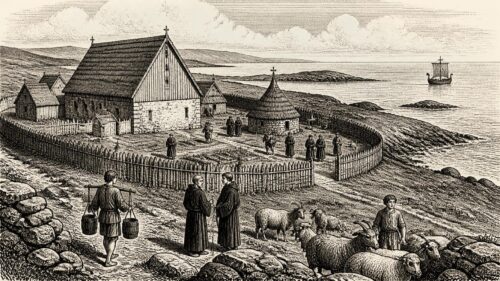
In 796, the Annals of Inisfallen briefly recorded heathens in Ireland, indicating the presence of non-Christian outsiders amid early Viking activity, but providing no evidence for a raid, landing site, settlement or permanent colony. Nearby annals record attacks on islands and churches, though chronology and corroboration remain uncertain. The same year saw the deaths of Colla son of Fergus, king of Connacht and rival to the rising Muirgius, and Máel Coba, king of Ciarraige Luachra. These events reveal politically fragmented, rural Ireland, where powerful churches and coastal communities faced emerging maritime threats without abandoning established dynastic, economic and religious life.
Read Article
Archived: 30 October 2026
Abstract
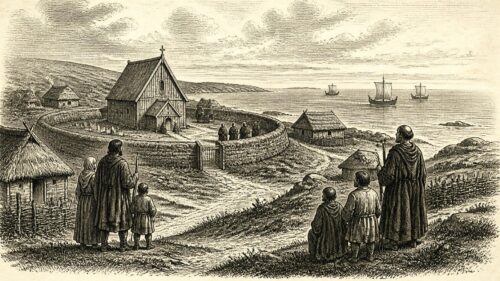
In 795, Irish annals recorded the burning of Rechru by heathens, generally identified as Scandinavian raiders and conventionally regarded as Ireland’s first surviving notice of Viking activity. Rechru’s location, possibly Rathlin or Lambay, and the raid’s scale remain uncertain; associated references may concern Skye or a shrine. The year also saw Leinster’s overking Bran Ardchenn and Queen Eithne killed by a rival dynast, weakening Donnchad Midi’s political alliances, and the death of Armagh’s abbot Faendelach. These events occurred within a rural, church-centred society connected by vulnerable seaways. They signalled emerging maritime insecurity, not immediate Scandinavian permanent settlement or Irish transformation.
Read Article
Archived: 30 October 2026
Abstract
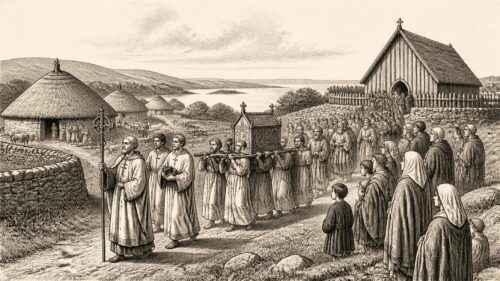
In 794, Irish annals record interconnected religious, political and maritime developments, while remaining sparse about causes and outcomes. The relics of Trian travelled on circuit, extending ecclesiastical authority among communities. Donnchad of Mide led forces supporting Leinster against Munster, while Áed son of Niall invaded Mugdorna Maigen, illustrating regional rivalry rather than national unity. Deaths of senior figures at Armagh, Bangor, Clonmacnoise, Tuaim Gréine and Cluain Bairenn marked significant ecclesiastical transitions, including female leadership. Reports of Scandinavian devastation around Britain warned Irish communities of mounting seaborne danger, preceding securely recorded attacks on Irish islands in following years and transforming horizons.
Read Article
Archived: 30 October 2026
Abstract
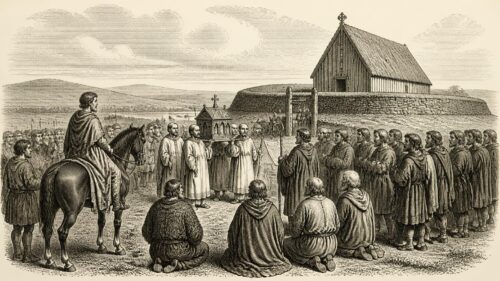
In 793, Ireland’s annals depict religious institutions as instruments of regional power rather than a unified kingdom. Muirgius of Connacht supported the promulgation of Comán’s law, while Munster’s Artrí was formally acknowledged as king alongside Ailbe’s law, probably strengthening Emly’s ecclesiastical claims. Armagh suffered the death of abbot Dub dá Leithe, other notable obituaries, and violent violation by Uí Chremthainn, followed by restoration. Tóla’s relics were taken on circuit, extending sacred authority beyond monasteries. In south-west Munster, the king of Corcu Duibne died at Conchenn. Chronological uncertainties remain, and however no securely recorded Viking raid occurred in Ireland that year.
Read Article
Archived: 30 October 2026
Abstract
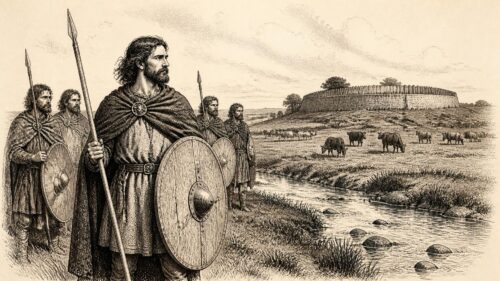
In 792, Muirgius son of Tommaltach of Síl Muiredaig defeated and killed Cináed son of Artgal at Sruth Cluana Argait, probably Cloonargid, establishing his effective overkingship of Connacht. A related battle at Ard Maic Rími crushed Uí Ailello forces and killed rulers from Cairpre and Bréifne, strengthening Muirgius without ending Connacht’s political rivalry. Annals also record deaths of kings in Dál nAraidi, Uí Fhiachrach, Dál Riata and elsewhere. Máel Ruain, founder of Tallaght’s influential religious community, died peacefully. These compressed notices reveal an Ireland shaped by contested dynastic authority, ecclesiastical succession, agricultural communities, and interconnected secular and religious power structures.
Read Article
Archived: 30 October 2026
Abstract
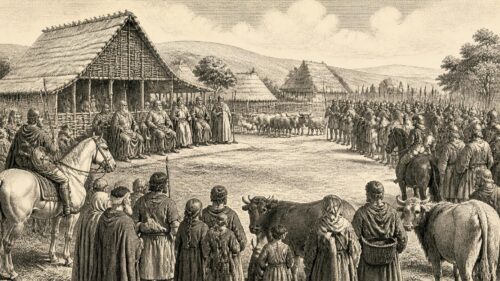
In 790, recorded in the Annals of Ulster under a chronologically disputed heading, Donnchad Midi of Clann Cholmáin defeated Áed Ingor of Cenél nÉogain at Tailtiu, the prestigious Uí Néill assembly site. Allies from Uí Chremthainn died with Áed’s force, demonstrating complex political connections. Diarmait of Tethba was killed at Ard Ablae, while regional kings of Uí Maine and Airthir also died. Obituaries marked leading clerics’ deaths across major churches, and Connacht’s king Artgal died at Iona. Rural farming, ecclesiastical estates and assemblies underpinned society. No securely dated Viking raid belongs to this year; indigenous rivalry dominated political life throughout.
Read Article


