Archived: 28 October 2026
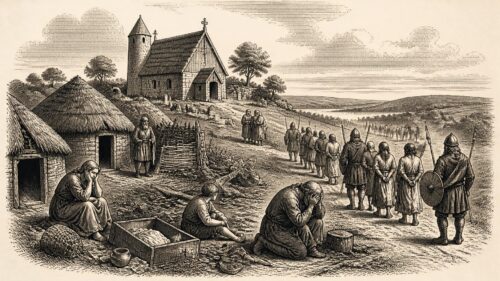
Abstract
In 895, during the year, according to annalistic chronology, Dublin raiders led by Glún Iarainn plundered Armagh, reportedly carrying off 710 captives and damaging its church. The attack exposed the vulnerability of a major ecclesiastical and political centre. Elsewhere, Dub Lachtna of Caisel and churchman Máel Petair died; Cellach, Brega’s leading heir, was treacherously killed; and Muiredach of Ulaid fell in regional conflict. Heavy snowfall and great scarcity disrupted subsistence, likely worsening hardship without proving direct causes for violence. These fragmented records portray Ireland as interconnected kingdoms and churches, where sacred wealth, political succession, and ordinary survival remained precariously entwined.
Read Article
Archived: 28 October 2026
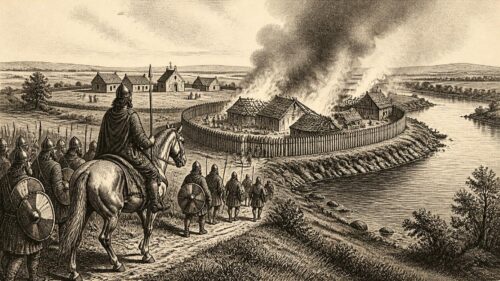
Abstract
In 867, Cennétig mac Gaíthéne of Loígis and Máel Ciaráin son of Rónán burned Amlaíb’s fort at Clondalkin, near Viking Dublin, reportedly killing one hundred foreign leaders. The attack, recorded with chronological variation in Irish annals, followed or coincided with dynastic division among Dublin’s Scandinavian rulers after Auisle’s killing. It checked, but did not end, Viking power; Dublin remained active and any subsequent assault is uncertain. Clondalkin’s monastic setting illustrates competition for resources and communications. The year also saw Gaelic succession conflicts and clerical deaths, while churches, literacy, trade, craft production and maritime networks endured amid political fragmentation and warfare.
Read Article
Archived: 29 October 2026
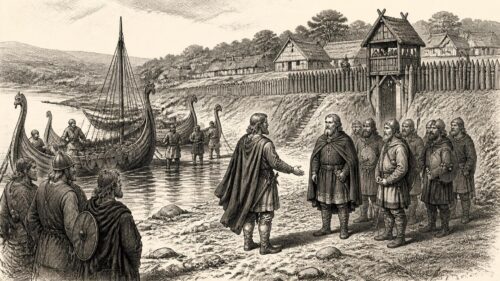
Abstract
In 853, Amlaíb, son of the king of Laithlind, arrived in Ireland, where Scandinavian groups submitted to him and tribute was extracted from Irish communities. Although often linked with Norway, Laithlind’s location remains uncertain, and the annals do not establish a unified foreign conquest. The year also saw Norsemen kill Cathmal, co-king of Ulaid; Echtigern of south Leinster murdered in an internal struggle; and Áilgenán, king of Cashel, die. Local Munster successions and deaths of prominent clerics reflected Ireland’s multiple political and ecclesiastical centres. Annalistic dating varies, while evidence chiefly records elites, violence and exceptional events, leaving ordinary life obscure.
Read Article
Archived: 29 October 2026
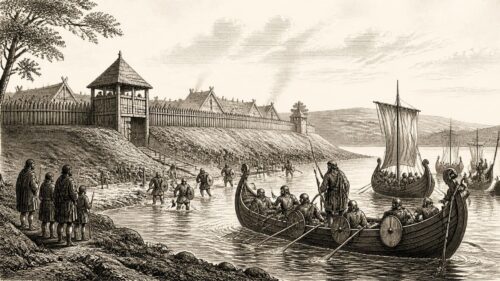
Abstract
In 851, rival Viking groups contested Ireland’s eastern seaways. The Dubgenti attacked Dublin’s Finngenti, killing many and plundering their longphort, but suffered heavy losses when attacking the defended base at Linn Duachaill near Annagassan. These events reveal competition for ships, wealth, captives and strategic ports rather than a unified Viking campaign. Meanwhile, Máel Sechnaill mac Máele Ruanaid, king of Tara, convened rulers and churchmen at Armagh, strengthening northern alliances and authority. He also helped kill Cináed of Cianachta, a rebellious regional rival, despite guarantees. Foreign violence killed Eochu of Fir Rois. The year illustrates contested military, political and ecclesiastical power.
Read Article
Archived: 29 October 2026
Abstract
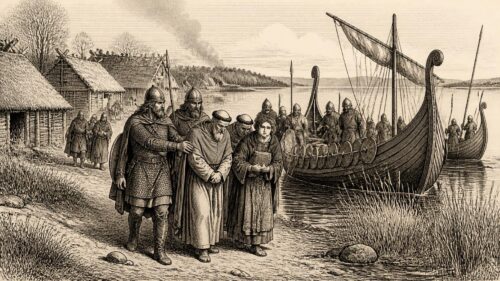
In 840, Viking raiders operating from Lough Neagh plundered Lugbad, capturing bishops, priests and scholars, demonstrating an inland capacity to hold prisoners. Armagh was also burned, although earliest evidence does not identify those responsible. Simultaneously, Feidlimid mac Crimthainn of Munster invaded the midlands and reached Tara, challenging Niall Caille’s northern Uí Néill authority; Niall countered in contested border districts. The year exposed links between waterways, churches, learning and royal power. Annalistic chronology remains uncertain, particularly regarding Viking camps at Dublin and Linn Duachaill, conventionally dated to 841. Nevertheless, 840 marked a transition towards sustained Viking operations and intensified interprovincial rivalry.
Read Article
Archived: 29 October 2026
Abstract
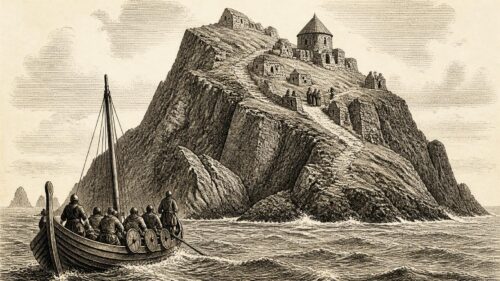
In 824 Scandinavian raiders attacked two Irish religious communities, Bangor in Ulaid and Sceilig off Kerry. At Bangor, they plundered the monastery, destroyed an oratory and violently disturbed the shrine and relics of its founder, Comgall, damaging a centre of dynastic and ecclesiastical prestige. At remote Sceilig, Étgal was captured and died of hunger and thirst, providing a rare named victim. Annalistic dating confirms both incidents despite manuscript chronological complications. The raids demonstrate mobile maritime danger across northern Irish Sea and Atlantic routes, not a unified campaign or permanent settlement. They marked early Viking-age insecurity; permanent Scandinavian bases came later.
Read Article
Archived: 29 October 2026
Abstract
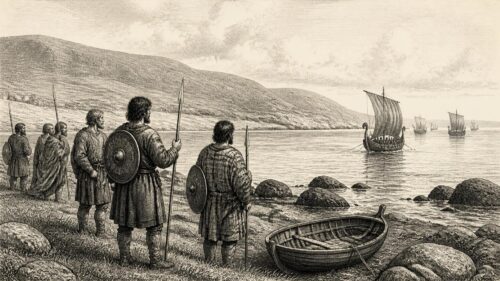
In 812, Irish communities faced Scandinavian raids along the western and south-western coasts. Men of Umall killed raiders, while heathens slaughtered Conmaicne; Cobthach, king of Loch Léin, also defeated a raiding party in Munster. These local successes did not end the threat, as later attacks showed. In Connacht, Muirgius son of Tomaltach plundered southern territories amid Uí Briúin expansion, while the Calraige of Lurg were slaughtered by the Uí Briúin. Daire’s law was promulgated in Connacht, reflecting ecclesiastical and political networks. Deaths of prominent church leaders emphasised churches’ administrative, scholarly and social importance throughout Ireland during an unsettled historical year.
Read Article
Archived: 30 October 2026
Abstract
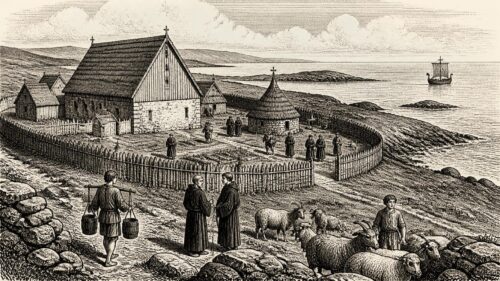
In 796, the Annals of Inisfallen briefly recorded heathens in Ireland, indicating the presence of non-Christian outsiders amid early Viking activity, but providing no evidence for a raid, landing site, settlement or permanent colony. Nearby annals record attacks on islands and churches, though chronology and corroboration remain uncertain. The same year saw the deaths of Colla son of Fergus, king of Connacht and rival to the rising Muirgius, and Máel Coba, king of Ciarraige Luachra. These events reveal politically fragmented, rural Ireland, where powerful churches and coastal communities faced emerging maritime threats without abandoning established dynastic, economic and religious life.
Read Article
Archived: 30 October 2026
Abstract
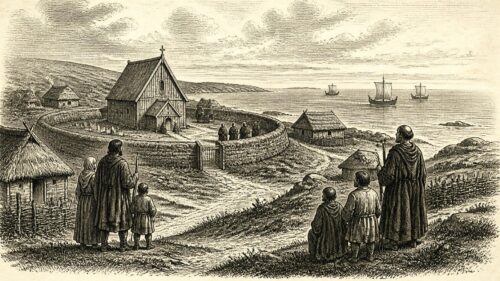
In 795, Irish annals recorded the burning of Rechru by heathens, generally identified as Scandinavian raiders and conventionally regarded as Ireland’s first surviving notice of Viking activity. Rechru’s location, possibly Rathlin or Lambay, and the raid’s scale remain uncertain; associated references may concern Skye or a shrine. The year also saw Leinster’s overking Bran Ardchenn and Queen Eithne killed by a rival dynast, weakening Donnchad Midi’s political alliances, and the death of Armagh’s abbot Faendelach. These events occurred within a rural, church-centred society connected by vulnerable seaways. They signalled emerging maritime insecurity, not immediate Scandinavian permanent settlement or Irish transformation.
Read Article


