Archived: 26 October 2026
Abstract
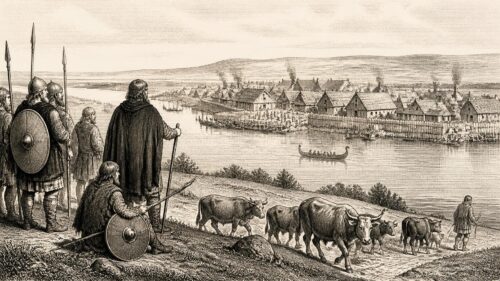
In 968, Domnall ua Néill, king of Tara, campaigned in Leinster, ravaged territory between the Barrow and the sea, exacted cattle tribute, and blockaded the Leinstermen and Dublin’s Scandinavian rulers for two months. The annals do not record Dublin’s capture. In Munster, Mathgamain son of Cennétig raided Uí Énna Áine, where Cathal son of Fogartach died, continuing Dál Cais expansion after successes against Limerick. Imlech Ibuir, or Emly, was plundered by unnamed forces. Deaths of prominent ecclesiastical successors and King Flaithbertach highlighted political and religious change. The records depict fragmented authority exercised through warfare, tribute, mobility and control of resources.
Read Article
Archived: 26 October 2026
Abstract
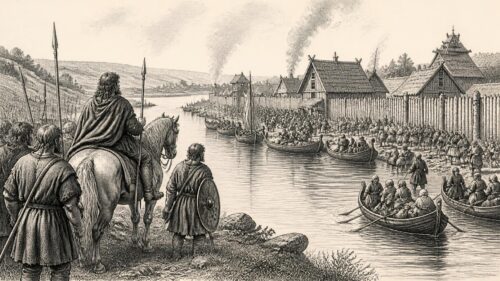
In 967, Mathgamain son of Cennétig, leader of the rising Dál Cais, defeated Limerick’s Norse forces at Sulchuait and burned the port the following morning. Recorded by Inisfallen, the episode weakened but did not end Norse power: Limerick and its ruler Ímar remained significant, requiring further action in 972. The victory strengthened Mathgamain’s claim to Munster kingship, though later tradition disproportionately associated it with his brother Brian Boru. Limerick was a commercially and strategically vital Norse-Gaelic settlement, not merely a raiders’ base. The year saw Connacht king Ferga Ua Ruairc die and Mungret abbot Conn son of Corcrán pass away.
Read Article
Archived: 26 October 2026
Abstract
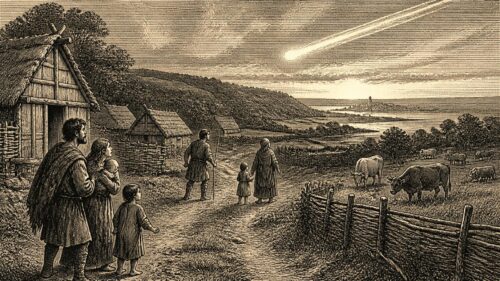
Conventionally assigned to 961, though annalistic chronologies differ, the year is chiefly marked by a reported fiery arrow travelling across Leinster from the south-west towards Áth Cliath, killing people and livestock. Its nature and stated thousand deaths remain unverifiable, but the notice records an exceptional environmental shock affecting agrarian communities and Dublin’s hinterland. The annals also note deaths of rulers in Uí Briúin Seóla, Dartraige and Cashel, the latter two killed by their own people, revealing unstable regional lordship. Ecclesiastical leaders at Clogher, Cork and Lismore died, underscoring churches’ institutional importance. Together, the entries depict politically fragmented, interconnected tenth-century Ireland.
Read Article
Archived: 26 October 2026
Abstract
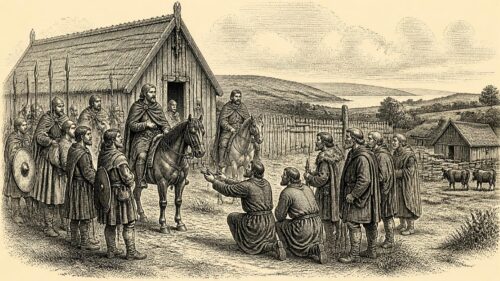
For Ireland in 960, the surviving record is brief but unusually revealing. It does not offer a single decisive battle, a royal inauguration or a named treaty. Instead, the nearest contemporary annalistic sequence preserves a cluster of movements: a northern ruler took pledges in Dál Araide; a man of the Dublin dynasty suffered defeat at an otherwise uncertain place; a figure called Muiredach made a wide circuit of Connacht; and Cathmug, associated with the great church of Lismore, died. Read carefully, these notices illuminate the practical business of power in a country of many kings, river routes and ecclesiastical communities.
Read Article


