Archived: 26 October 2026
Abstract
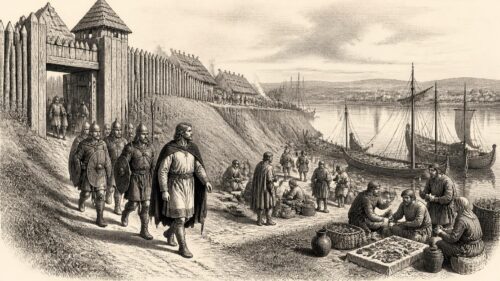
For Ireland, 979 is a year best approached through a small but unusually revealing cluster of annalistic notices. No surviving source supplies a continuous narrative, and none explains every motive or consequence. Yet the recorded capture of Domnall Claen, king of Leinster, by the foreigners of Dublin exposes the political weight of the Hiberno-Norse town at the mouth of the Liffey. Deaths and killings among rulers in Offaly, Dál Araide and Cenél Conaill show, at the same time, that power remained fragmented across many regional kingdoms. Notices of a Kildare church leader, a Clonmacnoise scholar-cleric and a foremost man of
Read Article
Archived: 26 October 2026
Abstract
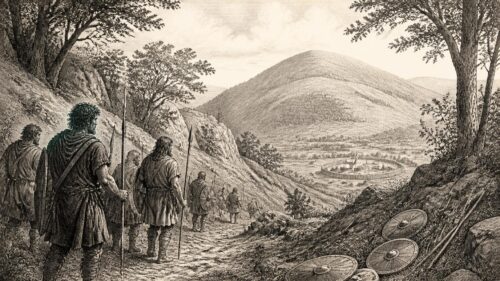
In 978, Ireland’s annals record conflict, illustrating fragmented authority among regional kings, churches and maritime powers. At Belach Lechta, Brian son of Cennétig defeated and killed Máel Muad of Cashel, securing leadership in Munster after his brother Mathgamain’s death and establishing the basis for his later ascendancy. Cork and Lismore were plundered and burned, though attackers and circumstances remain unknown. Dublin defeated Leinster at Bithlann, killing King Úgaire, while Airgialla routed Cenél Conaill in the north. Fiachra, superior of Iona, died. These events disrupted communities dependent on farming, cattle, church wealth and lordship, redistributing power without creating a unified Ireland.
Read Article
Archived: 26 October 2026
Abstract
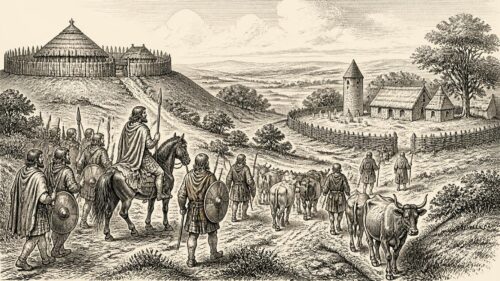
In 971, Domnall ua Néill, Northern Uí Néill king of Tara, was expelled from Mide by Clann Cholmáin, exposing the fragility of his claimed supremacy. He swiftly returned with an army, plundering churches, forts and communities in Mide and raiding Uí Fhailgi and Fotharta to punish resistance and display power. The year also saw the death of Niall son of Áed, king of Ulaid, amid eastern Ulster instability; ecclesiastical succession changes at Ciarán’s and Cainnech’s communities; and Cellach ua Nuadat’s killing by foreigners at a refectory. These entries reveal conflict affecting rural society, churches, dynastic politics and Irish Sea connections.
Read Article

