army reservists

Divided Loyalties

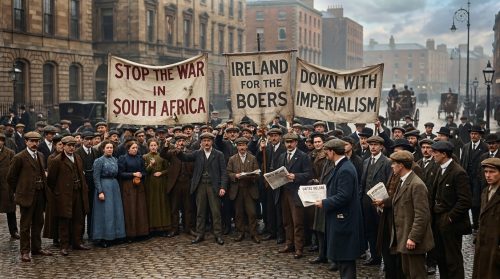
Irish public opinion during the South African War was divided in a manner that exposed the complicated relationship between nationalism, empire and military service. Nationalist newspapers and political organisations frequently expressed sympathy for the Boer republics, presenting their resistance to British expansion as a struggle resembling Ireland’s own opposition to imperial rule. Boer victories were sometimes welcomed as humiliations for a government that continued to deny Irish self-government. Public meetings, songs, newspaper commentary and street demonstrations gave the pro-Boer cause considerable visibility, making Ireland one of the strongest centres of anti-war and pro-Boer feeling in Europe.
Mounted Volunteers

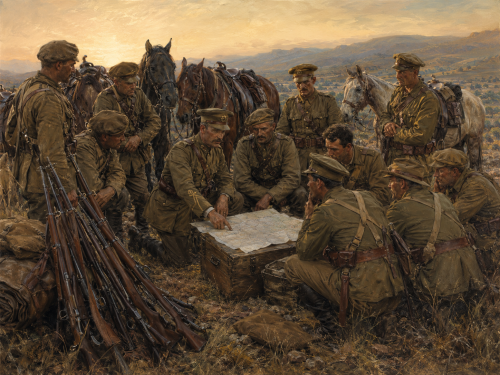
A Special Army Order issued at the beginning of January 1900 established the machinery for recruiting the Imperial Yeomanry, a volunteer mounted force intended for service in South Africa. The decision followed the British defeats of December 1899, when Boer commandos demonstrated the effectiveness of mobile riflemen operating across difficult country. Existing yeomanry units were invited to provide trained volunteers, while suitable civilians could also enlist for a limited period of overseas service. The new formation was organised as mounted infantry rather than conventional cavalry, emphasising movement, marksmanship and the ability to fight after dismounting.

Reservist Released

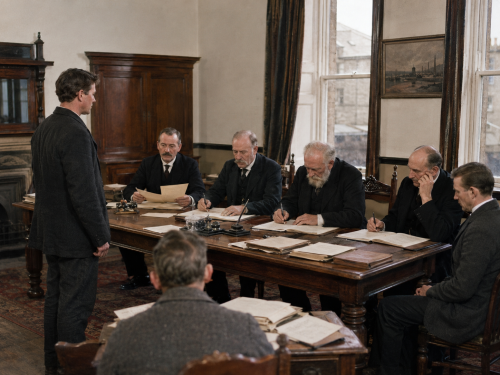
The Limerick Board of Guardians granted six months’ leave without salary to James Ryan, an employee who had been summoned to rejoin the colours during the South African War. The decision, reported on 25 January 1900, allowed Ryan to answer his military obligation without immediately forfeiting his position under the Board. Guardians also agreed that a temporary worker should be appointed during his absence, ensuring that the institution’s daily duties continued without interruption. The arrangement balanced the demands of wartime mobilisation with the Board’s responsibility towards a member of staff called away from civilian employment.

Recruitment Intensifies

A fresh sequence of enlistments was entered for the Royal Irish Regiment as recruiting activity increased during the South African War. The new names reflected the widening demand for soldiers after the British Army suffered heavy reverses during the closing weeks of 1899. Recruiting offices were encouraging suitable men to enter regular service, while reservists were being recalled and additional forces prepared for overseas deployment. For many Irish families, the war was no longer a remote imperial struggle reported from distant battlefields. It had begun to influence employment decisions, household income and the movements of young men across towns and rural districts.

Now Sharing: Articles (154) Images (296) Total Items Archived (450)
Our Mission: 100,000 Items Total Percentage Achieved (0.45%)