
Archived: 7 October 2026
Abstract
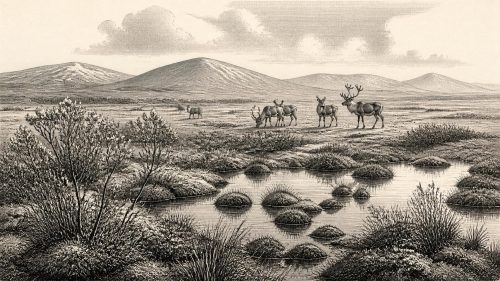
Thirty thousand years BCE is not a precise recoverable Irish date but falls within Marine Isotope Stage 3. At Derryvree, County Fermanagh, radiocarbon-dated freshwater deposits, sealed between tills, record an ice-free interval before later glaciation. Their plants, insects and sediments reveal cold, treeless tundra wetlands with pools, mosses, sedges and short seasonal productivity. Castlepook Cave, County Cork, yielded diverse remains of reindeer, mammoth, horse, predators and other open-country fauna, though accumulation spans time. A cut-marked reindeer femur may indicate human activity, but proves neither settlement nor society. Together, the sites document severe yet habitable, climatically unstable Late Pleistocene Irish landscapes.
Read Article
Archived: 6 October 2026
Abstract
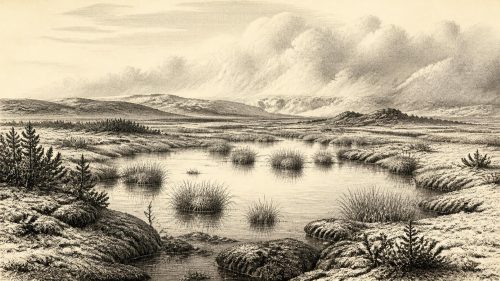
Around 30,214 BCE, Ireland lay within the fluctuating cold of Marine Isotope Stage 3, preceding Last Glacial Maximum ice cover. Derryvree, County Fermanagh, preserves freshwater organic sediments between glacial tills, indicating treeless, open wetland with mosses, sedges and aquatic plants during an ice-free interval. Greenagho and Crag Cave likewise indicate episodic environmental improvement. Castlepook Cave demonstrates a diverse MIS 3 fauna, including mammoth, reindeer, predators and cold-adapted mammals, although dates and associations remain uncertain. Lower sea levels altered coasts and possible routes. No secure evidence proves settlement; a modified reindeer bone only tentatively suggests human activity. Later ice buried evidence.
Read Article
Archived: 1 October 2026
Abstract
Modern label 30,412 BCE cannot identify a recoverable Irish historical moment. Derryvree, County Fermanagh, preserves freshwater silts between glacial tills, radiocarbon dated broadly to 36,900–31,700 calibrated years before present. Its juniper, sedges, mosses and insects indicate an open, treeless wet-tundra of pools and periglacial conditions, later overridden by ice. Castlepook Cave, County Cork, contains mixed remains of reindeer, mammoth, predators and other cold-climate fauna, accumulated across extended periods. A possibly cut-marked reindeer femur may indicate human activity, but proves neither settlement nor occupation. Evidence supports a changing Late Pleistocene environment, while political, social and cultural histories remain unknowable in Ireland.
Read Article

Archived: 30 September 2026
Abstract
Derryvree, County Fermanagh, preserves freshwater silts deposited between glacial advances during Marine Isotope Stage 3. Radiocarbon evidence places the deposit broadly between c. 34,950 and 29,750 BCE, so 30,447 BCE is only an approximate point within its range. Mosses, sedges, aquatic plants, insects and pollen indicate a cold, treeless tundra wetland with shallow pools, not continuous ice or woodland. Elsewhere, Castlepook Cave yielded cold-adapted mammals and a reindeer bone possibly cut by humans. This suggestive evidence cannot establish settlement or culture. Ireland's record instead documents changing ice margins, local habitats, intermittent animal access, and a possible brief human visit there.
Read Article

Archived: 29 September 2026
Abstract
30,498 BCE is a modern chronological reference, not a recorded Irish year. At Derryvree, County Fermanagh, freshwater silts between two glacial tills show a local ice-free interval during Marine Isotope Stage 3, although they cannot represent all Ireland or a single season. Radiocarbon calibration provides only a broad date range. Plant, moss, pollen and insect remains indicate treeless, cold, wet tundra with pools, sedges and short growing seasons. Cave fauna elsewhere confirms wider Pleistocene mammals, cautiously interpreted. No secure human settlement is known; a marked reindeer bone merely suggests possible Upper Palaeolithic activity. Later ice expansion buried and eroded record.
Read Article

Archived: 28 September 2026
Abstract
Although 30,512 BCE is a modern, falsely precise label, evidence from MIS 3 illuminates Ice Age Ireland. At Derryvree, Fermanagh, organic freshwater silts between glacial tills, dated broadly to 36,900–31,700 cal BP, record an ice-free tundra wetland during fluctuating conditions. Crag Cave speleothems indicate intermittent milder phases, while low sea levels altered, but did not simply create, connections with Europe. Castlepook Cave’s diverse fauna demonstrates cold-stage animal presence; a marked reindeer bone may signal human butchery, not settlement. No evidence supports contemporary Irish societies or institutions. Later glaciation obscured much evidence, leaving fragmentary records of a dynamic, ecologically connected landscape.
Read Article

Archived: 26 September 2026
Abstract
At c. 30,649 BCE, Ireland’s history is reconstructed from environmental evidence rather than records. Inter-till sediments at Derryvree, County Fermanagh, dated broadly to 36,900–31,700 calibrated years BP, preserve a local ice-free freshwater interval between glacial advances. Plant, moss, pollen and insect remains indicate a cold, treeless periglacial wetland supporting aquatic vegetation and tundra-like ground cover. Cave fauna elsewhere, including mammoth, reindeer and hyena, demonstrates changing animal movements but cannot define Derryvree’s precise fauna. Growing ice sheets later transformed the landscape. No secure evidence establishes any human settlement, society or activity; the period reflects ecological resilience, shifting drainage and repeated glaciation.
Read Article

Archived: 25 September 2026
Abstract
30,674 BCE is a modern label within Marine Isotope Stage 3, not a reconstructable Irish year. At Derryvree near Maguiresbridge, freshwater silts, dated broadly to 36,900–31,700 calibrated years BP, lay between glacial tills, showing a cold, tundra-like, intermittently ice-free landscape of sedges, mosses, pools and sparse vegetation. Ireland experienced unstable climate, shifting ice margins and altered coastlines. Castlepook Cave preserves diverse Ice-Age fauna, including mammoth, reindeer, giant deer and hyena, accumulated over time. A possibly cut-marked reindeer bone may indicate early human presence, but proves neither settlement nor continuous occupation. No political, religious or social history can be securely reconstructed.
Read Article

Archived: 15 September 2026
Abstract
Around 31,685 BCE, a notional date within Marine Isotope Stage 3, Ireland's evidence records changing Ice Age environments rather than a datable event. Organic silts at Derryvree, Fermanagh, preserved between glacial tills, indicate an ice-free, cold, treeless wetland of grasses, sedges, herbs, mosses and pools, later overridden by ice. Ireland was approaching, not experiencing, the Last Glacial Maximum. Castlepook Cave's mixed fauna demonstrates cold-stage animal diversity, but accumulated over separate periods. A possibly tool-marked reindeer femur may indicate an early human visit, yet lacks secure context. No settlement, culture or continuous population can be inferred; later glaciation further obscured evidence.
Read Article

Archived: 9 September 2026
Abstract
About 31,862 BCE, Ireland lay within the volatile MIS 3 phase of the Late Pleistocene, before the Last Glacial Maximum. Derryvree sediments in Fermanagh indicate an ice-free but severe tundra wetland, supporting mosses, insects and freshwater life between roughly 36,900 and 31,700 years ago. Castlepook Cave in Cork preserves bones of mammoth, reindeer, giant deer, hyaena and other cold-adapted animals, although its deposits span millennia and do not represent one community. A possibly cut-marked reindeer bone suggests brief human activity, not settlement. Ireland was a changing landscape of wetlands, grazing animals, predators, caves and fluctuating ice during this remote period.
Read Article

