Membership is completely free, giving members unlimited access to all available resources, services, features, and benefits without any restrictions or fees.
Welcome back. Sign in to continue enjoying unlimited access to all available resources, services, features, and member benefits at no cost.
The year opened under Bertie Ahern, Fianna Fáil leader and Taoiseach since 1997, heading a coalition with the Green Party and Progressive Democrats. His resignation on 6 May ended an unusually long tenure at the centre of Irish politics, one associated both with the Good Friday Agreement era and with the years of rapid economic growth. Brian Cowen, formerly Minister for Finance and Tánaiste, became Taoiseach on 7 May. He inherited a government with the same Dáil majority but a far less favourable economic environment.
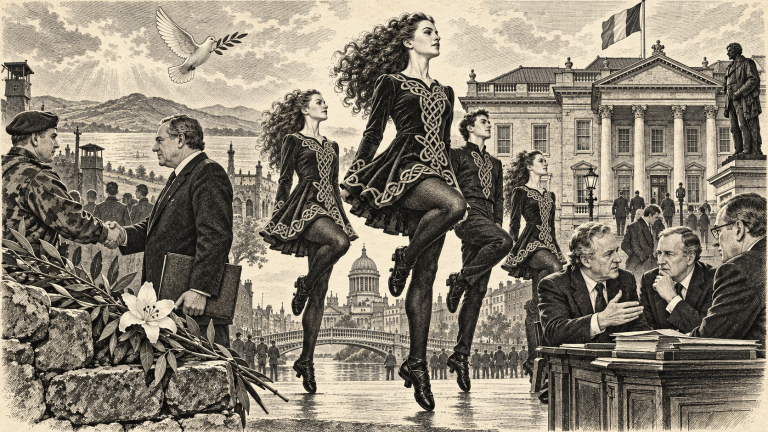
On 30 April the Eurovision Song Contest was held at the Point Theatre in Dublin. Ireland won the contest for the third consecutive year, with Paul Harrington and Charlie McGettigan performing “Rock ’n’ Roll Kids”. The interval performance, however, became the event remembered far beyond the competition. Riverdance, composed by Bill Whelan and featuring dancers Jean Butler and Michael Flatley, combined traditional Irish dance with contemporary staging, music and choral performance.
The government formed on 12 January 1993 brought Fianna Fáil and Labour together in coalition for the first time. Albert Reynolds remained Taoiseach while Dick Spring became Tánaiste and Minister for Foreign Affairs. The arrangement reflected the fragmented result of the November 1992 general election, when Labour had made major gains and neither of the traditional large parties could easily form a government alone.