Membership is completely free, giving members unlimited access to all available resources, services, features, and benefits without any restrictions or fees.
Welcome back. Sign in to continue enjoying unlimited access to all available resources, services, features, and member benefits at no cost.
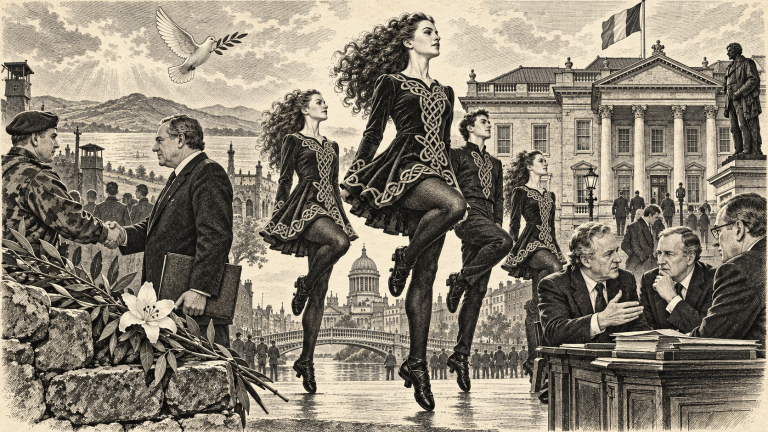
On 30 April the Eurovision Song Contest was held at the Point Theatre in Dublin. Ireland won the contest for the third consecutive year, with Paul Harrington and Charlie McGettigan performing “Rock ’n’ Roll Kids”. The interval performance, however, became the event remembered far beyond the competition. Riverdance, composed by Bill Whelan and featuring dancers Jean Butler and Michael Flatley, combined traditional Irish dance with contemporary staging, music and choral performance.
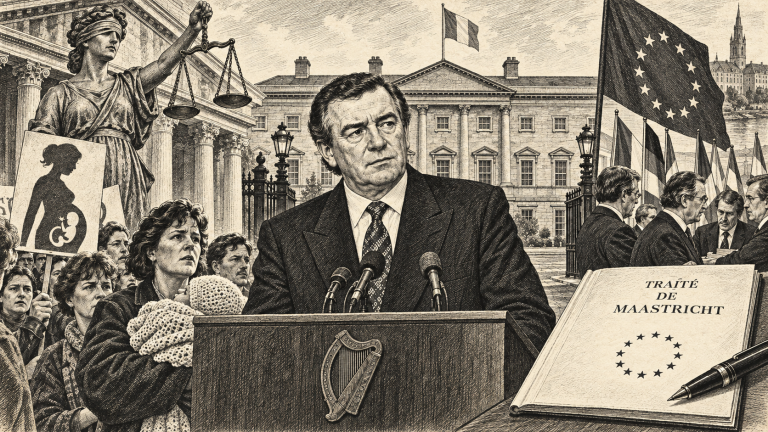
Charles Haughey resigned as Taoiseach in February after years of controversy and internal Fianna Fáil pressure. Albert Reynolds, who had challenged his leadership and had been dismissed as Minister for Finance the previous November, won the party leadership and became Taoiseach. Reynolds inherited a Fianna Fáil–Progressive Democrats coalition but immediately presented himself as a different kind of leader, promising a more direct style of government and a renewed effort to address Northern Ireland.
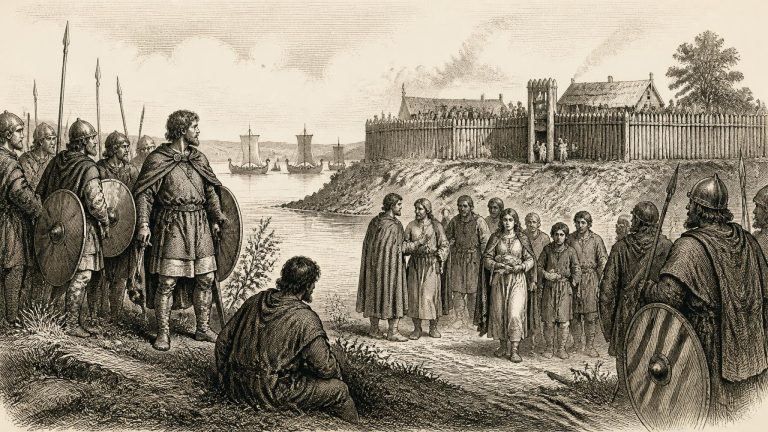
Under the annal-year 980, Domnall ua Néill, overking of Ireland and king of Tara, died at Armagh after penance. His death made succession urgent among the dominant Uí Néill kindreds. Máel Sechnaill, son of Domnall mac Donnchada of Clann Cholmáin in Mide, emerged as the new ruler. Chronicon Scotorum explicitly says that he began to reign over Ireland, while the Annals of Tigernach record that “Máel Sechnaill the Great” began to rule. Such titles reveal political aspiration as much as settled constitutional fact. They nevertheless show that contemporaries or near-contemporaries understood this as a transfer of authority of island-wide consequence.