Membership is completely free, giving members unlimited access to all available resources, services, features, and benefits without any restrictions or fees.
Welcome back. Sign in to continue enjoying unlimited access to all available resources, services, features, and member benefits at no cost.
The year opened under Bertie Ahern, Fianna Fáil leader and Taoiseach since 1997, heading a coalition with the Green Party and Progressive Democrats. His resignation on 6 May ended an unusually long tenure at the centre of Irish politics, one associated both with the Good Friday Agreement era and with the years of rapid economic growth. Brian Cowen, formerly Minister for Finance and Tánaiste, became Taoiseach on 7 May. He inherited a government with the same Dáil majority but a far less favourable economic environment.
The Northern Ireland Assembly election of 7 March was the first decisive political event of the year. The DUP and Sinn Féin, the largest unionist and nationalist parties respectively, emerged dominant within their own communities. That result mattered because the St Andrews Agreement of 2006 had laid down a route back to devolution, but could not itself compel former antagonists to govern together. The negotiations and statutory arrangements that followed the election brought the parties into a common Executive.
The principal all-Ireland political development came in Scotland. From 11 to 13 October, the Irish and British governments held intensive talks with Northern Ireland’s parties at St Andrews. Their joint proposals, published on 13 October as the St Andrews Agreement, sought to complete a task left unresolved since the Belfast/Good Friday Agreement of 1998: restoring the Northern Ireland Assembly and Executive on terms that the parties then dominant within unionism and nationalism could accept.
The political atmosphere at the opening of the year was heavy with the consequences of events late in 2004, particularly the Northern Bank robbery in Belfast. On 10 February 2005, the Independent Monitoring Commission concluded that the Provisional IRA had been responsible for the robbery. Its assessment, rather than a criminal court verdict, had major political force: it reinforced unionist distrust of Sinn Féin and deepened the deadlock in devolved government. The Northern Ireland Assembly and Executive had already been suspended since October 2002, and direct rule from Westminster continued through 2005.
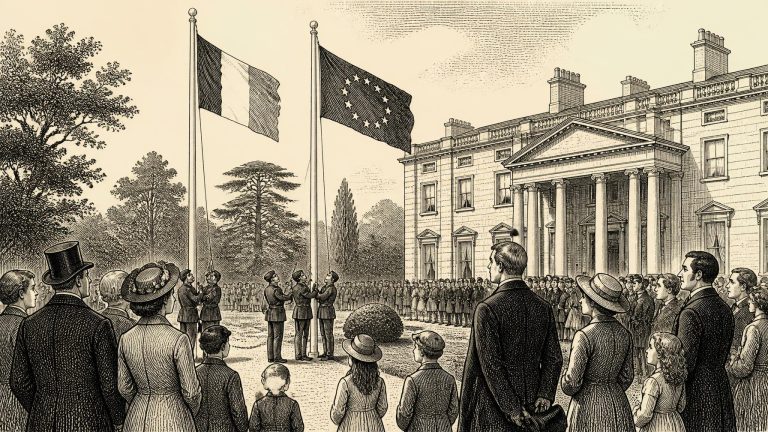
On 1 January Ireland assumed the rotating Presidency of the Council of the European Union for six months. It was the State’s sixth such presidency, and Ahern also chaired meetings of the European Council during the term. The role placed a relatively small member state at the centre of a Union preparing both for its largest enlargement and for a contentious attempt at institutional reform. Irish ministers and civil servants had to act as brokers among governments whose interests and political traditions were often sharply different.
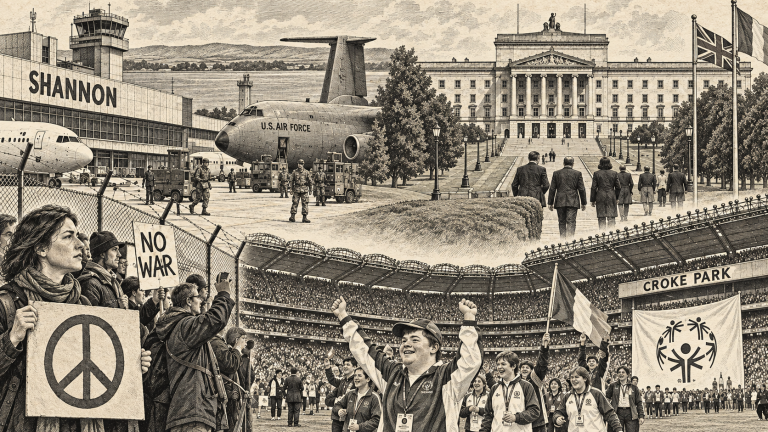
Irish policy during the Iraq crisis exposed a persistent ambiguity in the country’s understanding of military neutrality. Ireland was not a member of NATO, did not join the United States-led invasion and repeatedly favoured a United Nations-centred approach. But American military aircraft and personnel had long used Shannon Airport under permissions granted by the Irish authorities. As war approached, that established practice acquired a radically different political meaning. To opponents, a commercial and transport facility had become a material link in a war they believed lacked adequate UN authority; to the Government, abruptly withdrawing access would damage relations with the United States and Britain and depart from a longstanding policy.
The euro changeover came at a moment when the Republic was widely associated with the Celtic Tiger. The extraordinary export-led acceleration of the 1990s had slowed after the international technology downturn, yet Ireland remained a place of expansion, construction and inward migration. Subsequent national accounts measured real GDP growth in 2002 at 6.9 per cent. That impressive figure, however, concealed an important imbalance: real GNP, which excludes profits flowing abroad from multinational firms, grew by only 0.1 per cent. Chemicals and foreign-owned enterprise output were especially significant to the GDP result.
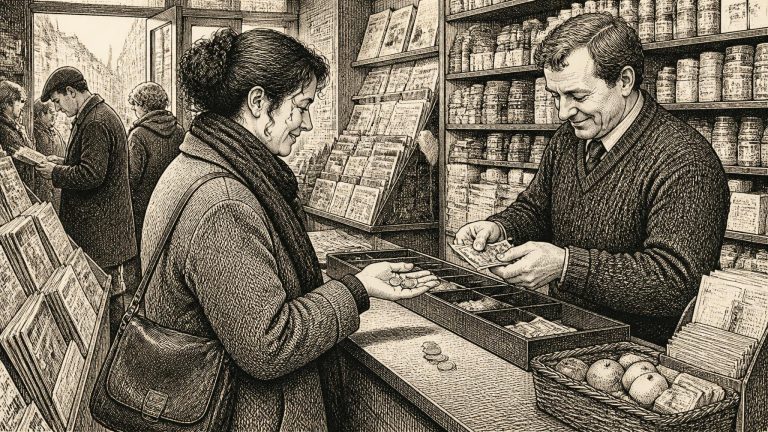
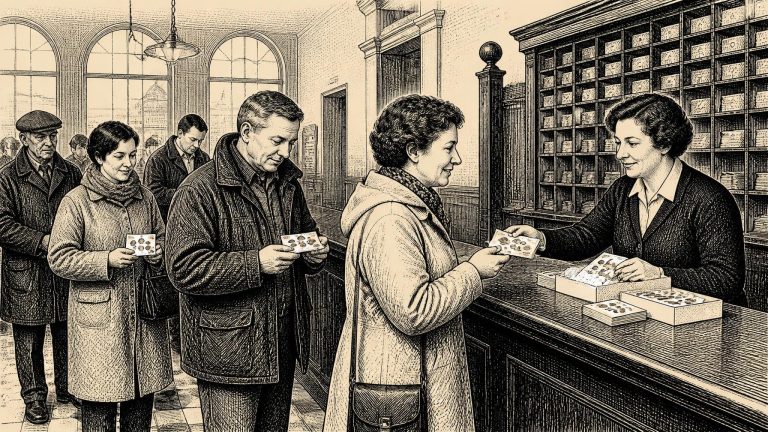
In 2001 Ireland appeared unusually confident. The Republic was still benefiting from the long economic expansion commonly called the Celtic Tiger: employment was high, immigration was changing workplaces and towns, and the State was preparing to exchange the Irish pound for the euro. Yet the year repeatedly showed how exposed an island economy and an unfinished peace settlement could be. A livestock disease crossing the Border closed roads and disrupted rural routines; a low-turnout referendum stopped an important European treaty; and Northern Ireland’s institutions again seemed close to failure. By December, however, the public had tangible euro coins in their hands, while a significant act of IRA decommissioning and the creation of the Police Service of Northern Ireland had altered the practical terms of the peace process.
The gravest immediate test came in Northern Ireland. The power-sharing institutions established under the 1998 Agreement had taken office only in December 1999. David Trimble of the Ulster Unionist Party served as First Minister and the SDLP’s Seamus Mallon as Deputy First Minister, but unionist confidence in the institutions depended heavily on progress towards paramilitary disarmament. The Agreement had envisaged the decommissioning of paramilitary weapons by May 2000, yet the Independent International Commission on Decommissioning reported that it had received no information from the Provisional IRA about when decommissioning would begin.
The most consequential development came at the end of the year. At midnight between 1 and 2 December, powers were devolved from Westminster to the Northern Ireland Assembly, ending the latest period of direct rule from London, which had begun in 1972. The Northern Ireland Executive then met at Stormont for the first time. It was headed by David Trimble of the Ulster Unionist Party as First Minister and Seamus Mallon of the Social Democratic and Labour Party as Deputy First Minister. Ministers from the UUP, SDLP and Sinn Féin took part; Democratic Unionist Party ministers refused to attend that inaugural meeting because of their opposition to entering government alongside Sinn Féin before IRA weapons had been decommissioned.
Multi-party negotiations at Stormont had been under way for almost two years when their final phase reached its conclusion on Good Friday, 10 April. The resulting agreement was the work of the British and Irish governments and most of Northern Ireland’s principal political parties, facilitated by the former United States senator George Mitchell. It did not require nationalists or unionists to abandon their aspirations. Instead, it set out rules by which those aspirations could be pursued peacefully and democratically.