
Archived: 7 October 2026
Abstract
About 32,000 years before present, Ireland was a cold, unstable Marine Isotope Stage 3 landscape, increasingly affected by the expanding British–Irish Ice Sheet. Open grassland, steppe and tundra-like habitats supported mobile large mammals, although coasts, ice margins and sea routes remained variable. Castlepook Cave in County Cork, Ireland’s richest pre-Last Glacial Maximum vertebrate archive, preserves time-mixed remains including mammoth, reindeer, giant deer, bear and hyena. Its disturbed deposits cannot prove simultaneous species or human hunting. A possibly cut-marked reindeer bone may indicate a brief human visit, but no secure settlement exists. Growing ice later reshaped terrain and obscured earlier evidence.
Read Article

Archived: 6 October 2026
Abstract
Thirty thousand two hundred and nine BCE falls within Marine Isotope Stage 3, as Ireland entered an increasingly severe glacial phase before the Last Glacial Maximum. Lower sea levels connected Ireland ecologically with north-west Europe, though ice, water and shifting terrain restricted movement. Ice cover remained variable and uncertain. Derryvree sediments in Fermanagh preserve evidence of treeless wetlands, mosses and sedges during an intervening cold phase. Castlepook Cave, Cork, yielded remains of mammoth, reindeer, giant deer, predators and other cold-adapted fauna accumulated over millennia. A possibly butchered reindeer bone suggests fleeting human visits, but habitation, society and culture remain unproven.
Read Article

Archived: 24 September 2026
Abstract
30,778 BCE is a modern label within unstable Marine Isotope Stage 3, not a date for a recorded Irish event. Derryvree, County Fermanagh, preserves freshwater sediments between tills, indicating an ice-free, treeless, tundra-like wetland, although it cannot represent all Ireland. Castlepook Cave, County Cork, contains remains of mammoth, reindeer, giant deer, predators and cold-stage fauna, accumulated across episodes. A marked reindeer femur may indicate Palaeolithic butchery, yet requires confirmation and proves neither settlement nor continuity. Evidence supports changing environments and possible mobile visitors, not society, economy or politics. Later glaciation has left a fragmentary archive of sediment, bone and ice.
Read Article
Archived: 23 September 2026
Abstract
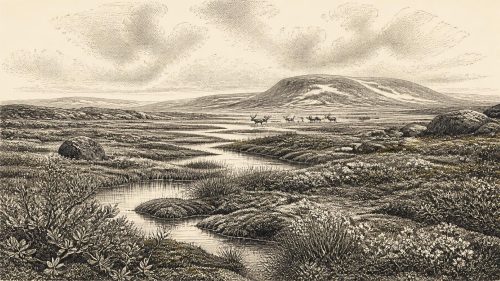
30,828 BCE is a modern label, not a recoverable Irish historical year. During climatically unstable Marine Isotope Stage 3, Ireland experienced shifting ice advances and exposed cold landscapes. Derryvree, County Fermanagh, preserves sediments indicating an ice-free freshwater tundra with sedges, dwarf shrubs, aquatic plants and insects during a broadly comparable interval. Castlepook Cave, County Cork, yielded Late Pleistocene remains including reindeer, mammoth, giant deer, predators and small cold-adapted mammals, though not necessarily contemporaries. A marked reindeer femur may indicate human carcass processing, but lacks secure context. Evidence supports a biologically active Pleistocene frontier, not settled society or continuous human occupation.
Read Article
Archived: 21 September 2026
Abstract
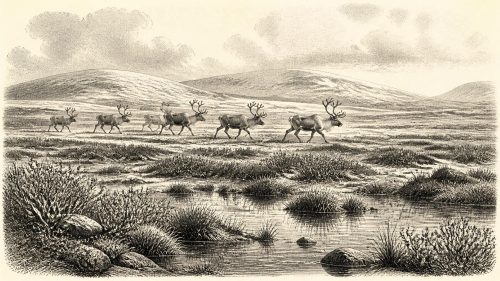
Around 30,981 BCE, Ireland lay within the climatically unstable Marine Isotope Stage 3, before the Last Glacial Maximum. Dates remain broad rather than annual. At Derryvree, County Fermanagh, freshwater sediments between tills preserve evidence of a treeless periglacial wetland, with tundra flora and aquatic life. Castlepook Cave in north Cork records reindeer, mammoth, giant deer and predators, indicating open cold-country habitats linked to north-west Europe. A marked reindeer femur may represent stone-tool butchery and Ireland’s earliest human activity, but lacks archaeological context. Human settlement, society and access routes remain unproven; the period is known through sediments, fossils and uncertain interpretation.
Read Article

Archived: 21 September 2026
Abstract
About 30,993 BCE, Ireland lay within the unstable later Marine Isotope Stage 3, not a precisely recoverable historical year. Derryvree, County Fermanagh, preserves an ice-free freshwater wetland between glacial advances, indicating cold, treeless tundra with mosses, sedges, aquatic plants, insects and seasonal grazing. Castlepook Cave, County Cork, contains mammoth, reindeer, giant deer and predators, demonstrating a variable mammoth-steppe fauna before the Last Glacial Maximum. A marked reindeer femur may indicate brief Upper Palaeolithic human activity, but remains unconfirmed and cannot establish settlement. No evidence supports institutions, agriculture, ritual or enduring population; later ice heavily erased much earlier archaeology across Ireland.
Read Article

Archived: 17 September 2026
Abstract
31,458 BCE is a chronological label, not evidence for a dateable Irish event. During MIS 3, Ireland experienced unstable cold conditions, fluctuating ice margins, sea levels and habitats. Deposits at Fermanagh preserve non-glacial wetlands, while Castlepook Cave near Doneraile yielded mammoth, reindeer, horse, giant deer, carnivores and fauna, indicating steppe-tundra and wetlands during favourable intervals. Changing geography permitted animal dispersal from north-west Europe, though no permanent land bridge can be assumed. No secure human settlement exists. A possibly modified reindeer bone may indicate brief Upper Palaeolithic activity, but disturbed deposits and uncertain dating prevent conclusions. Predating Irish politics and writing.
Read Article

Archived: 16 September 2026
Abstract
Around 31,608 BCE, Ireland formed a fluctuating Late Pleistocene frontier rather than a uniformly frozen island. Glaciers and open periglacial landscapes varied regionally as climate shifted. At Derryvree, County Fermanagh, freshwater deposits between till sheets preserve evidence of tundra-steppe vegetation, including sedges, herbs, mosses and aquatic plants. Castlepook Cave, County Cork, contains a mixed faunal record of mammoth, reindeer, giant deer, hyena, bear, wolf, Arctic fox and lemmings, reflecting links with wider Europe. A possibly cut-marked reindeer bone suggests brief Upper Palaeolithic human visits, but not settlement. Fragmentary evidence documents climate, water, ice and animal mobility before agriculture or monuments.
Read Article
Archived: 15 September 2026
Abstract
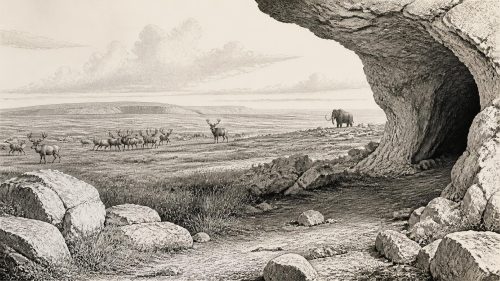
Around 31,674 BCE, Ireland lay within the variable MIS 3 phase of the last glacial period, before the Last Glacial Maximum. Rather than a uniformly frozen landscape, it contained regionally diverse open habitats of grasses, sedges, shrubs and wet ground, shaped by changing ice and lower seas. Castlepook Cave in north Cork preserves bones of mammoth, reindeer, giant deer, hyaena and other cold-adapted animals, indicating a dynamic food web, though deposits span long periods. Sediments elsewhere provide botanical evidence. A marked reindeer femur may indicate human visitation, but remains contested. No evidence supports permanent settlement, polities, beliefs or continuous occupation.
Read Article

