
Archived: 7 October 2026
Abstract
30,150 BCE denotes an approximate late-Marine Isotope Stage 3 horizon, rather than a recoverable Irish year. Ireland experienced unstable cold conditions before maximum British-Irish ice expansion, with local ice-free intervals indicated by Crag Cave speleothems. Castlepook Cave, County Cork, preserves a fauna including reindeer, mammoth, giant deer, predators and tundra species, demonstrating open habitats. A National Museum reindeer femur, possibly cut by a stone tool and dated around 31,000–33,000 BCE, may indicate Ireland's human activity. However, disturbed context and explanations preclude proof of settlement. Glaciation and later landscape change destroyed evidence, leaving caves as archives of change and hunter presence.
Read Article

Archived: 1 October 2026
Abstract
Around 30,413 BCE, Ireland lay within a fluctuating late-Pleistocene environment, approaching major glaciation but not necessarily wholly ice-covered. Climate, sea level and routes to Britain and Europe changed rapidly, allowing intermittent animal movement. Castlepook Cave in County Cork preserves remains of reindeer, mammoth, hyaena and other fauna, demonstrating episodic ecological connections. A reindeer femur bearing a possible stone-tool cut mark may indicate Upper Palaeolithic carcass processing about 30,000 years ago. However, uncertain dating, disturbed cave context and absence of associated artefacts or settlement evidence preclude claims for permanent occupation, named communities or continuous ancestry. Interpretation therefore remains calibrated and cautious.
Read Article
Archived: 27 September 2026
Abstract
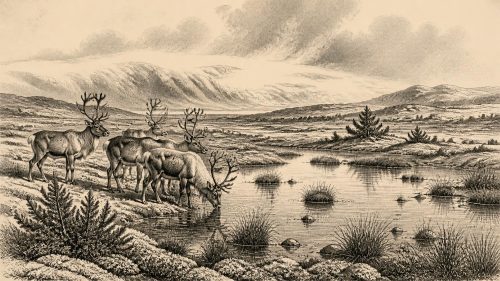
About 30,611 BCE, Ireland lay within the unstable, cold conditions of Marine Isotope Stage 3, before maximum expansion of the British–Irish Ice Sheet. Derryvree, County Fermanagh, preserves freshwater silts between tills, indicating an ice-free periglacial interval with treeless tundra wetlands, pools, sedges, mosses, herbs and insects. Castlepook Cave, County Cork, produced reindeer, mammoth and hyaena remains, reflecting open grazing country. A cut-marked reindeer femur may indicate Upper Palaeolithic butchery, but cannot prove settlement or continuous occupation. No securely contemporary human sites exist; Ireland’s evidence chiefly records changing climate, habitats, fauna and returning ice across chronological ranges rather than exact dates.
Read Article
Archived: 21 September 2026
Abstract
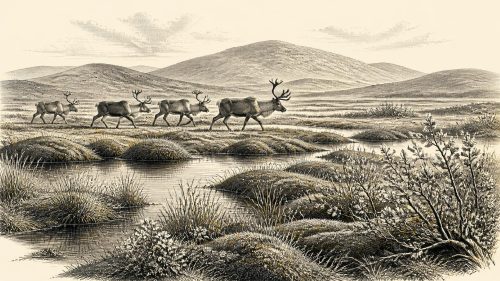
30,973 BCE is a modern label for a late MIS 3 interval, not a recorded Irish year. Derryvree, County Fermanagh, preserves freshwater sediments beneath till, indicating an ice-free, cold wetland with open, treeless vegetation during a broadly dated interval. Castlepook Cave, County Cork, contains diverse pre-Last Glacial Maximum fauna, including mammoth, reindeer, giant deer and spotted hyaena, reflecting connection with north-west European cold-stage ecosystems. A cut-marked reindeer femur may indicate Upper Palaeolithic human processing, but cannot prove settlement, hunting, or permanent population. Glaciation, erosion and rising seas destroyed evidence; Ireland remained a landscape of wetlands, open ground and mobile animals.
Read Article
Archived: 19 September 2026
Abstract
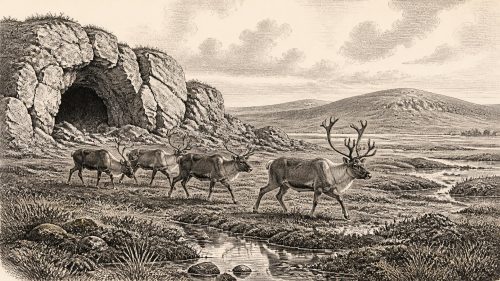
31,148 BCE is a retrospective date within Marine Isotope Stage 3, not a recoverable Irish year. Derryvree, County Fermanagh, preserves freshwater sediments dated broadly to 36,900–31,700 years before present, revealing cold, treeless tundra wetlands between glacial advances. Ireland’s climate, ice extent and coastlines changed regionally, while access routes remained uncertain. Castlepook Cave, County Cork, contains remains of reindeer, mammoth, giant deer and carnivores, demonstrating an Ice Age fauna but not a single contemporaneous community. A possibly tool-marked reindeer femur may indicate early human activity, yet lacks secure context. Later glaciation reshaped landscapes and obscured evidence, leaving a cautious landscape record.
Read Article
Archived: 18 September 2026
Abstract
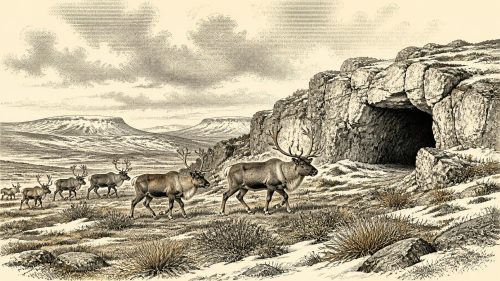
31,351 BCE is a modern label for a broad MIS 3 interval, not a recoverable Irish year. Castlepook Cave, County Cork, preserves Pleistocene fauna including reindeer, mammoth, giant deer, carnivores and cold-adapted species, indicating fluctuating open environments and repeated animal access. A roughly 33,000-year-old reindeer femur bears a possible fresh-bone stone-tool mark, potentially Ireland’s earliest human evidence. However, its historic collection context, uncertain modification and lack of associated tools or occupation deposits prevent claims of settlement or continuous habitation. Lower sea levels do not establish a land bridge. Recent investigations and redating emphasise mixed deposits, earlier dating errors, requiring analysis.
Read Article

Archived: 17 September 2026
Abstract
Around 31,479 BCE, Ireland lay in the unstable, cold Late Pleistocene, before maximum glaciation. Much terrain was probably ice-free, supporting tundra, steppe-tundra, wetlands and sparse shrubs, while later ice destroyed much evidence. Deposits at Derryvree and Maguiresbridge show wetland habitats with cold-adapted plants. Castlepook Cave in County Cork yielded fauna including reindeer, mammoth, giant deer, hyaena and Arctic fox. An incised reindeer femur, dated broadly to about 31,000 BC, may indicate human butchery, but lacks a secure archaeological context. It cannot prove settlement. Ireland’s evidence instead suggests a changeable landscape, rich Ice Age fauna, and only possible brief human visits.
Read Article

Archived: 16 September 2026
Abstract
31,543 BCE is a modern chronological marker, not a recorded Irish year; evidence consists of uncertain radiocarbon ranges, deposits and animal bones. Before the Last Glacial Maximum, parts of Ireland supported wetlands, sparse treeless vegetation and cold-adapted fauna, although landscapes changed rapidly and later ice erased much evidence. Derryvree deposits demonstrate freshwater conditions, while Castlepook Cave near Doneraile preserves remains of reindeer, mammoth, giant deer and carnivores from different periods. A reindeer femur bearing a possible butchery cut mark suggests brief Upper Palaeolithic human presence around 33,000 years ago. It proves neither settlement nor society; dating and excavation are required.
Read Article
Archived: 16 September 2026
Abstract
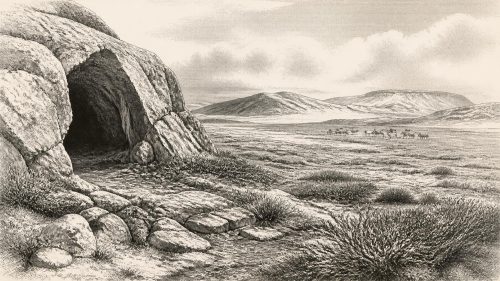
Around 31,554 BCE, Ireland lay within the unstable cold conditions of Marine Isotope Stage 3, before the Last Glacial Maximum. Dates from this period are calibrated scientific ranges, not recoverable calendar years. Derryvree’s organic silts, between glacial tills, preserve evidence of treeless, freshwater wetlands supporting cold-adapted plants, insects and mosses. Castlepook Cave contains fauna including reindeer, mammoth, giant deer, hyaena, Arctic fox and lemmings, although its mixed deposits cannot represent one moment. A marked reindeer femur may indicate human butchery and a brief Upper Palaeolithic visit, but cannot prove settlement. Later ice damaged evidence, leaving an environmental history of Ireland.
Read Article

Archived: 9 September 2026
Abstract
At roughly 31,915 BCE, Ireland lay within the unstable Late Pleistocene, before maximum glaciation, with open cold landscapes supporting diverse mammals. Castlepook Cave, County Cork, preserves bones of reindeer, mammoth, giant deer, predators and smaller cold-adapted species, although its deposits combine material from different periods and processes. A marked reindeer femur, approximately 33,000 radiocarbon years old, may record stone-tool butchery and potentially very early human activity. Yet it cannot prove settlement, population or social life. Ireland lacks securely contemporary human remains, tools, camps or ritual evidence. Subsequent ice advance destroyed much surviving evidence, leaving Castlepook a vital but uncertain archive.
Read Article

Archived: 8 September 2026
Abstract
Around 31,973 BCE, Ireland was part of a climatically unstable, open Ice Age landscape, with changing coastlines, ice conditions and access routes. Cave faunas show that reindeer, mammoths, giant deer, bears, wolves, hyaenas and smaller cold-adapted animals occupied the island intermittently. At Castlepook Cave, County Cork, a reindeer femur bears a deep mark possibly made by a stone tool during butchery, potentially indicating an early human visit. However, disturbed deposits, uncertain dating and absence of associated tools, hearths or settlements prevent confirmation of occupation. The find prompts further research into Ireland’s earliest, fragile evidence of human presence in deep prehistory.
Read Article

