Membership is completely free, giving members unlimited access to all available resources, services, features, and benefits without any restrictions or fees.
Welcome back. Sign in to continue enjoying unlimited access to all available resources, services, features, and member benefits at no cost.
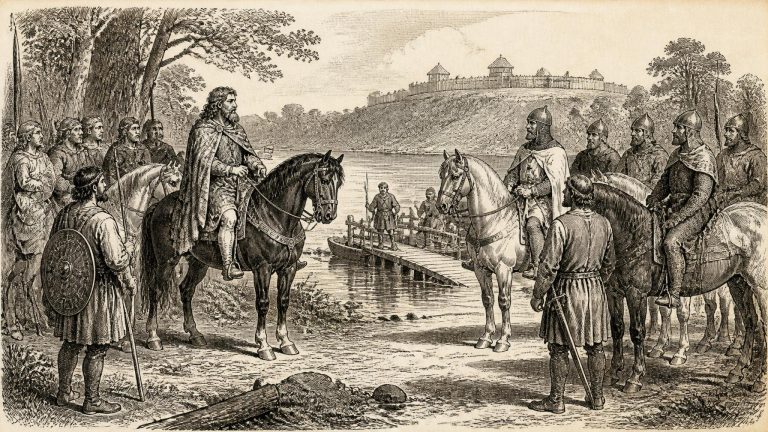
The pivotal development was Cathal Crobderg Ua Conchobair’s intervention beyond Connacht. Cathal was king of Connacht, though his position was neither uncontested nor secure from internal rivals. The Annals of Loch Cé record a great muster at Athlone, a strategic Shannon crossing where Connacht met the lordship’s midland frontier. Cathal reportedly assembled 1,200 men or more. There John de Courcy, Walter de Lacy—the son of Hugh de Lacy—and leading Anglo-Norman nobles came to meet him, and peace was made.
At the beginning of the year Diarmait controlled much of Leinster, aided by the forces that had landed in 1169 under Robert fitz Stephen, Maurice de Prendergast and others. Wexford had been captured, and an earth-and-timber stronghold had been established at Carrick near the River Slaney. Diarmait had also reached an accommodation with Ruaidrí Ua Conchobair. He recognised Ruaidrí’s high-kingship and, according to the surviving accounts, was expected to dismiss his overseas allies. His son Conchobar was held as a hostage guaranteeing the agreement.
Ruaidrí’s position was powerful but not that of a monarch governing a centralised state. Ireland remained a hierarchy of provincial kings, regional rulers and local dynasties. A successful claimant to the kingship of Ireland had to turn military superiority into recognised authority by receiving hostages, settling territorial disputes, rewarding allies and demonstrating protection of the Church. Ruaidrí pursued all these methods during 1167. Kings from Munster, Meath, Bréifne, Airgialla, Ulaid, Leinster and Osraige appear in the records as allies, subjects or participants in his assemblies.