Archived: 17 October 2026
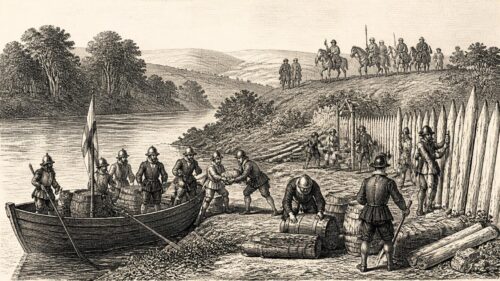
Abstract
In 1566, conflict between Shane O’Neill and Elizabethan government made Ulster Ireland’s principal political and military crisis. O’Neill sought French aid, managed fraught relations with Scottish MacDonnells, was proclaimed traitor, and burned Armagh’s cathedral, a religious site also militarily contested. Lord Deputy Sir Henry Sidney campaigned through Ulster while Colonel Edward Randolph established a garrison at Derry to pressure O’Neill; Shane’s forces killed Randolph in November, exposing royal weakness. Deaths and successions among O’Donnells and Maguires reshaped regional alliances and prompted renewed raiding. The year demonstrated that crown expeditions, Gaelic lordship, local warfare, logistics, learning and landscape remained inseparably linked.
Read Article
Archived: 17 October 2026
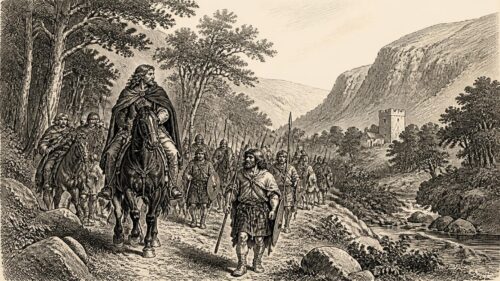
Abstract
In 1565, Ireland remained divided among powerful Gaelic and Old English lordships despite Tudor claims. At Affane, Ormond defeated and captured Desmond during a dispute over Déise, prompting concern at magnates waging private war. In Ulster, Shane O’Neill crushed the MacDonnells at Glentaisie, extending influence through garrisons and settlement, and alarming Dublin and London. The Crown advanced surrender and regrant by creating Donal MacCarthy Mór earl of Clancare, while Henry Sidney’s confirmation signalled intervention. Catholic organisation persisted through Jesuit schooling and Miler Magrath’s appointment. The death of scholar Tadhg Cam Ó Cléirigh also demonstrated continuing learned patronage amid political conflict.
Read Article
Archived: 18 October 2026
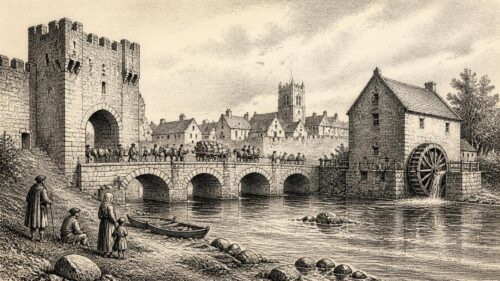
Abstract
In 1562 Shane O’Neill travelled to Whitehall, submitting to Elizabeth I while contesting the crown’s control over the Tyrone succession. He asserted authority derived from Gaelic inauguration as the O’Neill; ministers delayed any settlement, fearing his power and the precedent. During negotiations, Brian O’Neill, rival Dungannon claimant, was killed by Turlough Luineach, leaving young Hugh heir in English eyes. Shane’s subsequent raids devastated neighbouring lordships, especially Fermanagh, exposing limits of crown protection. Elsewhere, Brian Ballach O’Rourke’s death prompted succession in West Breifne, while Galway’s new bridge, mill and gate displayed urban investment, trade and defence within Ireland’s varied political landscape.
Read Article
Archived: 18 October 2026
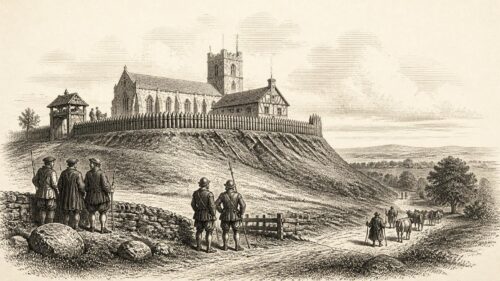
Abstract
In 1561, Shane O’Neill’s contest with the Dublin administration over authority in Ulster became Ireland’s principal political crisis. After capturing An Calbhach O’Donnell in May, O’Neill disrupted a planned alliance of Ulster and Scottish opponents. Sussex proclaimed him traitor, marched north, and fortified St Patrick’s Cathedral, Armagh, as a royal garrison. O’Neill’s forces besieged the post and inflicted a reverse on crown troops during their July withdrawal. A September expedition to Lough Foyle also failed to establish control. Negotiations followed, leading to O’Neill’s safeguarded journey to England in December. Coinage proclamations and correspondence revealed wider governmental, economic and diplomatic pressures.
Read Article
Archived: 18 October 2026
Abstract
In 1559, Conn Bacach O’Neill’s death triggered a succession crisis between Shane, chosen The O’Neill under Gaelic custom, and his grandson Brian, heir under an English patent. Sir Henry Sidney negotiated a temporary peace, acknowledging Shane’s effective power while Elizabeth’s government postponed a decision. Crown administration expanded through appointments, monetary measures and urban defence, yet remained weak beyond the Pale. Religious change was initially confined largely to official circles before Irish legislation in 1560. In Thomond, rival noble alliances fought around Inchiquin, showing persistent regional instability. Trade, provisions and fortifications preoccupied towns. Ireland remained fragmented, neither rebellious nor securely governed.
Read Article
Archived: 18 October 2026
Abstract
In 1542, Henry VIII’s Irish monarchy relied on negotiated submission rather than direct control. Conn Bacach O’Neill travelled to Greenwich, renounced his Gaelic title’s authority, and became earl of Tyrone; Matthew O’Neill’s recognition as heir intensified succession conflict. Parliament met at Limerick, while Murchadh O’Brien, Ulick Burke and the earl of Desmond engaged with royal policy, though promised earldoms for O’Brien and Burke followed in 1543. Campaigns and alliances demonstrated limited royal reach. Religious change included friary suppression, marriage legislation, and a Jesuit mission, yet Gaelic learning and worship endured. The kingdom remained diverse, contested, and dependent on local lordships.
Read Article
Archived: 18 October 2026
Abstract
In 1531, Sir William Skeffington’s government, supported by the earl of Kildare and Aodh Dubh O’Donnell, campaigned in Tír Eoghain against Conn Bacach O’Neill after O’Donnell’s submission at Drogheda. The coalition devastated territory and halted at Kinard, but failed to secure O’Neill’s defeat or lasting royal control. Ulster remained divided: O’Donnell faced conflict with his son Manus, while lordship disputes, raids, captivity and fosterage shaped local power. Skeffington’s authority also weakened as relations with Kildare deteriorated and parliament rejected a subsidy. Annalistic obituaries nevertheless record medical learning, hospitality and patronage, underscoring a society sustained by networks of care alongside warfare.
Read Article
Archived: 18 October 2026
Abstract
In 1526, Ireland’s fragmented political order was shaped by failed diplomacy, raiding, fortification and contested successions. Gerald FitzGerald, earl of Kildare, unsuccessfully mediated between Conn Bacach O’Neill and Manus O’Donnell, whose rivalry centred on the Tír Chonaill–Tír Eóghain frontier and O’Donnell’s castle at Port na dTri Namhad. O’Donnell forces raided Tír Eóghain and defeated opponents in Connacht, securing hostages and destroying castles while warfare devastated crops and communities. Succession disputes followed deaths among O’Reilly, O’Dochartaigh and O’Rourke kindreds; church office also provoked violence. Severe weather killed raiders. Kildare’s English summons weakened mediation, leaving conflicts unresolved across the island’s competing lordships.
Read Article
Archived: 18 October 2026
Abstract
Ireland in 1523 was governed through competing authorities whose interests extended beyond Dublin. Henry VIII’s administration depended upon negotiation with magnates, towns and Gaelic rulers. Gerald FitzGerald, ninth earl of Kildare, returned from England, renewing his rivalry with the lord deputy, Piers Butler, earl of Ormond. James FitzGerald, earl of Desmond, pursued connections with France, while northern dynasties fought and bargained largely beyond government control. Kildare’s return was intended to strengthen the lordship’s exposed frontier, yet intensified political competition. The year illustrates how royal appointments, rivalries, foreign diplomacy and regional military power shaped the limits of English authority in Ireland.
Read Article
Archived: 18 October 2026
Abstract
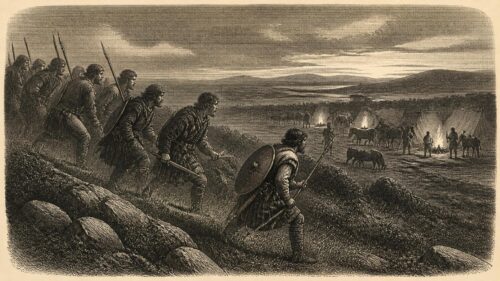
In 1522, Aodh Dubh Ó Domhnaill defeated Conn Bacach Ó Néill’s extensive coalition at a surprise night attack at Cnoc Buidhe, or Knockavoe, near Strabane. Conn’s allies included Ulster lords, Connacht and Munster contingents, men from Meath and Leinster, and Scottish mercenaries. Earlier raids captured Ballyshannon, burned settlements and seized livestock, damaging Tír Chonaill’s communities and resources. Ó Domhnaill’s victory disrupted the coalition’s planned advance from Sligo and preserved his lordship, though warfare continued into 1523. The campaign demonstrated Ireland’s interconnected political and maritime world, while annalistic notices also recorded churchmen, scholars and the wartime deaths of learned household members.
Read Article
Archived: 18 October 2026
Abstract
In 1517 Gerald FitzGerald, ninth earl of Kildare and lord deputy, demonstrated both the reach and limitations of Tudor authority in Ireland. After convening a Dublin parliament, he campaigned in Ulster, destroying Dundrum Castle, seizing Félim Magennis’s family and hostages, and burning Dungannon. Yet O’Donnell also raided Tír Eoghain and destroyed Dungannon amid O’Neill succession rivalries, showing regional politics remained autonomous. Elsewhere, inaugurations, killings, cattle raids and castle warfare reshaped local lordships. A severe frost disrupted travel, while a boat from Tory Island vanished at sea. The year reveals a connected but politically fragmented island, rather than unified crown rule.
Read Article
Archived: 19 October 2026
Abstract
In 1493, Conn Ó Néill’s treacherous killing by his brother Henry Óg triggered a contested succession in Tír Eóghain. Backed respectively by Ó Domhnaill and by Uí Chatháin and Uí Mhealláin, Domhnall Clárach and Henry Óg fought at Glasdromainn, where Henry prevailed, though instability continued. Ó Domhnaill’s later Ulster hosting ravaged territories but won no settlement. Across Ireland, killings, raids, burnings and changes of lordship affected Leinster, Offaly, Breifne and Connacht. Gerald FitzGerald, earl of Kildare, visited Henry VII amid political scrutiny. Annals also recorded deaths of clerics, poets and aristocratic women, revealing cultural ties and piety during the year.
Read Article
Archived: 20 October 2026
Abstract
In 1456 Enrí Ó Néill consolidated power in northern Ireland after the death of his father, Eóghan, whom he had displaced as ruler of Tír Eóghain in 1455. Allied with Tomás Óg Mag Uidhir, he invaded Inis Eógain, where Domhnall Ó Domhnaill of Tír Conaill was killed on 28 May and opponents captured. Ó Néill installed Toirdelbach Cairbreach Ó Domhnaill, securing acknowledged superiority rather than annexation. Obituaries from Connacht recorded the deaths of Moylurg’s tanist Fergal Mac Diarmata, his daughter Lasarfina, and John Burke. At Lisgabhail, deaths among teachers and fosterage networks reveal ecclesiastical communities, learning, kinship and women’s roles.
Read Article
Archived: 20 October 2026
Abstract
In 1449 Richard, duke of York, arrived in Ireland as Henry VI’s lieutenant, combining royal office with extensive Irish lordships. At Drogheda, he concluded an agreement with Énrí Ó Néill, backed by Eóghan Ó Néill, exchanging military support for protection. York received earls, negotiated hostages from Meath and demonstrated government through personal alliances rather than conquest. Elsewhere, disputed successions destabilised Breifne, while warfare involved Ó Néills, MacQuillans, Scottish connections and Cenél Conaill. Annals also record religious renunciation, dynastic deaths and learned families. The year reveals a plural political landscape, where English administration and Gaelic rulers formed shifting, pragmatic coalitions locally.
Read Article
Archived: 20 October 2026
Abstract
In 1432, Domhnall Bog Ó Néill was killed in Ó Catháin territory, enabling his rival Eóghan, son of Niall Óg, to be inaugurated king of Tír Eóghain at Tullaghoge with clerical and learned support. Eóghan’s alliance with Sligo provoked conflict with Niall Garbh Ó Domhnaill of Tír Conaill, bringing armed diplomacy, Erne crossings, prolonged campaigning, burned settlements and crops. Raids exposed Armagh’s vulnerability, while bishops and learned families remained centres of hospitality, law and memory. Elsewhere, Ormond attacked Éile and Mac Murchadha challenged English power in Leinster. The year revealed fragmented authority, shifting alliances, and legitimacy unable to secure peace.
Read Article
Archived: 20 October 2026
Abstract
In 1431, Ireland experienced raids, reprisals, dynastic conflict and institutional losses. Sir Thomas Stanley's delayed arrival as royal lieutenant left the English lordship constrained around Dublin, though chancery business continued. After John Maguire was killed in Tullyhaw, Tomás Óg Maguire ravaged the district and burned Ballymagauran. O'Neill, Maguire and O'Reilly devastated MacQuillan territory, while hostage negotiations and O'Donnell rivalries reshaped Ulster. Gaelic and English forces conducted reciprocal raids in Breifne and Leinster. Deaths of bishops, clerics, poets and nobles underscored the fragility of lordship. Warfare damaged crops and homes, yet religious, learned and administrative institutions endured amid mobile local power.
Read Article
Archived: 21 October 2026
Abstract
On 31 May 1379, Niall Mór Ó Néill defeated Pilib Mag Uidhir, lord of Fir Manach, and Domnall Ó Néill at Dreach, probably near Kinawley. Annals record serious Maguire losses but not the battle’s course. The victory asserted Ó Néill influence without ending Fir Manach’s power. Subsequent killings, including that of Pilib’s son Cú Chonnacht, exposed fragile lordships and kin rivalries. Notices of Gaelic, English and Hiberno-English elites, marriage alliances, church officers and learned figures reveal a plural political society. Edmund Mortimer’s October appointment as lieutenant foreshadowed intervention, though he arrived only in 1380. Ordinary people's experiences remain largely unrecorded.
Read Article
Archived: 22 October 2026
Abstract
In 1364, Ireland experienced interconnected transitions rather than a single crisis. Aodh Reamhar Ó Néill, influential king of Tír Eoghain, died and was succeeded by Niall Mór, whose position rested on dynastic support and military power. Diarmait Ó Briain of Thomond and several regional lords, heirs, women and learned figures also died, altering local networks. Lionel of Antwerp campaigned in Laois before returning to England; James Butler of Ormond governed temporarily amid tensions between English-born and Irish-born settlers. Annals, some uncertainly dated, record raids, alliances and mercenary warfare in western regions, revealing power sustained through lordship, kinship, resources and learning.
Read Article
Archived: 25 October 2026
Abstract
In 1241, Ireland’s political map did not suddenly become simpler, but decisive events in Ulster, Connacht and the midlands altered the balance of power. The most consequential was the battle of Caimeirge, where Brian Ó Néill and the newly installed Máel Sechnaill Ó Domnaill defeated and killed Domnall Mac Lochlainn, king of Tír Eoghain. In the west, Maurice FitzGerald, justiciar of Ireland, combined a damaging raid with a short-lived peace-making expedition. Meanwhile, the arrival of Albert Suerbeer, the German-born archbishop of Armagh, with papal authority over the churches associated with St Patrick made ecclesiastical jurisdiction an urgent political question. New
Read Article

Archived: 26 September 2026
Abstract
In 1167 Ruaidrí Ua Conchobair consolidated a precarious high-kingship through military campaigning, hostage-taking, assemblies and church patronage. Leading a broad coalition into Tír Eoghain, he secured submissions, divided authority among northern rivals and demonstrated coordination by land and sea. At Athboy and Tailtiu, he projected island-wide rule, promoted peace, protected churches and regulated political obligations. Ireland’s pastoral economy, port towns and ecclesiastical centres underpinned these networks. Diarmait Mac Murchada returned to Leinster with a small overseas force, regained territory, then submitted to Ruaidrí while retaining future foreign support. Deaths, violence and church building revealed continuing instability beneath Ruaidrí’s temporary ascendancy.
Read Article





