Membership is completely free, giving members unlimited access to all available resources, services, features, and benefits without any restrictions or fees.
Welcome back. Sign in to continue enjoying unlimited access to all available resources, services, features, and member benefits at no cost.
The Big Wind arrived after unsettled winter weather, strengthening during the evening of 6 January. It swept across Ireland with exceptional violence. Reports came from every province: roofs stripped from houses, chimneys and walls brought down, trees uprooted, vessels wrecked or driven ashore, and roads obstructed by fallen timber and debris. In Dublin, many buildings were damaged and the Liffey rose over the quays. Along exposed coasts, mariners and coastguard crews faced the gravest danger. The loss of twelve Roundstone coastguards in Connemara was among the documented tragedies; wrecks and drownings elsewhere around the coast added substantially to the death toll.
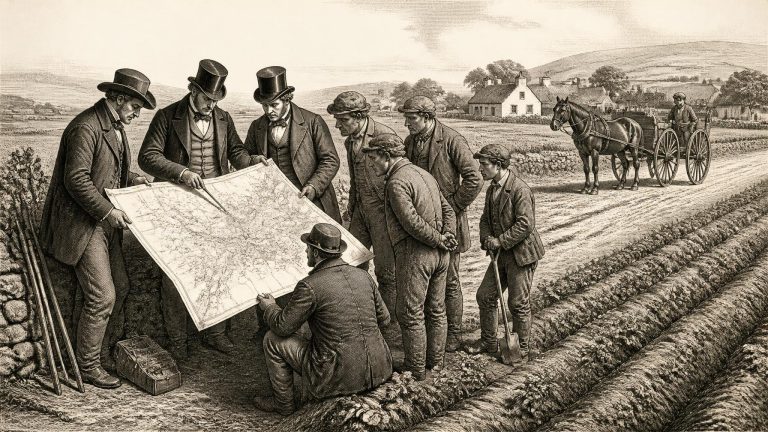
In 1838 Ireland was being newly described, counted and redesigned by the state, even as much of the population lived with severe insecurity. The year did not bring a single dramatic Irish rebellion or constitutional settlement. Its importance lies instead in a cluster of firmly dated measures and reports that exposed the condition of the country and created institutions which would shape daily life for generations. Parliament passed the Irish Poor Law on 31 July. On 15 August it converted tithes into a rent-charge. In Cork, Father Theobald Mathew made temperance a mass public cause. And, in June, the final report of the Irish Railway Commissioners offered a startlingly detailed account of population, food, traffic and economic weakness, while proposing a railway future that was still largely unrealised.
Richard Wellesley, Marquess Wellesley, began his Irish viceroyalty amid considerable expectation. His appointment had been welcomed in addresses from Dublin, Belfast, Cork, Drogheda and Trim during the opening months of 1822. He was a prominent figure, and his reputation for favouring a more conciliatory approach to Catholic claims encouraged hopes among some Catholics and liberal Protestants. Yet Wellesley inherited an administration whose immediate priority was restoring order in a countryside already troubled by organised nocturnal violence.