
Archived: 26 September 2026
Abstract
Ireland in 2017 faced political, social and constitutional uncertainty amid economic recovery. Leo Varadkar became Taoiseach, leading a fragile Fine Gael minority after Frances Fitzgerald’s resignation. Northern Ireland’s Executive collapsed, while Brexit negotiations elevated the border, producing commitments to avoid a hard border and protect the Belfast Agreement. Citizens’ Assembly and Oireachtas processes advanced debate on repealing the Eighth Amendment. Tuam excavations revealed infant and child remains, intensifying scrutiny of mother-and-baby homes. Growth coexisted with severe housing need and homelessness. Census profiles highlighted education and diversity; Storm Ophelia caused disruption and deaths; Creative Ireland promoted cultural participation across communities nationwide.
Read Article
Archived: 26 September 2026
Abstract
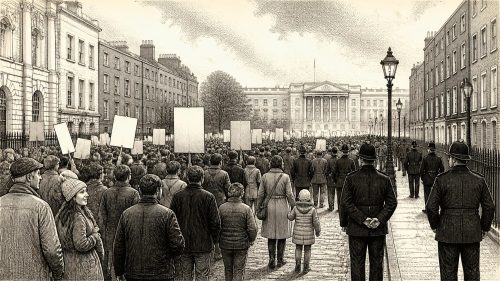
Ireland in 2014 emerged economically from crisis, but austerity and distrust fuelled protests against Irish Water’s meters and household charges. The Government delayed charges, capped bills and legislated safeguards, while electoral losses reflected wider discontent. Severe Atlantic storms caused flooding, coastal damage and power failures. Garda controversies prompted ministerial resignations and reforms including protected-disclosure, human-rights and freedom-of-information measures. Catherine Corless’s Tuam research provoked national reckoning with mother-and-baby institutions. President Higgins’s state visit to Britain affirmed improving relations. In Northern Ireland, the Stormont House Agreement addressed finances, institutions and conflict legacies. The Wild Atlantic Way promoted coastal tourism amid uneven recovery.
Read Article
Archived: 26 September 2026
Abstract
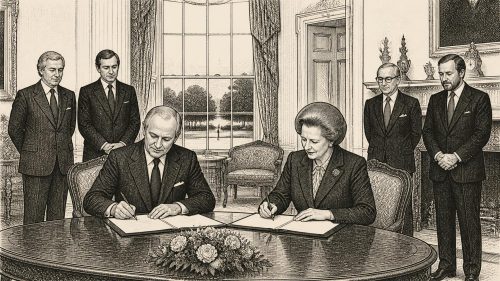
In 1985, the Anglo-Irish Agreement, signed by Garret FitzGerald and Margaret Thatcher at Hillsborough, created a permanent consultative role for Dublin in Northern Ireland affairs while confirming majority consent for constitutional change. It offered constitutional nationalists progress but provoked unionist protest and Fianna Fáil opposition. Violence continued, including major IRA attacks and the killing of a Garda officer. Sinn Féin advanced electorally and revised its Dáil abstention policy. The Republic faced severe unemployment and emigration, alongside the Progressive Democrats’ foundation and liberalised contraception law. Religious controversy, theatre, U2’s Croke Park concert and Cork 800 reflected changing national identities amid hardship.
Read Article
Archived: 9 October 2026
Abstract
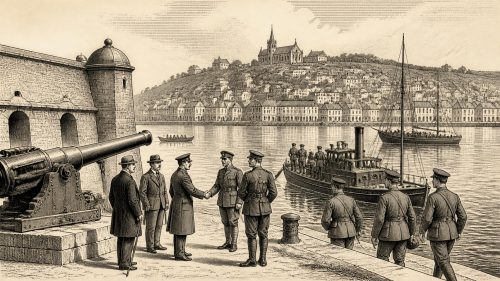
In 1938, the new Constitution acquired practical force as Ireland developed its institutions and position. Douglas Hyde, cultural revivalist and Church of Ireland scholar, became first President, symbolising an inclusive national identity, though disputes persisted. April agreements ended the Economic War: Ireland paid £10 million, Britain removed special duties, and the Treaty Ports at Cork Harbour, Berehaven and Lough Swilly returned to Irish control. Fianna Fáil then won an overall majority. Labour legislation addressed shop workers’ conditions, but poverty, emigration and agricultural dependence continued. Partition remained unchanged despite discussions with Britain and Northern Ireland, while port recovery strengthened future neutrality.
Read Article
Archived: 9 October 2026
Abstract
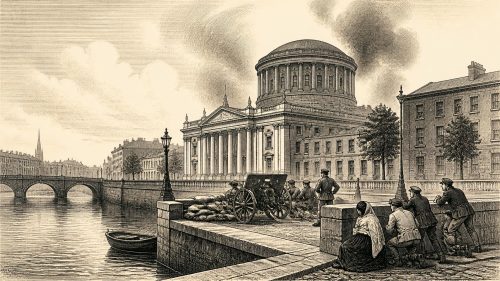
In 1922, Dáil Éireann ratified the Anglo-Irish Treaty, splitting Sinn Féin and the IRA between supporters of dominion status and republican opponents. Michael Collins led the Provisional Government as Northern Ireland remained separate amid continuing sectarian violence. Failed mediation and the anti-Treaty occupation of the Four Courts led to National Army bombardment on 28 June, initiating Civil War. Fighting devastated Dublin, destroyed the Public Record Office’s Record Treasury, and spread nationwide. Arthur Griffith and Collins died in August. Under W. T. Cosgrave, the Free State Constitution established democratic institutions. On 6 December the Free State began; Northern Ireland opted out.
Read Article
Archived: 9 October 2026
Abstract
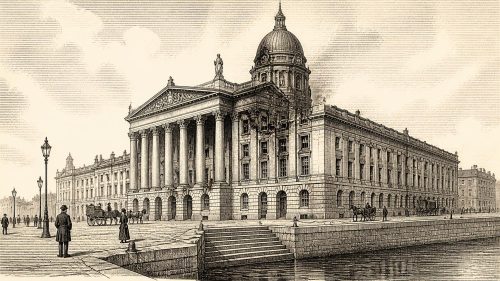
In 1921, Ireland moved from intense War of Independence fighting towards truce and treaty, amid coercion, raids and executions. IRA engagements at Crossbarry and Tourmakeady maintained pressure, while the Custom House burning destroyed records but cost lives and arrests. May elections confirmed Sinn Féin’s southern mandate and established Northern Ireland’s unionist government. The 11 July truce ended principal IRA–Crown operations but not Belfast’s sectarian violence. London negotiations produced the December Anglo-Irish Treaty, creating a dominion Free State while retaining the Crown, partition and British naval facilities. Signed but unapproved, it deeply divided republicans, leaving border, constitutional and security questions unresolved.
Read Article
Archived: 9 October 2026
Abstract
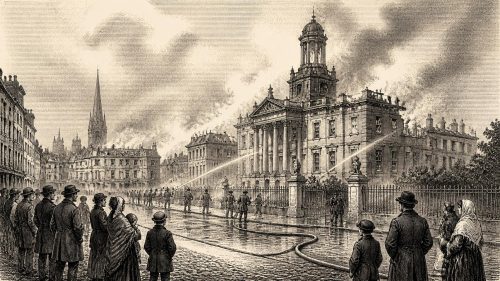
In 1920, Ireland’s political crisis widened into conflict across elections, workplaces, civic institutions and homes. Sinn Féin and Labour gained local authority, helping Dáil Éireann establish parallel courts, finance and propaganda, while Britain answered with emergency powers, troops, Black and Tans and Auxiliaries. IRA attacks, reprisals and executions, including Kevin Barry’s, intensified war. Cork symbolised the crisis through Tomás MacCurtain’s murder, Terence MacSwiney’s hunger-strike death and the city’s burning. Bloody Sunday and Kilmichael deepened violence. Labour resistance exposed regional divisions. Sectarian expulsions in Belfast accompanied the Government of Ireland Act, which legislated partition, shaping the 1921 truce and eventual negotiations.
Read Article
Archived: 9 October 2026
Abstract
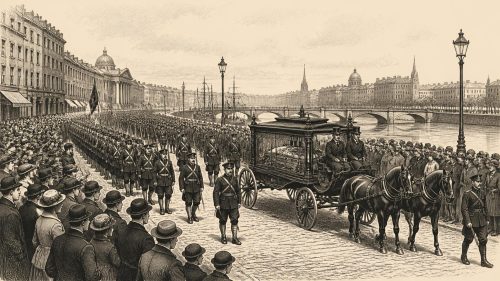
In 1915, the First World War intensified Ireland’s political, social and cultural divisions. The sinking of RMS Lusitania off Kinsale brought global conflict directly to Cork, killing about 1,198 people, including Hugh Lane and Thomas O’Brien Butler. John Redmond’s National Volunteers demonstrated continued constitutional strength, while Irish troops endured heavy losses at Gallipoli and prepared for France. Recruitment increasingly provoked opposition. Meanwhile, IRB-linked Volunteers secretly planned a 1916 rising, seeking German aid, while James Connolly promoted socialist militancy. O’Donovan Rossa’s Dublin funeral became a major republican demonstration. Cultural bodies debated nationalism, and wartime prices and hardship affected communities nationwide unevenly.
Read Article
Archived: 9 October 2026
Abstract
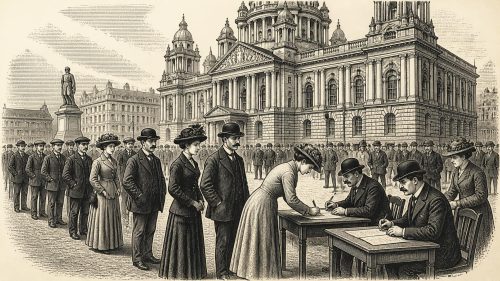
In 1912, the Third Home Rule Bill made limited Irish self-government a realistic prospect, though it remained under parliamentary debate and reserved major powers to Westminster. John Redmond’s Irish Parliamentary Party supported it, while Ulster unionists, led by Edward Carson and backed by British Conservatives, demonstrated mass resistance at Balmoral and signed the Ulster Covenant and women’s Declaration on Ulster Day. Belfast’s industrial strength, sectarian divisions and summer disturbances revealed mounting tension. Suffragists challenged women’s exclusion from reform. Titanic’s Queenstown call highlighted migration and regional connections. Cultural activity continued, but unresolved Home Rule, unionist mobilisation and social divisions foreshadowed crisis.
Read Article

Archived: 9 October 2026
Abstract
In 1910, two British general elections made John Redmond’s Irish Parliamentary Party essential to Liberal government, increasing prospects for Home Rule without securing it. The Lords’ veto remained intact, while nationalist and unionist divisions persisted. Land reforms strengthened the Congested Districts Board’s capacity to address western poverty, and old-age pensions exposed disputes over proof of age. James Connolly returned from America, reinforcing developing socialist and trade-union politics. The Abbey Theatre, after Annie Horniman withdrew support, faced financial uncertainty while asserting independence. Meanwhile, Kalem filmed The Lad from Old Ireland, linking rural Ireland, emigration and modern transatlantic visual culture for audiences.
Read Article
Archived: 10 October 2026
Abstract
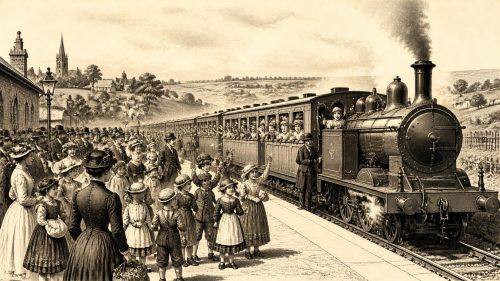
In 1889, Richard Pigott’s forged letters linking Charles Stewart Parnell to the Phoenix Park murders collapsed under cross-examination, vindicating Parnell though the Special Commission continued. Rural conflict persisted around the Plan of Campaign and coercive enforcement, despite reduced official proclamations. The Armagh railway disaster killed 80 people and injured 260, prompting railway safety legislation. Horace Plunkett began co-operative experiments at Doneraile. Cultural developments included Yeats’s The Wanderings of Oisin and Other Poems and Douglas Hyde’s Irish-language folktale collection. Parnell’s year ended ominously when Captain William O’Shea filed a divorce petition, foreshadowing the crisis of 1890 and the ensuing party split.
Read Article

Archived: 10 October 2026
Abstract
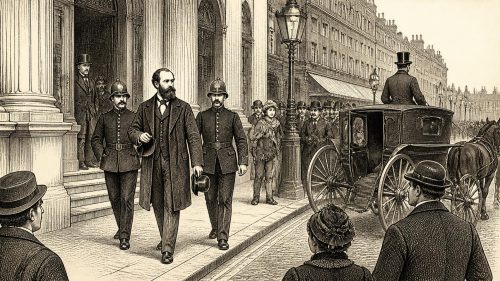
In 1887 Arthur Balfour’s Unionist administration combined coercion with limited land reform amid depressed farm incomes and organised tenant resistance. The Criminal Law and Procedure Act proclaimed districts and outlawed the Irish National League, while the Land Law Act revised protections, rents and purchase provisions. The Plan of Campaign mobilised tenants, notably on the Kingston estate near Mitchelstown. On 9 September, RIC police fired on a crowd, killing Michael Lonergan and mortally wounding John Shinnick and John Casey. The shootings intensified controversy over public meetings and policing. Meanwhile, The Times attacked Parnell, while antiquarian scholarship asserted Ireland’s distinct cultural heritage.
Read Article
Archived: 10 October 2026
Abstract
In 1881, Ireland’s Land War intensified as Gladstone’s government combined coercive detention powers with the Land Law (Ireland) Act. The Act advanced the Land League’s three Fs—fair rent, fixity of tenure and free sale—through judicial rents, security and protected tenant interests, but left arrears and ownership unresolved. Michael Davitt and Charles Stewart Parnell were imprisoned, while the Irish National Land League was suppressed after its No Rent Manifesto. Anna Parnell’s Ladies’ Land League organised relief and resistance. Census returns recorded continuing population decline and rural predominance. The year permanently weakened landlord authority while linking land reform, political protest and self-government.
Read Article
Archived: 10 October 2026
Abstract
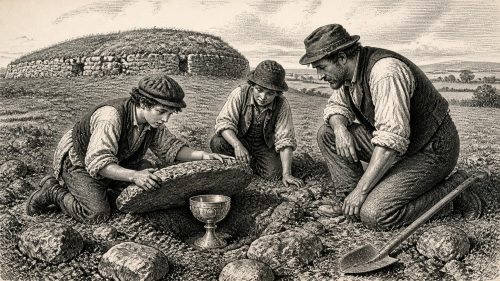
In 1868, Ireland faced a constitutional crisis over the Anglican Church of Ireland, whose privileged status conflicted with the Catholic majority and Presbyterian presence. Gladstone’s resolutions, Commons victories and Liberal election gains made disestablishment unavoidable, although legislation followed in 1869. Franchise reform enlarged, but did not democratise, the male electorate, while Gladstone’s ministry symbolised reform through Catholic lord chancellor Thomas O’Hagan. Fenian prosecutions sustained security fears. National schools expanded amid attendance, and industrial schools extended state control. Emigration, pastoral change and poverty persisted. St Colman’s Cathedral began at Queenstown, Valentia Observatory opened, and the Ardagh Chalice discovered during potato digging.
Read Article
Archived: 10 October 2026
Abstract
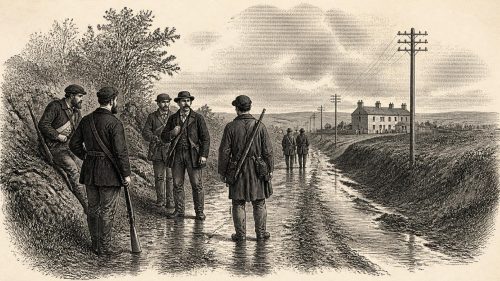
In 1867 the Irish Republican Brotherhood launched a poorly coordinated Fenian rising seeking an independent republic and social reform. After alarms including the failed Chester Castle raid, authorities extended habeas corpus suspension, arrested suspects, and strengthened policing. On 5 March, insurgents attacked police and coastguard stations, disrupted telegraphs and railways, and assembled near Dublin and in Munster. Better-armed government forces, intelligence, poor communications, inadequate weapons, and absent mass support quickly defeated them. Peter O'Neill Crowley's later death fostered martyrdom. The year brought Fenian rescues and executions in Manchester, transportation to Western Australia, the Clerkenwell bombing, hardship, reform, and Orange mobilisation.
Read Article

Archived: 10 October 2026
Abstract
In 1849, the Great Famine continued as blight, hunger, eviction, overcrowded workhouses and disease devastated Ireland. Cholera killed 772 of 1,077 recorded cases at Ballinasloe Union Workhouse, illustrating inmates’ vulnerability. Relief depended heavily on inadequate local rates; the May rate-in-aid redistributed Irish, rather than British, resources. The Incumbered Estates Act signalled restructuring of landownership, while emigration, consolidation and evictions altered rural life. Young Ireland leaders were transported, and unrest persisted; Dolly’s Brae exposed sectarian tensions. Victoria’s tour, new Queen’s Colleges and the Dublin–Cork railway projected progress, yet famine, political conflict and social upheaval still continued across the island’s fractured communities.
Read Article
Archived: 11 October 2026
Abstract
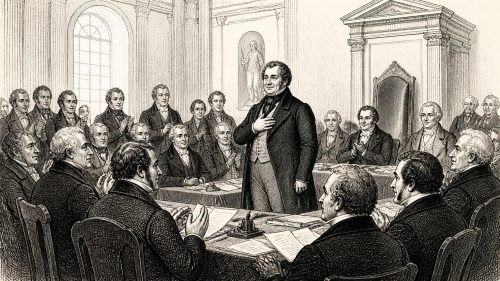
In 1841, Ireland’s census recorded 8,175,124 people, revealing a populous, unequal society where most families occupied modest cottages or single-room cabins and depended heavily on agriculture and potatoes. The general election returned Peel’s Conservatives, while Daniel O’Connell maintained repeal agitation despite restricted franchises and sectarian political division. Dublin’s reformed council elected O’Connell Lord Mayor on 1 November, the first Catholic to hold the office for over 150 years, marking expanded but limited civic participation. Poor Law workhouses embedded institutional relief, inadequately serving widespread vulnerability. Belfast combined industrial growth with confessional cooperation, while the Irish Archaeological Society published texts, reflecting recovery.
Read Article
Archived: 11 October 2026
Abstract
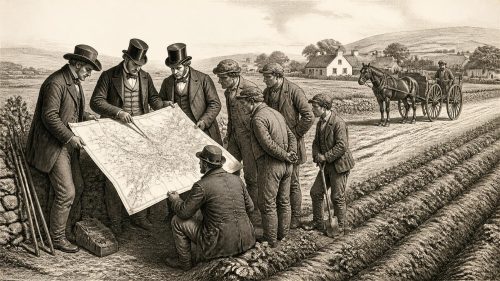
In 1838, Ireland was surveyed, classified and governed amid widespread rural insecurity. The Irish Railway Commissioners’ final report mapped population, trade and transport, advocated publicly directed railways, and warned of labourers’ heavy reliance on the nutritionally poor lumper potato, without predicting famine. The Poor Relief (Ireland) Act created poor-law unions, rates, guardians and a workhouse-centred system, reshaping local administration despite opposition. The Tithe Rentcharge Act replaced direct occupiers’ payments with a reduced landowners’ charge, easing but not ending religious grievance. Father Theobald Mathew’s Cork temperance campaign mobilised mass voluntary action. The Sirius voyage and surveys highlighted Atlantic and administrative links.
Read Article
Archived: 11 October 2026
Abstract
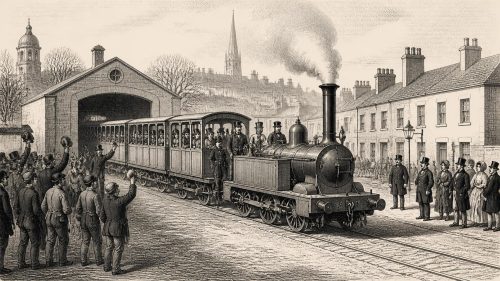
In 1834, Ireland’s contrasts were embodied by the opening of the Dublin and Kingstown Railway and the Rathcormac massacre at Gortroe, County Cork. The railway, Ireland’s first, linked Dublin’s commercial centre with its packet harbour, demonstrating private investment, engineering and growing passenger mobility. Next day, troops protecting tithe collection killed at least nine people resisting payments to the established Church of Ireland. The Tithe War exposed rural poverty, Catholic resentment and dependence on coercion. Westminster debated repeal, tithes and church reform amid ministerial instability. Population pressure, insecure labour, poor housing, disease and limited educational and health measures underscored persistent inequality.
Read Article
Archived: 11 October 2026
Abstract
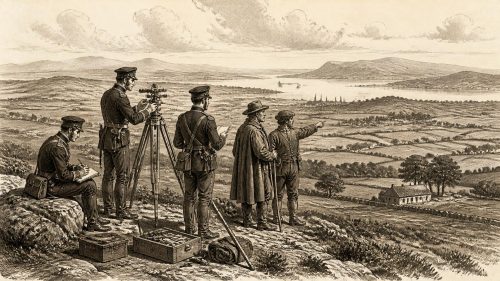
In 1825, government suppressed the Catholic Association through the Unlawful Societies Act, but Daniel O’Connell quickly reorganised constitutional agitation for emancipation, while a relief bill failed in the Lords. Thomas Colby’s Ordnance Survey began mapping Ireland for taxation and administration, incorporating local knowledge into state records. Government-assisted migration sent 2,024 people from Cork to Upper Canada. The Provincial Bank, Portlaw’s cotton venture, revised excise licences and packet steamers reflected economic change. Educational inquiry documented extensive yet fragmented schooling, while Croker’s Fairy Legends promoted Irish oral traditions. These developments linked politics, administration, migration, commerce and culture in an unequal, changing Ireland.
Read Article

Archived: 11 October 2026
Abstract
In 1822, Ireland endured agrarian unrest, food scarcity and emergency government. Lord Lieutenant Richard Wellesley inherited Rockite violence, chiefly in Munster, where the Insurrection Act, habeas corpus suspension, troops and special commissions produced prosecutions, transportation and executions. Poor harvests caused severe regional distress, especially in the west and south-west. Government coordinated charity and funded public works, employing labourers on roads, piers and harbours under engineers including Alexander Nimmo and Richard Griffith. Political divisions persisted over Catholic exclusion and the established Church. A new constabulary law encouraged organised policing. December's Bottle Riot, when a jar was thrown at Wellesley, symbolised conflict.
Read Article
Archived: 11 October 2026
Abstract
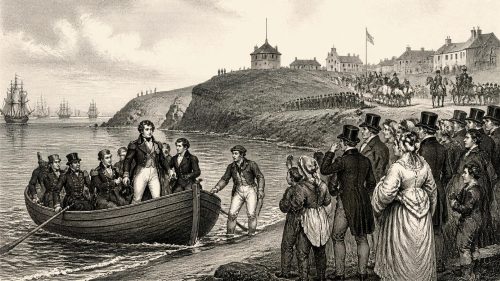
In 1821, Ireland experienced population growth, economic hardship, political exclusion and royal pageantry. The first comprehensive census recorded about 6.8 million people, exposing dependence on insecure rural livelihoods; most detailed returns were later destroyed in 1922. Post-war depression, rents, tithes and scarce employment contributed to Munster’s emerging Rockite disturbances. Westminster’s Catholic Disability Removal Bill passed the Commons but failed in the Lords, preserving Catholic exclusion from Parliament. George IV’s August landing at Howth inspired displays of loyalty, including Daniel O’Connell’s conciliatory participation, but brought no reform. Administrative changes and cultural activity highlighted tensions between Union, equality, rural insecurity and identity.
Read Article

Archived: 11 October 2026
Abstract
George IV’s accession in 1820 left Ireland under the Union, with limited property-based representation and Catholic exclusion from Parliament. Henry Grattan’s death removed a leading advocate of Catholic relief. Post-war depression and private-bank failures disrupted credit, trade and livelihoods, while Cork’s North Cathedral burned. The Dublin Gas Act, completion of the Lough Allen Canal, local schooling and the Royal Dublin Society reflected gradual improvement. Irish people also participated in Antarctic exploration and Cape Colony migration. In December, County Dublin freeholders at Kilmainham challenged an official loyal address, condemning the king’s treatment of Queen Caroline and Ireland’s distress, foreshadowing O’Connell’s mobilisation.
Read Article
Archived: 11 October 2026
Abstract
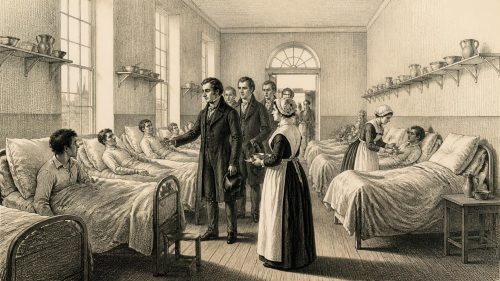
In 1817, Ireland faced severe scarcity, unemployment and typhus amid poor harvests and post-Napoleonic depression, though not an island-wide famine comparable to the Great Famine. Dublin fever surged in September, prompting Dr Steevens’ Hospital to open emergency wards for labourers, artisans and servants. Relief depended on fragmented charities, local bodies and government employment schemes, while new legislation addressed public works, grand-jury finance and institutional care. Fiscal integration with Britain advanced, and Catholic emancipation remained unresolved. Despite crisis, the Royal Canal reached Cloondara, Dunleary harbour construction began, temperance emerged in Skibbereen, and O’Reilly published an Irish-English dictionary, carefully preserving linguistic knowledge.
Read Article
Archived: 11 October 2026
Abstract
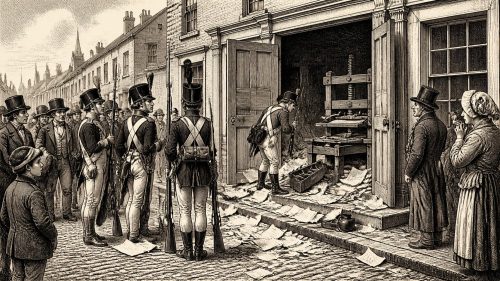
In 1797, Ireland faced mounting tension between the clandestine United Irishmen and a government anticipating rebellion and French invasion. General Gerard Lake’s Ulster disarmament campaign seized weapons, intimidated communities and weakened northern radical networks. After Monaghan militiamen implicated in United Irish activity were executed at Blaris, fellow soldiers destroyed Belfast’s Northern Star, silencing a major radical newspaper. Arrests also disrupted Cork organisers, while calls for constitutional conciliation gained little ground. William Orr’s contested conviction and hanging made him a powerful martyr. Meanwhile, parliamentary limitations and bank restrictions exposed wider political and economic insecurity, foreshadowing the 1798 rebellion in Ireland itself.
Read Article

Archived: 12 October 2026
Abstract
In 1788, Ireland’s post-1782 settlement revealed both reforming ambition and entrenched exclusion. Parliament, dominated by Protestant property and patronage, rejected Henry Grattan’s proposal to regularise tithes, while considering compensation for clergy whose payments had been withheld amid agrarian unrest. It also supported linen, hemp, transport, courts, gaols and urban works, reflecting practical governmental intervention. Cork Corporation opened the English Market, improving organised food provisioning. Belfast tradesmen founded the subscription-based Reading Society, later Linen Hall Library, promoting shared learning. George III’s illness created a regency crisis, foreshadowing constitutional conflict between Ireland and Britain in 1789 and exposing limits of parliamentary representation.
Read Article

Archived: 12 October 2026
Abstract
In 1773, the killing of Art Ó Laoghaire near Carriganima exposed the unequal legal position of Catholics in Ireland. His feud with magistrate Abraham Morris, involving a horse and penal legislation, inspired Eibhlín Dubh Ní Chonaill’s enduring Irish-language lament. Morris’s acquittal and the disputed burial reinforced perceptions of unequal justice. Nationally, Lord Lieutenant Harcourt’s unsuccessful absentee-tax proposal revealed financial strain, landlord influence and limits on Dublin’s parliament. Linen, woollen promotion and trade sustained a diverse but dependent economy, while volunteer corps reflected Protestant local society. Goldsmith’s success and Leland’s contested history illustrated Ireland’s contribution to, and disputes within, British culture.
Read Article
Archived: 12 October 2026
Abstract
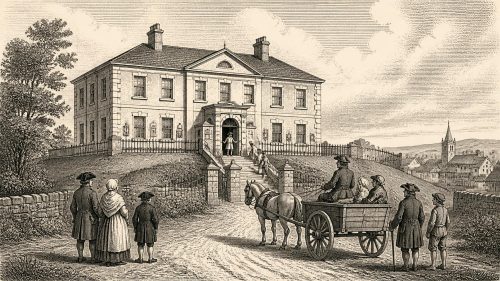
In 1754, Ireland’s unresolved dispute over public revenue sharpened conflict between the Irish Commons, Dublin Castle and Britain, despite Parliament’s restricted Protestant character. At Dublin’s Smock Alley Theatre, a performance of Mahomet provoked a political riot, damaging the theatre and forcing manager Thomas Sheridan’s departure. Days later, Dillon, Ferrall and Company failed, exposing the fragility of private banking and commercial credit. At Navan, the County of Meath Infirmary, supported by subscription, began providing modest organised care for poor patients. The year also saw notable improvement projects, historical and commercial print, and the death of Irish-language poet Seán Clárach Mac Domhnaill.
Read Article

Archived: 12 October 2026
Abstract
In 1749, Irish tensions appeared in political print, official measures, economic debate and religious conflict. Dublin apothecary Charles Lucas used The Censor and civic addresses to challenge municipal corruption, defend Protestant constitutional rights and question Dublin Castle’s authority. Parliament denounced his publications as seditious, ordered his arrest, and forced his flight. Government proclamations addressed quarantine, coin clipping and rural crime, reflecting administrative reliance on local institutions and military power. Thomas Waite’s account emphasised linen, restricted woollen trade and military spending, while improvement schemes favoured elite direction. In Cork, Charles Wesley’s Methodism provoked unrest, exposing intersecting confessional, civic and social rivalries.
Read Article
Archived: 13 October 2026
Abstract
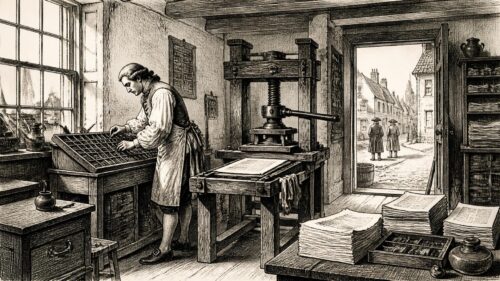
In 1737, William Cavendish, third duke of Devonshire, became lord lieutenant, linking Dublin administration to Walpole’s London government as Parliament convened under Protestant landed dominance. Proclamations addressed gold, silver and copper currency, crime, riots, vagrancy and begging, revealing official dependence on magistrates, rewards and local knowledge. George Berkeley’s Querist advocated economic improvement while reflecting elite assumptions about poverty and labour. Francis Joy founded the Belfast News-Letter, creating a provincial news channel despite limited readership. Religious divisions persisted under penal laws, while trade, linen and agriculture connected Ireland unequally to British and Atlantic markets. The year exposed social vulnerability without crisis.
Read Article

