
Aliens Act
At a Glance
Legal frame
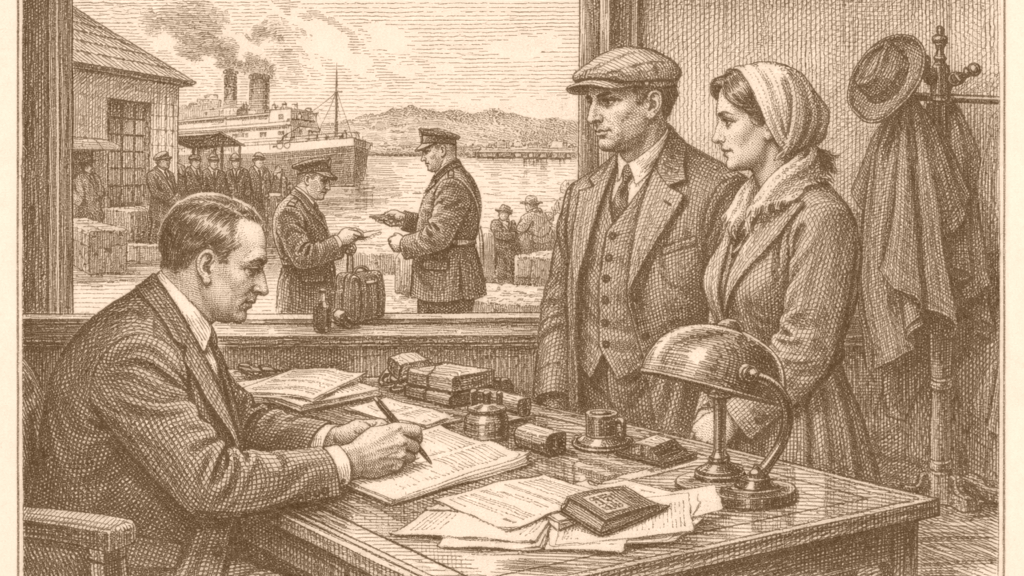
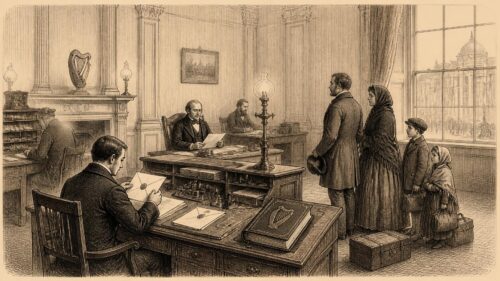
The basic legal frame for migration in Saorstát Éireann in 1935 appears in two statutes. The Aliens Act was enacted on 10 April 1935, and its stated purpose was to provide for the control of aliens and other matters relating to aliens. The Irish Nationality and Citizenship Act was enacted on the same date to provide for and regulate the acquisition of citizenship of Saorstát Éireann and the forfeiture or loss of that citizenship. [3] [1]
The statute book’s arrangement notices show how broad this framework was. The Aliens Act contained provisions on definitions, rights in property, subjection to law, control, offences, search warrants, restrictions on change of name, licences, exemptions, and regulations. The nationality statute contained sections on birth, naturalisation, marriage, foundlings, revocation, foreign births, registers, nationality certificates, and mutual citizenship rights. The structure itself indicates that migration law was tied closely to nationality law, not treated as a single narrow entry rule. [3] [1]
Alien Status
The 1935 Aliens Act gave a clear legal definition of alienage. An alien was a person who was not a citizen of Saorstát Éireann. That definition matters because the Act then attached a full legal regime to the category. It stated that aliens could hold property in the same way as citizens, while also preserving limits relating to offices, franchise, ships, aircraft, and other statutory privileges. The law therefore combined civil capacity with exclusion from some public rights. [3]
The same Act placed aliens under the law of Saorstát Éireann in the same manner as citizens. That statement is important because it shows the statute did not treat non-citizens as outside the legal order. Instead, it made them answerable to the courts and administrative system, while allowing separate controls to be imposed. The distinction was therefore not between law and no law, but between equal subjection and unequal permission to enter, remain, or exercise certain rights. [3]
Entry Powers
Section 5 of the Aliens Act concentrated extensive power in the Minister for Justice. The Minister could make orders affecting all aliens, aliens of a particular nationality, a class of aliens, or particular aliens. Those orders could prohibit landing or entry, impose conditions and limits on places of landing, prohibit departure, regulate means of travel, and provide for exclusion or deportation. The Act also authorised residence restrictions and obligations relating to registration, change of abode, travel, employment, and occupation. [3]
The same section also extended the order-making power beyond the alien traveller. It could regulate masters of ships entering or leaving Saorstát Éireann and pilots, showing that migration control reached transport and port administration as well as the person seeking to enter. Because the statute allows many different subclasses of aliens to be targeted, it is evidence of an administrative system designed for flexible control rather than a single blanket rule. [3]
Citizenship Rules
The Irish Nationality and Citizenship Act, 1935 set out the criteria by which a person became a citizen or lost citizenship. Its arrangement of sections shows rules for natural-born citizens, applications and certificates of naturalisation, special cases, minors, revocation, spouses, children, foundlings, and a widow’s resumption of citizenship. The Act also dealt with non-effect of marriage, citizenship of a citizen married to an alien, and loss of citizenship on acquiring another country’s citizenship. These provisions show that migration law and nationality law operated together. [1]
The 1935 Act also announced its purpose in broad terms: to regulate the acquisition by birth or otherwise of citizenship of Saorstát Éireann, and the forfeiture or loss of that citizenship. This wording is important because it links citizenship not only to descent and naturalisation but also to the legal consequences of change in status. The Act’s final section heading, concerning the scope of citizenship law, suggests a deliberate attempt to make the rules comprehensive within the new state framework. [1]
Later Revision
By 1956, the citizenship statute had been rewritten as the Irish Nationality and Citizenship Act, 1956. Its arrangement shows a fresh consolidation of the law of citizenship by birth or descent, formalities in certain cases, marriage, posthumous children, foundlings, adopted children, naturalisation, loss of citizenship, and mutual citizenship rights. It also added registry of births abroad and provisions on certificates of nationality. The 1956 Act thus preserved the same general distinction between acquisition, retention, and loss while recasting the statutory structure. [2]
The 1956 statute’s short title and preamble state that it was enacted to make provision for the acquisition and loss of Irish nationality and citizenship. Compared with the 1935 Act, the later law keeps citizenship at the center of migration governance, but its section list shows a more detailed treatment of descent, marriage, adoption, and renunciation. The evidence here supports continuity in the legal categories and refinement in their administration, rather than a break from the earlier framework. [2]
Historical Scope
The surviving statutory texts and their arrangement notices show a law of migration built around status, paperwork, and discretion. The 1935 Aliens Act made entry, departure, residence, and deportation matters of ministerial order, while the nationality statute defined who belonged and how that belonging could change. Because the sources are statutory and structural, they do not in themselves reveal how often these powers were used or how many people were affected. What they do show is the legal architecture. [3] [1] [2]
In 1935, the Aliens Act defined aliens, allowed them to hold property, and gave the Minister power to make orders controlling aliens. By 1956, the Irish Nationality and Citizenship Act provided for citizenship by birth or descent, marriage, foundlings, adoption, renunciation, and mutual citizenship rights. [3] [2]
Source References
Hover over a number to see the source. Select it to open the source.



How did the 1935 Irish legislation on aliens and nationality define, separate, and regulate legal belonging in Saorstát Éireann?