
Abwehr Contacts
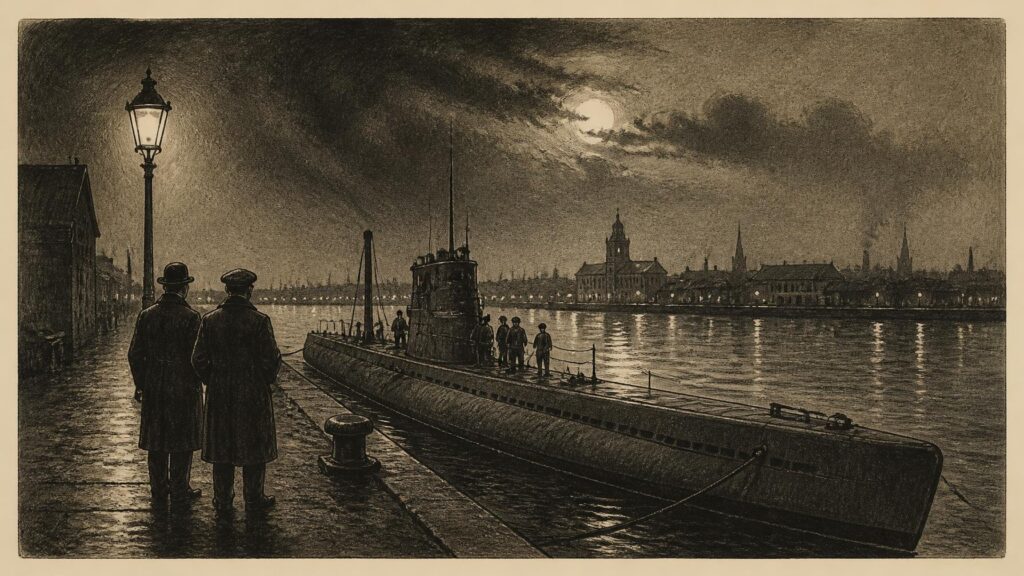
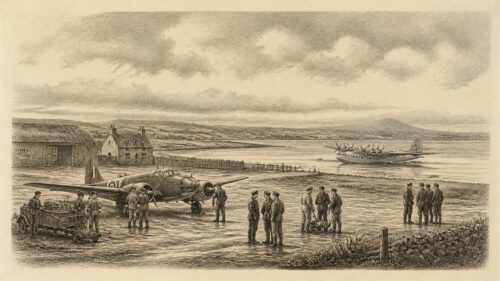
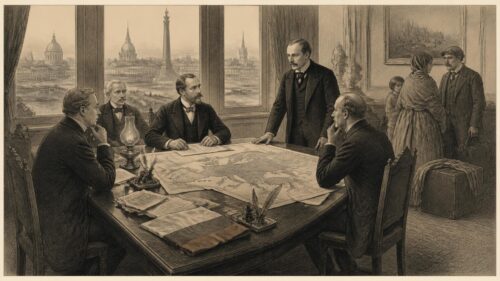
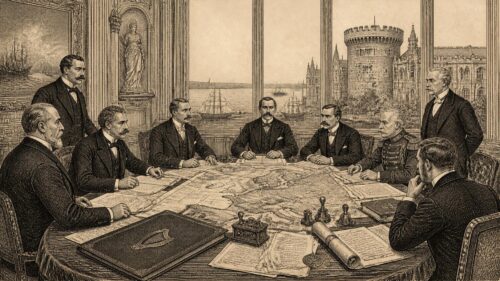
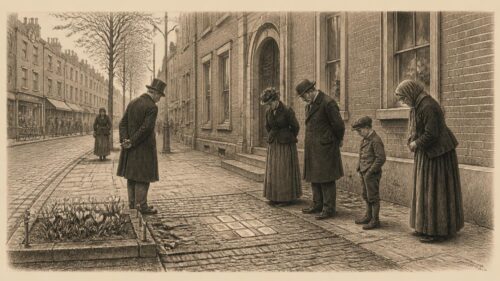
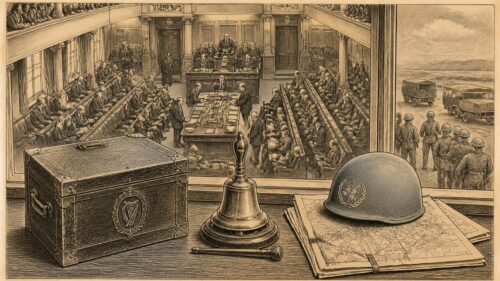
AI generated historical illustration, not a contemporary photograph.
At a Glance
Yes. Elements within the IRA did establish real, documented contacts with Nazi Germany before and during the Second World War, particularly with the Abwehr, Germany’s military intelligence service. Those contacts involved discussions of arms, money, communications, sabotage and possible action against Britain. They were neither a formal alliance between Ireland and Hitler nor evidence that every republican, or every IRA volunteer, was a Nazi. They were, however, serious enough to alarm the Irish and British authorities, and they left a deeply troubling historical record.
Direct Answer
The short answer requires several qualifications. The IRA of the late 1930s and early 1940s was an illegal, divided and weakened revolutionary organisation, not the government of Ireland and not a body representing Irish public opinion. The Irish state, officially neutral during the conflict known in Ireland as the Emergency, did not join the Axis. Éamon de Valera’s government suppressed the IRA, interned many of its members, executed several republican prisoners after due process under emergency legislation, and developed extensive security cooperation with Britain while maintaining formal neutrality.
Yet a section of the IRA leadership sought assistance from Nazi Germany. Contacts developed before war began in Europe in September 1939, became more substantial during 1939 and 1940, and continued in more fragmentary forms thereafter. Seán Russell, IRA chief of staff, James or Jim O’Donovan, an IRA organiser and explosives specialist, and several German intelligence officers were central figures. German agents also entered Ireland, while IRA personnel explored the use of radio communications, couriers and prospective weapons supplies.
The purpose was principally strategic. IRA leaders believed that a British defeat could create an opportunity to end partition and bring Northern Ireland into a united Irish republic. German officials, for their part, saw the IRA as a possible instrument for disrupting Britain, gathering intelligence and complicating British military planning. The relationship was profoundly unequal. Berlin had its own imperial and military objectives; the IRA hoped to use Germany for Irish ends. Neither side obtained all that it wanted, and the practical results fell far short of the ambitions sometimes expressed in conversations and propaganda.
That pragmatic motive does not make the connection morally neutral. By 1939 and 1940 Nazi Germany was plainly a dictatorship which had destroyed democratic opposition, persecuted Jews, invaded neighbouring states and waged aggressive war. Some republicans had previously condemned Hitlerism and fascism, while others remained hostile to German rule in principle. But parts of the IRA leadership and its propaganda apparatus came to speak favourably of German victories, contemplated support for a German landing, and circulated anti-Jewish material. The evidence therefore supports neither a sweeping claim that the IRA as a whole was simply Nazi nor the comforting claim that its German contacts were insignificant or innocent.
Republican Setting
To understand why such contacts became possible, it is necessary to begin with the political condition of Irish republicanism after independence. The Anglo-Irish Treaty of 1921 had created the Irish Free State while confirming Northern Ireland’s separation from the rest of the island. The Treaty split the republican movement and led to the Civil War of 1922–23. Although the anti-Treaty side was defeated, a continuing IRA claimed the heritage of the revolutionary army and rejected the legitimacy of partition and of the constitutional settlement in the twenty-six counties.
By the middle of the 1930s, the organisation faced declining membership, internal arguments and state pressure. There were sharp ideological differences. Some republicans were attracted to socialist politics, labour organisation and anti-fascism; others preferred a narrowly military conception of republicanism in which armed action mattered more than social programmes. Some held conservative Catholic or authoritarian ideas; others were strongly anti-clerical or left-wing. It is historically misleading to treat these strands as interchangeable.
Seán Russell belonged largely to the military tendency. He had been involved in the revolutionary period, became IRA quartermaster-general in 1927 and concentrated on organisation, training and procuring arms. The Dictionary of Irish Biography records that he had also travelled to Soviet Russia in the 1920s seeking arms. This earlier episode matters because it shows a recurring pattern: Russell was prepared to look abroad for support against Britain without thereby becoming a committed communist. The same distinction must be retained when examining his later approach to Germany. Seeking assistance was not automatically identical to ideological conversion, but it could still lead to collaboration with a destructive foreign power.
In 1938 Russell won control of the IRA after a bitter internal struggle. More experienced figures, including Tom Barry, left the leadership. Russell and allies such as Jim O’Donovan then favoured a bombing and sabotage campaign in Britain, commonly called the S Plan. An IRA ultimatum to Britain was issued in January 1939, followed by attacks in English cities. The campaign killed civilians, injured many others and failed politically. It also attracted German attention at precisely the moment when European diplomacy was sliding towards war.
German Interest
Nazi Germany did not approach Ireland as a disinterested champion of small nations. Hitler’s regime valued Ireland principally in relation to Britain. Irish geography was strategically significant: the island lay across Atlantic approaches, near British sea lanes and within reach of western Britain. German planners considered schemes connected with operations against the British Isles, though plans such as Operation Green, a projected German invasion of Ireland, were never carried out.
German intelligence explored contacts with Irish individuals and political groups who might provide information, influence public opinion or assist operations. The relevant service was usually the Abwehr, led by Admiral Wilhelm Canaris. Its officers were interested in espionage, sabotage, communications and the possibility of exploiting hostility to Britain. They did not need the IRA to share every feature of Nazi ideology; they needed to know whether it could be useful in a war against the United Kingdom.
This was a calculation rooted in German military interest, not a promise of Irish freedom. Abwehr officers assessed republican claims about membership, weaponry and influence with varying degrees of scepticism. Later German reports suggested that the organisation’s practical strength was lower than its representatives had implied. German planners also had difficulty finding reliable agents, establishing secure radio communications and reconciling competing intelligence and foreign-policy priorities. Ireland was never at the centre of Hitler’s war, even at the moment of greatest fear of a German invasion in 1940.
The distinction between Nazi Germany, the Abwehr and the German Foreign Office is important. They overlapped but were not identical institutions. Individual officers had different views about the IRA’s value. The Abwehr could cultivate republican contacts while diplomats considered wider implications, and German policy could change rapidly as military circumstances changed. Statements that “Hitler backed the IRA” are therefore too broad if they imply a settled, fully resourced state alliance. The documented picture is of exploratory and operational contacts, constrained by German doubts and by events.
Russell Mission
Seán Russell’s journey to Germany in 1940 is the most dramatic and best-known episode. After travelling in the United States, he made his way through Italy and reached Berlin. There he was received by leading German officials, including Foreign Minister Joachim von Ribbentrop. The Royal Irish Academy’s Dictionary of Irish Biography confirms that German communications had persuaded Russell that aid might be available and that arrangements were made to return him to Ireland.
Russell was treated with a degree of ceremony that reflected German hopes rather than an equal partnership. He received accommodation, transport and access to officials. He discussed the IRA’s potential role in a conflict involving Britain and Northern Ireland. Historical accounts based on post-war interrogations and intelligence material indicate that German officers sought practical intelligence and wanted to assess whether the IRA could contribute to sabotage or support operations. Russell, meanwhile, wanted arms, ammunition, explosives, money and German assistance for Irish republican objectives.
In August 1940, at the height of German military success in western Europe and during the Battle of Britain, Russell and Frank Ryan sailed from Wilhelmshaven aboard a German U-boat. The mission is generally known as Operation Dove. It was intended to bring them to Ireland, where they might assist German plans or revive an IRA initiative in circumstances thought favourable to Germany. The voyage ended abruptly. Russell became seriously ill and died on 14 August 1940, probably from a perforated gastric ulcer. He was buried at sea.
Russell’s death ended one particular plan but not the larger security problem. His mission demonstrates beyond reasonable doubt that senior IRA figures had direct dealings with the Third Reich. It also illustrates the limitations of those dealings. The U-boat did not land its passengers; no German arms shipment transformed the IRA into an effective auxiliary force; and no coordinated German–IRA offensive followed. The episode was real, dangerous and politically consequential, but it was not the prelude to a successful German takeover of Ireland.
Odonovan Role
Jim O’Donovan was at least as important as Russell in building the operational connection. A veteran republican and technically minded organiser, he helped design the S Plan and was deeply involved in its explosives and sabotage aspects. David O’Donoghue’s research traces meetings between O’Donovan, Russell and German representatives in Dublin during early 1939, followed by O’Donovan’s trips to Germany.
These visits were not casual encounters. O’Donovan met Abwehr personnel in Hamburg and Berlin, discussed possible support, obtained codes and explored means of contact. The Germans were interested in prospective agents, sabotage targets, radio sets, courier arrangements and the likely response of Britain to war. O’Donovan was interested above all in weapons, ammunition, explosives and financial help. The subject matter itself establishes the seriousness of the relationship: this was clandestine political and military business, not merely social contact or wartime rumour.
Nevertheless, negotiations did not produce the extensive material aid sometimes alleged. The outbreak of war disrupted arrangements. A projected package of German arms and explosives was not delivered. Some money and communications assistance did reach republican networks, and a radio link was established for a time, but this should not be inflated into proof of a fully functioning German supply system. The material capacity of the IRA remained limited, while the Irish authorities increasingly disrupted its organisation.
O’Donovan’s language and outlook also complicate attempts to portray the entire relationship as mechanically opportunistic. The surviving record suggests that he imagined a German victory creating favourable conditions for Irish unity and believed Germany would deal generously with Ireland. Such confidence was naïve at best. The Nazi occupation of much of Europe gave no sound basis for believing that a Germany dominant over Britain would respect Irish self-determination. Here the historical evidence supports a hard conclusion: anti-British calculation could lead individuals to underestimate, excuse or ignore the nature of Nazi power.
Intelligence Schemes
Contacts with the Abwehr extended beyond the journeys of Russell and O’Donovan. German agents were sent to Ireland between 1939 and 1943. Their missions varied. Some were tasked with collecting information about British and Irish military matters; others hoped to create communications channels or draw upon republican networks. A number were detected, monitored or rendered ineffective by Irish security services. The fact that agents arrived does not mean that each was successfully supported by the IRA, but it shows that the German state regarded Ireland as an intelligence theatre.
One much-cited document is Plan Kathleen, recovered after the arrest of German agent Stephen Held in 1940. It has often been described as a German–IRA blueprint for an invasion of Northern Ireland. That description needs caution. The surviving text was a preliminary, speculative paper rather than an approved German operational order. It contained questions and proposals about conditions in Northern Ireland, possible targets and an imagined republican role. It indicates that invasion and IRA action were being contemplated in some circles; it does not prove that the Wehrmacht had adopted a completed plan to conquer Northern Ireland alongside the IRA.
British military and intelligence authorities, however, had reason to worry. In the crisis following the German invasion of the Low Countries and France in May 1940, British officials feared that Ireland could become a route, base or distraction for German operations. They believed the IRA might act as a fifth column in the event of an invasion. Eunan O’Halpin has shown how these fears influenced British planning and Anglo-Irish relations. Fear should not be mistaken for proof of capability: British estimates could be alarmist. But the IRA’s actual foreign contacts gave such fears a factual foundation.
The Irish state also regarded the organisation as a grave danger. The government’s emergency powers, military intelligence work and internment policy were shaped not only by the IRA’s campaign in Britain but by the possibility that foreign agents could use republican channels to compromise Irish neutrality. Irish intelligence, often referred to as G2, pursued German espionage and kept watch on republican activity. This was part of the paradox of Irish neutrality: the state did not enter the war, yet it acted energetically to prevent its territory being used by Germany or by the IRA against Britain.
Ryan Question
Frank Ryan is the most difficult individual in this story and is frequently used to make incompatible arguments. Ryan had been a prominent republican, but he had broken with the IRA leadership in the mid-1930s and was associated with the left-wing Republican Congress. He fought for the Spanish Republic in the International Brigades against Franco’s insurgents, who were supported by Nazi Germany and Fascist Italy. Captured in Spain, he faced imprisonment and the threat of execution.
German intelligence helped secure Ryan’s release from Spanish custody in 1940, after which he was taken to Germany. This was not evidence that Ryan had become a Nazi. His anti-fascist record in Spain is substantial, and he never fitted easily into the ideological world of Berlin. Yet he did become involved in German schemes concerning Ireland, and he travelled with Russell on the U-boat mission. Following Russell’s death, Ryan remained in Germany until his own death in Dresden in 1944.
The evidence suggests that German officials considered using Ryan because they regarded him as potentially more cooperative or more useful than Russell. Plans were discussed in which he might make contact with Irish political figures and promote action over Northern Ireland if Germany invaded Britain. Such proposals show German intent; they do not prove that Ryan endorsed every proposal or that the Irish government was likely to accept them. Claims that Ryan met Hitler in 1942 rest on post-war intelligence reporting and should be treated cautiously unless corroborated by stronger documentary evidence.
Ryan’s case therefore resists a simple verdict. It would be false to erase his anti-fascist past or label him a straightforward Nazi collaborator in the mould of European fascist movements. It would also be false to pretend that his German years had no political significance. He was caught in an extraordinary and compromising situation, accepted German custody and became entangled in German plans. The responsible historical approach is to acknowledge both facts rather than use one to cancel the other.
State Response
The activities of Russell, O’Donovan and their contacts must not be confused with the policy of the Irish government. Ireland remained neutral from September 1939 until the end of the war in Europe in May 1945. Neutrality was defended publicly as a protection for sovereignty in a recently independent state and as a means of maintaining unity in a partitioned island. It was popular with many citizens, though its meaning and application were fiercely contested.
In practice, the Irish authorities opposed German espionage and republican militancy. The state censored wartime material, detained suspected IRA members and German agents, strengthened military defences and shared significant information with Britain. This cooperation was discreet because public association with Britain could damage neutrality at home, but it was consequential. Irish policy makers understood that a German invasion, whether of Ireland or Britain, could imperil Irish independence.
The IRA’s own position was unstable. It had declared war on Britain but lacked the strength to determine events. Its campaign made it more isolated from the Irish public and helped provide the state with grounds for repression. Internment in the Curragh and other prisons weakened the organisation further. By the later war years, the prospect of a German victory had receded and the practical value of Irish republican contacts to Berlin diminished.
This wider setting is essential when judging claims that “Ireland supported Hitler”. Ireland did not. Some Irish people admired German military successes, often through anti-British feeling rather than fully developed Nazism; others actively opposed fascism, including Irish volunteers who had fought for the Spanish Republic and Irish men and women who served in Allied forces. The state’s neutrality should itself not be rebranded as pro-Nazi alignment. The IRA contacts were serious precisely because they were the actions of a subversive minority acting against the policy of the state.
Ideological Faultlines
The motives of the people involved cannot be reduced to one explanation. Anti-British hostility, opposition to partition, faith in armed struggle, desperation after political decline, anti-communism, Catholic conservatism and admiration for German military success all played a part. There was also, in some republican circles, genuine ideological sympathy with authoritarian and fascist ideas. The balance differed from person to person and changed over time.
Russell is often described as an apolitical soldier interested only in arms. There is some basis for seeing him as a military organiser whose foreign policy was driven by the maxim that Britain’s difficulty was Ireland’s opportunity. The Dictionary of Irish Biography finds no evidence that he was ideologically a Nazi. But that observation should not become an acquittal. A leader who knowingly sought aid from Hitler’s regime in 1940, met its ministers and undertook a submarine mission connected to German war plans made a political and moral choice, whatever label he used for himself.
Other evidence is more explicitly disturbing. IRA publications during the war could praise the Third Reich, depict Germany as a liberating force and repeat anti-Semitic claims. Brian Hanley’s work draws attention to the movement’s earlier anti-Nazi voices as well as its later pro-German turn. This contrast matters. It shows that information about Nazi repression was available in Ireland and had been printed in republican newspapers before the war. The claim that nobody could have known what Nazism represented is untenable.
At the same time, the content of an illegal newspaper should not automatically be assigned to every IRA member. Wartime underground publications were produced by limited editorial circles, and the organisation was fractured by arrests, imprisonment and disagreement. The appropriate conclusion is specific rather than exculpatory: certain IRA leaders and propagandists adopted or tolerated pro-Nazi and anti-Jewish rhetoric, while other republicans rejected fascism and some had already left the IRA because of its political direction.
Evidence Limits
This subject attracts folklore because it combines secret services, submarines, coded messages, invasion scares and politically charged memories. Some popular accounts magnify isolated documents into proof that the IRA and Hitler were equal partners in a master plan. Others minimise documented meetings and intelligence links in order to preserve a cleaner nationalist narrative. Neither approach is persuasive.
Documented evidence includes direct IRA–Abwehr meetings; O’Donovan’s German visits; the exchange of codes and the discussion of radios, couriers and supplies; Russell’s residence in Berlin and meetings with German officials; the 1940 U-boat mission; German agents sent to Ireland; and the Irish and British security response. These matters are supported by Irish, British and German intelligence records, memoir evidence tested against archives, and the work of historians including Eunan O’Halpin, Brian Hanley and David O’Donoghue.
Interpretation begins when historians assess motive, degree and likely consequence. It is reasonable to conclude that the relationship was primarily transactional from the IRA’s side, because republican representatives sought material aid against Britain and Germany sought disruption of Britain. It is also reasonable to conclude that the transaction was morally compromised and politically reckless, because it involved assistance from a regime already defined by dictatorship, conquest and racial persecution. Whether particular individuals inwardly believed Nazi doctrine is harder to establish and must be argued from their words and actions, not assumed from association alone.
Folklore begins where evidence thins: claims of huge German arms caches, assertions that Ireland was on the verge of an IRA-led Nazi coup, or stories that every republican was a German agent. The record does not sustain them. The Germans did not conquer Ireland, the IRA did not seize Northern Ireland, and the projected partnership did not become an effective wartime alliance. Its historical importance lies not in success but in the reality of the attempt and in the dangers it created.
Historical Verdict
Did the IRA have connections to Hitler’s Third Reich during the Second World War? Yes, unquestionably. Senior IRA figures communicated and negotiated with German intelligence and officials; they sought military assistance; German agents tried to use Irish republican channels; and Seán Russell died while returning from Germany on a U-boat mission. These are matters of documentary record, not later invention.
But precision is vital. The IRA was not Ireland, and neutral Ireland was not a Nazi ally. The relationship was not a stable treaty alliance, and German support did not turn the IRA into a decisive military force. It was a limited, clandestine and often frustrated connection between a weakened republican organisation and a predatory foreign regime.
The most defensible judgement is that the contacts were driven chiefly by the hope that a German war against Britain would open the way to Irish reunification. That strategic logic was rooted in a long republican habit of looking to Britain’s enemies for opportunity. In the circumstances of 1939 and 1940, however, it led some IRA leaders into dealings with one of the most criminal regimes in modern history. The distinction between expediency and ideological Nazism is historically necessary; it is not a moral escape route.

The article highlights the uneasy boundary between strategic nationalism and ideological accommodation. IRA leaders sought German help chiefly to challenge Britain and partition, yet the contacts also involved pro-German propaganda and occasional anti-Semitism. This makes the relationship more troubling than a purely tactical calculation, while its limited practical results complicate claims of a coherent alliance. The contrasting cases of Seán Russell and Frank Ryan further suggest that individual motives cannot be reduced to one label. How should historians weigh anti-British strategy, personal conviction and moral responsibility when interpreting republican engagement with Nazi intelligence during the Emergency in Ireland and Britain?