
Contingent Invasion
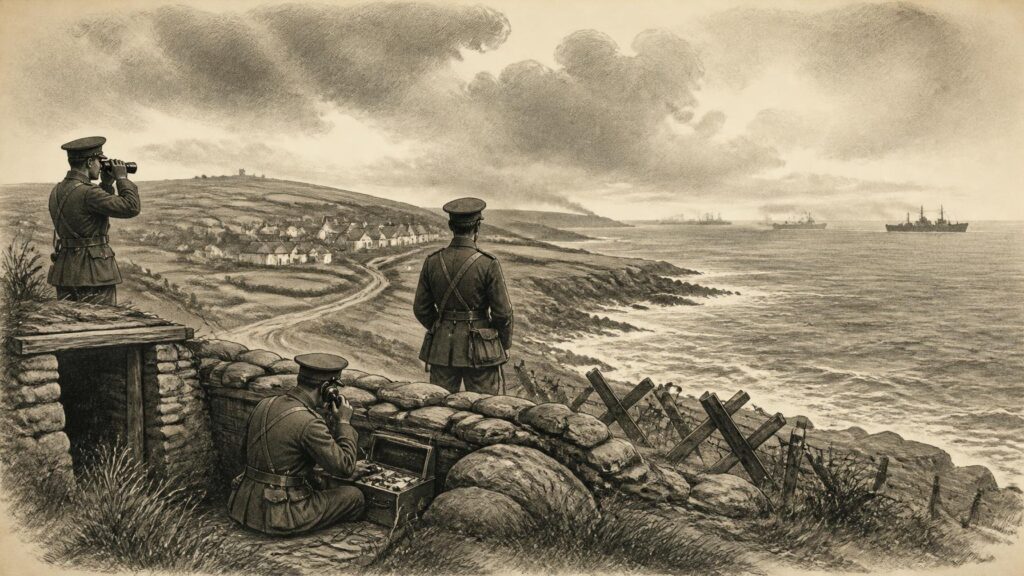
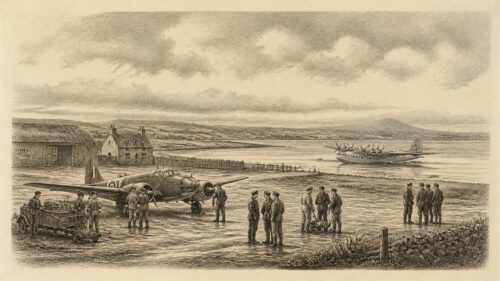
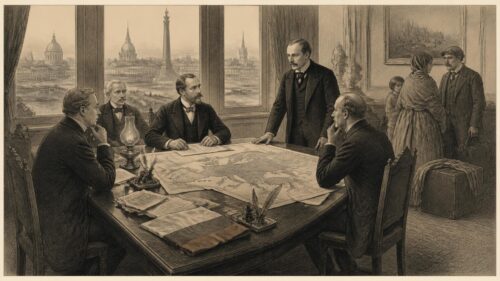
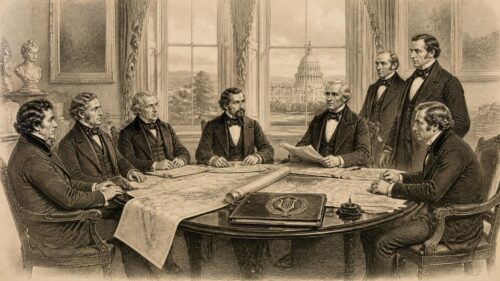
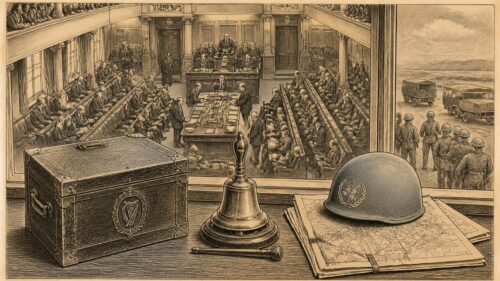
AI generated historical illustration, not a contemporary photograph.
At a Glance
Did Hitler have plans for Ireland during the Second World War? Yes—but the evidence requires careful wording. Nazi Germany produced real military planning for an invasion of neutral Ireland, usually known as Operation Green or Fall Grün. Yet it was not an independent scheme for the permanent conquest of Ireland, nor was it ever launched. It was a contingent, strategically secondary project tied chiefly to the far larger and unrealised German plan to invade Britain. As for plans “after” the war, Hitler died by suicide in Berlin on 30 April 1945, before the European war ended; there can therefore have been no post-war policy made by him for Ireland. What survives is a mixture of German operational papers, intelligence gathering, diplomatic assurances, Irish defensive planning and later speculation.
Direct Answer
The short answer is that Germany under Hitler did make plans which envisaged landing troops in Ireland during 1940, when a German invasion of Britain appeared, for a brief period, conceivable. The surviving material is sufficient to rule out the comforting claim that Ireland was simply irrelevant to Nazi strategy. German officers collected geographical and military information about the island before the war and assembled it into operational and geographical studies. In the summer and autumn of 1940, the German army prepared papers concerning a landing in Ireland. A surviving German archival file is explicitly described as containing directives, correspondence and orders relating to a landing in Ireland under Fall Grün, alongside training instructions, embarkation information and sea-transport papers.
That evidence does not mean that Hitler had a settled blueprint for an Irish Nazi state, a detailed programme of occupation, or a plan to incorporate Ireland into the Reich. Such claims go beyond what the documentation demonstrates. Operation Green was a military contingency: a possible attack intended to serve Germany’s wider war against Britain. It had to be understood beside Operation Sea Lion, the proposed cross-Channel invasion of England. Germany’s inability to win command of the air during the Battle of Britain undermined Sea Lion, and with it the practical basis of Green.
It is also important not to turn a plan prepared by parts of the German armed forces into a simple personal command from Hitler. In ordinary speech, “Hitler’s plan” can be a shorthand for Nazi German policy and war planning. Historically, however, the distinction matters. Military staffs, intelligence bodies, diplomats and political leaders did not all share identical priorities. Hitler authorised and directed the wider war against Britain, but the surviving evidence points more securely to a Wehrmacht contingency connected to that war than to a sustained personal project for Ireland.
Strategic Setting
Ireland’s geographical position made it important in 1940, despite its small military capacity and declared neutrality. The island lay on the western approaches to Britain and beside Atlantic shipping routes vital to Britain’s survival. German possession of suitable harbours, airfields or coastal observation points in Ireland might, in theory, have complicated British maritime defence and the Battle of the Atlantic. Equally, a German landing in Ireland could have forced Britain to divert troops and resources westwards at a moment of crisis.
For Dublin, this danger was only one side of an acute problem. Éamon de Valera’s government declared neutrality at the outbreak of war, formally entering the period remembered in Ireland as the Emergency. Neutrality was not a claim that Ireland could stand apart without risk. It was an attempt to keep the state out of a conflict in which either major belligerent might violate its territory. The Irish government feared Germany, but it also feared that Britain might seize strategic installations or return to ports transferred to Irish control in 1938. The Treaty Ports at Berehaven, Cobh and Lough Swilly had long been significant to British naval strategy.
The fall of France in June 1940 transformed the atmosphere. German forces now controlled the French Atlantic coast. Ireland was no longer separated from German-held territory by the North Sea and Britain; it lay within easier reach of aircraft and naval activity based in western France. Irish officials, British planners and the public had reason to contemplate possibilities which only months earlier might have looked remote. An invasion was not inevitable, but neither was it fantasy.
The German interest was not wholly new. Before the war, German visitors, students and officials had gathered information about Irish roads, railways, ports and terrain. Such knowledge had scholarly, commercial and tourist uses, but in a period of military preparation it could also be incorporated into intelligence files. The later operational material did not emerge from nowhere. It rested upon a body of geographical study, local observation and strategic assumptions about the British Isles.
Green Planning
Operation Green was the name normally applied to the German invasion concept for Ireland. Its terminology can be confusing. It appears variously as Fall Grün, Plan Green and Unternehmen Grün. These labels should not be mistaken for proof of one polished, final master plan. Wartime planning developed through drafts, assessments, staff papers and different versions. Nonetheless, the basic proposition is clear: German military authorities contemplated an amphibious assault on Ireland in 1940.
One widely cited outline envisaged a landing on the Wexford coast followed by a movement towards Dublin. Other contemporary assessments, including Irish fears and British intelligence appreciations, considered possible landings along the southern coast, with particular concern for the approaches between Waterford and Cork, and with airborne action against Dublin. These variations are not necessarily contradictions. They illustrate the difference between a German staff concept, the range of plausible landing zones, and the defensive authorities’ need to prepare for several dangers. Coastal geography, the availability of shipping, weather, British naval power and the condition of Irish communications all affected what could be attempted.
The archival evidence is more revealing than dramatic. It includes technical and logistical indications: orders, correspondence, embarkation ports, transport requirements, training directions and material for sea transport. This is the language of planning rather than propaganda. It establishes that German officers worked seriously enough on the possibility to identify forces, movement problems and administrative requirements. The preparation of detailed geographical information about Ireland, including photographs, maps and notes on routes and settlements, shows the same practical interest.
Yet a plan on paper is not an invasion force at sea. Germany would have required naval cover, transport vessels, reliable intelligence, air superiority and a capacity to maintain supply lines across waters contested by the Royal Navy. It would also have needed to judge Irish resistance, British intervention from Northern Ireland, and the possibility that troops landed in the south would become isolated. Operation Green was thus a formidable undertaking for a state already trying to solve the far greater problem of invading Britain.
Operational Limits
Operation Green was dependent on the larger German design against Britain. This was its central weakness. Sea Lion itself was never executed because Germany failed to achieve the air superiority regarded as necessary for a cross-Channel landing. If the Luftwaffe could not sufficiently suppress the Royal Air Force and make an invasion of southern England feasible, an expedition to Ireland was scarcely easier. The route was longer, the naval obstacles substantial, and the strategic reward uncertain.
Ireland could have offered useful Atlantic facilities, but it was not a shortcut to victory. German forces would have needed to capture and hold ports, secure airfields, move through unfamiliar territory and defend themselves against counter-attack. A landing on the east or south-east coast would bring Dublin within reach, but it also placed an invading army close to Britain and to possible British responses. A landing farther south or west might reduce some immediate risks while making supply and movement more difficult. The island’s roads, bridges and limited infrastructure imposed practical constraints on mechanised operations.
The Irish Army was poorly equipped by the standards of the great powers, but it was not absent. Mobilisation, coastal defences, demolition plans and local knowledge mattered. More importantly, a German attack on Ireland would have created a political and military crisis in Britain. A neutral Irish government attacked by Germany could request assistance. British troops in Northern Ireland were already close at hand, and British planning assumed that a German foothold anywhere on the island could not be ignored.
For these reasons, historians should resist two opposing exaggerations. One is that the plan was so impractical that it meant nothing. The other is that a German landing would necessarily have delivered the whole island to Nazism. Operation Green was genuine planning, but it was a risky subsidiary operation whose prospects depended on German success elsewhere. It illustrates danger, not inevitability.
Diplomatic Deception
German diplomacy towards Ireland in 1940 added another layer of uncertainty. The German minister in Dublin, Eduard Hempel, repeatedly assured Irish officials that Germany wished Ireland to maintain neutrality and did not intend to invade. In July 1940, according to an Irish Foreign Affairs memorandum, Hempel conveyed that Germany had only one aim in relation to Ireland: continued neutrality. In August he reaffirmed assurances that Germany would not violate Irish neutrality.
These statements cannot be accepted simply as reliable descriptions of German military intentions. Governments at war often use diplomatic assurances to preserve advantage and obscure plans. Earlier, when asked whether Germany might make use of Irish territory in an attack on England, Hempel had indicated that he could not seek a specific assurance because that would partly reveal German plans to an enemy. To Irish officials, this was hardly reassuring. It suggested that the German legation could not—or would not—separate diplomatic language from military contingency.
There was a rational German interest in Irish neutrality. A neutral Ireland denied Britain formal use of southern Irish bases while also avoiding the military burden that occupation would impose upon Germany. Berlin could prefer Ireland to remain outside the war while still retaining the option of action if circumstances changed. That was not a contradiction from the Nazi perspective; it was strategic flexibility.
For Dublin, the lesson was severe. Formal assurances had value as diplomatic evidence, but no state could safely organise national defence around them. Nazi Germany had already violated the neutrality of several European countries. The Irish government therefore treated German professions of goodwill with caution while trying not to provide either Berlin or London with a pretext to end Irish neutrality.
Irish Preparations
Irish preparations show that the German threat was treated as real. The Military Archives preserve files of the 18th Military Mission, created from 1940, documenting contacts between Irish officers and British and American military representatives. They include discussions of what might happen if Axis forces invaded Ireland, the sharing of information, assessments of defences, maps, supplies and communications. This was not a public alliance; Ireland remained officially neutral. It was, however, evidence of quiet contingency planning.
In July 1940, the Irish Chief of Staff outlined potential British action and probable German action. The latter included an invasion on the south coast, with a secondary parachute attack on Dublin. The government considered how Irish forces should respond, whether bridges should be prepared for demolition and under what circumstances British assistance might be requested. De Valera directed that preparations should focus on meeting a German invasion. If German troops landed, Irish forces were to oppose them with all available means, and British help could be sought if necessary.
This is an important corrective to caricatures of Irish neutrality. Neutrality was not acceptance of German action and did not mean that Dublin intended to welcome a German force. The state’s formal policy was to defend its territory against an invader, whoever that invader was. Its leaders understood that military weakness left them reliant on difficult decisions, including possible British aid. Their priority was to preserve Irish sovereignty as far as circumstances allowed.
Planning brought other anxieties. British troops might arrive as allies against a German landing, but their presence could revive fears of occupation, partition and loss of control. The problem was not merely military. Irish policymakers had to calculate public opinion, relations with Northern Ireland, the practical movement of troops, food and fuel supplies, and the effect of war on a young state whose independence was still politically sensitive.
Northern Dimension
The partition of Ireland made the question of invasion inseparable from Northern Ireland. The six counties remained part of the United Kingdom and thus were already within the British war effort. Belfast was an important industrial city and shipbuilding centre, while Northern Ireland provided British forces with bases and a position from which to respond to threats in the south. A German attack on the island would not have encountered a single unified military authority.
German plans concerning the Republic and German ideas about assisting anti-British forces should not be confused with a coherent policy for a united Ireland. Nazi strategic interest centred on weakening Britain. Any German willingness to exploit Irish republican hostility to British rule was instrumental, not altruistic. Berlin’s leaders did not share the democratic or anti-colonial principles which many Irish nationalists invoked. Their regime was a dictatorship founded on racial ideology, repression and expansionist war.
British and Irish authorities likewise had different priorities. Britain wanted to prevent German access to Irish territory and protect Atlantic communications. Dublin wanted to avoid both German invasion and an unauthorised British move into the state. Their secret discussions therefore contained co-operation, distrust and mutual calculation. The result was not a seamless Anglo-Irish military partnership, but a series of arrangements intended to avert a catastrophe neither side could manage alone.
Later wartime developments changed the balance. The stationing of American and British forces in Northern Ireland from 1942 strengthened Allied capacity on the island and reduced the likelihood that Germany could undertake a successful Irish venture. By then, Germany’s war had turned eastwards against the Soviet Union, while the Atlantic struggle and preparations for Allied operations elsewhere consumed resources. Ireland did not disappear from German thought, but it was no longer near the centre of European strategy.
Republican Contacts
Any account of German plans must address contacts between the Abwehr, Germany’s military intelligence service, and elements of the IRA. These contacts have often encouraged lurid accounts of Nazis and Irish republicans jointly preparing to conquer Ireland. The historical record is more complicated and less flattering. Some republican activists sought German support because they believed a war with Britain offered an opportunity to end partition. German intelligence saw possible agents and auxiliaries who might damage British interests or provide local information.
These contacts did not amount to a reliable German-Irish alliance, and they did not represent Irish public policy. The Irish government monitored and suppressed illegal activity. German agents who entered Ireland faced an increasingly capable Irish security response from G2, military intelligence, and the Gardaí. German expectations about the IRA were frequently unrealistic, while republican expectations of German generosity ignored the character and objectives of the Nazi regime.
“Plan Kathleen”, found in material connected to German agent Hermann Görtz and republican contacts in 1940, has become a recurring feature of popular discussion. It is best treated carefully. It indicated interest in action against Northern Ireland and contained ideas connected with a possible German-supported operation. It was not proof that the Wehrmacht had adopted a fully developed, executable plan to invade the North through the IRA. The distinction matters: an intelligence-related proposal, a wish-list and a general staff operation are different things.
Nor should the existence of collaborationist individuals obscure the broader setting. Ireland contained anti-British, pro-German and antisemitic currents, as did many countries in the period, but it also contained strong hostility to Nazism, especially in response to its persecution of Jews and Christians and its assaults on small states. A neutral state was not an ideologically neutral society. Irish attitudes were diverse, shifting and often shaped by the unresolved legacy of British rule.
Occupation Questions
What would Germany have done had Operation Green succeeded? This is where evidence gives way to cautious interpretation. No comprehensive, authoritative Nazi blueprint has been found that sets out a post-conquest civil administration for Ireland comparable to the occupation machinery imposed in territories Germany actually conquered. It would be irresponsible to fill that gap with invented certainty.
There are, however, reasonable inferences. A German force that landed in Ireland in support of war against Britain would have prioritised military control: ports, airfields, communications, road junctions, government centres and coastal facilities. Dublin, major harbours and transport routes would have been of obvious importance. Arrests of officials, surveillance of suspected opponents, censorship, requisitioning and efforts to recruit informers were common features of Nazi occupation elsewhere. Ireland would not have been insulated from the coercive nature of the regime merely because German propaganda might have described an invasion as liberation from British influence.
That inference must not become a claim that Ireland’s experience would have exactly replicated that of Poland, the Netherlands, Norway or France. Nazi occupation varied according to military conditions, racial ideology, local institutions, economic value and resistance. Ireland’s position, population and relationship to Britain would have produced its own pattern. But the governing fact remains: the prospective occupier was a dictatorship already responsible for aggressive war, racial persecution and the destruction of neutral states. Any assumption that German intervention would have preserved Irish independence is incompatible with the evidence of Nazi conduct across Europe.
Folklore often supplies neat endings: Germany would have created a united Ireland; Hitler would have rewarded Irish neutrality; the IRA would have governed with German support; or German troops would have used Ireland merely as a temporary base and departed. None can be presented as documented fact. They are retrospective possibilities, sometimes shaped by political hope or fear. The surviving record establishes military interest and contingency planning, not a settled future constitution for Ireland.
Later Shadows
German interest did not end instantly when Sea Lion faded. Geographical studies and material concerning Ireland continued to circulate, and German planners considered further possibilities during the war. Yet these did not mature into a credible second attempt at invasion. The strategic environment moved against them. Germany was increasingly committed in eastern Europe, faced growing Allied naval and air strength, and lacked the means to open a new major western expedition.
Some later fears were fed by real incidents. German bombs fell on Irish territory, including damaging raids on Dublin in 1941, though Germany later attributed these to navigational error and paid compensation. The Luftwaffe’s devastating raids on Belfast in April and May 1941 demonstrated that the island could be struck even without invasion. These events made abstract strategic debate immediate for civilians north and south of the border.
Wartime rumours thrived in such conditions. Reports of German submarines, clandestine wireless sets, local sympathisers and imminent landings circulated readily. Some reflected genuine espionage activity; others enlarged fragments of truth into tales of certainty. The historian’s task is not to dismiss all contemporary fear as hysteria, nor to treat every rumour as evidence. The documentary record supports a serious German contingency plan, but not every dramatic story later attached to it.
Operation Green’s afterlife has also been shaped by the survival of maps, photographs and striking documents. Such artefacts give the invasion an eerie physical reality. They rightly remind us that Ireland was studied as a possible theatre of war. But maps do not march, and planning files do not by themselves reveal political intentions beyond the operation for which they were created. Their importance lies in showing how close strategic calculation came to neutral Ireland during the crisis of 1940.
Aftermath Limits
The question sometimes asks what Hitler planned for Ireland “after it”, meaning after the Second World War or after a hypothetical German victory. The first meaning has a definite answer. Hitler could make no post-war plans because he died on 30 April 1945 in his Berlin bunker. Germany’s unconditional surrender followed in May 1945. Any later Nazi or post-Nazi fantasy about Ireland was not Hitler’s policy.
The second meaning requires a different answer: there is no sound basis for describing a detailed, final Hitler plan for Ireland after a victorious German war. Nazi leaders made many broad statements about a reordered Europe, and Nazi rule elsewhere makes clear that victory would have endangered sovereignty and human rights. But the evidence consulted for this article does not provide a specific postwar Irish settlement drafted or approved by Hitler. It is better to acknowledge that absence than to create a false certainty.
There is a temptation to imagine history as a sequence of secret master plans, each with a fixed outcome. The story of Ireland in 1940 was more contingent. Britain’s survival in the Battle of Britain, German operational limitations, Irish defensive measures, Anglo-Irish contacts, the course of the Atlantic war and Germany’s subsequent invasion of the Soviet Union all altered what was possible. Operation Green belonged to a short, dangerous moment when several futures seemed open.
Historical Verdict
The documented verdict is therefore precise. Nazi Germany prepared a genuine invasion contingency for Ireland in 1940. It was linked to the projected invasion of Britain and was supported by intelligence collection and practical military-geographical work. Irish leaders took the prospect seriously enough to plan resistance and, if necessary, seek British assistance. German diplomats publicly denied an intention to invade, but their assurances cannot erase the existence of military planning.
At the same time, Operation Green should not be inflated into a fully resourced, independently viable campaign or a proven programme for permanent Nazi rule in Ireland. It was never executed. Its chances depended heavily on a German victory in the air war against Britain that did not occur. Later German interest remained preliminary and did not overcome the strategic obstacles which had made the original project doubtful.
The answer to the wider question is thus neither “no plan at all” nor “Ireland narrowly escaped a fully designed Nazi future”. Ireland was included in Nazi Germany’s strategic calculations at one of the most perilous points of the war. That fact deserves remembrance. It also deserves disciplined interpretation: documents show a contingent plan to invade; they do not show that Hitler possessed a completed postwar design for Ireland, and they certainly do not support folklore that a Nazi victory would have brought Irish freedom.

Operation Green reveals the difficult tension within Irish neutrality during the Emergency: Dublin had to prepare to resist a possible German landing while fearing that British assistance might compromise sovereignty and deepen anxieties over partition and the Treaty Ports. The article persuasively distinguishes a documented military contingency from claims of a settled Nazi programme for Ireland. This raises an interpretative question about how governments make policy amid uncertain threats and unequal alliances. To what extent should Ireland’s wartime neutrality be understood as principled non-alignment, pragmatic self-preservation, or a flexible strategy shaped by the distinct risks posed by Germany and Britain?