

Diplomatic Independence
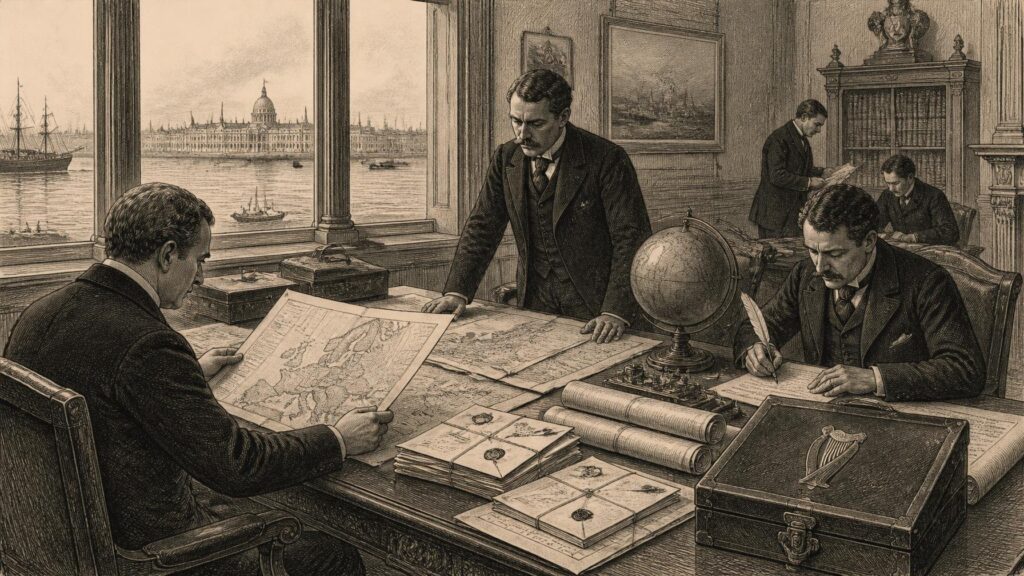
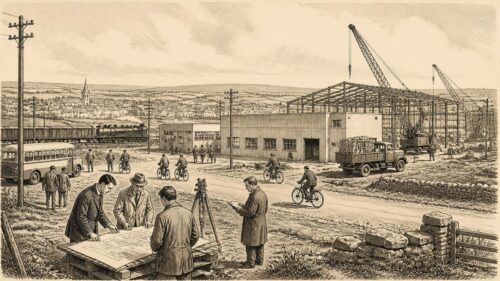
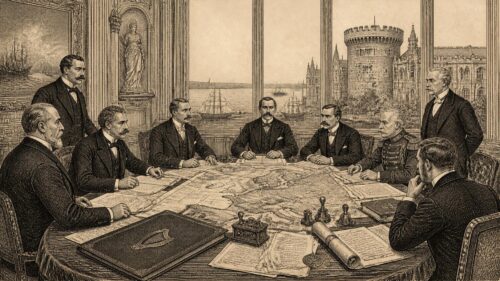
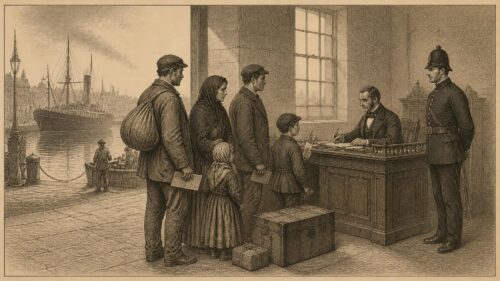
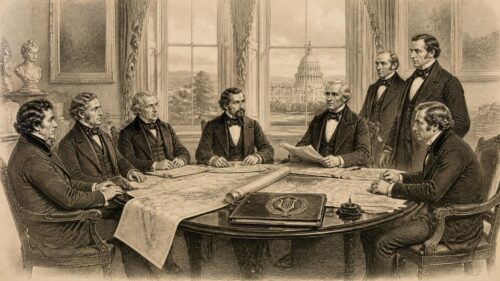
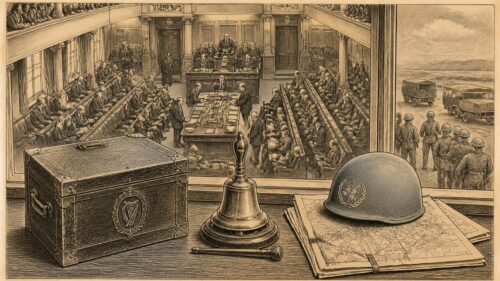
AI generated historical illustration, not a contemporary photograph.
At a Glance
Irish foreign policy developed not as an ornamental addition to independence, but as one of the ways in which independence was asserted, tested and repeatedly remade. For a small state situated beside Britain, divided by partition and long tied to British markets, external relations could never be wholly separate from domestic survival. The historical record shows a succession of governments attempting to secure recognition, preserve discretion, widen economic choices and make Ireland visible in international institutions. It also shows that the language used to describe this work—above all, “neutrality”—has often carried more certainty in public memory than in the shifting circumstances of policy.
Revolutionary Diplomacy
The foreign policy of the independent Irish state had roots in the revolutionary years before the state itself received broad international recognition. When Dáil Éireann first met in January 1919, its leaders understood that the contest with Britain would not be decided in Ireland alone. The Dáil sought to represent the Irish republic abroad, to make the case for self-determination at the Paris Peace Conference and to establish contacts in the United States, continental Europe and elsewhere. Éamon de Valera’s American tour of 1919–20, despite its political frustrations and divisions, was an effort to obtain money, public sympathy and diplomatic standing for the republican claim.
These initiatives did not persuade the victorious powers to seat an Irish delegation at Paris. That failure is important. It demonstrated the severe constraint facing a nationalist movement whose adversary was a major Allied power, and it made clear that appeals to principle could not automatically overcome strategic calculation. Yet the campaign was not meaningless. It created overseas networks, familiarised republican leaders with the language of international legitimacy and established a political habit: Ireland’s case would be presented as a matter of rights extending beyond a bilateral quarrel with Britain.
It is tempting to treat this diplomacy as a straightforward precursor to later state policy. That is an interpretation, not a simple fact. The revolutionary Dáil spoke for a movement contesting British authority, whereas the Irish Free State created in 1922 inherited constitutional obligations within the British Commonwealth. Still, there was continuity in one vital respect. Both the revolutionary envoys and later Free State diplomats sought a recognised international personality distinct from that of the United Kingdom.
Free State
The Anglo-Irish Treaty of December 1921 established the Irish Free State as a self-governing dominion rather than the fully separate republic imagined by many republicans. Civil war followed, and the new government’s first foreign-policy task was therefore inseparable from state-building. It had to demonstrate that the Free State could act competently abroad while avoiding confrontation with Britain that might expose its constitutional limitations or aggravate the conflict at home.
Admission to the League of Nations in September 1923 was consequently a landmark. League membership supplied a public platform and a legal identity in an organisation whose central premise was that sovereign states could cooperate for collective security. Irish representatives did not enter Geneva merely to receive the honours of nationhood. They arrived during an international crisis: the Italian occupation of Corfu after the murder of an Italian official on Greek territory. The episode quickly exposed weaknesses in the League’s procedures and the influence of larger powers.
The Corfu affair matters because it complicates an easy story in which Ireland began with neutrality. The Free State accepted League obligations and took collective security seriously. The documentary and scholarly record indicates that its representatives were interested in reforming international machinery, not in standing aloof from it. Ireland’s early diplomats saw multilateral institutions as useful precisely because they might restrain the dominance of states with more military and economic power. That did not mean they were naïve about the institution’s defects. On the contrary, disillusionment with the League’s failures later helped create the conditions in which neutrality appeared attractive.
The Department of Foreign Affairs’ Documents on Irish Foreign Policy project is especially valuable here. It makes available official records from 1919 onward and demonstrates that Irish external policy was conducted through memoranda, cabinet decisions, diplomatic reporting and detailed argument, rather than by broad sentiment alone. The archive also cautions against a retrospective assumption that every early decision arose from a settled doctrine. Much of the policy was improvised within the uncertain constitutional and international environment of the 1920s.
Geneva Presence
Geneva allowed Irish politicians and officials to practise a form of diplomacy that had symbolic as well as practical importance. Delegations could meet states unconnected to the British imperial system; Irish representatives could vote, speak and negotiate in their own name; and the state could associate itself with questions reaching far beyond Anglo-Irish relations. Such activity made the claim of distinct nationhood habitual in international settings.
The value of this presence should not be exaggerated. Ireland did not become a great power, and the League could not dissolve the material realities of dependence on British trade, transport and security. Nor did League membership settle the constitutional issue of partition. Northern Ireland remained within the United Kingdom, while the Free State’s claim to national unity had no simple diplomatic remedy. Nevertheless, Geneva reduced the sense that Dublin’s only meaningful external relationship was with London.
The League years also reveal a recurring feature of Irish policy: the use of legal and institutional language to extend influence. A small state could rarely command events, but it could seek rules, procedures and forums in which its voice carried formal weight. This was not uniquely Irish; many smaller countries worked similarly. In the Irish case, however, it held special appeal because the state itself had emerged from a struggle over recognition and authority.
Public memory sometimes projects later ideas of permanent neutrality backwards onto the 1920s. That is misleading. The Free State’s League obligations could, in principle, involve sanctions against aggressors. The distinction is crucial. Neutrality was not the original, unaltered foundation of Irish foreign policy; it became prominent through later experience, especially when collective security proved unable to prevent major conflict.
Constitutional Freedom
The 1930s brought a more assertive pursuit of constitutional autonomy. Under de Valera’s governments, Ireland used Commonwealth mechanisms and bilateral bargaining to loosen the remaining ties created by the Treaty settlement. The Statute of Westminster of 1931 widened dominion legislative freedom, while the removal of the oath of allegiance and the eventual 1937 Constitution signalled a changed understanding of Irish sovereignty. External policy and constitutional policy were closely joined: a state limited in its external representation could not easily claim complete political independence.
The new Constitution did not make neutrality a constitutional rule. Its language included a commitment to the pacific settlement of international disputes, but it did not bind the state to abstention in every foreign war. This distinction remains historically important. Irish neutrality has largely been a policy and a political tradition rather than an immutable constitutional command. Arguments that present it as either ancient law or a mere passing convenience both miss the more complicated record.
By the later 1930s, the League of Nations had been gravely weakened by the Japanese invasion of Manchuria, the Italian invasion of Ethiopia and the inability of collective-security arrangements to contain aggression. Ireland participated in League debate and sanctions, but it could not alter the broader collapse. For Dublin, the lesson was not necessarily that international law was worthless. Rather, it was that legal commitments without effective and impartial enforcement could place a small state in danger without guaranteeing protection.
Neutrality Emerges
The outbreak of the Second World War in September 1939 produced the decisive practical expression of Irish neutrality. The government declared that the state would remain outside the conflict, which in Ireland became known as the Emergency. Its decision had political, strategic and constitutional motives. The state had only recently emerged from the shadow of civil war; partition remained unresolved; the Defence Forces had limited capacity; and participation alongside Britain would have been deeply divisive among a population with vivid memories of imperial rule and the struggle for independence.
Neutrality was therefore a means of preserving sovereignty as well as avoiding war. It enabled Dublin to refuse the expectation that Ireland should simply follow British policy. In this sense, it was an assertion of independence. But it was never an effortless or wholly detached position. Britain and Germany both posed dangers. Allied shipping routes ran near the island; German attack or invasion remained a possibility; shortages, censorship and emergency powers transformed everyday life.
The historical evidence also qualifies the image of perfect impartiality. Irish authorities took measures that assisted Allied interests, including the provision of weather information and other forms of cooperation, while maintaining the formal position of non-belligerence. Thousands of Irish citizens served in British forces, though this was individual service rather than state participation. The government’s treatment of belligerent personnel, intelligence matters and access to facilities varied with circumstance. Neutrality in practice involved difficult calculation, not separation from the war’s consequences.
Some later accounts treat Emergency neutrality as either heroic resistance to British pressure or concealed partnership with the Allies. Both contain elements of evidence, but neither fully captures the policy. The documented record supports a more restrained conclusion: Dublin sought to defend its authority to remain outside the war, while recognising that the survival of the state was closely connected to the outcome in the neighbouring islands and the Atlantic. Neutrality was real, but it was constrained neutrality.
Public Memory
The Emergency acquired an unusually powerful place in Irish political memory. For many people, it represented the moment when the state acted independently under extreme pressure. That memory helped make neutrality an element of national identity. Yet historical memory compresses disagreement. During the war, there were competing loyalties, anxieties over invasion, criticism of censorship and frustration at hardship. The policy was supported widely, but it did not eliminate political difference.
Folklore has added further layers. Stories about secret operations, sympathetic signals or small acts of assistance often survive in families and local communities. Such stories can illuminate how people understood the Emergency, but they cannot by themselves establish official policy. The distinction between documented evidence and recollection matters particularly in a subject where secrecy was normal and later political arguments have encouraged selective memory.
The war’s aftermath reinforced the symbolic force of neutrality. Ireland had remained outside the devastation suffered by many European countries, and the achievement of keeping the state out of war seemed to validate the policy. At the same time, the very success of the Emergency model could obscure its exceptional conditions. Neutrality in a conflict involving Britain, Germany and the Atlantic was not automatically a complete guide to every later crisis.
Atlantic Pressures
The early Cold War forced Ireland to reconsider its place in a divided world. It did not join the North Atlantic Treaty Organisation when NATO was founded in 1949. Partition was central to the discussion: joining an alliance with Britain while Northern Ireland remained under British sovereignty was politically difficult. Military limitations and attachment to independent decision-making also mattered. Ireland’s choice did not make it politically indifferent to the conflict between Western powers and the Soviet bloc, but it preserved non-membership of a military alliance.
In 1949 the Republic of Ireland Act came into operation, ending the remaining external role of the British monarch in relation to the state and confirming the description “Republic of Ireland”. The legal change had diplomatic significance. It clarified that Ireland was outside the Commonwealth and could conduct external relations through its own constitutional institutions. It did not end the practical influence of Britain, but it removed an ambiguity that had lingered since the Free State’s foundation.
Here again, interpretation requires care. To describe post-war Ireland as isolationist is too sweeping. Its diplomatic resources were modest, and its network of missions remained limited, but it pursued bilateral relations, trade, consular work and multilateral engagement. Nor was the state ideologically neutral in the sense of refusing all political judgement. Its governments generally located Ireland in the Western democratic world while declining formal military alignment.
United Nations
Ireland joined the United Nations on 14 December 1955, after earlier applications had been caught in Cold War deadlock. Admission provided the state with the global institutional setting that the League had once promised, but in a post-war world transformed by decolonisation, superpower rivalry and the development of international human-rights norms. The United Nations records Ireland’s admission among the sixteen states accepted in the large enlargement of that year.
UN membership became one of the principal pillars of Irish foreign policy. It allowed Irish representatives to work on questions of disarmament, colonial rule, development, human rights and peacekeeping. It also supplied a vocabulary through which military neutrality could be reconciled with active international engagement. Ireland could reject military alliances while supporting collective action authorised through the United Nations system.
This was not a purely altruistic project. Participation offered a small state contacts, prestige and opportunities to shape issues where numbers, procedure and coalition-building mattered. It also made practical sense for a country whose security was not guaranteed by a major alliance. Strengthening international rules could be understood as an interest of the state as well as an expression of principle.
The language of Irish diplomacy often joined principle and interest rather than choosing between them. Support for international law, self-determination and disarmament reflected moral traditions within Irish political culture, but it also suited a state wary of great-power dominance. That combination helps explain the durability of the UN connection.
Peacekeeping Service
Irish service in United Nations peacekeeping gave this multilateral commitment a public and human dimension. The first major overseas deployment began with the UN force in the Congo in 1960. Irish soldiers served in difficult and dangerous conditions, and several were killed. Later deployments, especially in Cyprus and Lebanon, made the blue helmet a familiar symbol of the state’s external role.
Peacekeeping should not be romanticised. It involved armed personnel, uncertain mandates and exposure to conflict, not an escape from the realities of war. Nor did it mean that Ireland had become neutral in every political dispute. Rather, it represented a particular compromise: participation in internationally authorised missions while retaining non-membership of military alliances. The policy depended upon domestic consent, Defence Forces capacity and the legitimacy of UN mandates.
The Congo mission was especially formative because it exposed Irish troops to the hazards of a newly independent African state caught in a wider international struggle. It demonstrated that peacekeeping could be politically contested and militarily demanding. Yet it also established a reputation that subsequent governments regarded as a valuable diplomatic asset. Ireland’s international profile was no longer based only on its own national history; it was increasingly connected to visible service in collective institutions.
Disarmament Campaign
Disarmament became another major field of activity. Ireland was closely associated with efforts to prevent the spread of nuclear weapons and was the first state to sign the Treaty on the Non-Proliferation of Nuclear Weapons when it opened for signature in July 1968. The Department of Foreign Affairs has identified this as recognition of Ireland’s established role in promoting non-proliferation.
The significance of that achievement lies in more than ceremonial priority. Nuclear proliferation was a subject on which a small, non-nuclear country could make a serious contribution through drafting, coalition-building and persistence. Ireland’s diplomats worked in an arena where military power did not automatically determine influence. The episode fits the larger pattern of seeking authority through law and international agreement.
It would be wrong, however, to imply that Ireland controlled the direction of nuclear politics. The great powers determined the broad strategic environment, and the treaty itself contained compromises that were contested by many states. The supportable historical claim is narrower: Irish diplomacy was a recognised and active participant in the negotiations and used that role to associate the state with arms control.
European Turn
Entry into the European Economic Community on 1 January 1973 was another decisive alteration in Ireland’s foreign relations. The decision followed a referendum in May 1972 in which 83 per cent of voters supported membership. Economic considerations were central. Ireland had long depended heavily on the British market, and access to wider European markets appeared essential to economic modernisation. But the decision also had diplomatic meaning: it placed Ireland in a network of regular negotiation with continental partners and reduced the sense that Britain was its unavoidable external reference point.
European membership did not replace the United Nations or erase the importance of relations with Britain and the United States. It added a powerful new setting in which Irish interests were pursued. Ministers and officials acquired experience of continuous bargaining over agriculture, trade, regional development, law and later foreign and security cooperation. For a state historically preoccupied with the limits of sovereignty, European integration required a more complex understanding of shared decision-making.
Debate over neutrality sharpened as European cooperation developed. Supporters of integration argued that participation strengthened Ireland’s influence and prosperity without compelling it to join a military alliance. Critics feared that common foreign and security policies could gradually narrow independent choice. These were not merely technical arguments. They turned on rival readings of national independence: whether it was best protected by distance from collective commitments or by a secure place within European institutions.
Northern Diplomacy
The conflict in Northern Ireland ensured that relations with Britain remained central. From the late 1960s onward, Irish governments had to balance constitutional claims, public opinion, security concerns and the urgent need to reduce violence. Diplomatic contact with London became more sustained, particularly after the Sunningdale Agreement of 1973 and, later, the Anglo-Irish Agreement of 1985.
The Anglo-Irish Agreement did not end the conflict, and it provoked fierce unionist opposition. Its historical importance was that it institutionalised an advisory role for the Irish government in Northern Ireland affairs and established regular intergovernmental cooperation. It also marked a movement away from rhetoric alone towards structured engagement with Britain. The Irish state’s approach increasingly accepted that constitutional aspiration could not substitute for negotiation, consent and patient diplomacy.
The Good Friday Agreement of 10 April 1998 represented the most consequential result of this development. It was not the achievement of governments alone; political parties, civil society, British and Irish officials, and international participants all mattered. Still, the agreement showed the maturity of an Irish foreign policy capable of working with Britain, the United States, the European Union and wider international support while retaining the all-island concerns of the Irish state.
The Agreement changed the constitutional and diplomatic framework. Ireland amended Articles 2 and 3 of its Constitution after referendum, replacing a territorial claim with an aspiration to unity achieved by peaceful means and consent. This was a profound acknowledgement that national objectives required democratic legitimacy in both jurisdictions. It also demonstrated that foreign policy and constitutional identity remained intertwined.
Contested Neutrality
By the opening decades of the twenty-first century, neutrality remained one of the most resonant and disputed ideas in Irish public life. Governments generally described the policy as military neutrality: non-membership of military alliances and of common or mutual defence arrangements. This official formulation coexisted with broader popular understandings that included non-involvement in war, independence from larger powers and a preference for peacebuilding.
The difference between these definitions explains many arguments. Those who emphasise military neutrality may consider participation in European security structures or UN-authorised missions compatible with the tradition. Those who understand neutrality more broadly may see the same activities as compromising it. Neither position can be settled simply by invoking the Emergency. Historical evidence shows that neutrality has changed in meaning, practice and political purpose since 1939.
It is therefore more accurate to speak of a continuing tradition of military non-alignment combined with active political engagement, rather than a permanent refusal to take positions in world affairs. Ireland has repeatedly expressed views on aggression, human rights, colonialism, sanctions and international law. The policy has been selective, debated and shaped by institutional commitments. Its force lies partly in that flexibility, though flexibility also makes it vulnerable to charges of inconsistency.
Historical Balance
The history of Irish foreign policy is not a simple march from dependence to freedom, nor a tale of immaculate neutrality. It is a record of adaptation by a state with limited power but considerable incentive to use diplomacy well. Revolutionary envoys sought recognition; Free State delegates tested the promise of Geneva; wartime leaders guarded the right to remain outside a devastating conflict; later governments made the United Nations, peacekeeping, disarmament and European membership instruments of national presence.
Its central tension has endured. Ireland has wished to be independent of larger powers without being isolated from the world; to value international law without assuming law alone can provide security; and to retain military discretion while participating visibly in international affairs. Geography, partition and economic interdependence imposed limits, but they did not remove choice. The most convincing interpretation is that Irish foreign policy gained effectiveness when it treated independence not as withdrawal, but as the capacity to choose cooperation on terms the state could defend.
That conclusion leaves room for disagreement about particular decisions. Historians can debate whether neutrality was primarily strategic, ideological or democratic; whether European integration enlarged sovereignty or qualified it; and whether multilateralism reflected principle, necessity or both. The documents do not eliminate those debates. They do, however, establish that Ireland’s foreign policy has been a serious and sustained part of the country’s modern history: an effort to turn a precarious independence into an active place in the world.
The article complicates the popular view of Irish neutrality as a fixed inheritance by portraying it as a contested, pragmatic policy shaped by the League’s failures, partition, limited defence capacity and Britain’s proximity. It also suggests that neutrality coexisted with selective wartime cooperation and energetic multilateral engagement, especially through the United Nations and peacekeeping. This raises an important question about continuity: should Ireland’s diplomatic independence be understood principally as non-alignment, or as a broader strategy of using international institutions, law and peacekeeping to protect autonomy while navigating unavoidable dependence on larger neighbours and powers? How might later events refine this?