

European Vantage
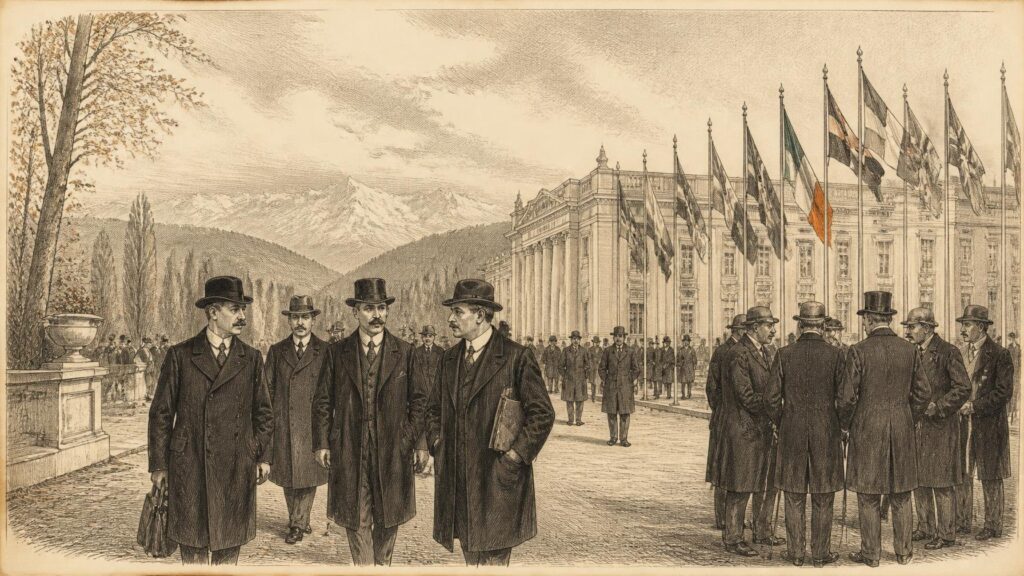
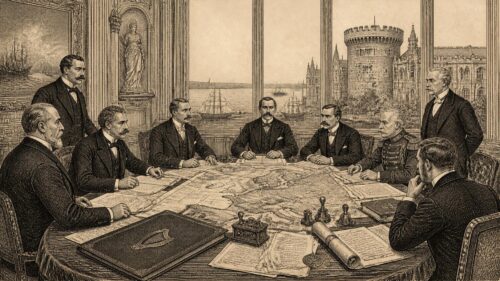
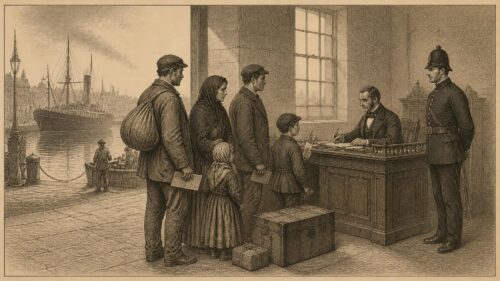
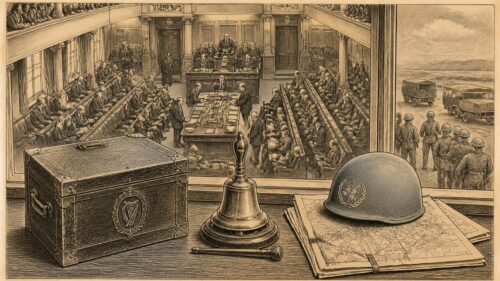
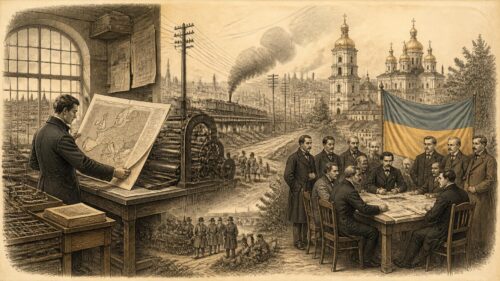
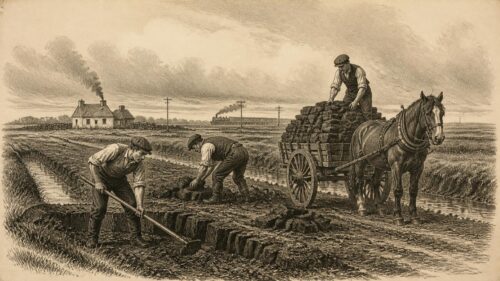
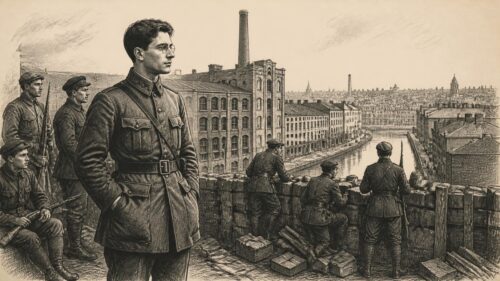
AI generated historical illustration, not a contemporary photograph.
At a Glance
Ireland’s relationship with European diplomacy has never been merely a story of an island looking outward. It is a record of changing political circumstances in which religious networks, migration, imperial entanglement, revolutionary appeals, multilateral institutions and economic integration successively altered what Irish representatives could do abroad. The history is neither one of timeless isolation nor of inevitable Europeanism. It is instead a history of difficult choices about sovereignty, security and influence, made under conditions rarely chosen by Ireland itself.
Ancient Connections
It is necessary to begin with a caution. Modern diplomacy is an activity of recognised states, accredited representatives, written treaties and permanent institutions. Pre-modern Ireland possessed none of these in the present sense. The island contained numerous kingdoms and lordships, whose rulers negotiated alliances, tribute, marriages, ecclesiastical authority and military assistance with neighbours. These were political relationships, but it would be anachronistic to describe them as the foreign policy of a unified Irish state.
Nonetheless, Ireland was not outside Europe. Its early medieval connections were formed through seaways, Christian learning, pilgrimage, trade and migration. Clerics travelled between Ireland, Britain and the Continent; Irish religious communities and scholars became visible in parts of Frankish and Italian Europe; Latin learning linked Irish ecclesiastical centres with a wider intellectual world. Such movements have often been condensed into the attractive image of Ireland as an island that preserved European civilisation during a supposed continental darkness. That phrase belongs more to later cultural memory than to a precise account of the evidence. It should not obscure the complexity of early medieval Europe, nor turn learned exchange into a programme of national diplomacy.
The more supportable conclusion is also the more interesting one. Ireland’s place on Europe’s western edge did not make it inert. The sea was a route as well as a barrier, and ecclesiastical institutions gave people from Ireland access to continental languages, patrons and audiences. These contacts furnished later Irish political writers with a repertoire of European belonging. When twentieth-century Irish delegates invoked old Christian and scholarly links with the Continent, they were drawing upon a real historical inheritance, though doing so for modern political purposes.
Papal Horizons
By the twelfth century, reform within the Latin Church drew Ireland into a more closely organised ecclesiastical order. Synods, diocesan structures, archiepiscopal authority and relations with Rome mattered because they placed Irish churchmen within a system that crossed kingdoms and languages. The arrival of papal legates and the distribution of pallia at Kells in 1152 were signs not of Irish subordination in a simple sense, but of participation in a European church whose claims were universal. The reforming process was uneven and contested, yet it changed the political vocabulary available on the island.
This wider ecclesiastical setting also mattered in the crisis that followed the Anglo-Norman intervention of 1169 and Henry II’s arrival in 1171. The English king’s claim to lordship in Ireland was presented through feudal, legal and papal languages intelligible beyond the island. Irish rulers and churchmen were therefore caught in a political field larger than Ireland and England alone. The issue was not simply an encounter between two sealed national communities. It involved church reform, lordship, dynastic claims, maritime power and the legitimacy that could be sought from continental Christendom.
Later nationalist narratives naturally emphasised conquest and dispossession, while older English accounts often overstated the completeness and permanence of royal control. Historical evidence points to a more fractured reality. English authority varied markedly by region and period; Gaelic lordships retained political life and developed their own external links. The enduring point for diplomatic history is that Ireland’s international standing after the twelfth century was usually mediated through English, and later British, power. This did not end connections with Europe. It changed the terms on which they were conducted.
Exile Networks
The Reformation and the wars of the sixteenth and seventeenth centuries made continental Europe a political resource for Irish Catholic resistance. Irish leaders sought assistance from Spain, France and the papacy; military officers, priests, students and exiles established durable communities abroad. Continental colleges trained clergy for missions to Ireland, while Irish regiments served in European armies. These networks joined religion, dynastic rivalry and military necessity. They were not the diplomatic service of an independent Ireland, but neither were they merely private adventures.
The prospects of foreign intervention repeatedly shaped calculation at home. Hugh O’Neill’s rebellion occurred against the background of Anglo-Spanish war. The hoped-for Spanish force that landed at Kinsale in 1601 demonstrated both the potential and the limits of such assistance. Continental support could raise the stakes of an Irish conflict, but it could not readily overcome local military realities, differing strategic priorities or the distance separating a foreign court from the Irish theatre of war. The defeat at Kinsale became, in later memory, a decisive symbol of a lost Gaelic order, but it also shows the dangers of depending upon an ally whose principal concerns lay elsewhere.
After the Williamite settlement and the Treaty of Limerick, the movement remembered as the Flight of the Wild Geese deepened the Irish presence in continental military life. Irish soldiers served France, Spain and Austria, among other powers. Clerical and mercantile communities likewise sustained a circulation of letters, money, education and political intelligence. It would be misleading to make these communities into a single national bloc: loyalties varied, and many individuals entered European service for livelihood or advancement as much as for a collective cause. Yet they preserved a sense that Ireland’s future might be argued, armed for or imagined outside the British state.
This diaspora supplied later generations with potent symbols. The Irish Brigade, the continental colleges and the exiled aristocracy became evidence of an Ireland connected to Catholic Europe. Symbols, however, require discrimination. They testify to real mobility and attachment, but they do not prove that European powers consistently supported Irish independence. Foreign courts used Irish causes when convenient and neglected them when not. That hard lesson remained relevant to every subsequent attempt to internationalise Irish political claims.
Republican Appeals
The revolutionary era after 1916 brought the question of international recognition to the centre of Irish politics. Sinn Féin’s leaders understood that military and electoral success on the island would not by itself settle Ireland’s place in the world. The First Dáil, assembled in January 1919, declared independence and authorised efforts to obtain recognition abroad. Its representatives sought to present Ireland through the language that had gained exceptional force after the First World War: national self-determination.
The appeal was directed especially towards the United States and the Paris Peace Conference, but Europe was central to the endeavour. Irish envoys attempted to persuade governments, journalists, émigré communities and international opinion that the Irish case belonged among the unresolved national questions of the post-war settlement. Their work confronted severe obstacles. The great powers had their own interests; Britain opposed recognition; and the international system being constructed at Paris was not a neutral tribunal for every national demand. The refusal to admit Irish representatives to the peace conference exposed the gulf between the universal rhetoric of self-determination and its selective application.
Republican diplomacy nevertheless mattered. It created contacts, circulated propaganda, collected evidence and gave political form to the claim that Ireland was a nation entitled to equal standing. It also revealed a structural dilemma that would confront the independent state. International sympathy might be valuable, but no outside power could be expected to secure Irish objectives at the cost of its own relations with Britain. The record of the period is therefore best read neither as diplomatic failure nor as hidden victory. It was preparation: an education in the constraints of recognition, representation and power.
The Anglo-Irish Treaty of 6 December 1921 transformed those questions. It ended the war with Britain and established the framework for the Irish Free State, but it divided the revolutionary movement and led to civil war. The Treaty’s dominion status was unacceptable to many republicans, who judged it incompatible with the republic proclaimed in 1919. Yet the settlement gave the new state an institutional basis from which it could pursue external recognition. The same agreement that created profound domestic division opened a route into the formal society of nations.
Geneva Arrival
The Irish Free State’s admission to the League of Nations in September 1923 was accordingly more than a ceremonial event. It made Ireland a participant in the principal international organisation of the inter-war period, and allowed its delegates to deal directly with representatives from states well beyond the limited range of early bilateral relations. W. T. Cosgrave and Desmond FitzGerald headed the delegation at Geneva. Their attendance proclaimed that the Free State intended to act not merely as a local constitutional arrangement within the British Commonwealth, but as an international person.
League membership served practical and symbolic purposes. Practically, Geneva supplied a meeting place in which a small state could establish contacts, acquire information and make its position known. Symbolically, it represented recognition after the revolutionary and civil-war years. For Irish leaders, the League was a stage on which the country could be described as old in culture but new in formal statehood. Cosgrave’s language about Ireland’s ancient European connections was diplomatic rhetoric, but it rested upon the historical traditions of scholarship and Christianity that had long associated Ireland with the Continent.
Irish officials were not naïve about the League’s defects. The Corfu crisis of 1923, involving Italy and Greece, exposed the difficulty of enforcing collective security when a great power resisted it. Irish representatives saw early that the organisation’s authority depended on the political will of its members. Nonetheless, the Free State usually treated the League seriously. It supported reform, took interest in questions of law and minorities, and joined other small states in defending procedures that might restrain power. This was a principled position, but it was also a calculation of national interest. Rules mattered most to countries unable to impose their will by force.
Geneva thus became a school of sovereignty. The Free State could not escape its economic dependence upon Britain or the constitutional ties that remained under the Treaty. It could, however, use multilateral diplomacy to make independence more concrete. Participation created habits of representation and gave the Department of External Affairs experience in negotiation, drafting and protocol. In this respect, Irish diplomacy developed through institutions before it developed through a large network of embassies.
Sovereign Practice
The 1930s brought a sharper assertion of autonomy. Under Éamon de Valera’s governments, Ireland worked to remove constitutional links with Britain, while remaining active at Geneva. The Statute of Westminster of 1931 enlarged the legislative independence of the dominions, and the Free State used the changed constitutional environment to advance its own position. De Valera’s presidency of the League Council in 1932 was a conspicuous mark of standing. It did not mean that Ireland had become a great power; rather, it showed that a small state could hold office and shape procedure within a multilateral body.
Ireland’s conduct during the Abyssinian crisis, the Spanish Civil War and other disputes demonstrated the tension between collective security and national restraint. Irish policymakers favoured legal principles and criticised aggression, but they also recognised the League’s inability to make its commitments effective against determined powerful states. The organisation’s failures did not create Irish neutrality from nothing. The desire to avoid entanglement in Britain’s wars had older roots. But the failure of collective security strengthened the belief that small states could not safely rely upon promises that larger states were unwilling to uphold.
It is therefore too simple to describe inter-war Ireland as either idealist or realist. Its diplomacy was both. Officials valued international law because it expressed an ethical aspiration and because it provided a protective language for weaker countries. They sought European association while guarding the freedom to decide Irish policy independently. They wished to escape the shadow of British dominance without imagining that geography, trade and security could be ignored. These balances, rather than a fixed doctrine, are the central inheritance of the period.
Neutral Years
When war began in Europe in September 1939, Ireland declared neutrality. The decision was often explained at the time, and has often been interpreted since, as an assertion of recently won sovereignty. That interpretation is sound but incomplete. Neutrality also reflected military weakness, the unresolved question of partition, fear of invasion, the vulnerability of shipping and food supplies, and the political impossibility of entering a British war so soon after the struggle for independence. A neutral policy was not a withdrawal from the European crisis; it was a means of surviving it.
The Emergency, as the Second World War was called in Ireland, required continuous diplomacy. Dublin had to maintain relations with both belligerent camps, defend the island’s territory, manage scarce imports and respond to British and American pressure. The government rejected proposals that would have compromised neutrality, including wartime demands connected with the use of ports. At the same time, later scholarship has demonstrated extensive forms of discreet practical cooperation with the Allies, particularly where Irish security and the prospect of German attack were concerned. Public neutrality and private cooperation could coexist because policymakers distinguished formal alignment from measures they considered necessary for national defence.
This distinction has sometimes been lost in polemic. Critics of neutrality point to its moral ambiguities and the danger posed by Nazi Germany; defenders stress the precarious position of a small, partly armed state on Britain’s western flank. Both perspectives identify real problems. A historical account should avoid treating neutrality as either uncomplicated heroism or simple appeasement. It was a policy of constrained independence pursued in a conflict whose outcome Ireland could not determine. Its domestic importance lay in demonstrating that the state, unlike the pre-independence administration, would make its own decision on war and peace.
The war also separated Ireland from aspects of post-war European memory. Much of continental western Europe built later integration partly from shared occupation, resistance, devastation and reconstruction. Ireland’s experience was different. It had endured shortages, anxiety and strategic exposure, but not invasion or battlefield destruction on the continental scale. This difference affected the tempo, though not the eventual direction, of Irish engagement with post-war Europe.
Postwar Openings
After 1945, European diplomacy acquired new institutions and new divisions. The United Nations, the Marshall Plan, the Organisation for European Economic Co-operation, the Council of Europe, NATO and the emerging European Communities each posed questions for Ireland. The state supported international cooperation but avoided military alignment. It joined the United Nations in 1955 after earlier applications had been blocked amid Cold War politics. At the UN, Irish delegates developed a profile in peacekeeping, decolonisation and disarmament that widened the country’s diplomatic horizons beyond Europe while retaining a distinctly European setting.
The European Recovery Programme made clear that economic recovery was also a diplomatic matter. Ireland participated in the institutions created for cooperation, even though its wartime position affected the assistance available to it. The larger lesson was unavoidable. The old economic relationship with Britain, founded heavily upon agricultural exports and sterling links, was increasingly inadequate for a changing Europe. The question was not whether Ireland possessed a European identity in the abstract. It was whether its economy and institutions could adapt to the new continental order.
During the 1950s, that question acquired urgency. Economic stagnation and emigration encouraged a reappraisal of protectionist assumptions. T. K. Whitaker’s programme for economic expansion and Seán Lemass’s more outward-looking government altered the terms of debate. European integration offered markets, investment and a framework for modernisation. It also raised anxieties. Irish entry into a customs union could expose vulnerable industries and agriculture to competition; membership might carry political obligations whose implications were uncertain. The decision to seek entry was therefore not a reflexive embrace of Europe, but a strategic response to economic and geopolitical circumstances.
Continental Choice
Ireland first applied to join the European Economic Community in 1961, alongside the United Kingdom, Denmark and Norway. The applications were closely linked because Britain remained Ireland’s principal trading partner. Irish officials knew that entry without Britain could place existing access to the British market at risk, while British entry without Ireland could leave the Irish economy at a disadvantage. The interdependence was a reminder that independence had changed the political relationship with Britain, not abolished the economic consequences of proximity.
Charles de Gaulle’s veto of British membership in January 1963 halted the applications. Ireland’s negotiations could not advance independently in the circumstances. A second application in 1967 encountered the same obstacle. These delays were instructive. They compelled Irish governments to undertake diplomatic work in the capitals of the Six and to explain that Ireland was prepared to accept the political as well as economic responsibilities of membership. Patrick Hillery, appointed Minister for External Affairs in 1969, became particularly important in this effort.
When the route reopened after de Gaulle’s resignation, the government set out the likely effects of membership in its 1970 white paper, Membership of the European Communities: Implications for Ireland. Its attention to agriculture, fisheries, taxation, free movement and economic policy reveals that accession was understood as a transformation of national life rather than a narrow trade treaty. Ireland signed the Treaty of Accession on 22 January 1972. Because membership required constitutional amendment, the decision went to referendum. Voters approved the Third Amendment on 10 May 1972 by a substantial majority, and Ireland entered the Communities on 1 January 1973.
The result was a major reorientation, but not a clean break with older Irish habits. Membership reduced the relative dominance of Britain in Irish economic and diplomatic life, supplied access to continental markets and institutions, and brought Irish ministers and civil servants into regular contact with European counterparts. Yet it also posed a familiar question: how could a small state retain room for independent judgement within a larger political framework? Irish participation in European Political Cooperation, and later in the European Union’s foreign and security arrangements, repeatedly revived debate about neutrality and national discretion.
Shared Frameworks
European membership changed the working environment of Irish diplomacy. Before 1973, relations with continental states had been important but comparatively limited in administrative reach. Membership created a dense routine of meetings, negotiations, directives, councils and presidencies. Much of diplomacy ceased to be exceptional. It became daily government. Officials needed not only to represent national preferences but also to understand technical files, form alliances and find language acceptable to several states. This practical multilateralism was perhaps the most profound institutional change brought by membership.
It is tempting to tell this story as a simple movement from dependence to European freedom. That would exaggerate. The Communities and later Union did not abolish asymmetries of power, nor did they erase the importance of British-Irish relations. They did, however, give Ireland additional settings in which to pursue its interests. In Brussels, Irish governments could cooperate directly with France, Germany, the Benelux countries, the Nordic states and southern European members; they could also work through Commission, Parliament and Court structures. The state’s diplomatic field became genuinely continental.
Membership also shaped public arguments about sovereignty. Supporters often maintained that pooling certain powers made Ireland more effective in a world of large states and economic blocs. Critics warned that transfer of competences could hollow out self-government so painstakingly secured during the twentieth century. Neither argument can be dismissed as mere slogan. They express two valid historical experiences: the weakness that isolation can bring to a small economy, and the importance Irish political culture has attached to the independent capacity to decide. Referendums on European treaties gave this tension a recurring democratic form.
Border Diplomacy
The Northern Ireland conflict ensured that European diplomacy could never be solely a matter of continental markets or institutions. Relations with Britain remained fundamental, while Irish governments sought international understanding of violence, discrimination and constitutional conflict in the North. The Anglo-Irish Agreement of 1985 marked an important development by giving the Irish Government a consultative role in Northern Ireland affairs through an intergovernmental framework. Its immediate reception was intensely contentious, especially among unionists, but it demonstrated the value Dublin placed on sustained bilateral machinery.
The Good Friday or Belfast Agreement, signed on 10 April 1998, supplied a broader constitutional and diplomatic settlement. It involved the British and Irish governments, Northern Ireland parties and external facilitators, while its structures addressed relationships within Northern Ireland, across the island and between Britain and Ireland. The agreement rested on consent rather than coercion as the basis for constitutional change, and recognised the legitimacy of British, Irish or dual identities among the people of Northern Ireland. It was not created by the European Union, and it should not be reduced to a European project. Its core achievement was political agreement among those directly affected.
Yet shared membership of the European Union formed an important context. It softened the practical and symbolic force of the border, encouraged common regulatory and funding environments, and made North-South and British-Irish cooperation easier to imagine. European institutions also supported cross-border and peace-building programmes. This was an enabling setting rather than a substitute for difficult negotiation. The peace process depended on local political courage, painstaking intergovernmental diplomacy and international mediation; Europe provided one of the frameworks within which those efforts could work.
European Afterlife
The United Kingdom’s departure from the European Union revived questions that many had believed less acute after 1998. The border on the island of Ireland became central to negotiations because the post-Agreement settlement had evolved under conditions of common British and Irish EU membership. The Protocol on Ireland and Northern Ireland, whose principal provisions took effect on 1 January 2021, was designed by the United Kingdom and the European Union to address the particular circumstances of the island and to protect the Good Friday Agreement. Its operation has generated continuing political and practical argument, but its historical significance is already plain: the Irish question again became inseparable from the wider architecture of European diplomacy.
This episode illustrates a durable feature of Irish external relations. Ireland’s diplomatic leverage has often been greatest when a specifically Irish concern can be explained within a broader international principle: self-determination after the First World War, collective security at Geneva, small-state rights during the Emergency, economic interdependence in the Communities, and peace settlement obligations in the context of British withdrawal from the EU. Such framing does not make Irish policy disinterested. It makes national interests communicable to partners whose priorities may differ.
Nor should the European dimension obscure other directions in Irish diplomacy. The United States, the United Nations, the wider diaspora and relations with states beyond Europe have all been essential. But Europe remains the environment in which Ireland’s questions of territory, economy, security and constitutional identity have been most persistently negotiated. The continent is not simply a destination for Irish policy. It is the setting that has repeatedly altered the meaning of Irish independence.
Historical Balance
The long history of Ireland and European diplomacy resists myths of inevitability. Ireland was neither naturally cut off from Europe nor destined always to be absorbed by stronger neighbours. Medieval religious and cultural connections were real, but they were not modern statecraft. Continental exile communities mattered, but foreign patrons were unreliable. League membership gave the Free State recognition and experience, yet could not guarantee collective security. Neutrality protected political autonomy in one crisis while leaving moral and strategic ambiguities. European integration widened Ireland’s choices, but also required compromises in the exercise of sovereignty.
The most persuasive interpretation is that Irish diplomacy developed through the search for usable independence. Political leaders and officials repeatedly sought arrangements that would permit Ireland to act distinctly without pretending it could act alone. That logic explains the importance of Geneva, the care taken over neutrality, the eventual decision to join the European Communities, and the use of European partnership in defending the conditions of the 1998 settlement. It also explains why debates about Europe have been so durable in Ireland: they are arguments not only about trade or institutions, but about the practical meaning of self-government for a small state.
European diplomacy, then, is not a peripheral chapter in Irish history. It is one of the means by which modern Ireland was made. The island’s western position has sometimes encouraged a language of distance, but the historical record shows continual engagement, adaptation and negotiation. Ireland’s representatives have entered European forums seeking recognition, law, markets, security and peace. Their achievements were limited by power and circumstance, as all diplomacy is. Yet the enduring achievement has been to turn participation in wider European systems into an instrument for sustaining an Irish voice within them.
The article presents Irish neutrality and European integration not as opposites, but as shifting responses to sovereignty, security and economic dependence. Particularly striking is its suggestion that multilateral forums, from the League of Nations to later European institutions, allowed Ireland to practise independence even while British influence remained substantial. This raises an intriguing question about continuity: did participation in European organisations primarily strengthen Ireland’s autonomy by amplifying a small state’s voice, or did growing interdependence require a redefinition of autonomy away from freedom of action? How should we weigh diplomatic symbolism, economic interests and partition when interpreting Ireland’s European choices?