
Guarded Autonomy
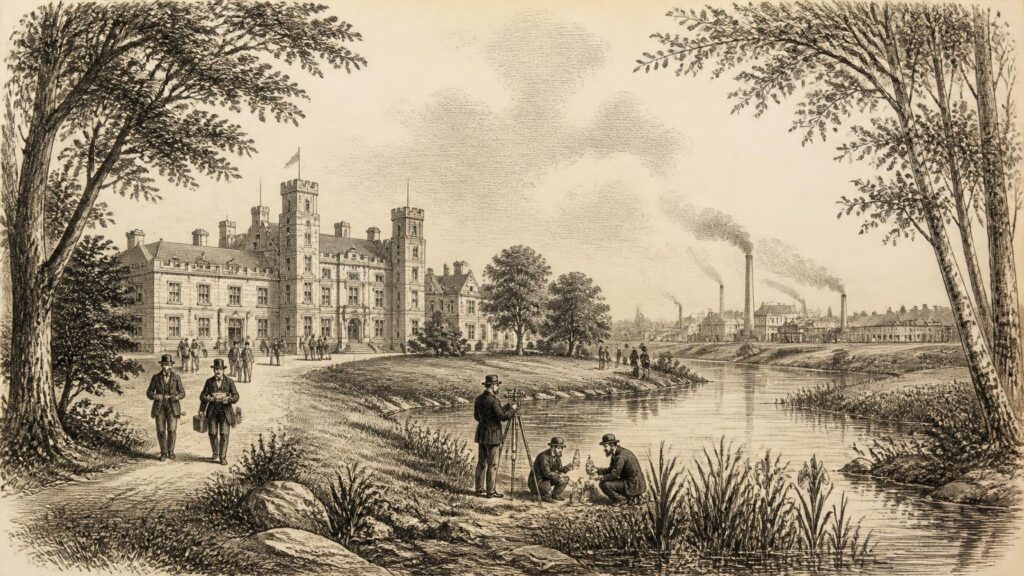
AI generated historical illustration, not a contemporary photograph.
At a Glance
Ireland’s Environmental Protection Agency was created not merely to administer environmental rules, but to make environmental judgement more visibly independent of day-to-day political and developmental pressure. Its leadership history therefore offers a revealing account of the modern Irish State: the movement from dispersed local regulation towards national expertise, the difficulty of balancing industrial development with public protection, and the continuing effort to make official environmental evidence credible.
Institutional Origins
The Irish Environmental Protection Agency emerged from a late twentieth-century recognition that pollution, waste, water quality and industrial risk could no longer be managed adequately through a loose collection of local and departmental arrangements. The Agency was established on 26 July 1993 under the Environmental Protection Agency Act 1992. That date matters. It placed the EPA’s birth in an Ireland already transformed by European Community membership, expanding environmental law, new expectations of public administration and the pursuit of foreign industrial investment.
Before the EPA, responsibility for many environmental matters was divided among local authorities, Government departments and specialist bodies. This did not mean that environmental protection was absent. Water-pollution legislation, planning controls, public-health law and European measures already existed. Yet the system could be uneven. Local authorities had varying technical capacity, differing priorities and, at times, conflicting roles as both promoters of local development and regulators of its consequences. The increasing complexity of industrial processes and European environmental obligations sharpened the argument for a single national body able to gather evidence, issue licences, inspect sites and take enforcement action.
The historical context was not simply one of worsening contamination. It was also one of changing administrative ideas. A new generation of public bodies was expected to possess specialist competence, publish information and command confidence beyond party politics. The EPA was designed as such a body. Its Irish title, An Ghníomhaireacht um Chaomhnú Comhshaoil, carried the same purpose: an agency for the protection of the environment. Its task was framed broadly, covering not just the control of pollution but the protection and improvement of the environment as an asset shared by the public.
The creation of the Agency was shaped by a tension central to Irish public life in the period. Economic policy sought industrial employment and investment after decades in which emigration and unemployment had cast a long shadow. Environmental regulation could be represented either as an impediment to development or as a condition of development that was credible, safe and durable. The latter case became increasingly persuasive. An impartial regulator could assure communities, investors and European partners alike that industrial activity would be subject to transparent standards rather than private accommodation.
Frances Nolan’s historical account of the EPA’s origins, drawing on the period’s political and administrative record, describes the Agency as a landmark in the history of the State. That judgement is sound, provided it is not read as a claim that the EPA solved every environmental difficulty. The landmark lay in institutional design: Ireland created a national environmental authority with a statutory identity, a professional executive board and duties extending from licensing and enforcement to monitoring, research and public reporting.
Legislative Design
The Environmental Protection Agency Act 1992 set out a deliberately distinctive leadership model. The Agency was incorporated as a statutory body and given an Executive Board rather than a conventional departmental hierarchy. Its original structure comprised a Director General and four directors; following the absorption of radiological protection functions in 2014, the statutory composition became a Director General and five directors. The arrangement was intended to unite collective responsibility with identifiable executive leadership.
The Director General’s role was not ceremonial. The Act assigned responsibility for ensuring the efficient discharge of the Agency’s business and for arranging its distribution among the directors. In practical terms, the office required an individual capable of leading scientific, regulatory, legal, financial and communications functions while preserving the integrity of decisions that could carry major commercial, local and political consequences. The directors, appointed full time, supplied a collegiate element: leadership was concentrated enough to be effective, but not reduced to one office-holder acting alone.
The appointment arrangements were equally important. The Act provided for a statutory selection process before Government appointment. In the original framework, the selection committee for a Director General drew representation from the senior civil service and from bodies associated with heritage, industrial development, trade unionism and women’s organisations. The composition reflected an effort to make appointment more plural than a simple ministerial choice. It also made plain that environmental administration touched economic development, labour, civic life and public confidence, not science alone.
Terms of office and removal provisions sought to give leadership a measure of security. Under the legislation, the Director General served in a whole-time capacity and, under the provisions in force for the historical period discussed here, held office for a seven-year term subject to reappointment. Directors held terms of up to five years. The Government retained removal powers for incapacity, stated misbehaviour or reasons connected with the effective performance of the Agency’s functions; where removal occurred, a written statement of reasons had to be laid before both Houses of the Oireachtas.
This was independence with qualifications, not institutional isolation. The EPA depended on public funding, operated under legislation passed by the Oireachtas and worked within the wider framework of Government policy and European law. Ministers could not direct its decisions in areas assigned to it, notably regulatory functions, but Government still appointed its leadership and influenced resources. The OECD later identified this balance clearly: the EPA possessed administrative and technical independence, yet its budget and staffing were materially shaped by Government processes. That tension remains essential to understanding EPA leadership.
Documented evidence therefore supports a precise conclusion. The EPA was intended to be independent in exercising its statutory functions; it was not intended to be wholly separate from the State. Interpreting it as a free-standing environmental opposition within Government would be mistaken. Interpreting it as an ordinary departmental office, equally, would miss the purpose of its founding statute.
Political Beginnings
The Agency’s formation took several years of political work. In 1989, the Fianna Fáil–Progressive Democrats coalition had committed itself to an independent environmental monitoring agency. Mary Harney, then a junior minister at the Department of the Environment, became a particularly significant advocate of the proposal. Her role illustrates a feature of the EPA’s prehistory: institutional change depends upon political sponsorship, even when the institution ultimately created is meant to act independently of politicians.
Government announced the broad plan in December 1989. The following period involved consultation, examination of comparable agencies elsewhere in Europe and the demanding task of turning an administrative ambition into legislation. The eventual Bill did not pass without difficulty. Concerns were raised about cost, authority, overlap with existing systems and the implications for development. The long parliamentary passage, during which hundreds of amendments were tabled, showed that the question was not whether environmental protection was desirable in the abstract. It was who should make difficult decisions, by what standards and with what degree of accountability.
The wider European setting strengthened the case for change. By the early 1990s, Ireland was required to implement a growing body of Community environmental law dealing with subjects such as waste, water and environmental assessment. National implementation could no longer rest easily on a patchwork of local capacity. A regulator able to apply specialised knowledge consistently was attractive both as a response to European obligations and as a means of enhancing domestic administrative credibility.
It would be too simple, however, to say that European pressure alone created the EPA. The historical record points to a convergence of motives. There was genuine concern about environmental quality; a desire to improve public administration; anxiety about the reputational cost of weak regulation; and a belief that effective regulation could support, rather than deter, responsible investment. The State’s economic and environmental goals were not automatically reconciled by creating an Agency, but the Agency was intended to provide an institutional place where their friction could be addressed through evidence, standards and procedure.
The location of the headquarters at Johnstown Castle in County Wexford also belonged to this early story. The decision was connected to the State’s decentralisation policy. A purpose-built headquarters followed after the original castle accommodation was found unsuitable, and EPA staff moved into the new building in 1998. This was more than a logistical matter. Locating the national regulator outside Dublin gave tangible expression to a national rather than metropolitan remit, while the Wexford site became the organisational centre of a body working through regional inspection and monitoring structures.
Founding Board
The first Executive Board established the habits that would determine whether statutory independence was real in practice. Its Director General was Bill McCumiskey, also rendered in some contemporary reporting as Liam McCumiskey. The founding board also included Marie Sherwood as Deputy Director General, with Ann Butler, Iain MacLean and Declan Burns as directors. The variation in the published form of McCumiskey’s first name is a small archival caution: reliable historical writing should note it rather than silently force absolute certainty where sources differ.
The task facing this first group was formidable. They had to build an organisation while beginning work that could affect powerful interests. Staff and expertise came partly through transfers from existing public bodies, including An Foras Forbartha, and partly through direct recruitment. The Agency had to develop procedures for integrated pollution control licensing, inspections, environmental monitoring, reporting and public access to information. It also had to create an internal culture in which scientists, engineers, inspectors, administrators and lawyers could work towards common regulatory purposes.
Leadership in the first years was necessarily institutional rather than personal in the popular sense. There were no ready-made traditions to inherit. Decisions about standards, licences, information systems and communications established precedents. The first board had to demonstrate that the Agency could be technically rigorous without becoming inaccessible; firm in regulation without making arbitrary decisions; and independent without behaving as though democratic scrutiny did not apply.
Integrated pollution control was especially significant. Rather than considering emissions to air, water and land in complete isolation, the approach sought to regulate an industrial activity as a whole. That required a regulator with expertise across environmental media and the capacity to impose detailed licence conditions. It also required leaders prepared to defend a national standard in circumstances where local pressures might favour a quicker or less demanding outcome.
The Agency’s early workload made public information central to its authority. Monitoring data and environmental reports did not simply accompany regulation; they helped form the basis on which regulation could be understood and criticised. A public body that could demonstrate what it had measured, what standards it applied and why it reached a decision was better placed to earn trust than one that operated through opaque ministerial files. The EPA’s later policy of broad public access to compliance and enforcement material can be traced to this foundational understanding of environmental information as a public good.
There is little value in attaching folklore to the founding board. Its significance lies in documentation: appointments, statutes, transferred functions and the administrative record. The more illuminating interpretation is that the board had to convert a legal promise of independence into working routines. The survival of the EPA as a recognised institution owes much to that patient and largely unglamorous labour.
Practical Authority
Independence becomes meaningful only when it is exercised in particular cases. For the EPA, that meant licences, investigations, enforcement notices, environmental assessments and reports that could be unwelcome to business, local authorities, Government or campaigners. The Agency’s leaders could not avoid disagreement. Indeed, criticism from opposed sides was often an expected consequence of regulation that affected real interests.
The EPA’s statutory functions were broad. They included environmental licensing and enforcement; monitoring and assessment; environmental research; support and advice to public authorities; and the publication of state-of-the-environment information. In later decades, climate evidence, waste policy, water governance, radiation protection and the circular economy became increasingly visible components of its work. No Director General could personally master every technical detail. Effective leadership instead depended on assigning responsibility, maintaining standards and ensuring that expert judgement was translated into defensible public decisions.
That last phrase is important. A regulator’s decision may be scientifically informed, but it must also be lawful, procedurally fair and intelligible. EPA leadership therefore sits at the intersection of evidence and administration. A licence condition is not merely a scientific conclusion; it has to be framed in a way that can be inspected, enforced, challenged and, if necessary, defended. A monitoring report is not merely a dataset; it has to communicate what is known, what is uncertain and what action may be required.
The Organisation for Economic Co-operation and Development, in its 2020 review of the EPA, judged the Agency to be trusted and respected, recognised for scientific integrity and possessed of a strong culture of independence. That assessment is evidence of institutional reputation, not proof that every decision was beyond dispute. Public regulators should be judged through scrutiny and challenge. But the OECD finding does suggest that, by its third decade, the EPA had built a standing substantially stronger than the fragile new body of 1993.
Its authority also derived from continuity. The Agency’s board model allowed for changes in individual office-holders while preserving an organisational memory of procedures, data and regulatory practice. This mattered in environmental fields where consequences can unfold slowly. A river catchment, landfill, industrial installation or radioactive risk does not conform to an electoral timetable. Long-lived environmental questions require institutions that can maintain records and standards across successive governments and changing public priorities.
Mary Kelly
Bill McCumiskey’s death in office brought a transition at a sensitive moment. Dr Mary Kelly became Director General in May 2002. Contemporary reporting described her as taking over from the Agency’s first Director General after having worked for seven years as the Irish Business and Employers Confederation’s environmental officer. Her appointment therefore brought to the head of the regulator someone with direct knowledge of industry’s experience of environmental rules.
That background could be interpreted in opposing ways. Some might see it as evidence that a regulator risked becoming too close to the regulated community. Another interpretation, and one more consistent with the logic of professional administration, is that knowledge of industrial practice can make regulation more realistic and more effective, provided decisions remain bound by law, evidence and transparent procedure. The existence of a formal board, statutory functions and public reporting was intended to reduce dependence on the outlook of any single leader.
Kelly’s period at the helm coincided with a phase when environmental regulation was becoming more embedded in commercial and public administration. In the early years of the EPA, formal environmental compliance had been unfamiliar to many businesses. By the early 2000s, regulation had become a recognised condition of operating in sectors covered by the Agency’s licensing powers. This did not make conflict disappear. It altered its terms. Arguments increasingly concerned standards, enforcement, waste infrastructure, planning, emissions and the adequacy of particular controls rather than the bare proposition that environmental oversight should exist.
Her leadership also highlights the personal demands of the Director General’s office. The holder must be able to address industry without becoming its advocate, speak to environmental organisations without promising outcomes beyond the law, and advise Government while retaining the capacity to reach independent regulatory conclusions. The office requires public explanation as well as technical competence. In an era of growing environmental awareness, silence or imprecision could weaken confidence just as readily as a flawed decision.
It is tempting to frame changes of Director General as sharp breaks. In reality, institutional continuity was considerable. The EPA continued to operate through its board and specialist offices, while its remit evolved through legislation and European obligations. Individual leaders shaped tone, priorities and external relations; they did not remake the Agency from nothing. That distinction guards against a common historical error: attributing the work of a complex public institution exclusively to its most visible office-holder.
Expanding Mandate
The EPA of the twenty-first century carried responsibilities broader than those envisaged in its first statutory design. Environmental governance itself had changed. Climate change moved from a subject of scientific concern to a central public-policy challenge. European law continued to develop. Waste, water, air quality, chemicals, biodiversity and human health became more closely connected in public debate. Leadership had to respond not only to an expanding workload but to an expanding conception of what environmental protection involved.
A decisive institutional enlargement occurred in 2014, when the Radiological Protection Institute of Ireland merged with the EPA. The Agency thereby took on responsibility for radiological protection alongside its existing environmental functions. The statutory board expanded from four directors plus the Director General to five directors plus the Director General. This was a practical reorganisation, but it also marked a shift in how the State assembled expertise. Environmental monitoring and radiation protection were brought under a single organisation capable of assessing risks that crossed conventional administrative boundaries.
The merger should not be mistaken for a simple absorption of staff. It required leadership capable of preserving specialist scientific competence while creating a coherent organisational structure. Radiation protection involves distinctive forms of monitoring, technical assessment, preparedness and communication. Folding those functions into the EPA required sensitivity to professional knowledge as well as managerial efficiency. The modern EPA’s structure, including an office concerned with radiation protection and environmental monitoring, bears the imprint of that change.
The Agency’s climate role also expanded the public meaning of its evidence. Measuring greenhouse-gas emissions and assessing national progress do not themselves determine Government policy. Yet they provide a disciplined account against which policy claims can be judged. This can place an environmental agency in an awkward but necessary position: its reports may be politically inconvenient precisely because they are expected to describe conditions candidly. Leadership must protect the integrity of such reporting while recognising the limits of the Agency’s statutory authority to compel wider action.
The distinction between evidence and policy is fundamental. The EPA can monitor, assess, regulate and advise within its legal functions. Elected Government decides national policy and legislation. When public debate blurs those roles, the Agency may be criticised either for failing to act where it lacks power or for speaking too plainly where it has a duty to report. The history of its leadership is therefore partly a history of explaining institutional boundaries to a public that understandably wants environmental problems solved.
Laura Burke
Laura Burke became Director General in November 2011, having previously served as an EPA director from 2004. Her long tenure represented an important phase of continuity during which the Agency’s remit widened and environmental questions became more prominent in public life. The EPA’s 2025 highlights report described that year as her fourteenth and final year as Director General, while the Government’s subsequent appointment process marked a formal transition in 2026.
Burke’s period in office encompassed the 2014 radiological merger, the deepening importance of climate evidence, the consolidation of the EPA’s role in national environmental reporting and the continuing demand for transparent enforcement. It would be inaccurate to credit one leader alone with these developments. They depended on legislation, staff expertise, board decisions, European obligations and public pressure. Nonetheless, a Director General provides strategic direction and becomes the principal public representative of the organisation’s judgement.
One feature of the Burke years was the increasingly public character of environmental data. The EPA’s reports, online information and monitoring services gave citizens, journalists, researchers and public representatives greater access to evidence about emissions, water, air, enforcement and environmental trends. This did not eliminate argument over the interpretation of data. It did, however, strengthen the expectation that official environmental claims should be evidenced and available for examination.
The leadership challenge in this period was not merely to regulate specific activities. It was to maintain the EPA’s authority as an evidence-producing body at a time when environmental information circulated rapidly and public expectations intensified. The Agency’s influence often lay in setting out the condition of the environment and the likely implications of present trends. Such work could be criticised as insufficiently forceful by campaigners, or as overreaching by those subject to regulation. Its value lay in supplying a documented basis for democratic argument.
The OECD’s favourable account of the EPA’s scientific integrity and culture of independence belongs substantially to this institutional period. Yet the same OECD review noted dependence on Government for elements of budget and staffing. This is not a contradiction. It is an account of the permanent challenge of independent agencies: their credibility requires enough autonomy to assess and regulate honestly, while their operation requires resources authorised through the State. Good leadership cannot abolish that tension. It can make the tension visible and manage it with procedural discipline.
Governance Tensions
The phrase “independent agency” can create a misleading impression of simplicity. Independence is not an on-off condition. It has several dimensions: independence in individual regulatory decisions; independence in scientific assessment; independence in appointments; independence in public communication; and independence from short-term political pressure. The EPA’s history contains safeguards for each, but none is absolute.
Government appointment is the clearest example. The Director General and directors are appointed by Government after statutory selection procedures. This gives the State democratic responsibility for the composition of a powerful public body. At the same time, selection rules and fixed terms are meant to ensure that appointments do not turn the Agency into a changeable extension of ministerial preference. The historical purpose was to combine legitimacy with professional distance.
Finance is another. A regulator without money, staff or specialist equipment cannot discharge its functions effectively, however strong its statutory language. The OECD observed that the EPA negotiated its resources with parent departments and required agreement for changes in staff numbers and grades. Such dependence is a potential constraint. It is also a normal feature of public administration. The question is whether resource processes are used to distort particular regulatory outcomes. The available record supports the conclusion that the Agency has retained a substantial culture of independent judgement, while the structural vulnerability is one that historians and citizens should continue to recognise.
There is also a tension between expertise and democratic comprehension. Environmental regulation often depends on technical concepts, lengthy licences and specialised datasets. If these become inaccessible, public confidence can suffer. The EPA’s commitment to publishing information and maintaining public access to compliance and enforcement material is consequently not an optional communications exercise. It is part of the democratic case for expert administration. People affected by environmental decisions need more than assurances that experts have acted; they need routes to inspect the evidence and process.
Criticism of the EPA should not automatically be treated as evidence of institutional failure. An independent regulator will make decisions that displease companies, local communities, environmental advocates and public representatives at different times. The more useful historical question is whether criticism can be answered with reasons, records, legal authority and evidence. The EPA’s leadership model was built to enable that form of answer.
Public Evidence
The EPA’s relationship with the public is inseparable from its leadership history. Public concern about pollution, water quality, waste and industrial activity was one reason a national agency became politically possible. In turn, public access to environmental information became one of the means by which the Agency could establish legitimacy. A regulator that merely possessed expertise would have been weaker than one able to show its work.
Since its establishment, the EPA has stated that it has operated a policy of public access to compliance and enforcement records. This approach has particular importance in Ireland, where disputes about industrial facilities, waste treatment, water and planning have often been rooted in a fear that consequential decisions were being made without adequate local knowledge or openness. The availability of records does not settle such disputes, but it changes the ground on which they are argued.
Environmental evidence is also historical evidence. Long runs of monitoring data can reveal changes invisible in a single year or election cycle. They allow later researchers to examine whether conditions improved, deteriorated or shifted geographically. They can expose the gap between policy ambition and actual outcomes. The EPA’s leadership has therefore had a custodial responsibility: not only to reach current decisions, but to maintain the evidence from which future judgement will be possible.
This function is particularly important in climate and water governance. Causes may be diffuse, remedies may involve several departments and public bodies, and meaningful results may take years to emerge. The EPA cannot substitute for political choice, agricultural practice, industrial investment or local action. Its contribution is to make conditions and trends more knowable. That is less dramatic than a single enforcement case, but it may be more consequential over time.
Folklore plays little part in this history. There are no ancient legends that can explain why an environmental regulator was created in 1993, nor should institutional memory be replaced by anecdote about heroic individuals. The surviving documentary record—legislation, parliamentary debate, annual reports, appointment announcements, monitoring records and independent reviews—provides a firmer foundation. Interpretation can then ask how far the EPA fulfilled its founders’ aspirations, but it should not pretend that institutional complexity has a simple tale.
Present Board
The leadership transition of 2026 demonstrates both continuity and renewal. Dr Eimear Cotter was appointed Director General in March 2026 after serving as an EPA director since 2017. The EPA identifies her as chair of the Executive Board and operational chief executive, responsible for leading and strategically managing the Agency. Dr Tom Ryan, a director since 2018 with responsibility for environmental enforcement, became Deputy Director General in the same month.
The current board structure also includes directors responsible for environmental sustainability, communications and corporate services, radiation protection and environmental monitoring, and evidence and assessment. This distribution of portfolios shows how far the Agency has travelled from the original framework of the early 1990s. Environmental protection is now understood through connected systems: licensing and the circular economy; enforcement and water; environmental evidence and public communication; radiation monitoring and health.
Cotter’s appointment should not be treated as a blank new beginning. Her prior service as director gives institutional continuity, while the change at the top inevitably brings a new phase of leadership. The historical significance lies less in predicting personal style than in observing the durability of the office itself. The EPA has outlasted changes of Government, economic cycles and shifts in public debate because its authority is rooted in law, professional expertise and an accumulated record of work.
At the same time, the present board inherits serious pressures. Climate commitments, biodiversity loss, water quality, pollution prevention, waste systems and public confidence all demand attention. The Agency’s remit is extensive, but its powers are defined. Historical perspective cautions against expecting a regulator to solve every environmental problem on its own. Its leadership can assess, licence, enforce, monitor, advise and communicate. Broader environmental outcomes also require sustained political decisions, adequate infrastructure, economic change and public participation.
Historical Meaning
The history of EPA leadership is not chiefly a sequence of biographies. It is the history of an Irish institutional experiment in guarded independence. The State created a body expected to apply expert judgement at a distance from immediate ministerial control, while remaining answerable through law, appointments, reporting, finance and public scrutiny. That design has always involved tension, but the tension is part of its purpose.
The founders recognised that environmental administration required more than good intentions. It needed scientific capacity, enforceable rules, reliable records and leaders able to withstand competing demands. The first board under Bill McCumiskey built the organisation. Mary Kelly led during the further embedding of environmental regulation in economic life. Laura Burke oversaw an era of widening remit, radiological integration and more visible environmental evidence. Eimear Cotter’s appointment in March 2026 opened the next chapter.
Documented evidence shows that the EPA has gained responsibilities and institutional standing since 1993. Interpretation suggests that its most enduring achievement may be the normalisation of an idea once politically contested: that Ireland needs a national body able to state environmental facts, regulate significant risks and make difficult decisions through procedures that can be publicly examined. Whether that achievement is sufficient for the environmental challenges ahead is a question for citizens and policymakers as much as for the Agency itself.
The appropriate historical verdict is therefore neither celebratory nor cynical. The EPA did not remove environmental conflict from Irish life; it gave much of that conflict a formal arena of evidence, law and accountability. Its leaders have mattered because they have been custodians of that arena. Guarding independence has never meant avoiding controversy. It has meant making controversy answerable to standards that endure beyond any one minister, company, campaign or office-holder.
The article highlights a productive tension in the EPA’s design: it must make independent, evidence-based regulatory decisions, yet remains publicly funded, government-appointed and democratically accountable. This guarded autonomy appears especially important where long-term environmental risks conflict with immediate local or industrial priorities. The leadership model and publication of monitoring information suggest that credibility depends not on separation from the State, but on transparent procedures capable of withstanding scrutiny. Mary Kelly’s industry experience also raises questions about expertise and distance. How can Ireland best preserve the EPA’s independence while ensuring that its appointments, resources and decisions remain accountable to the Oireachtas?