
Kieran Traditions
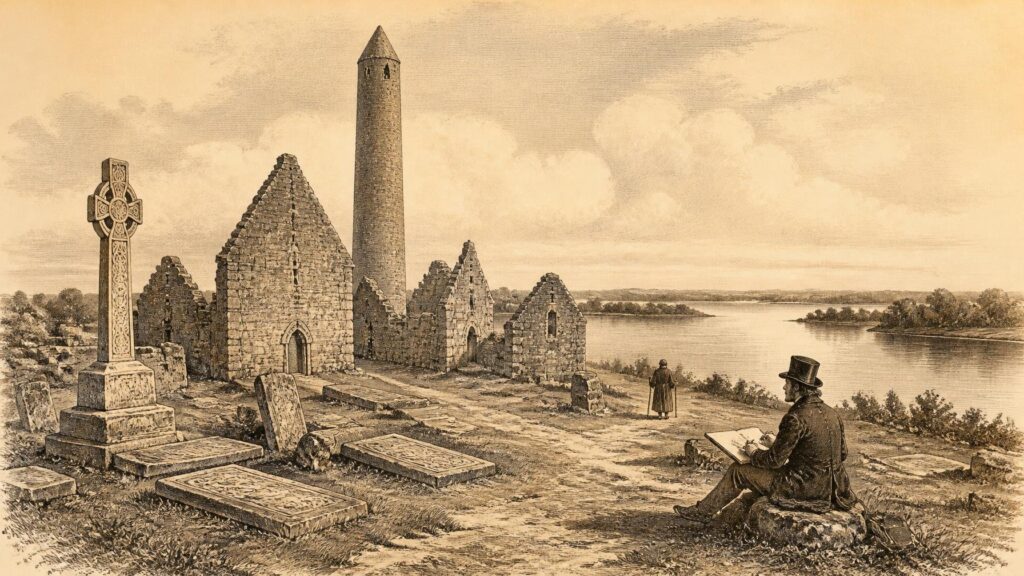
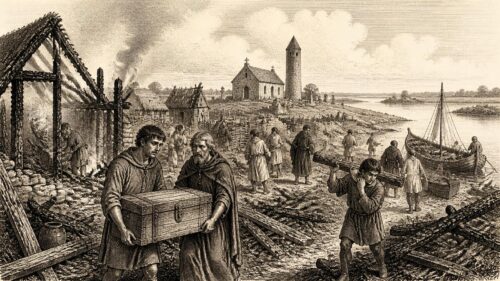
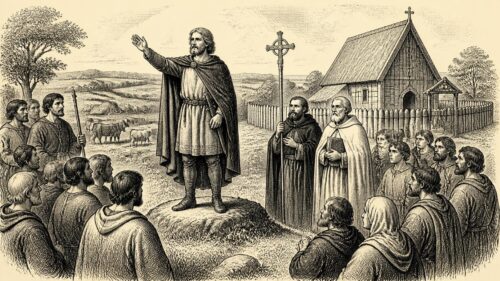
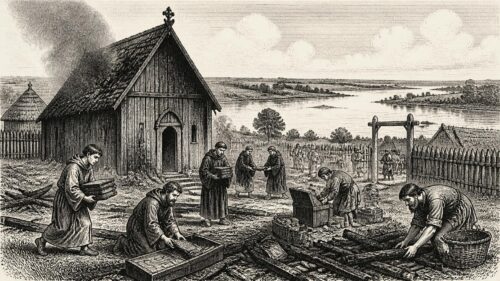
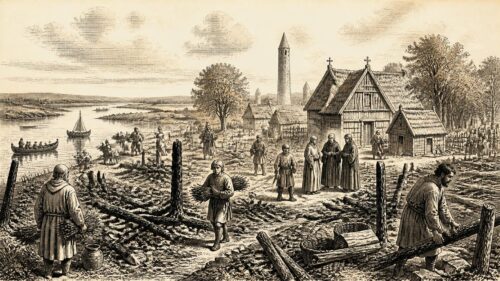
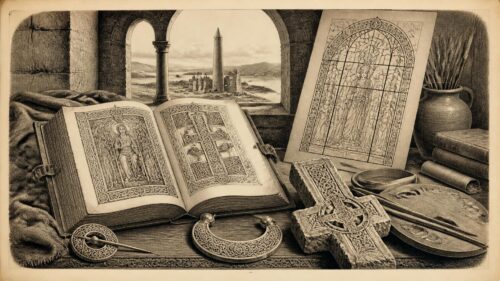
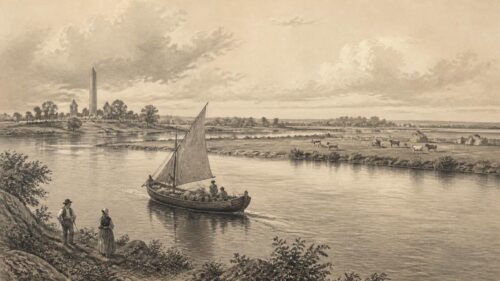
AI generated historical illustration, not a contemporary photograph.
At a Glance
The name St Kieran belongs not to a single uncomplicated figure but to a dense Irish inheritance of saints, churches, manuscripts, monuments, place-names and later institutions. Most often it evokes two early Irish holy men: Ciarán of Saighir, associated with Ossory and remembered as an exceptionally early apostle of Ireland, and Ciarán of Clonmacnoise, whose monastery on the Shannon became one of the island’s great religious and intellectual centres. Their stories overlap in name, miracle and later devotion, but historical enquiry must keep them distinct.
Names Entwined
“Kieran” is the familiar English spelling of the Irish name Ciarán. In Irish historical writing, however, the name has a special capacity to confuse. A considerable number of saints called Ciarán occur in calendars, genealogies, lives and local traditions. Two became pre-eminent: Ciarán of Saighir, sometimes called Ciarán the Elder, and Ciarán of Clonmacnoise, frequently distinguished as Ciarán the Younger or Ciarán mac an tSáir, “son of the craftsman”. Their reputations grew within different regions and institutions, yet the similarity of their names encouraged later comparison, blending and occasional misidentification.
That ambiguity is not merely a problem of modern spelling. It belongs to the way early Irish Christianity preserved memory. Saints were remembered in liturgical calendars, devotional tales, kinship claims, local landscapes, possessions regarded as relics, and churches whose communities promoted particular founders. A saint’s biography was therefore often more than a record of an individual life. It could explain why a church held land, why a community possessed status, why a place bore a name, or why its people regarded themselves as heirs to a sacred founder.
The sources consequently require careful handling. The surviving Lives of both major Ciaráns are hagiography: writing intended to celebrate sanctity, encourage devotion and assert ecclesiastical authority. Such works can preserve old names, places and institutional memories, but they do not provide modern biography. Miraculous animals, prophetic encounters and exact chronologies may reveal the religious imagination of the writers and patrons as clearly as they reveal the sixth or fifth centuries in which the saints were placed. The Dictionary of Irish Biography accordingly treats the early narratives with caution, particularly where texts survive in forms compiled long after the supposed events.
A historical article on “St Kierans” must therefore begin with distinction rather than certainty. Ciarán of Saighir belongs above all to the tradition of Ossory, the old kingdom spanning much of present-day Kilkenny and parts of neighbouring counties. Ciarán of Clonmacnoise belongs to the Shannon midlands and to a monastic settlement whose later political, literary and artistic importance is abundantly visible in both documents and archaeology. The two traditions are Irish in origin and development, but their influence also travelled through devotion, migration and ecclesiastical contacts beyond Ireland.
Early Saints
Ciarán of Saighir is conventionally placed in the fifth century, though the evidence does not permit a secure modern chronology for his life. He was remembered as the patron saint of Ossory and as founder of Saighir, now Seir Kieran near Birr in County Offaly. His Lives make him a man of the Osraige through his father and connect his mother with the Corco Loígde of southwest Munster. They also associate his birth with Cape Clear Island, off the Cork coast. This geographical range is significant: it maps later ecclesiastical and regional interests rather than providing a simple itinerary that can be accepted without qualification.
The boldest claim in the Saighir tradition is that Ciarán received Christian instruction abroad and returned to Ireland before Patrick’s mission. Some versions portray him as a missionary bishop who had encountered Patrick on the Continent; others make him an Irish precursor to Patrick. In medieval terms, such a claim granted extraordinary antiquity and dignity to the church of Ossory. Modern scholarship regards the pre-Patrician assertion as part of the saint’s later prestige rather than a securely documented fact. It should be read as ecclesiastical memory and regional argument, not as proof that Christianity was organised in Ossory before Patrick’s arrival.
Ciarán of Clonmacnoise is usually placed in the earlier sixth century. His principal epithet, mac an tSáir, identifies him as the son of a wright or craftsman, called Beodán or a related form in the tradition. Unlike the aristocratic genealogies frequently constructed for saints, this description offers the striking image of a holy founder from an ordinary working household. Yet even here the stories are preserved in hagiographical Lives whose extant forms are later than the man they celebrate. Their value lies partly in showing how Clonmacnoise wished to remember its founder: humble in origin, disciplined in learning, and divinely marked for authority.
The Clonmacnoise narratives place Ciarán in the company of several great figures of Irish monastic tradition. He is said to have studied under Finnian of Clonard, to have trained with Énnae on Aran, and to have spent time with Senán of Inis Cathaig. These connections fitted him into a sacred network of teachers and foundations across Ireland. They may preserve a broad awareness of relationships among churches, but their detail cannot be assumed to be contemporary testimony. The famous “Twelve Apostles of Ireland”, with whom Ciarán is often associated in popular accounts, is likewise a later organising label rather than an uncomplicated list of historical classmates.
The contrast between the saints is useful. Saighir’s Ciarán was made the ancient evangelist and episcopal protector of Ossory. Clonmacnoise’s Ciarán was made founder of a community whose continuing life transformed his memory into a major national tradition. Both were holy founders in the medieval imagination. But one cannot be used as evidence for the other, and stories transferred from one Ciarán to another must be treated as evidence of later devotional contact, not necessarily of shared biography.
Saighir Foundations
Saighir was the centre from which the cult of Ciarán of Saighir developed. Its Irish name, Saighir Chiaráin, survives in the form Seir Kieran, joining place and saint in a manner typical of early Irish ecclesiastical landscapes. The site lies in the territory historically connected with Ossory, though it is now in County Offaly. Its location illustrates the difference between modern county boundaries and the older political geography that shaped a saint’s cult. To call Ciarán simply a County Offaly saint would obscure the fact that his most powerful historical association was with Ossory.
The surviving remains at Seir Kieran demonstrate that the location retained religious importance, though ruins alone cannot prove the date or precise circumstances of the first foundation. Medieval churches, graveyards and later alterations are the material result of long use. Archaeological survival is especially valuable because it offers a check against narrative simplicity: an ecclesiastical place may be ancient and significant even when its founding story has been reshaped by generations of writing and worship.
The Lives depict Ciarán as an ascetic close to the natural world. He wears animal skins, eats little and receives the obedience of wild creatures. A boar, fox, badger, wolf and deer appear among the animals that serve him in one well-known account. Such episodes should not be presented as documentary events. They belong to an international Christian language of sanctity in which mastery over animals indicated recovery of harmony between holy person and creation. In Irish settings, however, the stories gained local force because they attached sanctity to particular woods, wells, journeys and communities.
Another Saighir tradition describes a manuscript known as Ciarán’s journey, remembered in a gloss to the Martyrology of Óengus. The reference is important even though the book itself does not survive. It suggests that the saint’s cult had generated literary material and that Saighir possessed, or was believed to possess, a decorated book associated with him. This is firmer evidence for the intellectual and devotional life of a later Saighir community than for the personal travels of a fifth-century founder. It shows how saints could become centres of textual memory as well as objects of prayer.
The cult also reached beyond its immediate Irish setting. Ciarán of Saighir has been associated with the Cornish Saint Piran, and the resemblance of names encouraged extensive speculation. The relationship remains disputed. Similarity of name, maritime links between Ireland and southwest Britain, and the mobility of saints’ cults make some form of contact conceivable, but they do not establish that the two saints were one historical person. The safer conclusion is that the Saighir tradition participated in a wider Irish Sea world, while the precise mechanisms by which particular cults crossed that sea remain uncertain.
Shannon Foundation
Clonmacnoise offers a markedly different kind of evidence. Founded on the east bank of the River Shannon, it developed into an ecclesiastical complex of exceptional scale and endurance. The Office of Public Works describes the site as occupying an esker ridge beside the Shannon, where a major north–south waterway intersected east–west routes along glacial ridges. That setting helps explain its later importance. The monastery was not isolated from society: it stood at a point of movement, exchange and political encounter in the Irish midlands.
Tradition puts Ciarán’s foundation in the middle of the sixth century and links it to a short final period of his life. The exact year differs between sources and reconstructions, and should not be treated as beyond dispute. What is much more secure is that, by the early medieval period, Clonmacnoise had become a great church, a burial place, a centre of learning and a community with extensive influence. The saint’s historical footprint is therefore inseparable from the later institution that claimed him as founder.
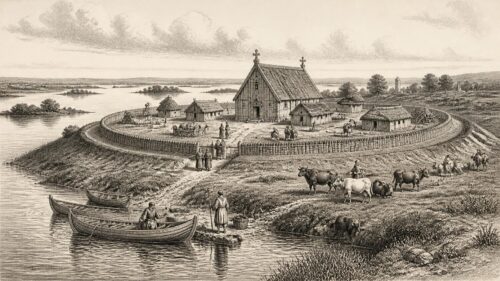
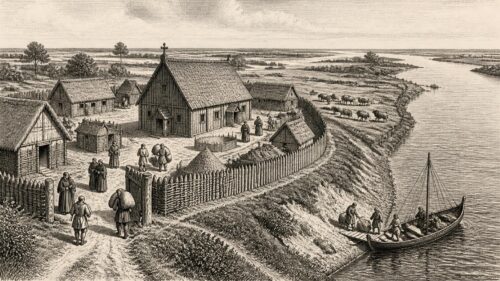
The name Cluain Mhic Nóis is generally understood as the meadow of the sons of Nós. In its developed form, Clonmacnoise was not simply a cloister occupied by a small body of monks. It was an ecclesiastical settlement with clergy, students, craftworkers, clients, tenants, visitors and people whose work sustained religious life. The modern visitor sees stone churches, round towers, high crosses and grave-slabs. Yet many domestic and service buildings were constructed of timber, and have vanished or survive only as archaeological traces. The impressive stone remains are therefore only part of the former settlement.
Its location on the Shannon made Clonmacnoise vulnerable as well as prosperous. The community was exposed to conflict among Irish rulers and to Viking raids. Raiding should not be mistaken for proof of helplessness; it also indicates that the church possessed wealth, strategic value and political consequence. Irish monasteries could be religious houses, landholders, centres of craft production, places of learning and nodes of royal alliance at once. Clonmacnoise became important precisely because it operated within, rather than apart from, the political and economic life of early medieval Ireland.
The saint remained central to this identity. His shrine, tomb, cult and attributed objects helped make the place a destination. An enshrined crozier believed to be Ciarán’s, along with another crozier linked to the abbots of Clonmacnoise, survives in the National Museum of Ireland. Such objects cannot resolve every biographical question about the founder, but they bear witness to the long-standing material expression of his authority. Relics were not passive memorials. They could define institutional continuity, command reverence and reinforce a community’s claim to sacred inheritance.
Written Lives
The written Lives of Ciarán of Clonmacnoise have an especially important warning attached to them. The Dictionary of Irish Biography notes that the Latin and Irish Lives have been understood to derive from a recension preserved at Clonmacnoise in the ninth century. If so, they stand centuries after the lifetime traditionally assigned to the saint. This does not make them worthless. Rather, it changes the questions historians ask. The texts may preserve older traditions, but they are also evidence for ninth-century and later attitudes about Ciarán, his church and the kind of founder Clonmacnoise required.
The tale of the dun cow is a fine example. Ciarán is said to have taken a cow to Clonard so that its milk might sustain him, and the hide of that animal was later associated with Lebor na hUidre, the Book of the Dun Cow. The manuscript, a major surviving collection of early Irish literature, has genuine and profound connections with Clonmacnoise. But the claim about the saint’s cow is a pious explanation, not a fact established by material analysis. Its importance lies in the way it joined a revered manuscript, a saintly founder and a monastic literary culture into one memorable story.
Texts attributed to Ciarán include a monastic rule, a penitential litany and spiritual poems. Attribution is not authorship. Medieval communities commonly placed works under the names of revered founders, whether to preserve a tradition of teaching, authenticate practice or honour a saint’s authority. The cautious historical position is that these works illuminate the devotional and disciplinary world associated with Ciarán, while direct composition by the sixth-century saint is uncertain.
Clonmacnoise was nevertheless a genuine centre of writing and historical memory. It is connected with major Irish textual traditions, including the compilation or preservation of works such as Lebor na hUidre and annalistic material associated with the Clonmacnoise group. The later Annals of Clonmacnoise are themselves a complicated witness: they survive as an early seventeenth-century English translation of a lost Irish chronicle and cannot be read as if they were a manuscript written in Ciarán’s lifetime. Yet their very existence shows the enduring importance of Clonmacnoise as a place from which Irish history was ordered, remembered and interpreted.
Written sources thus present two levels of history. At one level they yield fragments of earlier traditions: personal names, church affiliations, feast-days and memories of places. At another, they reveal the purposes of the communities that copied, adapted and promoted them. The historian should resist both extremes: neither dismissing hagiography as mere fantasy nor converting every miracle into an event. The productive question is how a story functioned within a particular religious and political setting.
Stone Evidence
At Clonmacnoise, archaeology and architecture supply a durable counterweight to literary tradition. The site includes churches dating principally from the tenth century onward, two round towers, high crosses, grave-slabs and later defensive remains. These structures do not date back unchanged to Ciarán’s foundation. Instead, they demonstrate that the community continued to invest in its sacred centre for centuries. Stone building was itself a declaration of permanence, wealth and collective memory.
The great crosses are among the clearest signs that Clonmacnoise addressed an audience wider than a small religious household. The Cross of the Scriptures, generally dated to the tenth century, combines carving, biblical imagery and commemorative inscription. It belongs to a world in which art instructed, honoured patrons and articulated Christian identity in public space. The original crosses are protected in the visitor centre, while replicas stand outdoors. Their survival makes Clonmacnoise one of the principal places through which the visual culture of medieval Ireland is encountered today.
Church names also preserve layers of association. Temple Ciarán is traditionally linked to the founder and his burial. Such a link is meaningful as evidence of cult and commemoration, but it does not mean that the present fabric can simply be identified with the original sixth-century church. Buildings were repaired, replaced and reinterpreted. The same is true of every major early medieval monastery: continuity of sacred place often coexists with repeated physical change.
Seir Kieran presents a more modest surviving landscape, yet it too is historically eloquent. Its importance is not measured by monumentality alone. The persistence of the saint’s name in the place-name, the church site and regional devotion demonstrates the capacity of an early ecclesiastical cult to outlast political rearrangement. Saighir’s claim to antiquity became part of Ossory’s spiritual map, while Clonmacnoise’s monumental remains became an enduring image of Ireland’s monastic past.
Material evidence cannot tell historians everything they might wish to know. It cannot prove that a saint personally stood at a given spot, nor can it authenticate every later relic-story. But it can establish the depth, scale and changing form of a community’s occupation. When used alongside texts rather than as their decorative accompaniment, archaeology helps distinguish a cult’s documented longevity from the legendary details of its origin.
Regional Power
The traditions of the two Ciaráns also reveal how Irish churches related to regional power. Saighir’s prominence in Ossory made its founder a symbol of diocesan and territorial identity. To proclaim Ciarán the first-born of Ireland’s saints was not a neutral compliment. It placed Ossory near the beginning of the island’s Christian story and asserted the dignity of its ecclesiastical inheritance. Such claims must be understood in the competitive setting of medieval churches, where antiquity brought prestige.
Clonmacnoise became entangled with kings, dynasties and rival ecclesiastical interests. Situated near the meeting of major routes, it had reasons to cultivate royal patrons and to serve as a prestigious burial place. Its annalistic and literary associations further strengthened its authority. The community did not merely receive history; it participated in making the records through which later generations knew Irish rulers, conflicts and sacred figures.
It is tempting to call Clonmacnoise a medieval town, and in some respects the comparison is illuminating. It had a substantial lay population, production, trade connections and buildings extending beyond a simple monastic enclosure. Yet historians debate how far the word “town” can be applied to Irish ecclesiastical settlements. The category can clarify their complexity, but it can also conceal the distinct economic and social structures of early medieval Ireland. “Monastic settlement” remains the more careful description, provided it is not imagined as detached from secular life.
Both Ciarán traditions show that saints were not only religious figures. Their names authorised claims to land, place, learning and communal standing. Their feast-days shaped devotional calendars. Their churches anchored people in local landscapes. Their stories could travel and adapt without losing their Irish character. In this sense, St Kieran is best understood not simply as an individual saint but as a tradition through which communities articulated continuity.
College Legacy
The name continued to carry authority long after the medieval period. St Kieran’s College in Kilkenny is among the most visible later institutions bearing it. The college traces its origins to 1782, when a Catholic diocesan school was established after the easing of the Penal Laws. Its current nineteenth-century building on College Road gave architectural form to a renewed Catholic educational presence in Kilkenny. The institution’s dedication to Kieran of Saighir is entirely appropriate to its Ossory setting.
The college’s own historical account calls Ciarán of Saighir its patron and repeats the traditional assertion that he preached before Patrick. That statement is revealing as institutional memory, but it should still be distinguished from verified fifth-century chronology. The school’s choice of patron expresses an enduring connection between education, diocesan identity and the saintly founder of Ossory. Its motto, Hiems Transit, “winter has passed”, explicitly recalls emergence from the era of the Penal Laws.
St Kieran’s College is therefore not an accidental modern use of an attractive saint’s name. It forms part of a long pattern in which Kieran’s cult supplied legitimacy and local belonging. The medieval saint of Saighir, however difficult to recover as a historical individual, remained meaningful to a post-Penal Catholic institution seeking roots in the deep Christian past of Ossory. The continuity is cultural and devotional rather than evidence that the school inherited an unbroken institutional line from Saighir itself.
Elsewhere, Clonmacnoise has become a powerful emblem of Irish heritage. It attracts visitors because its ruins make visible a history that can otherwise seem remote: stone churches beside the Shannon, carved crosses, graves, towers and a landscape in which religious devotion, scholarship, politics and travel once converged. This public significance creates its own responsibility. Interpretation must preserve the distinction between the exceptional historical importance of the monastery and the more uncertain details of its founder’s later Life.
Historical Judgement
What, then, can responsibly be said about St Kierans? First, the plural is historically useful. Ireland possesses more than one major Ciarán tradition, and the saints of Saighir and Clonmacnoise should not be collapsed into one composite figure. Second, both traditions have deep and demonstrable Irish roots. Saighir was a major focus of Ossory’s ecclesiastical memory; Clonmacnoise became one of early medieval Ireland’s most influential religious centres.
Third, the evidence is uneven. The physical and documentary record securely establishes the later significance of Clonmacnoise, its location, monumental development, literary associations and continuing cult of its founder. It also establishes Saighir’s enduring place in the religious landscape of Ossory. It does not securely establish every episode in the saints’ Lives, exact dates of birth and death, meetings with Patrick, journeys to Rome, miraculous animals or precise foundation years. Those are traditions to be interpreted, not facts to be silently repeated.
Finally, the survival of the Kieran name shows the resilience of historical memory in Ireland. It persists in Seir Kieran, in Clonmacnoise, in feast-days, manuscripts, relics, schools and local devotion. The name has been repeatedly renewed because it could connect communities to a sacred past. To study St Kierans is therefore to study more than two holy men. It is to study the making of Irish Christian memory: how landscape, literature, art, institutions and belief combined to keep early medieval founders present across more than a millennium.
The article compellingly shows that the historical importance of both Kierans may rest less on recoverable biography than on the institutions, landscapes and texts that continually renewed their reputations. This raises an intriguing comparison between Saighir’s regional claim to exceptional antiquity and Clonmacnoise’s more visibly monumental, literary and strategic legacy. In each case, hagiography appears valuable not simply for factual reconstruction, but for revealing how communities expressed authority, identity and continuity. How should historians balance archaeological evidence, surviving manuscripts and devotional tradition when assessing whether Saighir and Clonmacnoise shaped Irish Christian memory in distinct ways across medieval and modern Ireland?