Saint Ruadhán of Lorrha
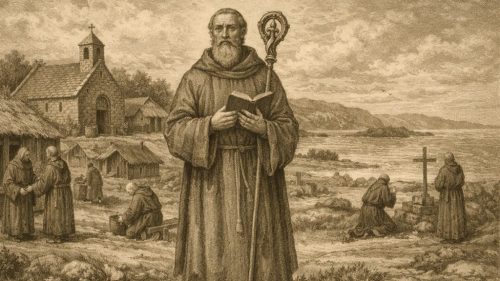
Saint Ruadhán of Lorrha, also rendered Ruadhán or Ruadhan, is remembered in Irish ecclesiastical tradition as a saint associated with Lorrha in County Tipperary. The surviving evidence presents him through a combination of liturgical memory, later historical writing, and the devotional life of the site that bears his name. The record is not a full contemporary biography, but it does preserve several points that recur in the sources: his association with Lorrha, his links with early Irish ecclesiastical tradition, and the commemoration of his death on 5 April. The Catholic Encyclopedia describes Ruadhán as one of the twelve “Apostles of Erin” and states that he studied under Saint Finian of Clonard.
Dateline
Saint Ruadhán of Lorrha, also rendered Ruadhán or Ruadhan, is remembered in Irish ecclesiastical tradition as a saint associated with Lorrha in County Tipperary. The surviving evidence presents him through a combination of liturgical memory, later historical writing, and the devotional life of the site that bears his name. The record is not a full contemporary biography, but it does preserve several points that recur in the sources: his association with Lorrha, his links with early Irish ecclesiastical tradition, and the commemoration of his death on 5 April.
Early Tradition
The Catholic Encyclopedia describes Ruadhán as one of the twelve “Apostles of Erin” and states that he studied under Saint Finian of Clonard. It also says that his embassy to King Dermot at Tara in 556 was later worked into the romance known as the “Cursing of Tara.” The same source adds that the legend of Tara’s halls having been deserted after 564 is of comparatively late origin and contradicts the fact that a Feis was held at Tara in 697. These notices belong to the later literary and historical tradition about the saint, and they should be read as evidence for how Ruadhán was remembered rather than as direct proof of every detail in his life.
A poem preserved in the CELT material also names Ruadhán among a group of saints associated with Munster. The passage is brief, but it is useful because it shows that his name circulated within wider saintly memory and was not confined to a single local tradition. Even so, the poem offers only a mention, not a detailed life. For that reason, Ruadhán’s early career remains known mainly through references preserved in later sources.
Lorrha Site
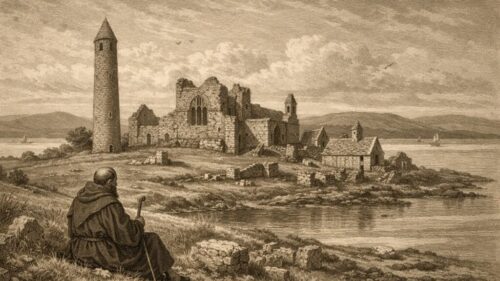
The clearest and most secure association is with Lorrha itself. Heritage Ireland states that Lorrha Church is dedicated to St Ruadhán, son of Ferghas Bearn of the Uí Dhuach clan. The same source identifies the church as a state-owned National Monument in the care of the Office of Public Works. It also notes that Lorrha church was the priory for the 13th-century Dominican priory. These details show that Ruadhán’s name remained central to the identity of the place across many centuries of use and rebuilding.
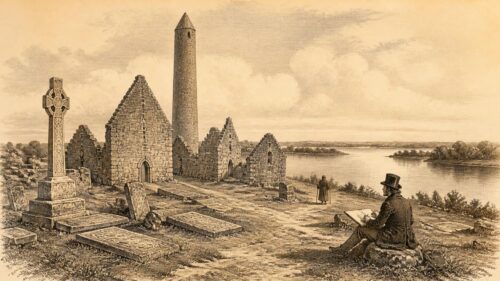
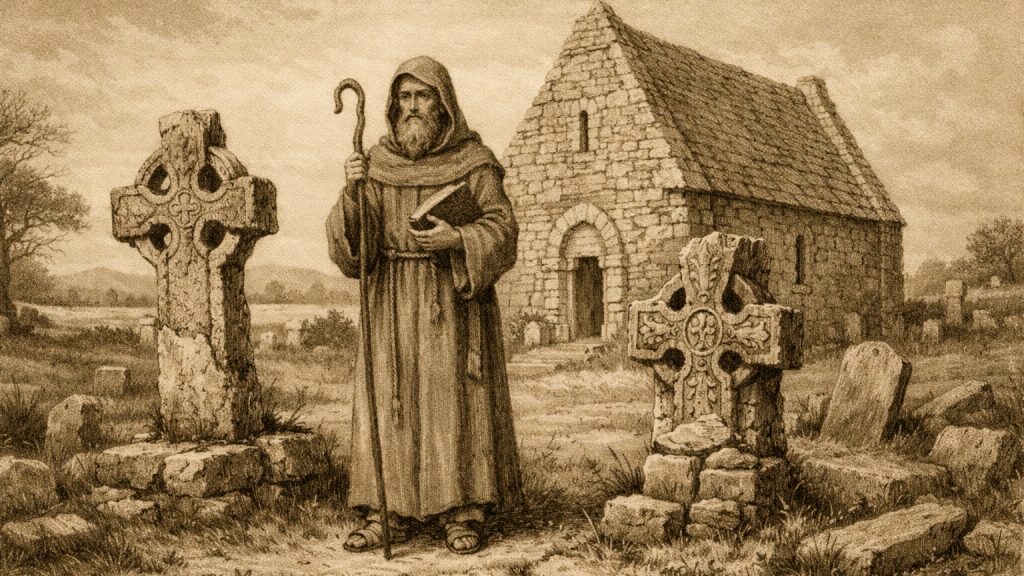
The surviving fabric at the site is later than the saint’s own lifetime, but it still reflects the long continuity of devotion there. Heritage Ireland describes the church as rectangular in plan and records features of later medieval date, including a 15th-century pointed doorway, capitals decorated in carved foliage dating to the 12th and 13th centuries, and a later addition to the east gable in 1813 using stone taken from the Dominican priory. The surrounding graveyard also contains the remains of two high crosses, dated to the 8th or 9th century. These monuments are not evidence for Ruadhán’s lifetime, but they do demonstrate the long sacred history attached to his church.
Death Commemoration
The Catholic Encyclopedia gives Ruadhán’s date of death as 5 April 584 and states that he died at the monastery of Lorrha, County Tipperary. It adds that his feast is kept on the anniversary of his death. This is the most explicit date provided in the supplied sources, and it corrects any conflicting date elsewhere. The source also identifies his bell as preserved in the British Museum, which is another sign of the enduring memory attached to his cult. Such details belong to the history of devotion and commemoration, even when the documentary basis for the saint’s life is limited.
In this way, Ruadhán appears less as a figure whose biography can be reconstructed in modern detail and more as a saint whose memory endured through place, liturgy, and relic tradition. The evidence securely supports his identification with Lorrha, his commemoration on 5 April, and his place in the early Irish saintly tradition described by later writers. Beyond those points, the surviving record is sparse and should not be expanded beyond what the sources actually say.
Source References
Hover over a number to see the source. Select it to open the source.