

Markets Belonging
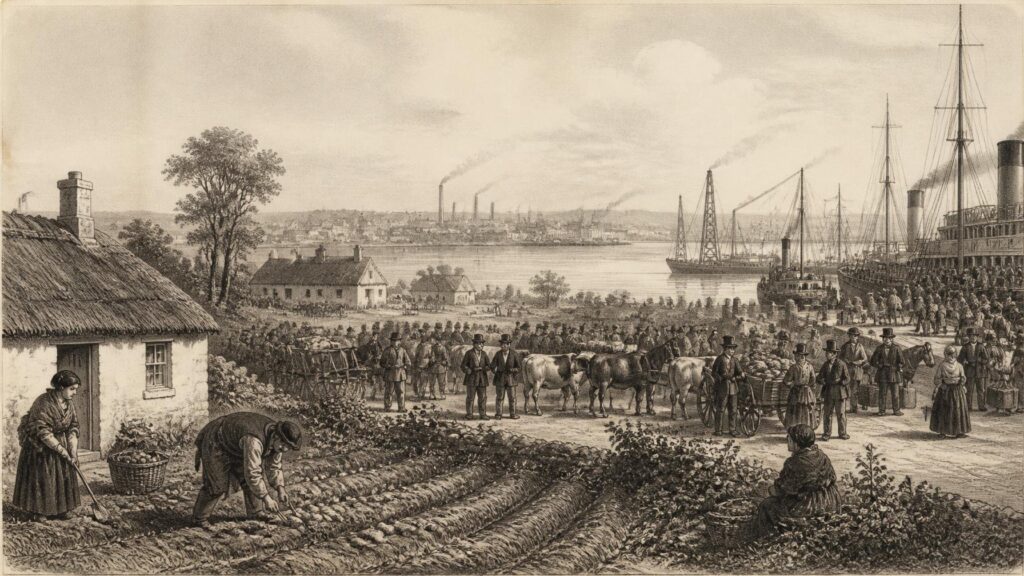
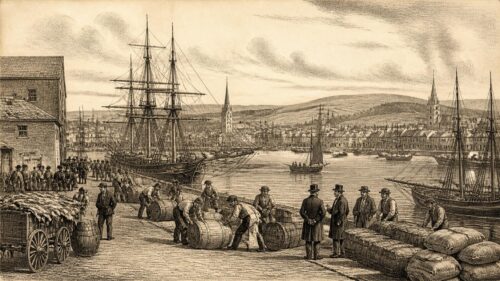
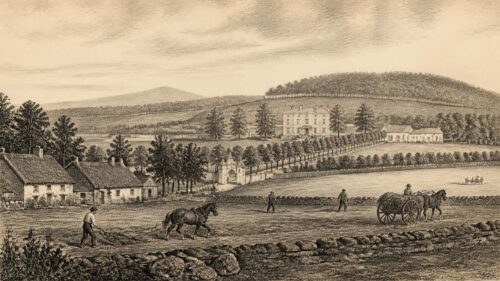
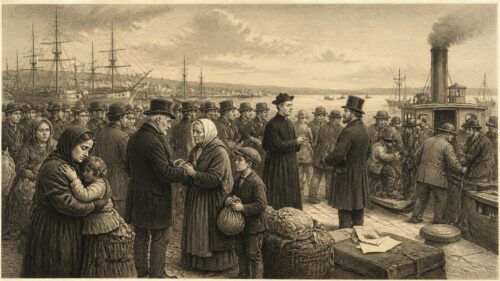
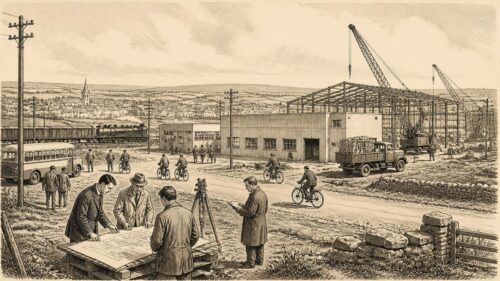
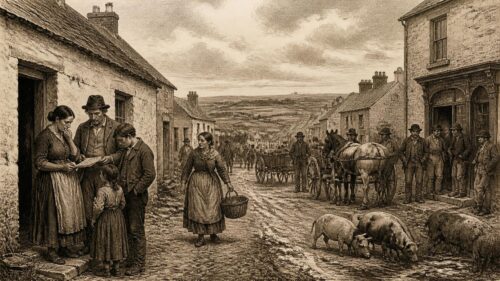
AI generated historical illustration, not a contemporary photograph.
At a Glance
Irish identity has never been made by culture alone. Land, wages, migration, trade, industry and the power to make economic decisions have repeatedly shaped how people on the island understood themselves, their neighbours and their political future. The historical record does not reveal one settled economic identity, but several overlapping and sometimes hostile traditions: rural and urban, tenant and proprietor, nationalist and unionist, emigrant and resident, protectionist and internationalist.
Material Foundations
To connect economy and identity is not to reduce belief, language or allegiance to money. People have acted from faith, inherited loyalty, moral conviction and affection for place even where doing so brought material loss. Yet economic life determines the circumstances in which such commitments are lived. It influences where people work, whom they encounter, whether they remain at home, what institutions they depend upon and which political arrangements appear secure or threatening. In Ireland, these questions were unusually sharp because the island’s economy developed unevenly, because ownership of land became a central national grievance, and because emigration made absence an enduring feature of family life and public imagination.
The evidence also cautions against a simple national tale. Ireland was never economically sealed off from Britain, Europe, North America or the wider empire. Agricultural exports, linen, shipping, remittances, imported manufactures, overseas labour and later multinational investment all bound the island to external markets. The historian’s task is therefore not to identify an untouched native economy later disturbed by outsiders. It is to ask how communities interpreted interdependence, and why the same commercial connection could be represented as opportunity by one group and dependency by another.
Modern statistical series illuminate part of that story, but they do not supply a complete answer. The Central Statistics Office notes that national accounts do not exist for Ireland in 1916; trade and population data are instead among the indicators from which conditions must be reconstructed. Such limits matter. Figures reveal movements in exports, employment and population, but they cannot by themselves tell us what a smallholder felt when a child departed for America, or why a Belfast engineer regarded the Union as protection for a way of life. For those questions, statistics need to be read beside newspapers, political speeches, organisational records, memoirs and local histories.
Union Markets
The Act of Union of 1800 joined the kingdoms of Great Britain and Ireland politically from 1 January 1801. Its consequences were argued over in economic as well as constitutional terms. Supporters promised access to a larger imperial market and stability after the upheaval of the 1790s. Opponents feared the loss of a Dublin parliament and doubted whether an Irish economy, with its own interests and vulnerabilities, would be protected at Westminster. Those arguments established a durable pattern: political constitutional choices were repeatedly expressed through claims about employment, trade and prosperity.
During the nineteenth century, the island did not industrialise uniformly. Parts of the north-east acquired a dense commercial and manufacturing economy centred on Belfast and its hinterland. Linen, engineering, shipbuilding and associated trades joined the port to British and imperial markets. The pattern was real but should not be romanticised. Factory work often depended on low-paid labour, including large numbers of women, and the prosperity of industrial Belfast coexisted with crowded housing, casual employment and sectarian division. The University of Ulster’s CAIN material records both the spectacular expansion of Belfast and occupational inequalities that pre-dated partition.
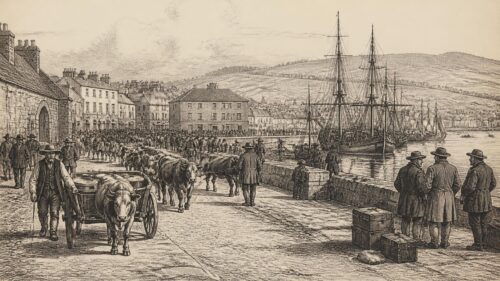
Elsewhere, agriculture remained decisive. Cattle, dairy produce and other foodstuffs supplied Britain; the relationship created income but also concentrated risk. Much of rural Ireland contained small holdings, tenancy arrangements and households dependent upon a narrow range of crops or seasonal earnings. It was not a timeless peasant world. Markets, credit, landlords, merchants and state decisions reached deeply into local life. Still, the lived experience of economic insecurity made land more than a commodity. It became a measure of dignity, family continuity and national justice.
Famine Memory
The Great Famine of the 1840s transformed both the demographic and moral landscape. The potato blight was biological in origin, but mass death and displacement occurred within a society marked by unequal property, inadequate relief, dependence on one crop among the poorest households, and an imperial administration committed to particular ideas about markets and public expenditure. It is therefore misleading to describe the catastrophe as either a wholly natural event or an event explained only by policy. The disaster emerged from their destructive conjunction.
Its demographic legacy can be documented with unusual clarity. Ireland’s population declined drastically in the famine era and continued to fall for generations through emigration and reduced births. Later census figures show the long reach of that history: the 1926 census, the first after the creation of the Irish Free State, recorded 2.97 million people in the twenty-six counties, and the population reached its recorded twentieth-century low in 1961. These figures do not make famine memory automatic, but they explain why absence became so familiar in Irish households and why economic success came to be judged against the possibility of forced departure.
Famine has also generated powerful folklore and political shorthand. Stories of full ships departing while hungry people remained on shore have often been told as a single, uncomplicated proof of national betrayal. There is a documented basis for the wider point that food continued to be exported from Ireland during the famine, but particular anecdotes require verification before they are repeated as fact. Historical interpretation is strongest when it retains both moral seriousness and evidential precision: the catastrophe was not less terrible because trade was complex, and complexity should not be used to evade responsibility for failures of policy and power.
Land Possession
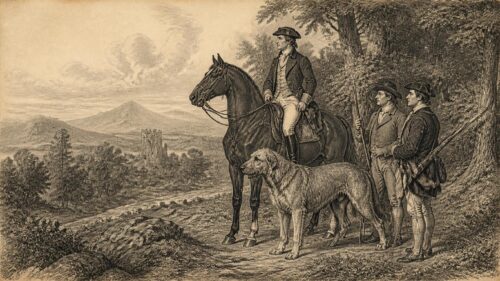
The land question converted economic pressure into mass politics. Tenant right, rents, eviction and ownership were not merely technical matters of agrarian law. They touched the household economy, social rank and the legitimacy of the governing order. The Land League and later campaigns brought organised pressure to bear on landlords and the state. Their language connected possession with nationhood: to own or securely occupy the farm was presented as liberation from an alien system as well as practical protection against insecurity.
That language was compelling, but the results were uneven. Land purchase and the transfer of many holdings into occupiers’ ownership changed rural Ireland profoundly. They did not abolish small farm incomes, local inequality or the tendency of younger people to leave. National Archives material on early twentieth-century Kerry, for example, shows that a county with a strong land-war history still contained precarious small farms, low-paid work and continuing emigration. Ownership could strengthen independence and status while leaving households exposed to poor prices, limited acreage and lack of alternative employment.
The association between land and authentic Irishness was therefore partly a political construction, though it rested upon genuine experience. Nationalist writers and activists often treated the countryside as the moral core of the nation, while urban industry appeared foreign, anglicised or socially disruptive. That opposition concealed much. Irish-speaking districts traded with the wider world; cities contained nationalists; rural communities were divided by class and religion. Nonetheless, the image of the self-supporting farm became a durable ideal because it joined economic security to cultural continuity.
Industrial Ulster
The north-east produced a different but equally consequential economic imagination. Belfast’s nineteenth-century industrial growth linked many Protestant workers, employers and commercial families to the United Kingdom’s market, capital and naval power. For unionists, the Union could be represented not simply as a constitutional preference but as the framework within which employment, investment and trade had flourished. The fear that Dublin rule might introduce tariffs, weaken British connections or redistribute influence gave economic content to political resistance to Home Rule.
That explanation must not become a claim that everyone in Ulster shared one material interest. Catholics worked in the city’s industrial economy, while their access to skilled work and secure employment was frequently unequal. CAIN’s review of employment and religion identifies a pattern in which Protestants were disproportionately represented in manufacturing, shipbuilding and engineering, while Catholic workers were more concentrated in lower-paid general labouring and certain commercial occupations. These were broad patterns, not a complete account of every workplace, but they show how class and religious identity could become mutually reinforcing.
Partition in 1921 created two states from an island whose economic geography did not map neatly onto either. Northern Ireland retained its place within the United Kingdom, while the Free State began to devise policies for a predominantly agricultural economy with a much smaller domestic market. The economic divergence was neither inevitable nor total: cross-border trade, kinship and migration continued. Yet the boundary gave different institutional forms to rival understandings of belonging. In the north, British citizenship and regional industry became central to unionist self-description; in the south, political independence was expected to make national economic development possible.
National Economy
The early Free State confronted an awkward inheritance: public finances to stabilise, a damaged post-revolutionary society, dependence on British markets and persistent outward migration. The first governments generally favoured balanced budgets and an export-oriented agricultural relationship with Britain. This was prudent in some respects, given limited resources, but it disappointed those who believed independence should quickly produce industry, employment and self-sufficiency. The distance between legal sovereignty and economic capacity became one of the central tensions of the new state.
Fianna Fáil’s arrival in government in 1932 gave economic nationalism its most important institutional expression. Tariffs, quotas and domestic manufacturing policy were intended to shelter Irish producers and lessen external dependence. The Control of Manufactures Act 1932 is primary evidence of this outlook: it regulated the carrying on of manufacturing within Saorstát Éireann and embodied concern over ownership and control as well as output. The policy was not simply an irrational rejection of trade. It belonged to an international age of depression and protection, while also drawing force from a specifically Irish desire to make political independence visible in workshops, goods and jobs.
The Economic War with Britain exposed the limits of that ambition. A dispute over land annuities brought British duties on Irish agricultural exports and Irish retaliation against British goods. ESRI historical analysis records a sharp fall in the export ratio in the early 1930s, even as the state attempted to broaden local production. Supporters could point to protected factories and the symbolic value of buying Irish; critics saw dearer goods, restricted competition and harm to agricultural producers. Both views contained elements of truth, and the outcome cannot be measured solely by the number of factories opened or closed.
Consumer Patriotism
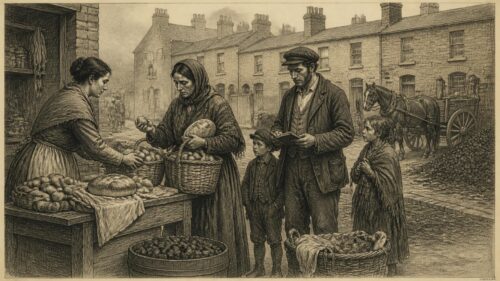
Economic nationalism was also a cultural practice. “Buy Irish” campaigns invited ordinary consumers to enact patriotism through everyday purchases. In this rhetoric, the shopper was not passive. Choosing domestic goods could be described as support for Irish labour, sovereignty and family welfare. The appeal was particularly attractive because it translated a large constitutional question into an individual act. A packet, garment or household object could become evidence of loyalty.
Such campaigns should be read critically. The claim that a product was Irish could obscure foreign inputs, ownership structures and uneven benefits. Nor did consumers always have the means to choose the goods urged upon them, especially if imported alternatives were cheaper or better suited to their needs. The ideal of national self-sufficiency was also gendered: women, commonly responsible for household purchasing but often excluded from economic authority, were asked to carry part of the patriotic burden. The rhetoric gave consumption moral significance without distributing economic power equally.
Folklore later simplified the period into an image of a wholly inward-looking Ireland, uniformly poor but culturally pure. The documentary record is more complicated. The state remained economically tied to Britain, emigrants sustained transnational family networks, and imported commodities remained necessary. What changed was the public language in which dependence was discussed. Protection made the national economy imaginable as a moral community, even where that community could not in practice supply all that its members required.
Departure Culture
Emigration was perhaps the most intimate bridge between economy and identity. It rearranged households, inheritance and marriage; it carried Irish accents, associations and political loyalties abroad; and it made the imagined national community larger than the population residing on the island. The historical evidence shows long, heavy outward movement before and after independence. The UCD research of Neil Cummins and Cormac Ó Gráda stresses both the scale of migration to Britain and the persistent disadvantage experienced by people identified as Irish in English records. Departure was not always desperation, but it was rarely a neutral choice.
In the Free State and later Republic, emigration acquired a double meaning. It could be praised as adventure, ambition and a route to remittances. More often in political argument it stood as an indictment: a state that could not provide work was said to be exporting its people. This judgement had emotional force because departure was measurable in empty houses, postponed marriages and ageing rural communities. Yet emigrants also challenged narrow definitions of Irishness. They formed unions, churches, sporting clubs, republican organisations and cultural societies abroad, while their children navigated identities that were Irish, British, American, Australian or more than one at once.
The population figures matter here, but they should not become a melodrama of inevitable decline. Demography changed with fertility, mortality, return migration and immigration as well as departures. The Central Statistics Office records growth from the 1970s, renewed emigration in the 1980s and sustained population expansion from the 1990s. The important historical point is that migration made Irish identity relational. To be Irish was often to be connected to someone elsewhere, and national arguments about success carried the recurring question of whether the next generation could remain.
Opening Horizons
By the 1950s, it had become difficult to sustain confidence in protection as the route to broad prosperity. Unemployment and emigration remained grave, while other western European economies were integrating and expanding. T. K. Whitaker’s 1958 paper, Economic Development, informed the First Programme for Economic Expansion and helped legitimate a turn towards export promotion, foreign investment and planning. The change was gradual rather than magical, but it altered the vocabulary of national advancement. Modernity increasingly meant education, technical skill, industrial exports and participation in international markets.
This was not a simple abandonment of national purpose. Governments sought external capital precisely because they hoped to create employment at home and make independence socially sustainable. The old contrast between nationalism and openness proved inadequate. A small state could pursue national objectives through international integration, just as earlier governments had pursued national objectives through protection. ESRI analysis describes the long shift from the late 1950s as an opening of goods and capital markets alongside state investment in education and inducements for foreign direct investment.
Entry to the European Economic Community in 1973 further changed both opportunity and self-understanding. Europe offered agricultural supports, a wider regulatory and trading framework, structural funding and a political horizon not reducible to the British connection. Membership did not end reliance on Britain, nor did it dissolve the importance of the Irish diaspora. It did, however, make it easier to imagine the Republic as a European state whose identity could be national without being economically isolationist. That was an interpretation promoted by politicians and commentators; its appeal rested on concrete institutional change as well as aspiration.
Prosperity Claims
The rapid growth of the 1990s and early 2000s, commonly called the Celtic Tiger, transformed the social setting in which Irishness was discussed. Returning emigrants, new migrants, rising employment and visible consumption challenged older assumptions that Ireland was defined by scarcity and departure. The phrase itself was useful journalism rather than a full explanation. Growth reflected a combination of long-term educational investment, European integration, export-oriented policy, multinational investment and wider international conditions. It was not proof that a single national character had suddenly discovered enterprise.
Prosperity made new identities more visible. Immigration complicated the older equation of Irishness with ancestry, Catholic background or rural origin. Cities became more diverse; workplaces connected people to global firms; and a generation accustomed to travel and higher education could understand national belonging in less defensive terms. This did not produce universal inclusion. Racism, insecure work and unequal access to housing demonstrated that economic growth could widen social membership for some while making others precarious. Identity changed through argument and law, not merely through higher incomes.
The financial crash after 2008 was a corrective to triumphalist stories. It exposed the fragility of a growth model tied to property, credit and internationally mobile capital. Public anger concerned banks, austerity, unemployment, emigration and perceived failures of political accountability. The experience revived an older lesson: economic sovereignty is constrained when credit, trade and investment depend heavily on forces beyond the state. But it did not restore the old protectionist consensus. Instead, debate centred on regulation, public services, taxation, housing and the distribution of recovery.
Shared Futures
Across the island, economic history has supplied resources for opposing identities. Nationalists have remembered land hunger, famine, emigration and external control. Unionists have remembered industrial connection, British markets and the perceived vulnerability of Ulster employment outside the United Kingdom. Neither memory is simply invented. Each selects real experiences, gives them moral order and sometimes overlooks people whose lives do not fit the preferred narrative: Catholic industrial workers, Protestant farmers, southern unionists, northern nationalists, women workers, migrants and those who crossed communal boundaries.
Interpretation should therefore resist the temptation to make prosperity the automatic solvent of conflict. The decline of the old Belfast staples did not erase unionist identity; the Republic’s internationalisation did not erase nationalism; and cross-border economic cooperation does not by itself settle constitutional questions. Economic arrangements matter because they shape confidence, fear and practical opportunity, but people give those arrangements meaning through history, institutions and collective memory.
The most defensible conclusion is modest. Ireland’s identities have been made in markets, but not by markets alone. Land ownership gave national politics an emotional grammar; industrial employment bound parts of Ulster to British structures; emigration spread Irish belonging across the world; protection and openness each became languages of sovereignty; and European and global connections altered the scale on which national life was imagined. The archive does not support a single economic destiny or a single authentic people. It supports a more demanding history of communities repeatedly remaking belonging under material pressure.
Most striking is the article’s suggestion that economic openness and national independence were not necessarily opposites. Protectionism made sovereignty visible through Irish-owned production and consumer choices, yet later planners pursued employment, education and social sustainability through foreign investment and European integration. This complicates any simple contrast between an authentic, self-sufficient Ireland and a globally connected one. It also raises questions about who benefited from each model, rural households, women managing budgets, and workers facing unequal access to jobs. How should we assess whether openness broadened Irish belonging more effectively than protection, while recognising the class, religious and gendered experiences involved?