
Year by Year
Explore Year by Year articles from the most modern historical year back to the oldest.
3,305 Articles Archived

Hyaena Reindeer
Archived: 28 September 2026
Around 30,554 BCE, Ireland lay within the climatically unstable Late Pleistocene, not a datable historical year. At Derryvree near Maguiresbridge, Fermanagh, freshwater silts between glacial tills indicate a locally ice-free tundra wetland during MIS 3, dated broadly to 36,900–31,700 years before present. Plants and insects record treeless, cold, seasonally frozen terrain with pools, mosses, sedges and herbs. Castlepook Cave, Cork, preserves mammoth, reindeer, hyaena and other fauna adapted to open habitats. A possibly stone-cut reindeer femur suggests, but cannot prove, Upper Palaeolithic visitors. Evidence reveals changing environments and animal communities, while later glaciation obscures human occupation, society and movement patterns.
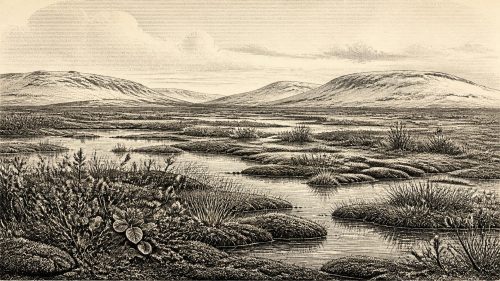
Severe Seasonality
Archived: 27 September 2026
At around 30,555 BCE, Ireland lay within the unstable middle phase of the last glacial period, not a precisely datable year. Derryvree’s freshwater deposits, preserved between glacial tills in County Fermanagh, record a local ice-free wetland between roughly 36,900 and 31,700 years ago. Its treeless tundra-like environment supported sedges, mosses, aquatic plants, willow and juniper amid severe seasonal conditions. Castlepook Cave in County Cork yielded diverse MIS 3 fauna, including mammoth, reindeer and hyaena. A marked reindeer femur may indicate human carcass processing, but settlement remains unproven. These scarce records show biologically active landscapes before later ice-sheet expansion transformed Ireland.
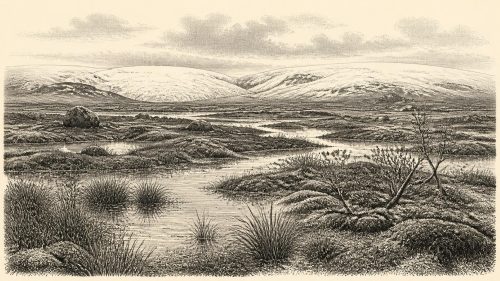
Glacial Renewal
Archived: 27 September 2026
At roughly 32,500 calibrated years before 1950, Ireland lay within an unstable Late Pleistocene glacial landscape. Derryvree in County Fermanagh preserves freshwater sediments between tills, recording ice, a cold, treeless wetland, and renewed glaciation. Plant and insect remains indicate shallow water, mossy ground and sparse vegetation. Ice was expanding unevenly across the region, while lower seas altered coasts. Cave deposits at Castlepook document cold-adapted fauna, including reindeer, mammoth and predators. A possibly cut-marked reindeer femur may indicate human carcass processing, but cannot prove settlement. No political or cultural history is recoverable; scientific evidence instead reveals changing environments and fragmentary possibilities.

Avens Tundra
Archived: 27 September 2026
About 30,557 BCE, Ireland’s evidence records no datable event, but Derryvree near Maguiresbridge preserves freshwater sediments deposited between glacier advances during Marine Isotope Stage 3. Their broad calibrated range encompasses this notional date, indicating an open, cold tundra wetland with pools, sedges, dwarf willow, mountain avens, mosses and seasonally available water. Local ice had retreated temporarily, although the British-Irish Ice Sheet was growing towards its later maximum and national conditions remain uncertain. Castlepook Cave’s fauna, including reindeer, mammoth, predators and other cold-adapted species, demonstrates variable food webs. A possibly butchered reindeer bone suggests transient Upper Palaeolithic visitors, not proven settlement.
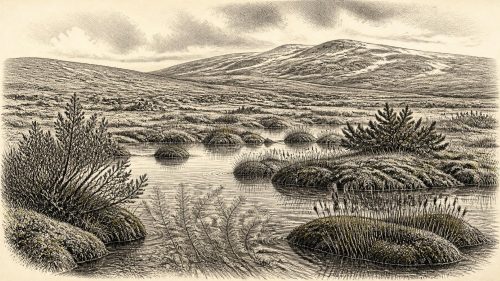
Periglacial Flora
Archived: 27 September 2026
30,558 BCE denotes a broad Late Pleistocene horizon rather than a precise Irish date. At Derryvree, County Fermanagh, organic freshwater sediments between glacial tills preserve evidence of a treeless, periglacial tundra: sedges, grasses, mosses, dwarf willow, juniper, bogbean, water-milfoil and insects occupied shallow wetlands during an ice-free interval. Ireland experienced unstable climate, advancing glaciers, altered coastlines and low sea levels. Cave remains, notably from Castlepook, indicate diverse cold-stage fauna, though they represent separate episodes. A possibly cut-marked reindeer bone suggests an unconfirmed early human visit. No secure evidence supports settlement, society or institutions; the period is understood through environmental remains.
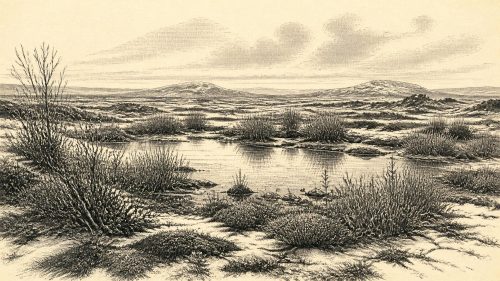
Hollymount Marshes
Archived: 27 September 2026
Around 30,559 BCE, Ireland lay within the unstable Late Pleistocene cold stage, not a precisely recoverable historical year. Intertill freshwater deposits at Derryvree and Hollymount, County Fermanagh, show that local ice-free intervals supported pools, marshes, tundra plants and insects before later glaciers buried them. Related sites demonstrate regional climatic variation, not an island-wide landscape. Castlepook Cave, County Cork, preserves diverse pre-Last Glacial Maximum fauna, including mammoth, reindeer, giant deer, predators and scavengers. A possibly cut-marked reindeer bone suggests, but cannot prove, Upper Palaeolithic human presence. The evidence records changing ecosystems, sedimentation and ice advance rather than societies, events or dates.

Dwarf Shrub
Archived: 27 September 2026
30,560 BCE is not a precise recoverable Irish historical year but a broad Late Pleistocene horizon within Marine Isotope Stage 3. At Derryvree, County Fermanagh, freshwater organic sediments between glacial tills record an ice-free interval before renewed glaciation. Radiocarbon dating provides only a wide calibrated range. Mosses, sedges, dwarf willow, aquatic plants, pollen and insects indicate cold, treeless, wet, open terrain with pools and short growing seasons. Comparable sites demonstrate regionally varied ice activity. Southern cave fauna confirms wider Pleistocene mammals, though not contemporaneity. No secure evidence identifies humans, settlements, agriculture or institutions then; Ireland’s earliest human activity is later.

Mixed Faunas
Archived: 27 September 2026
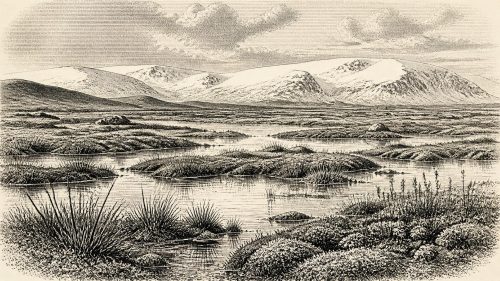
30,561 BCE is an imprecise modern label for a Late Pleistocene interval, probably within Marine Isotope Stage 3. Derryvree, County Fermanagh, preserves freshwater sediments between tills, showing that glaciation was interrupted locally by cold, treeless wetlands supporting tundra plants, mosses and aquatic vegetation. Castlepook Cave, County Cork, contains chronologically mixed remains of reindeer, mammoth, giant deer, predators and smaller animals, evidencing a mobile cold-stage fauna. A possibly cut reindeer bone suggests fleeting Upper Palaeolithic human presence, but cannot establish settlement. No evidence supports claims about Irish societies, politics, culture or belief; this past is reconstructed cautiously from environmental traces alone.
Calibrated Horizon
Archived: 27 September 2026
Thirty thousand five hundred and sixty-two BCE is a modern chronological label, not a recoverable Irish historical year. The BIRM-166 radiocarbon date from Derryvree, County Fermanagh, falls within a calibrated range and documents an interval between glacier advances. Sediments, pollen, plants, insects and mosses indicate cold, open, treeless wetland with freshwater pools, rather than uniformly ice-covered terrain. Ireland experienced unstable Late Pleistocene climates and expanding ice sheets, with changing coastlines and uncertain routes. Castlepook Cave preserves cold-stage fauna and a butchered reindeer bone, but human presence remains unproven. Evidence therefore supports environmental reconstruction, not claims of society, settlement or politics.

Glacial Pause
Archived: 27 September 2026
30,563 BCE is a modern label, not a precise Irish date. During the Late Pleistocene, Ireland experienced unstable cold conditions, changing sea levels and shifting ice margins. At Derryvree, County Fermanagh, freshwater silts between glacial tills show a locally ice-free landscape sometime about 36,900–31,700 years ago. Plant remains indicate shallow water, wet hollows and open tundra-like vegetation. Later ice preserved and buried this evidence. Castlepook Cave fauna demonstrates cold-stage animals, while a marked reindeer bone offers only tentative evidence of human butchery. Secure human activity is far later. No political, cultural or settlement history survives; environmental change defines the period.
Some records do not yet have a verified historical year and are awaiting chronological placement.