
Year by Year
Explore Year by Year articles from the most modern historical year back to the oldest.
3,307 Articles Archived

Calcite Thaws
Archived: 20 September 2026
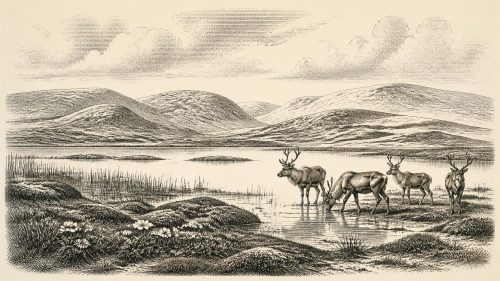
Labelled 31,082 BCE, this period cannot be treated as a precisely recorded Irish year, but belongs broadly to climatically unstable Marine Isotope Stage 3. Freshwater deposits at Derryvree, Hollymount and Greenagho show intermittent cold, open wetland environments between glacial advances, while Crag Cave calcite indicates milder episodes with flowing water. Castlepook Cave preserves fauna, including mammoth, reindeer, giant deer, hyaena, wolves and Arctic foxes, accumulated over complex deposits rather than one moment. An incised reindeer femur may indicate human butchery, but proves neither settlement nor continuous occupation. Evidence instead depicts fragmentary Ice Age environments, shifting ice and possible human presence.
Intermittent Tundra
Archived: 20 September 2026
The modern label 31,083 BCE denotes a broad Late Pleistocene interval, not a recoverable year. Ireland experienced unstable cold conditions, with changing ice, low sea levels and largely treeless grassland, wetland and tundra mosaics. Derryvree, County Fermanagh, preserves freshwater sediments dated broadly to the mid-to-late 30,000s calibrated years before present, containing cold-adapted plants and insects that disprove permanent island-wide ice cover. Castlepook Cave, County Cork, records diverse cold-stage fauna, although mixed deposits prevent a single contemporaneous reconstruction. A possibly tool-marked reindeer femur suggests, but cannot prove, brief human carcass processing. No settlements, institutions or sustained population are securely documented locally.

Butchery Doubt
Archived: 20 September 2026
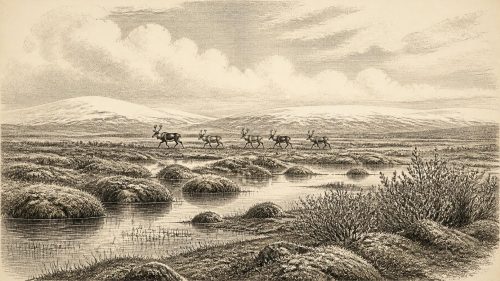
Around 31,084 BCE, Ireland experienced unstable Marine Isotope Stage 3 conditions, with advancing ice, lower sea levels and varied periglacial habitats rather than uniform frozen terrain. Derryvree, County Fermanagh, preserves wetland sediments between glacial tills, indicating cold, treeless freshwater environments during an ice-free interval. Castlepook Cave, County Cork, yielded diverse cold-stage fauna, including reindeer, mammoth, giant deer, predators and lemmings, although its deposits span multiple periods. A cut-marked reindeer femur may indicate Upper Palaeolithic butchery and a brief human visit, not proven settlement. Evidence reveals ecological complexity but cannot securely establish precise dates, communities, politics, culture or permanent occupation there.
Sedge Fossils
Archived: 20 September 2026
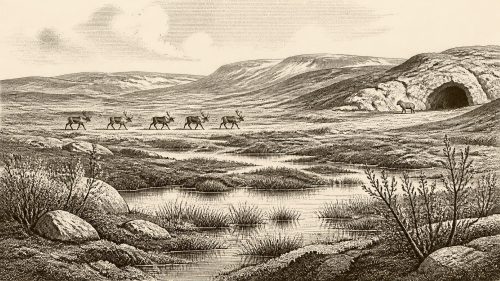
About 31,085 BCE, Ireland lay within the unstable Marine Isotope Stage 3, not a precisely datable historical year. At Derryvree, County Fermanagh, freshwater silts between glacial tills record an ice-free interval of wet, treeless tundra, supporting sedges, mosses, herbs and cold-adapted plants. Ice conditions elsewhere remain uncertain. Castlepook Cave, County Cork, preserves mixed faunal remains, including mammoth, reindeer, giant deer and predators, from several episodes. A marked reindeer femur may indicate stone-tool butchery, suggesting brief human visits, but this remains unproven. No settlements, polities, beliefs or exchange networks can be identified. Ireland was an environmentally dynamic, intermittently habitable cold-stage landscape.
Faunal Corridors
Archived: 20 September 2026
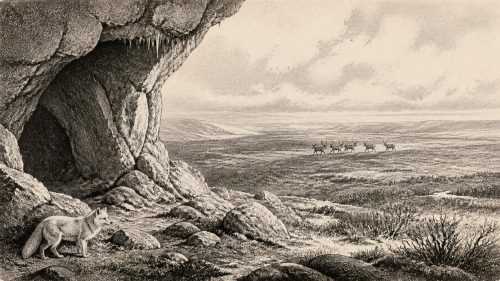
Around 33,000 calendar years before present, Ireland experienced increasingly severe, unstable conditions as the British-Irish Ice Sheet expanded towards its later maximum. Low sea levels allowed intermittent ecological connections, though routes remained uncertain. Derryvree, County Fermanagh, preserves freshwater evidence of treeless tundra wetlands supporting plants and insects. Castlepook Cave, County Cork, contains a disturbed assemblage including reindeer, mammoth, giant deer, hyaena, lemmings and Arctic fox, demonstrating repeated cold-adapted faunas. A possibly cut-marked reindeer femur may indicate brief Upper Palaeolithic human activity, but lacks secure context. No settlements, tools, institutions or continuous occupation can be established; erosion and glaciation obscured evidence.
Uncertain Passage
Archived: 20 September 2026
31,087 BCE is an imprecise label for a period near the onset of Ireland’s Last Glacial Maximum. Evidence, centred on Castlepook Cave in County Cork, depicts a cold, open tundra-steppe environment inhabited intermittently by mammoth, reindeer, giant deer, wolves, Arctic foxes and spotted hyaenas. Cave bones, coprolites and feeding damage demonstrate carnivore activity within a wider Eurasian-connected fauna. A marked reindeer femur may indicate human stone-tool use around 33,000 years ago, but disturbed deposits and uncertain taphonomy prevent conclusions. No settlements or cultural evidence are securely known. Subsequent ice expansion transformed Ireland, leaving Castlepook as evidence of early human passage.
Bogbean Mosses
Archived: 20 September 2026
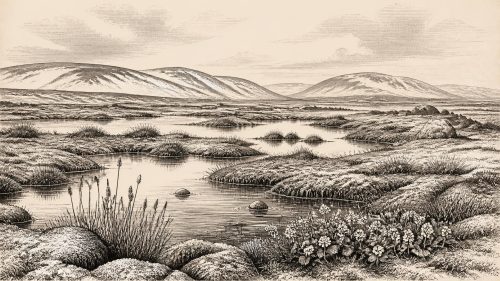
Around 31,088 BCE, Ireland cannot be described through annual events or historical communities, but through Late Pleistocene environmental evidence. At Derryvree, County Fermanagh, freshwater sediments between glacial tills record an ice-free MIS 3 interval, dated broadly between 34,950 and 29,750 BCE. Mosses, sedges, bogbean and cold-adapted insects indicate open, wet tundra-like terrain. Castlepook Cave, County Cork, preserves a mixed, cautiously interpreted fauna including mammoth, reindeer and hyaena. Possible human activity rests on an uncertain cut-marked bone, not settlement evidence. Later ice expansion erased much evidence, leaving a dynamic, harsh landscape rather than identifiable societies or events at any precise date.

Cave Predators
Archived: 20 September 2026
Around 31,089 BCE, Ireland lay within a fluctuating cold-stage environment before the Last Glacial Maximum. Lower sea levels altered coasts, but no definite route from Britain or evidence of permanent human settlement exists. Derryvree, County Fermanagh, preserves a wetland sequence between glacial tills, indicating open, treeless tundra-like conditions. Castlepook Cave, County Cork, contains remains of mammoth, reindeer, giant deer and predators, accumulated over long periods. A cut-marked reindeer femur may indicate human carcass processing, but cannot prove occupation. Later ice-sheet advances reshaped Ireland and destroyed much earlier evidence, leaving a fragmentary record of changing ecosystems, animals and possible transient visitors.

Seasonal Freezing
Archived: 20 September 2026
The label 31,090 BCE cannot identify a specific Irish event, but indicates a changing late-Pleistocene environment during Marine Isotope Stage 3. At Derryvree, County Fermanagh, organic deposits between glacial tills preserve evidence of an ice-free wetland with cold, treeless vegetation, freshwater pools and seasonal freezing. Castlepook Cave, County Cork, contains time-averaged remains of mammoth, reindeer, giant deer, hyaena and other animals, demonstrating diverse cold-open habitats. A possibly cut-marked reindeer bone suggests transient human activity, but not settlement. Ireland was not uniformly ice-covered, yet conditions were increasingly severe before the later ice-sheet maximum; evidence remains fragmentary, chronologically imprecise, limited in scope.
Castlepook Layers
Archived: 20 September 2026
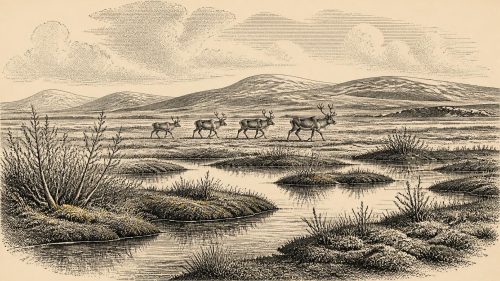
Around 31,091 BCE, Ireland lay within fluctuating Marine Isotope Stage 3 conditions, not a precisely identifiable year. Derryvree, County Fermanagh, preserves freshwater sediments between glacial tills, dated broadly to 36,900–31,700 calibrated years before present. Their pollen, plants and insects indicate a treeless, cold, wet tundra landscape. Castlepook Cave, County Cork, contains diverse cold-stage fauna, including mammoth, reindeer, giant deer and hyaena, although cave deposits mix ages and origins. A marked reindeer femur may record stone-tool butchery, suggesting a brief human visit, but remains unconfirmed. Later advancing ice transformed or destroyed these landscapes, preceding the Last Glacial Maximum in subsequent millennia.
Some records do not yet have a verified historical year and are awaiting chronological placement.