Jadotville, Brussels and Montrose1961 CE
In 1961, Ireland remained rural, economically dependent on Britain and affected by emigration, as the census population fell to 2,818,341. Seán Lemass’s government pursued modernisation through legislation, industrial development and outward-looking trade policy. Fianna Fáil retained office after October’s general election but lacked a majority, leaving Lemass dependent on a narrow Dáil vote. Ireland applied to join the European Economic Community, chiefly to protect trade links and agricultural exports amid Britain’s application. In Katanga, Commandant Pat Quinlan’s A Company fought at Jadotville, surrendered after isolation, and returned from captivity. Telefís Éireann’s inaugural broadcast on 31 December marked a new medium.
Dateline
In 1961 Ireland stood at a point of acceleration, though not yet of arrival. The Republic remained a predominantly rural country marked by emigration, a small home market and close economic dependence on Britain. Yet the direction of government policy under Seán Lemass was outward-looking: industrial development, exports and a place in European economic life mattered more than the older ideal of self-sufficiency. During the year, that change became visible in three very different settings: an Irish Army company encircled in Katanga; a formal application to join the European Economic Community; and the first pictures transmitted by Telefís Éireann. None settled Ireland’s future at once, but together they revealed a state becoming more international, more technologically connected and more conscious of its limitations.
A Country Counted
The census taken in the Republic on Sunday, 9 April was a sobering inventory of the society that the Lemass government hoped to transform. It recorded a de facto population of 2,818,341 people, lower than the 1956 total. The result confirmed that the long demographic decline which had shaped independent Ireland had not simply disappeared with the arrival of economic planning. Census night counted those physically present in the State, including visitors, rather than Irish people temporarily abroad; this technical definition mattered in a country whose families were so often divided by migration.
The figures must not be read as a simple story of national emptiness. Dublin and other larger towns drew people from rural districts, while new factories, offices, transport services and building schemes offered forms of employment that had been scarce in the previous decade. But the countryside still carried the burden of small farms, limited local work and the expectation that sons and daughters might leave for Britain, the United States or elsewhere. Agriculture remained central to livelihoods and exports, and its prospects were therefore central to every discussion of trade policy. The 1961 census captured an Ireland in which the movement from farm to town and from Ireland overseas continued alongside the beginnings of industrial growth.
Partition made the island’s demographic picture still more complicated. Northern Ireland held its own census on 23–24 April, under the institutions of the Northern Ireland state. Thus, within a fortnight, two administrations counted populations on the same island but for different political systems. The border remained a hard constitutional fact, even as economic and personal links across it persisted. In Dublin, ministers spoke increasingly about economic modernisation; in Belfast, Lord Brookeborough’s Unionist government remained firmly in office. The high-level contacts between Lemass and Terence O’Neill that would later become notable had not yet begun.
Law, Election and a Narrow Mandate
Legislation during 1961 gives a sense of a state extending its administrative reach. The Central Bank Act was enacted on 30 March. The Oireachtas also passed measures concerning industrial research and standards, tourism, roads, air transport, social welfare, agricultural credit, medical practitioners and hospitals. Such enactments did not by themselves remake daily life, but they show the practical machinery behind the language of development: regulation, credit, transport, technical capacity and public services.
Electoral arrangements became especially urgent. The Electoral (Amendment) Act 1961 created the constituency scheme used for the autumn general election and fixed the Dáil at 144 members. On 4 October voters elected the Seventeenth Dáil. Fianna Fáil remained the largest party with 70 seats, but fell short of an overall majority. Fine Gael won 47 and Labour 16; smaller parties and independents held the balance in a fragmented chamber. The result was significant not because it displaced Lemass, but because it curtailed the comfortable parliamentary dominance that Fianna Fáil had enjoyed after the 1957 election.
On 11 October the new Dáil nominated Lemass Taoiseach by 72 votes to 68. The narrow division demonstrated both the resilience and the vulnerability of his government. Fianna Fáil governed alone, dependent on careful management of the House rather than a secure majority. Political disagreement remained sharp over taxation, social provision, economic policy and the pace at which Ireland should expose its industry to foreign competition. Even so, there was wide recognition that the older protectionist settlement could not indefinitely provide employment for a growing working-age population.
The European Decision
The most consequential diplomatic act of the year came on 31 July, when Ireland applied for full membership of the European Economic Community. Lemass wrote to Ludwig Erhard, President of the EEC Council, setting out the Irish request. The application followed a July government White Paper and coincided with Britain’s decision to seek entry. For Ireland, the British move was decisive: Britain was the State’s principal trading partner and the principal market for agricultural exports. If Britain entered a European customs area while Ireland remained outside, Irish producers faced the risk of losing privileged access to that market.
This was therefore not a sudden abandonment of national independence, nor was it simply an expression of continental enthusiasm. It was a calculation rooted in geography, trade and agriculture. The EEC’s emerging common agricultural policy appeared potentially attractive to an economy still heavily dependent on farm production, while the Community also offered the prospect of a larger market for industrial exports. Yet full membership raised difficult questions. Irish firms would have to face greater competition; officials in Brussels doubted whether Ireland was economically developed enough; and Irish military neutrality sat awkwardly beside contemporary discussion of European political and security co-operation.
The application was firmly dated, but its outcome was not decided in 1961. No accession negotiations began that year. It is important not to read later membership, achieved only in 1973, backwards into this moment. What changed in 1961 was strategic direction. A government that had once treated economic independence largely in terms of insulation now sought security through participation in a wider European market. Frank Aiken, the Minister for External Affairs, and the diplomatic service had to reconcile that ambition with Ireland’s neutral foreign policy and exceptionally close commercial relationship with Britain.
Jadotville and the Congo
Ireland’s international role also carried a grave military cost and responsibility. Irish troops had been serving with the United Nations Operation in the Congo since 1960. In June 1961 the 35th Infantry Battalion deployed to Katanga, where the secession of the mineral-rich province had created a dangerous confrontation involving the Congolese central government, Katangese authorities, foreign mercenaries and the United Nations. Irish participation was an important expression of the State’s commitment to UN peacekeeping, but the events of September showed how little “peacekeeping” could resemble peace.
Commandant Pat Quinlan’s A Company was sent to Jadotville on 3 September. The unit was isolated as tension increased around the town and the crucial Lufira River crossing. On the morning of 13 September, as UN operations against Katangese forces widened, A Company came under attack. The Irish soldiers fought from prepared defensive positions over several days. They were short of water, their relief was unable to break through, and the tactical situation deteriorated. Quinlan accepted surrender terms on 17 September in order to protect his exhausted men, five of whom had been wounded.
The men were taken prisoner rather than killed in the fighting. They remained in captivity through a tense and uncertain autumn before their release on 25 October; the 35th Battalion returned to Ireland by Christmas. News from Katanga travelled slowly and imperfectly to Irish families, and early reports at home included false claims of heavy Irish casualties. Jadotville was thus both a battlefield episode and a domestic ordeal of waiting, rumour and anxiety. Its later reputation should not obscure the immediate fact: in 1961, Irish soldiers serving under the UN flag found themselves in sustained combat in central Africa, far from the neutral island whose international standing they were meant to represent.
Montrose Goes On Air
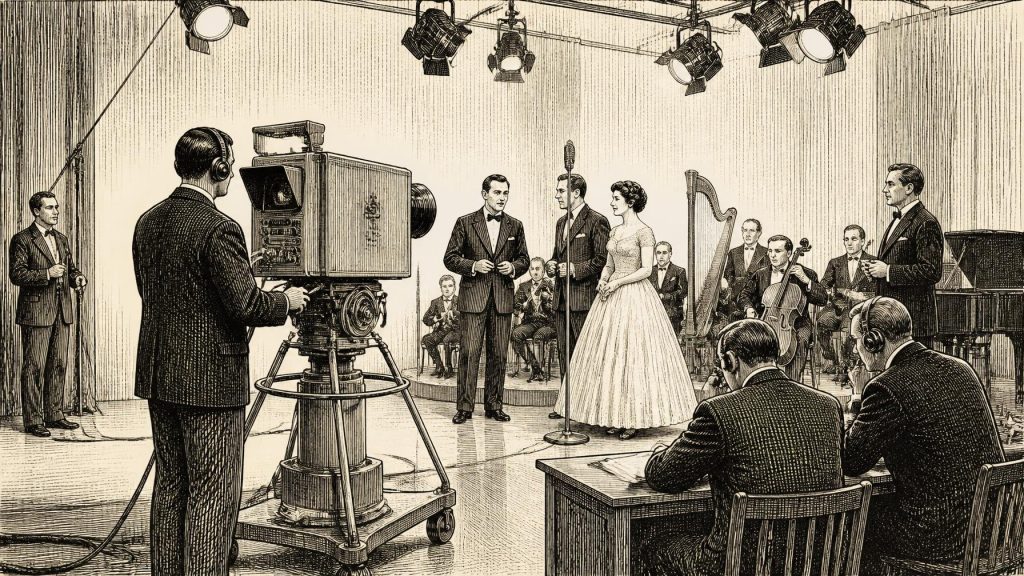
The year ended with a quieter but lasting transformation. At 7.00 pm on 31 December, Telefís Éireann began broadcasting. The national television service had been authorised by the Broadcasting Authority Act 1960, which required the new authority to provide television and sound broadcasting while bearing national aims, the Irish language and national culture in mind. Its opening was therefore a public institution as well as a technical achievement, expected to inform, entertain and help define a modern national culture.
President Éamon de Valera, aged 79, was the first person to address viewers on the new service. His cautious welcome recognised television’s extraordinary capacity to influence public thought and behaviour. The opening night combined solemnity and popular entertainment: a benediction and an address by Cardinal D’Alton sat beside music, comedy, traditional dance, news, outside broadcasting from the Gresham Hotel and scenes from O’Connell Street. The choice of programming conveyed the tensions of the moment. A new mass medium entered homes under the watchful eyes of Church, State and cultural guardians, but it also promised a more immediate, shared and less easily controlled public sphere.
Telefís Éireann did not instantly erase the dominance of radio, newspapers, parish life or local conversation. Reception and ownership were uneven, and television’s social effects would unfold over years. Still, its first broadcast on New Year’s Eve was a precise landmark. At the close of a year of censuses, electoral uncertainty, European calculation and overseas war, Ireland acquired a screen on which it could begin to see itself anew.
Primary Sources
- Census through History
- 1961 Vol 1 Entire
- Census 1961 Volume 1 – Population, Area and Valuation of Each DED and Each Larger Unit of Area
- Census 1961 Volume 7 – Religion and Birthplaces
- Introduction Census of Population 2022 – Preliminary Results
- 1961 Census
- 1961 Census – Reports
- Electoral (Amendment) Act, 1961
- Nomination of Taoiseach. – Dáil Éireann (17th Dáil) – Wednesday, 11 October 1961
- Chronological Table of the Statutes (1961)
- Central Bank Act 1961
- Broadcasting Authority Act, 1960
- Telefís Éireann Opens
- President On New Television Service
- The Soldier's Song 1961
- History of RTÉ: RTÉ 1960s
- The 60th Anniversary of the Battle of Jadotville, 13–17 September 1961
- 35 Infantry Battalion Congo Unit History
- ONUC Archival Collection
- Ireland and the EU: A History
- European Union Enlargement
- The Archives of Enlargement 1950–1973
- Irish Membership of EEC. – Seanad Éireann – Thursday, 14 July 1966
- Global Citizen and European Republic: Irish Foreign Policy in Transition
- Speeches of Seán Lemass as Taoiseach