Dundalk, Devolution and £4.402000 CE
In 2000, Northern Ireland’s new power-sharing Executive was suspended over IRA decommissioning, then restored after commitments and arms inspections, though no weapons were destroyed. Saville’s Bloody Sunday hearings began, while policing reform advanced through the Police (Northern Ireland) Act. In the Republic, Celtic Tiger growth brought low unemployment, inflation and infrastructure pressures, prompting the National Development Plan and Science Foundation Ireland. A national minimum wage, equal-status protections, human-rights legislation and child-abuse inquiry strengthened social accountability. Clinton visited Dundalk supporting peace. Sporting finals sustained shared rituals, but fragile devolution and unresolved arms left the peace process dependent on continuing international reassurance.
Dateline
The year 2000 was publicly received as a millennium threshold, although the twenty-first century in strict calendrical terms would begin in 2001. In Ireland, the symbolic new beginning sat beside problems that were anything but ceremonial: the uncertain implementation of the Belfast/Good Friday Agreement, the practical pressures of extraordinary economic growth, and a growing willingness to confront abuses long obscured within institutions. The island was peaceful by the standards of the preceding three decades, but its political settlement remained provisional, conditional and deeply contested.
Suspension and Return at Stormont
The gravest immediate test came in Northern Ireland. The power-sharing institutions established under the 1998 Agreement had taken office only in December 1999. David Trimble of the Ulster Unionist Party served as First Minister and the SDLP’s Seamus Mallon as Deputy First Minister, but unionist confidence in the institutions depended heavily on progress towards paramilitary disarmament. The Agreement had envisaged the decommissioning of paramilitary weapons by May 2000, yet the Independent International Commission on Decommissioning reported that it had received no information from the Provisional IRA about when decommissioning would begin.
On 11 February, the British Government suspended the Assembly and Executive and restored direct rule from Westminster. This was an exceptionally sharp reminder that devolved government was not yet secure. Suspension did not mean that the Agreement had failed, but it showed how its interlocking obligations could produce paralysis: republicans rejected the idea that weapons should be surrendered as a precondition for participation in government, while many unionists regarded visible movement on arms as indispensable proof of a changed political reality.
During the spring, intensive work by the British and Irish Governments sought a route back. On 6 May, the IRA stated that it would initiate a process intended to put arms “completely and verifiably beyond use”. That was a significant political commitment, but it was not the same thing as an act of decommissioning. The distinction mattered. On 30 May, devolution was restored, while an international inspection arrangement for IRA arms dumps was developed as a confidence-building measure. Inspectors reported in June and again in October that they had seen substantial quantities of weaponry and that the material had remained in the inspected dumps. Yet the decommissioning commission could still report no actual destruction or disabling of weapons in 2000. The first verified IRA act of putting arms beyond use would not occur until October 2001.
This uneasy compromise characterised the year. Institutions returned, but neither trust nor the central issue of arms had been resolved. The peace process had moved decisively away from sustained large-scale conflict, but it had not moved beyond the legacy of conflict. Its advance relied on inspections, careful language, private assurances and the continuing involvement of both Governments.
Truth, Policing and Rights
Other developments in the North addressed the inheritance of violence more directly. On 27 March, the Bloody Sunday Inquiry began its main public hearings at the Guildhall in Derry. The inquiry, chaired by Lord Saville, revisited the killing of thirteen civil-rights demonstrators by British soldiers on 30 January 1972; a fourteenth man later died of his wounds. Its opening in Derry gave survivors, relatives, soldiers and the wider public a formal arena in which evidence about one of the Troubles’ most consequential events could be examined afresh. The inquiry would continue for years, but 2000 marked the beginning of its substantive public work.
Policing was another sensitive front. The Police (Northern Ireland) Act received royal assent on 23 November. It gave legislative form to central elements of the Patten reforms, including arrangements for a new police identity, a Policing Board and district policing partnerships. The statute provided that the Royal Ulster Constabulary would be styled operationally as the Police Service of Northern Ireland, while initially retaining the wording “incorporating the Royal Ulster Constabulary”. This was legislation for transition, not an overnight settlement: the new service’s operational naming and associated institutions were brought into effect subsequently. Nevertheless, the Act made 2000 a pivotal year in the attempt to create a police service capable of winning support across both main communities.
The Republic was also strengthening its institutional language of rights. The Human Rights Commission Act, passed on 31 May, provided for a national Human Rights Commission. Its functions included promoting and protecting human rights, conducting enquiries, assisting legal proceedings in appropriate cases and advising Government. The legislation reflected a wider post-Agreement climate in which human-rights standards were increasingly presented as a practical part of public administration rather than simply an international aspiration.
Prosperity, Work and Uneven Pressures
In the Republic, Bertie Ahern’s Fianna Fáil–Progressive Democrats coalition governed amid the height of the Celtic Tiger expansion. Later national-account estimates put real GDP growth in 2000 at 11.5 per cent; contemporary official accounts similarly recorded exceptional growth, export expansion and very low unemployment. Forfás reported consumer-price inflation averaging 5.6 per cent and unemployment at 3.6 per cent by year’s end. These figures conveyed a striking reversal from the unemployment and emigration that had shaped Irish life in earlier decades.
The gains were visible in jobs, construction, consumer spending and the international presence of technology, pharmaceutical and financial firms. They were also inseparable from Ireland’s European position. Trade with the wider European Union, foreign direct investment and access to structural funding had helped make a small, previously peripheral economy unusually dynamic. But rapid growth brought immediate strains: prices rose quickly, roads and public transport lagged behind demand, and the pressure to provide homes, schools, water services and other infrastructure became increasingly evident.
The seven-year National Development Plan for 2000–06 therefore began with an intended total investment of about £40.6 billion at 1999 prices. It envisaged expenditure on roads, public transport, environmental services, education, health, regional development and productive capacity. Its stated purpose was not merely to spend the proceeds of growth, but to reduce bottlenecks, support social inclusion and spread development beyond the congested east and south-east. In practice, the plan placed a large public-investment programme at the centre of the State’s response to boom conditions.
Research and higher education were also treated as economic infrastructure. In February the Government established Science Foundation Ireland within Forfás to administer the Technology Foresight Fund. It was part of the research, technological development and innovation investment attached to the National Development Plan. The decision expressed a defining confidence of the period: Ireland should not rely solely on attracting overseas production, but should compete through scientific research, advanced technology and a more highly skilled workforce.
The Planning and Development Act 2000 belonged to the same setting. Its extensive provisions reorganised elements of planning law and development-plan practice, although many sections came into operation later. It should not be read as a solution achieved within the year; rather, its enactment showed that land use, local authority planning and the physical consequences of expansion had become central public concerns.
New Floors of Protection
Economic success did not remove questions about low pay or unequal access to everyday services. On 1 April, a national minimum wage took effect for the first time, set at £4.40 an hour, equivalent to €5.58. The measure established a statutory wage floor in a labour market where employers were competing intensely for workers. It also gave employees legal protections against victimisation for asserting their entitlement.
The Equal Status Act, enacted on 26 April and largely commenced on 25 October, extended anti-discrimination law beyond employment. It prohibited specified forms of discrimination, harassment and related conduct in goods and services, accommodation, education and clubs. Its protected grounds included gender, marital status, family status, age, disability, sexual orientation, religious belief, race and membership of the Traveller community. The Act did not erase entrenched inequality, but it supplied people with a clearer legal means of challenging exclusion in places and services used in ordinary life.
In June, the Commission to Inquire into Child Abuse Act placed a commission of inquiry on a statutory footing. The Government’s administrative commission, chaired by Ms Justice Mary Laffoy, had already been established in 1999; the Act gave it a framework to hear survivors and investigate allegations concerning childhood abuse in institutions. It created separate confidential and investigation committees, seeking to balance a survivor’s wish to tell an experience privately with procedures capable of examining allegations and respecting fair process. The legislation did not provide final answers in 2000, but it represented an important public acknowledgement that institutional abuse had been neglected and that testimony had to be heard.
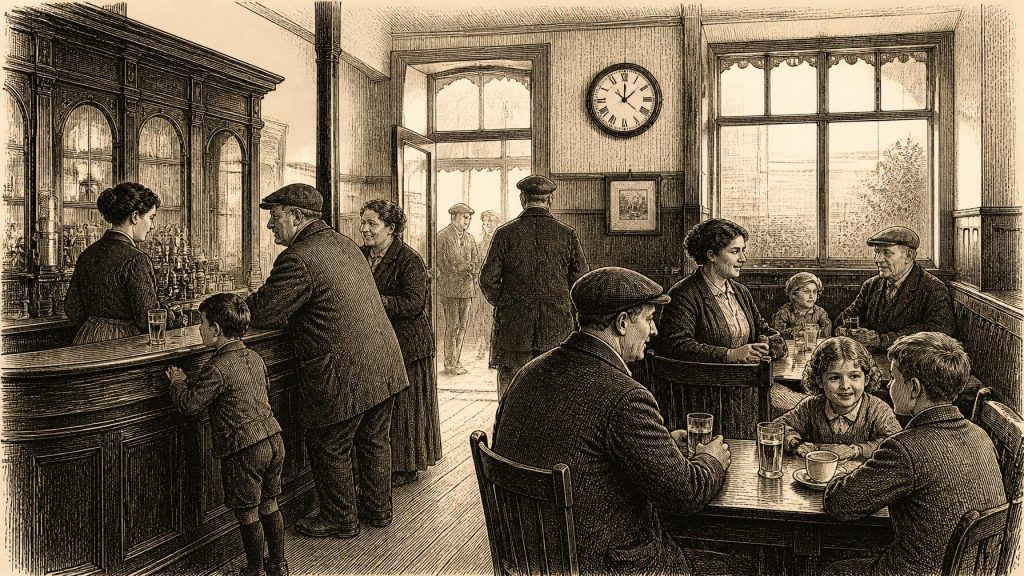
A smaller legal alteration captured changing social habits. The Intoxicating Liquor Act came into operation in July and abolished the Sunday afternoon “holy hour”, during which pubs had been required to close between 2 p.m. and 4 p.m. The change was modest beside constitutional politics and economic transformation, yet it was recognisable in the rhythms of weekend social life: a surviving rule of older licensing culture was removed.
Dundalk and the Public Stage
International attention returned in December when President Bill Clinton visited Dublin and Dundalk on 12 December, near the close of his presidency. Clinton had been closely associated with American support for the peace process. His Dundalk address, in a border town whose hinterland had long been affected by division, reinforced the United States’ encouragement for the Agreement’s institutions and for the parties to overcome their continuing impasse. The visit was symbolic, but symbolism retained real political value in a process dependent on reassurance as much as formal agreements.
Sport meanwhile supplied a more straightforward national public drama. Kilkenny defeated Offaly by 5–15 to 1–14 in the All-Ireland Senior Hurling Championship final at Croke Park on 10 September. Two weeks later, Kerry and Galway drew the All-Ireland Senior Football final, 0–14 apiece, before Kerry won the replay, 0–17 to 1–10. Such occasions brought county loyalties, national broadcasting and large urban crowds together in an Ireland whose economy and politics were changing rapidly, but whose sporting calendar still offered a durable common ritual.
By year’s end, Ireland had reason for confidence but little reason for complacency. The Republic’s prosperity was generating resources and expectations at a remarkable pace. New laws widened the language of rights, employment protection and public accountability. In Northern Ireland, devolution had survived its first suspension and returned to work, while the opening of the Saville hearings and policing legislation addressed difficult parts of the past. Yet weapons had not been decommissioned, trust remained thin, and the structures of peace still required constant maintenance. The year’s most important achievement was not closure, but the preservation of a political process through uncertainty.
Primary Sources
- Irish Statute Book: Public Acts 2000
- National Minimum Wage Act, 2000
- National Minimum Wage Act 2000: Commencement
- The History of the Minimum Wage in Ireland
- Equal Status Act, 2000
- Equal Status Act 2000: Commencement
- Human Rights Commission Act, 2000
- Commission to Inquire into Child Abuse Act, 2000
- Commission to Inquire into Child Abuse Bill, 2000: Second Stage
- Intoxicating Liquor Act, 2000
- Planning and Development Act, 2000
- Planning and Development Act 2000: Commencement
- Forfás Annual Report 2000
- National Income and Expenditure Archive 2000
- Ireland: Staff Report for the 2000 Article IV Consultation
- The Mid-Term Evaluation of the National Development Plan and Community Support Framework for Ireland, 2000 to 2006
- History: About Science Foundation Ireland
- Vision 2008: Science Foundation Ireland
- Devolution in Northern Ireland, 1998–2020
- The Northern Ireland Assembly: Chronology
- Report of the Independent International Commission on Decommissioning, 26 October 2000
- Final Report of the Independent International Commission on Decommissioning
- Bloody Sunday Chronology
- Saville Inquiry: Hansard Written Answer, 8 January 2001
- Police (Northern Ireland) Act 2000
- President Clinton's Trip to Ireland and the United Kingdom, December 2000
- Remarks to the Community in Dundalk, Ireland
- American Presidential Visits to Ireland
- GAA Championship Results, 2000–2002
- Sean Ó Domhnaill's Replay Recall