Carlow, Creggs and Glasnevin1891 CE
In 1891, the Parnell split dominated Irish politics as anti-Parnellites organised in the Irish National Federation, won North Sligo and Carlow, and gained episcopal support. Parnell defended Irish independence, married Katharine O’Shea, addressed his last major meeting at Creggs, and died in Brighton; his Glasnevin funeral drew vast crowds. The Purchase of Land Act strengthened tenant purchase and created the Congested Districts Board to address western poverty. The census recorded continuing population decline, driven by emigration and limited rural opportunity. Meanwhile, the Irish Daily Independent began publication, Wilde published Dorian Gray, Stephens returned, and Redmond’s Waterford victory preserved minority Parnellism.
Dateline
In 1891 Irish public life was dominated by the wreckage of a movement that, only a year earlier, had seemed capable of carrying Home Rule to the centre of British politics. Charles Stewart Parnell had made the Irish Parliamentary Party a disciplined force at Westminster and a national organisation at home. Yet the party’s rupture, precipitated in late 1890 by the O’Shea divorce case and by William Ewart Gladstone’s refusal to work with Parnell as leader, was not healed in the new year. Instead, 1891 made the division tangible: in elections, parish meetings, newspaper offices, railway stations and streets. The year also brought a major land measure, a revealing census, and cultural and political developments that showed Ireland was larger than the exhausted struggle between Parnellites and anti-Parnellites.
A National Movement Divided
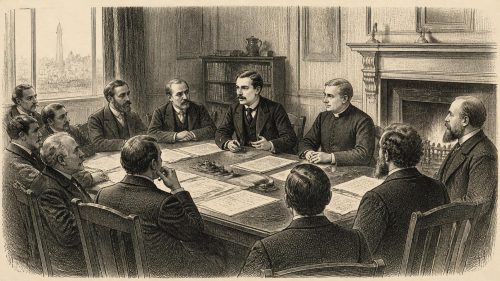
The split had formally occurred in December 1890, when the majority of Irish MPs left Parnell and followed Justin McCarthy. In 1891 that majority acquired a more durable organisational form in the Irish National Federation. It retained the parliamentary language of Home Rule but rejected Parnell’s leadership as an impediment to restoring the Liberal alliance on which a second Home Rule bill seemed to depend. Parnell’s adherents, led in parliament by John Redmond and others, insisted that Ireland must not allow an English Liberal leader to decide who could lead an Irish party. The disagreement was therefore not merely personal, although personal morality was continually invoked; it concerned political independence, electoral calculation and the terms on which Irish self-government might be pursued.
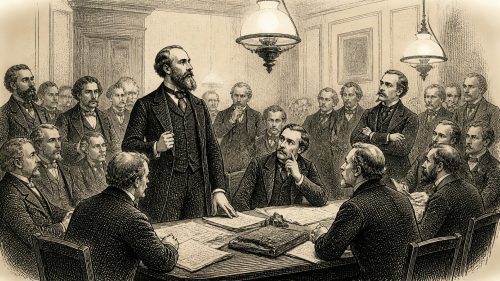
The arguments entered everyday politics with extraordinary bitterness. Public meetings could become tests of local allegiance, while priests, local organisers, newspapers and publicans all mattered in assembling a constituency. Parnell still possessed intense loyalty, especially in Dublin and in pockets of the country where his earlier leadership of the land and Home Rule movements remained decisive. But the anti-Parnellite majority had stronger organisational resources, support from much of the Catholic hierarchy, and the benefit of presenting reunion with Gladstone’s Liberals as the practical route back to Home Rule.
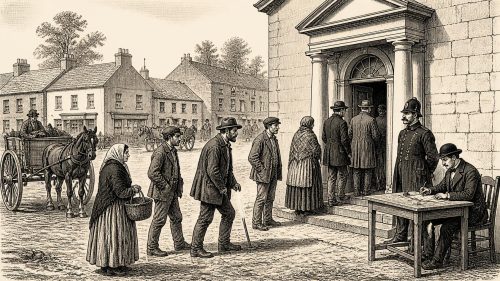
By-elections supplied hard evidence of the balance of forces. North Sligo, polled on 2 April, returned an anti-Parnellite candidate. The County Carlow contest of 7 July was still more damaging. It followed months in which Parnell had travelled, spoken and fought for his political survival. The anti-Parnellite candidate won 3,747 votes to the Parnellite 1,532. Immediately afterwards the Catholic bishops, with the exception of the bishop of Limerick, issued their collective condemnation of Parnell’s continued leadership. Their intervention did not create all anti-Parnellite feeling, but it gave religious and electoral authority to a case already being pressed vigorously from platforms and in the press.
Parnell’s Last Journey
Parnell did not retreat. His speeches of 1891 were often framed as a defence of Irish political dignity against Liberal interference, but the campaign also exposed the punishing human cost of the split. Crowds were enthusiastic in some places and hostile in others; meetings, trains and processions became occasions for confrontation. A projectile struck him at Castlecomer, County Kilkenny, during one turbulent episode. Such incidents should not obscure the larger point: the conflict was primarily a struggle for the inheritance of a constitutional nationalist movement, carried on through elections, associations and newspapers, but it was conducted in an atmosphere of intense personal animosity.
On 25 June Parnell married Katharine O’Shea at the registry office in Steyning, Sussex. The marriage did not close the controversy. To many opponents it confirmed that he could no longer credibly lead a party dependent on Catholic popular support and Liberal goodwill; to loyalists, it offered no reason to surrender an Irish leader to pressures from outside Ireland. The Carlow result soon showed that marriage had not reversed his electoral decline. Even the Freeman’s Journal, long an important nationalist daily, moved into the anti-Parnellite camp during the summer.
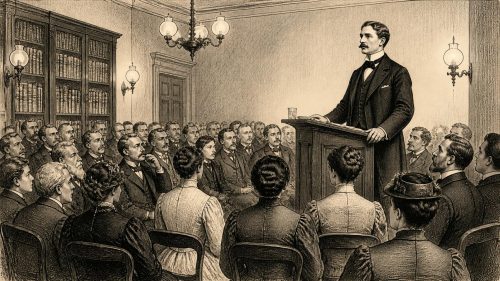
Parnell’s final major Irish meeting was held at Creggs, on the Roscommon–Galway border, late in September. He was visibly unwell. After returning to England, he died at Brighton on 6 October, aged forty-five. It would be misleading to portray his death as instantly resolving the split: the rival organisations survived him, and their quarrels continued. Yet his death removed the one figure whose authority, reputation and political style had shaped constitutional nationalism in the preceding decade.
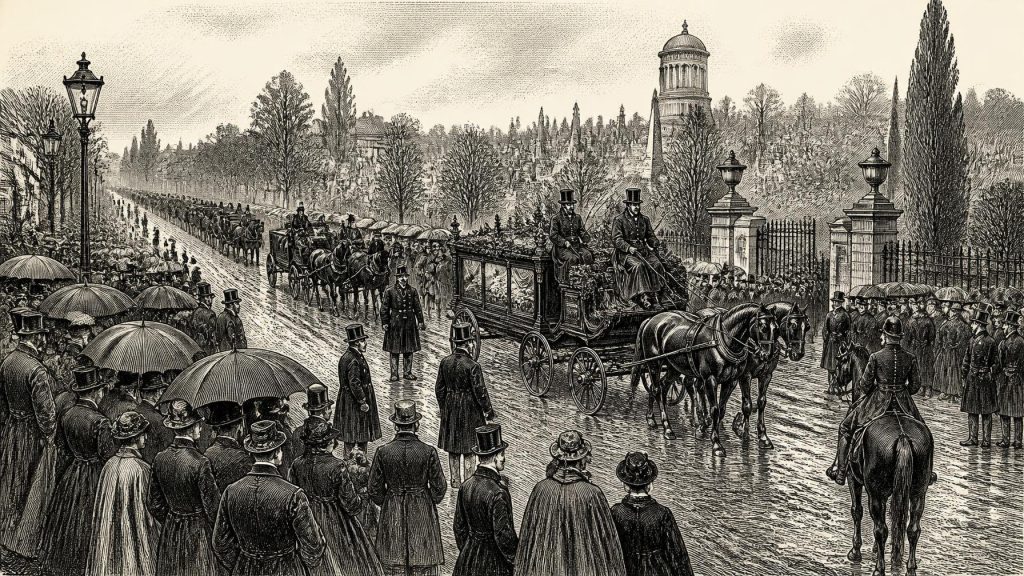
His body was brought to Dublin, and he was buried in Glasnevin Cemetery on 11 October. The immense funeral procession, attended by crowds estimated in the hundreds of thousands, was both an act of mourning and a public demonstration of national memory. Parnell was an Anglican, but Glasnevin’s non-denominational character made it an appropriate resting place for a leader claimed by a far wider public. The unadorned Wicklow granite grave later associated with him suited the posthumous image of a leader whose fall had become inseparable from the perceived tragedy of lost political unity.
Land Purchase and the Congested West
While nationalist politics fractured, Arthur Balfour’s Conservative administration passed the Purchase of Land (Ireland) Act on 5 August. The statute made the Irish Land Commission permanent and provided further machinery and finance for tenant purchase. Its importance lay in the continued transformation of the land question: Irish tenants were increasingly encouraged to become owners, while landlords were offered a route out of the older rent-based system. This was not a sudden end to landlordism or rural inequality, but it reinforced a long movement away from the insecure tenancies that had helped generate the Land War.
The Act also created the Congested Districts Board for Ireland. Its language made poverty administratively visible. A ‘congested districts county’ was to be identified not simply by remoteness or scenery, but through electoral divisions where low rateable value per head indicated very limited resources. The Board received the interest on a £1.5 million Church Surplus Grant and inherited specified reproductive-loan and fisheries funds. It could assist the enlargement and amalgamation of small holdings, support migration or emigration in particular circumstances, and address fisheries, agriculture and related local needs.
These provisions were aimed especially at the overcrowded, low-valued smallholding districts of the west and north-west. They recognised that an agricultural household on a tiny holding of poor land could not be made secure merely by fixing a fair rent. Nevertheless, the Board was only established in 1891; its later estate purchases, fisheries schemes and attempts at rural improvement should not be projected backwards as achievements already completed in this year. In 1891 the significant development was the creation of an institution and the acceptance by government that regional poverty required a distinctive response.
Counting a Shrinking Country
The census taken on 5 April recorded 4,704,750 people in Ireland, a fall of 470,086 since 1881. The decline was not a temporary fluctuation. It was part of the long demographic contraction that had followed the Great Famine, sustained by emigration, changing marriage patterns and a rural economy with limited opportunities for young people. The published returns counted houses as well as people and classified occupation, religion, birthplace, education and other features of social life. Individual household schedules from 1891 were later pulped, but the printed county reports preserve the broad outline.
The census confirms the centrality of agriculture while cautioning against an image of a wholly uniform countryside. Farmers, farm servants, labourers and their families formed a vast portion of the population; market towns, ports, railway employment, domestic service, textile districts and the industrial economy around Belfast supplied other livelihoods. Women’s work was often under-recorded or described through household position rather than paid occupation. Emigration remained embedded in family strategy, especially where a small farm could support only one successor. The more than nine per cent decline since 1881 made such pressures impossible to ignore.
Print, Memory and Cultural Life
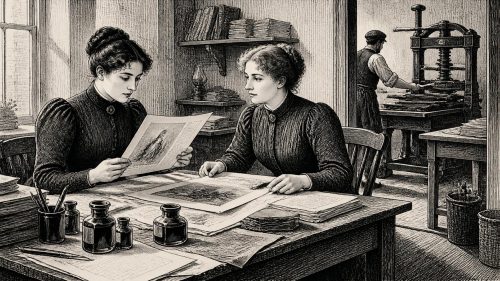
Political division also sharpened the importance of print. The Irish Daily Independent began publication in Dublin in December 1891, adding another daily voice to a crowded and partisan newspaper culture. Newspapers were commercial enterprises, but they were also political institutions: they carried speeches, election reports, clerical pronouncements, agrarian news and correspondence across the island and into emigrant networks abroad. Control of public interpretation mattered greatly in a year when former allies offered incompatible accounts of Parnell, the bishops and the future of Home Rule.
1891 also connected Ireland to wider literary and republican currents. Oscar Wilde’s expanded book version of The Picture of Dorian Gray appeared in London, a work by a Dublin-born writer whose social and artistic world was transnational rather than narrowly national. James Stephens, the ageing founder of the Irish Republican Brotherhood, was permitted to return to Ireland through Parnell’s intervention after long exile. Neither development altered the parliamentary crisis directly. Together, however, they suggest the coexistence of literary modernity, surviving Fenian memory and constitutional nationalism at a moment when no single political language could contain Irish aspirations.
By the end of December, John Redmond’s victory over Michael Davitt in the Waterford City by-election showed that Parnellism had not disappeared with Parnell’s funeral. But it was now a minority force, defending a legacy rather than commanding a united party. The year closed with Home Rule delayed, nationalist organisation divided, and rural reconstruction newly entrusted to state institutions. Ireland had lost its most formidable parliamentary leader; it had not lost the questions of land, representation, poverty and national self-government that had made his career possible.
Primary Sources
- Parnell, Charles Stewart | Dictionary of Irish Biography
- Purchase of Land (Ireland) Act, 1891
- Purchase of Land (Ireland) Act, 1891 (PDF)
- Census 1891 | Central Statistics Office
- Census of Ireland, 1911: General Report
- People Statistical Yearbook of Ireland 2017: Census
- 1891 Census: General Report | The United Kingdom
- Labour Market | Centre for Economics, Policy and History
- Rural Ireland, 1850–1950: Timeline of Events | National Museum of Ireland
- McCarthy, Justin | Dictionary of Irish Biography
- Davitt, Michael | Dictionary of Irish Biography
- Redmond, John Edward | Dictionary of Irish Biography
- Chapter 14: I Join the Fight – 1891 Carlow By-election | The Material for Victory
- Chapter 15: Parnell’s Death and the Fate of the Seceders | The Material for Victory
- On the Death of Parnell | Kilmainham Gaol Museum
- Parnell's Funeral Procession Lantern Slide | National Library of Ireland
- Irish Daily Independent | National Library of Ireland
- Stephens, James | Dictionary of Irish Biography
- James Stephens | Kilkenny Archaeological Society
- Add MS 81635 | British Library Archives and Manuscripts Catalogue