Archived: 9 October 2026
Abstract
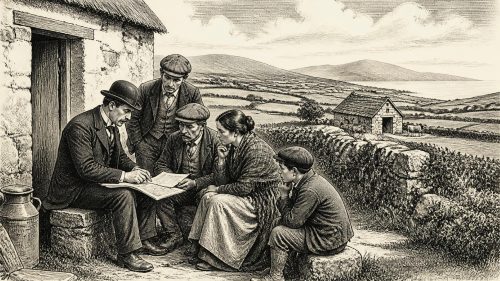
1903 in Ireland combined disruption, political ceremony and lasting reform. February storms damaged woodland, buildings and livelihoods. George Wyndham’s Land Purchase Act, following the Land Conference, used state-backed advances and landlord incentives to accelerate tenant ownership, though it neither ended poverty, congestion and labourers’ insecurity nor resolved Home Rule. It also divided nationalists over conciliation. Edward VII’s Irish tour attracted loyalist receptions but nationalist protest, revealing competing identities. Northern railway reorganisation and the Independent Orange Order reflected economic links and unionist tensions. Cultural revival, Trinity’s decision to admit women, and Dublin’s expanded electricity supply signalled uneven modernisation alongside rural inequality.
Read Article
Archived: 10 October 2026
Abstract
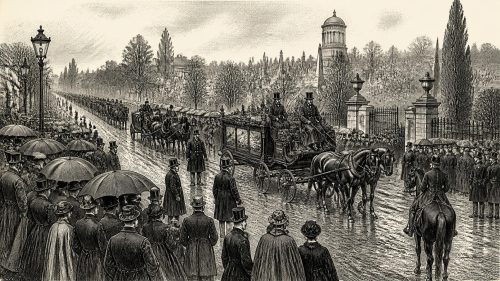
In 1891, the Parnell split dominated Irish politics as anti-Parnellites organised in the Irish National Federation, won North Sligo and Carlow, and gained episcopal support. Parnell defended Irish independence, married Katharine O’Shea, addressed his last major meeting at Creggs, and died in Brighton; his Glasnevin funeral drew vast crowds. The Purchase of Land Act strengthened tenant purchase and created the Congested Districts Board to address western poverty. The census recorded continuing population decline, driven by emigration and limited rural opportunity. Meanwhile, the Irish Daily Independent began publication, Wilde published Dorian Gray, Stephens returned, and Redmond’s Waterford victory preserved minority Parnellism.
Read Article

Archived: 11 October 2026
Abstract
In 1831, Ireland experienced escalating conflict over tithes, compulsory payments supporting the established Church, despite most occupiers being Catholic. Organised resistance, including Patt Lalor’s boycott strategy, culminated at Carrickshock, County Kilkenny, where twelve constables and a process-server were killed. The census recorded approximately 7.8 million people amid poverty and land pressure. Edward Stanley established the basis for non-denominational national education. At Ralahine, County Clare, an Owenite co-operative sought security through shared labour and profits. Catholic and evangelical institutions developed, while James Hardiman’s Irish Minstrelsy promoted Irish-language poetry. The year combined coercion with reform, social experimentation, demographic observation and cultural assertion.
Read Article
Archived: 11 October 2026
Abstract
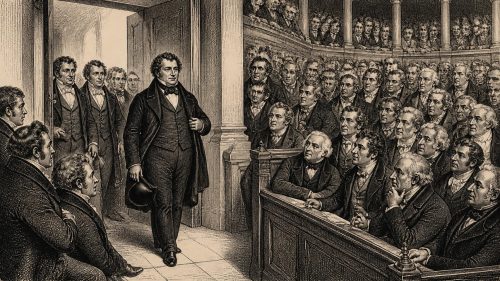
In 1830 Daniel O’Connell took his Westminster seat, embodying Catholic Emancipation after the 1829 Relief Act, while its limitations remained stark. The raised £10 franchise disfranchised many former forty-shilling freeholders, and Ireland remained governed under the Union. O’Connell’s Waterford election followed William IV’s accession and a general election, amid emerging British reform debates. Resistance to tithes supporting the Church of Ireland intensified, particularly late in the year, reflecting religious inequality and rural hardship. Distress, insecure agricultural work and market grievances sharpened tensions. Belfast’s July Orange riots exposed northern sectarian divisions. Contemporary diaries and records reveal political life extending beyond Parliament.
Read Article
Archived: 11 October 2026
Abstract
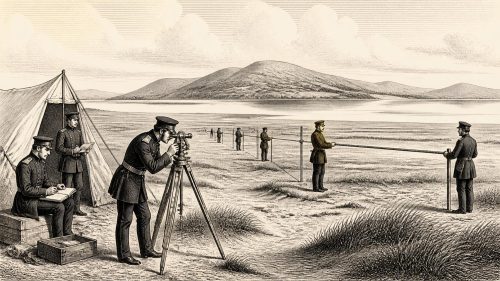
In 1827, Ireland remained politically unsettled as Catholic emancipation was debated but denied, despite petitions, Daniel O’Connell’s New Catholic Association and concern for vulnerable forty-shilling freeholders. The Petty Sessions Act regularised magistrates’ courts, while Beggars Bush Barracks reflected the state’s military reach. Fever, drought and harvest uncertainty exposed rural precarity. Religious controversy appeared in Dublin’s Maguire–Pope debate, alongside Franciscan restorations and Catherine McAuley’s lay House of Mercy. Ordnance Surveyors began the Lough Foyle baseline, initiating systematic mapping. In Callan, Amhlaoibh Ó Súilleabháin commenced his Irish-language diary, recording everyday life and cultural continuity amid administrative, religious and social change during 1827.
Read Article
Archived: 12 October 2026
Abstract
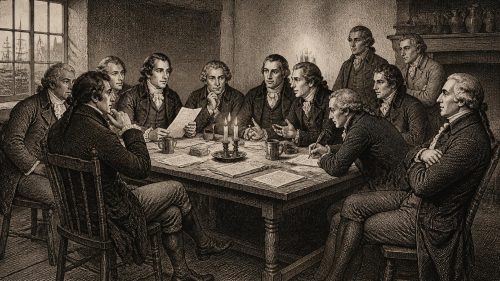
In 1791, Irish politics became organised without delivering constitutional change or Catholic emancipation. Belfast’s Bastille commemoration and the founding of the Society of United Irishmen linked parliamentary reform, Catholic inclusion and civic unity across religious divisions, influenced by Theobald Wolfe Tone. Dublin radicals, including John Keogh, Edward Byrne, James Napper Tandy and William Drennan, strengthened Catholic and reform movements, provoking divisions with conservative Catholic elites. The Dublin Custom House symbolised both commercial ambition and state authority, while the Grand Canal’s Barrow link improved transport to Waterford. Amid rural inequality, print, association and infrastructure widened horizons, marking transition towards popular politics.
Read Article
Archived: 12 October 2026
Abstract
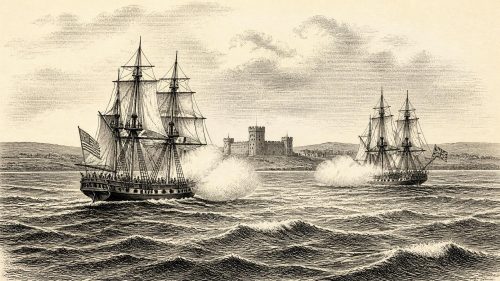
In 1778, Captain John Paul Jones’s Ranger captured HMS Drake off Carrickfergus, exposing Ireland’s weak coastal defences amid imperial war. Fear of attack encouraged Belfast’s first Volunteer company and similar locally organised Protestant corps, which later strengthened demands for political and commercial influence. Wartime disruption prompted limited trade concessions, though these fell far short of free trade and intensified Patriot dissatisfaction. Gardiner’s Catholic Relief Act improved property rights for qualifying Catholics but preserved political exclusion and most penal restrictions. Road building, cultivation, mapping and Dublin’s changing streetscape also reflected gradual improvement. Together, these developments revealed mounting pressures for Irish change.
Read Article
Archived: 12 October 2026
Abstract
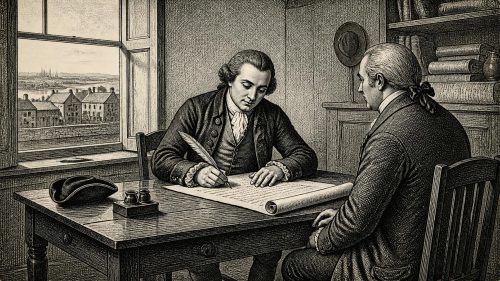
In 1759, Ireland, a separate but constitutionally restricted kingdom under George II, experienced political unrest and urban change. On 3 December, Dublin crowds invaded Parliament House over a false union rumour, demonstrating Protestant civic patriotism, economic anxiety and expanding popular political engagement. Speaker John Ponsonby helped restore calm, while Henry Flood entered Parliament. Catholics, still excluded from political power, promoted a loyal address to the Crown. Dublin's economy depended on agriculture, linen, trade and regulated industries. Arthur Guinness leased St James's Gate brewery for 9,000 years. Trinity's West Front was completed, and Bartholomew Mosse's maternity hospital survived its founder's death.
Read Article

Archived: 13 October 2026
Abstract
In 1721, Ireland’s proposed public bank collapsed amid post-South Sea Bubble distrust, disputes over credit, land, religious exclusion and dependence on Westminster, recently reinforced by the Declaratory Act. Although supporters sought cheaper loans and retained capital, the Commons rejected the scheme, first narrowly in October and decisively in December, preserving fragmented private finance. Land and influence remained central: Charles Butler regained Ormond estates under British sanction, William Ponsonby became Baron Bessborough, and Luke Gardiner acquired land developed as Henrietta Street. Linen exports linked rural households to imperial markets, while Catholic institutions endured restrictions. Government pursued disorder and imposed plague precautions.
Read Article

Archived: 14 October 2026
Abstract
In 1687 Richard Talbot, earl of Tyrconnell, became Ireland’s lord deputy and reshaped government under James II. Although instructed not to remove Protestants solely for religion or overturn land settlements, he promoted Catholics to judicial, administrative, military and local offices. New sheriffs and judges challenged Protestant dominance and intensified fears over legal security. Through charter surrenders and renewals, municipal corporations were reorganised to expand Catholic influence and prepare a favourable parliament. James’s Declaration of Liberty of Conscience widened religious freedoms, though Anglican suspicion persisted. Trade continued, while army recruitment increased. By year’s end, Catholic hopes and Protestant anxieties transformed politics.
Read Article

Archived: 15 October 2026
Abstract
In 1648, the Catholic Confederation of Ireland fractured over the Dungarvan truce with Murrough O’Brien, Lord Inchiquin, newly aligned with Charles I. Exhaustion after 1647 defeats led moderates to seek a royalist coalition and negotiations with Ormond, despite Inchiquin’s destructive record. Papal nuncio Rinuccini condemned the truce, censuring supporters and joining Owen Roe O’Neill’s resistance. Rival Confederate armies campaigned without decisive battle, burdening civilians suffering requisition and scarcity. The Kilkenny assembly marginalised O’Neill, while Ormond’s return and Rome’s limited aid strengthened accommodation. O’Neill’s ceasefire with parliamentarian Michael Jones revealed division. Winter brought coalition, not peace, before the 1649 Ormond settlement.
Read Article
Archived: 15 October 2026
Abstract
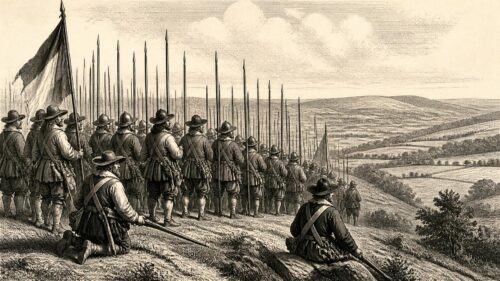
In 1646, the Catholic Confederation reached its military zenith but became divided over peace with Charles I. Owen Roe O’Neill’s victory over Scottish Covenanters at Benburb, Preston’s Connacht operations, and the capture of Bunratty strengthened hopes of securing Catholic religious and political guarantees. The First Ormond Peace, agreed secretly with the royalist lord lieutenant, offered insufficient protections and provoked clerical, military and popular resistance. Papal nuncio Giovanni Battista Rinuccini led opposition, overthrowing the agreement and remodelling Confederate government. A failed advance on Dublin exposed rivalries, weak supply and divided command. Kilkenny’s Catholic print culture also articulated suffering, rights and legitimacy.
Read Article

Archived: 15 October 2026
Abstract
In 1645, the Catholic Confederation strengthened its position by capturing Duncannon Fort after Thomas Preston’s siege, gaining control over an important Waterford Harbour defence but not coastal supremacy. Secret negotiations between Edward Somerset, earl of Glamorgan, and Confederate representatives promised religious concessions and troops for Charles I, but their disclosure damaged royalist prospects. Archbishop Malachy Ó Caollaidhe died amid Connacht fighting. Papal nuncio Giovanni Battista Rinuccini arrived with money, arms and authority, intensifying demands for enforceable Catholic guarantees. War imposed severe local burdens, while Jesuits founded a Galway school and John Colgan published a major saints’ collection at Leuven abroad.
Read Article

Archived: 15 October 2026
Abstract
In 1642, Ireland’s uprising became organised war amid the Wars of the Three Kingdoms. Catholic leaders united Gaelic and Old English interests around defence of worship, property and liberties, while professing loyalty to Charles I. Synods at Kells and Kilkenny promoted an oath of association. In October, the Kilkenny General Assembly established a Supreme Council, subordinate councils, military administration and taxation, creating a fragile Catholic government. Royalist, Protestant and Scottish forces retained key territories; defeats at Kilrush and Liscarroll checked Catholic arms. Owen Roe O’Neill’s return aided Ulster’s future resistance. War brought displacement, requisitioning and violence to all communities nationwide.
Read Article
Archived: 16 October 2026
Abstract
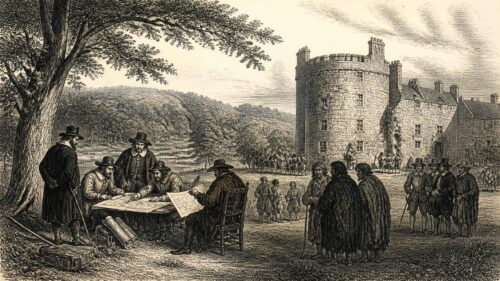
In 1637 Thomas Wentworth’s administration strengthened royal control in Ireland through ceremony, land investigations, economic regulation and institutional reform. His provincial progress projected authority, while the Commission for Defective Titles unsettled proprietors and enabled Christopher Wandesford’s crown-backed acquisition of Castlecomer, displacing the Brennan community. Proclamations regulated cloth, currency, land titles and licensed trade, supporting revenue and English commercial standards. Dublin gained building projects and a chartered Goldsmiths’ Company; Trinity received Laudian statutes. Church discipline pressured Presbyterians, despite William Bedell’s Irish-language work. Meanwhile, Mícheál Ó Cléirigh and Franciscan patrons sustained Gaelic Catholic scholarship through Leuven. Apparent order masked grievances and insecurity.
Read Article
Archived: 16 October 2026
Abstract
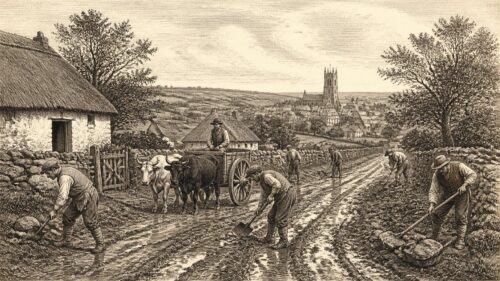
In 1614, James I’s government consolidated authority in Ireland through parliamentary management, anti-Catholic proclamations, trade regulation and parish responsibility for roads. Catholic representatives were rebuffed over the 1613 parliament’s new boroughs and religious exclusions, while priests and Jesuits faced expulsion orders. Yet Catholic organisation persisted: the Kilkenny synod reinforced Tridentine discipline and pastoral provision. Ulster Plantation reached a financial milestone when undertakers’ rents became due, accelerating changes in landholding, settlement and power. Deaths of William Bathe, Bonaventure O’Hussey and Thomas Butler, tenth earl of Ormond, highlighted transnational Catholic culture, Gaelic learning and the importance of aristocratic inheritance amid deepening divisions.
Read Article
Archived: 18 October 2026
Abstract
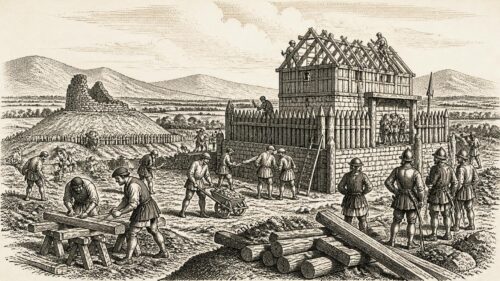
In 1546, Henry VIII's Irish government faced factional conflict and uneven authority. Sir Anthony St Leger defeated the Earl of Ormond in disputes over regional power, though Ormond's death soon exposed continued dependence on magnates. A fort at Daingean extended crown influence into the midlands, provoking annalistic accounts of destruction. In Ulster, Donnell O'Donnell's murder at Inis Saimer violated guarantees of protection and reflected enduring Gaelic politics. Debased copper coinage affected exchange, while episcopal appointments asserted royal control over the Church. The imprisonment of poet-teacher Teige O'Coffey highlighted pressures on bardic learning. These events reveal a kingdom undergoing contested transformation.
Read Article

Archived: 21 October 2026
Abstract
In 1407, conflict, succession, learning and subsistence shaped Ireland’s localised political world. Tadhg Ó Cearbhaill of Éile was killed at Callan by Stephen le Scrope’s forces during wider Leinster–Munster struggles; annalists praised him as a leading military protector and patron of poets. In Connacht, rivals contested the kingship, and Cathal Ó Conchobair’s defeat at Cell Achaid brought captures and losses. Archbishop Muirchertach Ó Ceallaigh died at Tuam, remembered for wisdom, charity and learning. Northern captures, raids and internal violence exposed fragile alliances. Very bad weather and cattle losses damaged regional livelihoods, while warfare, church authority and cultural patronage remained intertwined.
Read Article
Archived: 21 October 2026
Abstract
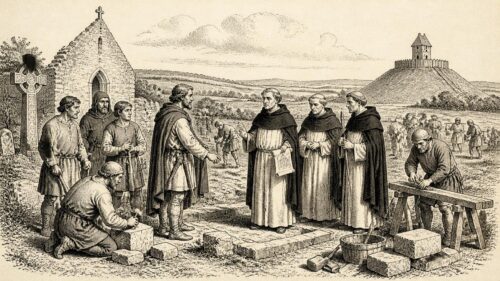
In 1382, Ireland was divided among royal administration, Anglo-Irish magnates and Gaelic rulers. Ruaidhrí Ó Conchobair, king of Connacht, arrested rival chiefs at an assembly, exposing insecure personal power. Raids in Corcomroe and Desmond destroyed homes, crops and lives, while imprisonment claimed members of the Ó Briain dynasty. Deaths, including that of James Butler, earl of Ormond, altered lordly succession. William Tany resumed the Irish chancellorship, maintaining crown government through the great seal. Finghin Mac Giolla Phádraig founded a Dominican friary at Aghaboe, demonstrating enduring religious patronage. Annals also remembered women, clerics, entertainers and heirs, reflecting regional, interconnected medieval society.
Read Article
Archived: 22 October 2026
Abstract
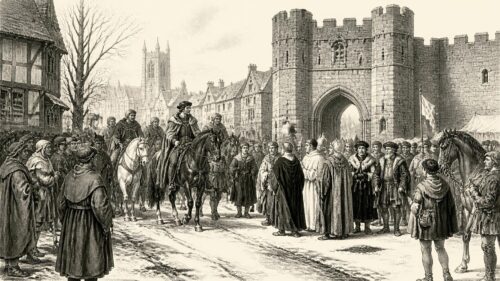
In 1366 Lionel of Antwerp, Edward III’s lieutenant, summoned a parliament at Kilkenny to reinforce the weakening English lordship of Ireland. Its Statutes sought to separate English and Irish inhabitants by restricting intermarriage, fosterage, language, dress, law, ecclesiastical office and cultural exchange. They also regulated warfare, military service, abuses, markets, land, sport and church authority, exposing anxieties about defence and administration. The measures chiefly targeted the lordship rather than Gaelic Ireland and indicate cultural contact rather than achieved control. Contemporary annals record regional conflicts and shifting lordships beyond royal reach. Lionel’s November departure demonstrated the statute’s limits amid Ireland’s diversity.
Read Article
Archived: 23 October 2026
Abstract
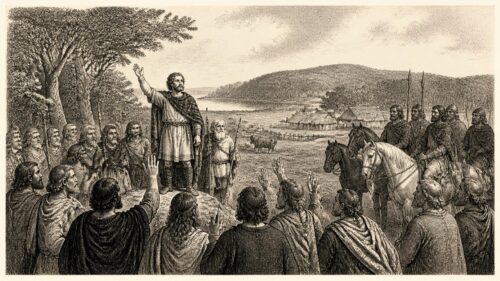
In 1350, plague remained active in Ireland, evidenced by legal notes, vacant Kilkenny holdings and deaths linked cautiously to pestilence, while its impact varied regionally. Connacht underwent a major coup when Sir Edmund Albanach de Burgh, Macwilliam Burke, and leading communities deposed Aed Ó Conchobair and installed another dynastic claimant. Killings and reprisals in Connacht, Moylurg, Breifne and Thomond exposed violent struggles over lordship, land and cattle. English administration nevertheless continued: Justiciar Thomas Rokeby held a Kilkenny council, raised taxation and negotiated service. Chancery, inheritance inquiries, religious leadership and learned culture endured amid demographic loss, insecurity and contested power locally.
Read Article
Archived: 23 October 2026
Abstract
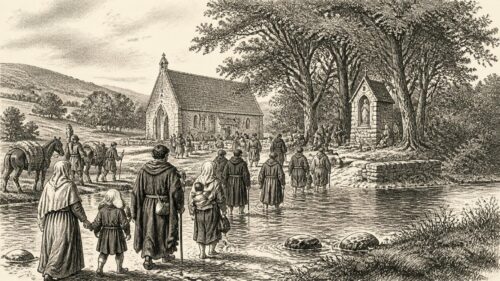
During 1349, a pestilence remembered as the Black Death became an all-Ireland crisis, although its arrival and mortality cannot be dated or quantified precisely. John Clyn recorded contagion, deaths among clergy and households, pressure on burial and care, and costly imported goods in Kilkenny. Connacht annals reported heavy losses in Moylurg, while warfare, raiding and contested lordship continued across Connacht and elsewhere. Ecclesiastical vacancies exposed institutional vulnerability, though individual causes of death remain uncertain. Clyn's final entries, ending amid violence and epidemic fear, symbolise the fragility of record-keeping. The year strained trade, worship, families and political authority without halting conflict.
Read Article
Archived: 23 October 2026
Abstract
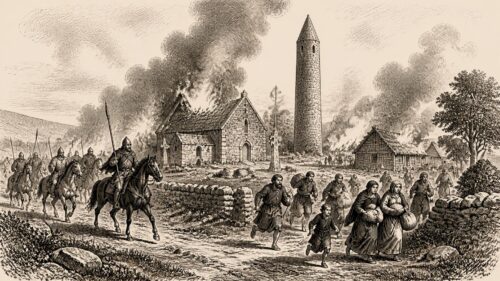
In 1346, Ireland experienced political instability, warfare and dearth following the death of Sir Ralph Ufford, the royal justiciar. Gaelic and settler forces contested Leinster, capturing castles, raiding communities and damaging churches. On 5 May, Diarmaid Mac Giolla Phádraig and an Ó Cearbhaill ally burned Aghaboe, including its church, cemetery and St Canice’s shrine, a religious and communal loss. Wheat prices reflected scarcity, worsened by conflict. Walter de Bermingham became justiciar in May but violence continued, including northern defeats, killings and winter raids. John Clyn’s annals document events, while evidence does not place the Black Death in Ireland before 1348–49.
Read Article
Archived: 23 October 2026
Abstract
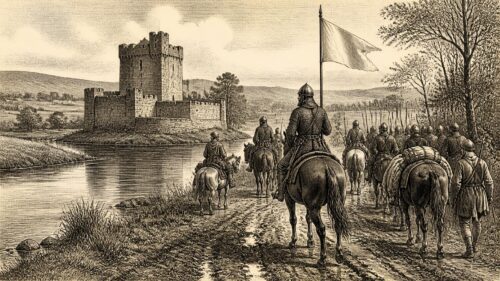
In 1345, the sharpest political struggle in the English lordship of Ireland unfolded not at a frontier ford but across the towns, castles and lordships of Munster. Sir Ralph Ufford, justiciar of Ireland and the king’s chief governor, moved against Maurice fitz Thomas FitzGerald, first earl of Desmond. Their quarrel exposed a basic weakness in royal administration: the Crown needed the co-operation of the great Anglo-Irish magnates, yet Ufford sought to discipline them with an unusually forceful assertion of central authority.The year also brought a violent change of ruler in Connacht, fighting upon Lough Neagh in Ulster, and smaller but
Read Article
Archived: 23 October 2026
Abstract
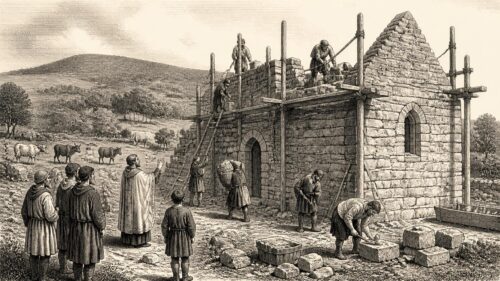
In 1343, Ireland saw shifting lordship, violence and religious investment. Toirrdelbach Ó Conchobair regained Connacht and made peace with Conchobar Mac Diarmata, while Clann Feorais and Clann Ricaird crushed Uí Maine, killing eleven Ó Ceallaigh princes. In Thomond, Diarmait Ó Briain briefly succeeded Muirchertach before Brian Bán seized power. In Tír Conaill, Aengus Ó Domhnaill displaced Niall through a broad coalition, granted land to exiles, and defeated his rival’s supporters. Deaths included nobles, churchmen and scholars. Kilronan received a new church, St Mary’s, Kilkenny, a belfry, and Boyle Abbey remained central to Mac Diarmata burials and succession during the year.
Read Article
Archived: 23 October 2026
Abstract
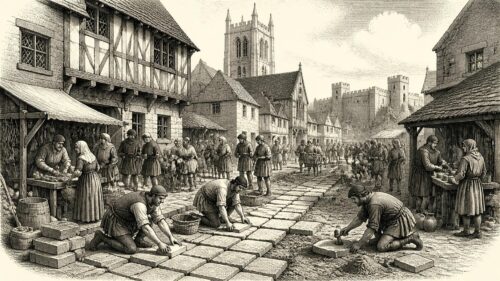
In 1334, severe winter weather injured people and livestock and damaged mills, weirs and bridges across Kilkenny’s region. Kilkenny burgesses began the town’s first recorded paving, later supported by a seven-year royal pavage grant. Local lordship remained contested: Thomas Fanyn seized Moytobyr Castle before Earl James Butler imposed temporary custody. Elsewhere, Donnchad Mac Carthaigh captured David de Barry, John de St Aubin was murdered, and a Connacht force of Gaels and settlers secured Munster hostages but burned a church, killing 180 people. Kilkenny also saw raids, erection of a market cross, crusading branding, and Desmond’s knighting campaign in late December.
Read Article

Archived: 23 October 2026
Abstract
In 1330, violent storms and flooding devastated parts of Ireland, sweeping away nearly all Boyne bridges, damaging Trim and Drogheda, delaying harvests and raising grain prices. These disruptions hindered trade, travel, government and military movement. Meanwhile, Roger Outlaw’s Kilkenny parliament sought support against Brian Bán Ó Briain in Munster, exposing rival magnates’ uncertain loyalties. Edward III warned the earls of Ulster and Desmond against private warfare, while Adam de Lymbergh became chancellor. Violence afflicted Meath, although Wexford fighting is uncertainly dated. Gilla Ísu Ruad Ó Ragallaig died at Cavan’s Franciscan friary, illustrating the links between Gaelic lordship and religious patronage.
Read Article
Archived: 24 October 2026
Abstract
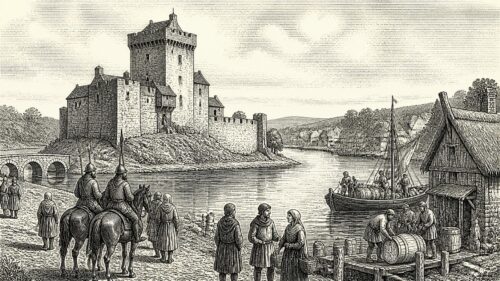
In 1310, Ireland remained politically fragmented despite Edward II’s lordship. At Kilkenny Parliament, John Wogan, Richard de Burgh and church leaders addressed disorder, revealing reliance on powerful magnates. In Connacht, Aed Brefnech Ó Conchobair’s destructive campaign against Mac Diarmata included killings, capture and burning; his allies then sacked Buninna Castle. Aed was subsequently murdered by mercenaries, allegedly bribed by William de Burgh, whose soldiers imposed oppressive quartering. Feidlim Ó Conchobair emerged as king of Connacht. Richard rebuilt Sligo Castle, asserting contested authority. The year also saw scholar Tanaide Ó Maelchonaire’s death, wine landing in Magh Cétné, and violence across Ireland.
Read Article
Archived: 25 October 2026
Abstract
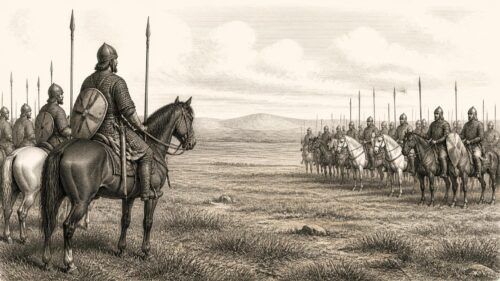
In 1234, Richard Marshal, earl of Pembroke and lord of Leinster, brought his rebellion against Henry III’s Poitevin advisers to Ireland. Supported by Leinster allies, he recovered positions and captured Limerick, but royalist magnates Maurice FitzGerald, Hugh de Lacy and Walter de Lacy defeated him on the Curragh of Kildare on 1 April. Wounded and detained, Marshal died at Kilkenny on 16 April and was buried there. His defeat strengthened royal authority, restored Richard de Burgh’s Connacht interests under restrictive terms, and prepared subsequent expansion. Meanwhile, fighting at Tralee demonstrated continuing conflict between settler powers and Gaelic dynasties across Ireland.
Read Article

Archived: 26 September 2026
Abstract
In 1192, Ireland remained politically fragmented, with Irish rulers retaining broad authority despite expanding lordship from Dublin and Leinster. John’s Dublin charter, dated 15 May, confirmed civic jurisdiction, trading privileges, guilds and burgess rights, strengthening colonial urban government. Ecclesiastical claims around Glendalough reflected contests over church revenues and authority. Leinster forces raided Thomond, built mottes at Kilfeakle and Knockgraffon, but Domnall Mór Ua Briain resisted successfully. Further castles at Horseleap and Kilbixy, and Geoffrey fitz Robert’s planned Kells settlement, advanced territorial control. Annals also record local killings, resistance, religious construction and an uncertain Dublin fire, illustrating resilient nationwide regional societies.
Read Article


