Plunkett’s Recess Committee1895 CE
In 1895, the fall of Lord Rosebery’s Liberal government ended immediate hopes of Home Rule, while the general election confirmed nationalist strength but exposed continuing division after the Parnell split. Gerald Balfour became chief secretary amid unresolved land grievances, limited purchase reform and persistent rural inequality. Horace Plunkett launched negotiations for the cross-party Recess Committee, promoting agricultural cooperation, technical education, credit and industry; its later achievements were not yet assured. The Irish Homestead and early Gaelic League records reflected growing economic and cultural organisation. John Daly’s election highlighted political imprisonment, while Oscar Wilde’s conviction and imprisonment marked devastating cultural loss.
Dateline
In 1895 Ireland’s public life was marked less by a single dramatic Irish event than by a revealing conjunction of political frustration, rural insecurity and new practical ambitions. The fall of the Liberal government in London removed any immediate prospect of Home Rule. The general election exposed the continuing damage done to Irish nationalism by the Parnell split. Yet, while constitutional politics appeared stalled, Horace Plunkett began assembling a cross-party committee intended to address agriculture, industry and technical education. Its work was tentative and controversial, but it gave the year an importance beyond the parliamentary disappointments of the moment.
A General Election Without Unity
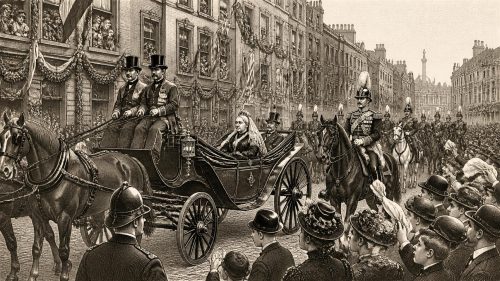
Lord Rosebery’s Liberal administration fell in June 1895, having already shown little capacity to revive the cause of Irish self-government after the defeat of the second Home Rule bill in the House of Lords in 1893. A Conservative and Liberal Unionist ministry replaced it. On 4 July Gerald Balfour, younger brother of the former chief secretary Arthur Balfour, became chief secretary for Ireland. His appointment mattered because he entered office at a time when agrarian agitation was quieter than in the Land War years, but the underlying land question remained unsettled, nationalist MPs were divided, and Home Rule had plainly receded from Westminster’s immediate agenda.
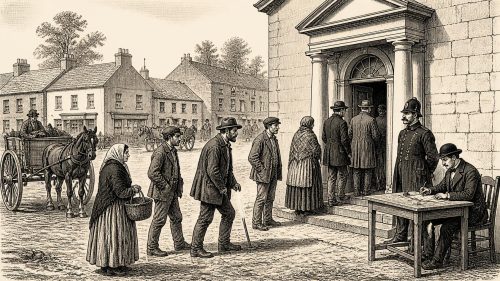
The United Kingdom general election ran from 13 July to 7 August; Irish polling itself was completed during July. The outcome demonstrated both the continuing reach and the fragmentation of constitutional nationalism. The anti-Parnellite Irish National Federation won seventy of Ireland’s 103 Westminster seats. John Redmond’s Parnellite Irish National League won eleven, one Liberal Home Ruler was returned, and unionists took twenty-one seats. Nationalists therefore still dominated most of the island outside the unionist north-east, but they did so through rival organisations which could not offer Britain a united negotiating partner.
The result also needs reading with caution as a measure of popular participation. Sixty-one Irish constituencies were uncontested. Electioneering depended heavily on local conventions, clerical and newspaper influence, party managers, and the restricted franchise of the period. The campaign nevertheless damaged the authority of the anti-Parnellite organisation: historians have identified the election as a moment when its established methods of directing candidate selection and constituency politics were seriously discredited. The old Parnellite machine had not been restored; neither had an effective replacement emerged.
One extraordinary Limerick episode showed how the election could become a protest against the administration as much as a contest for representation. John Daly, a Fenian serving penal servitude, was returned unopposed on a nominally Parnellite ticket, though his candidature was declared ineligible. During 1895 a parliamentary commission also censured prison authorities over the inadvertent arsenic poisoning of Daly. His case kept the treatment of political prisoners before the public and linked the constitutional divisions of the 1890s to an older republican tradition which had not disappeared.
Land Still Defined Rural Life
For many families, however, the most immediate politics remained the farm. The Land Acts had supplied rent-fixing machinery and routes towards tenant purchase, but they had not ended the anxiety attached to arrears, eviction, indebtedness or small, uneconomic holdings. In August, a Wexford MP asked the new chief secretary whether promised land legislation would protect the interests of evicted tenants whose improvements had passed to landlords without compensation. Balfour gave no assurance that the forthcoming bill would include such a provision. The exchange was brief, but it captured a durable grievance: land reform had changed the legal landscape without resolving every human consequence of eviction.
Parliament did pass the Purchase of Land (Ireland) Amendment Act in September 1895, re-enacting a provision from the 1891 purchase legislation. It was a limited measure rather than a settlement of the land question. Broad transfer of ownership from landlords to occupiers still lay ahead. This distinction is important. Ireland in 1895 was already moving away from the older landlord-and-tenant order, but the decisive acceleration in tenant purchase would not come until the Wyndham Act of 1903.
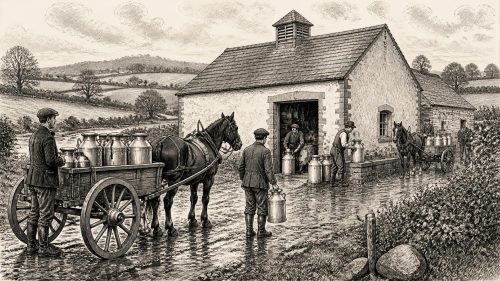
Regional inequality sharpened the problem. Since 1891 the Congested Districts Board had operated across poor western and north-western districts, where population pressure on inferior land, limited cash income and weak transport links restricted opportunity. Its remit embraced fisheries, piers, local industries and agricultural improvement as well as land. Thus an Irish household’s prospects could vary sharply between the small farms of the Atlantic seaboard, the cattle and tillage districts of the south and midlands, and the more industrialised north-east. In such conditions, practical instruction, credit, better marketing and cooperation appeared to some reformers as urgently necessary as another Westminster land bill.
A Recess Proposal
That conviction found its clearest expression in Horace Plunkett’s initiative of 1895. A unionist MP for South Dublin and a promoter of agricultural cooperation, Plunkett had helped establish the Irish Agricultural Organisation Society in 1894. The society encouraged farmers to form cooperative creameries, purchasing groups and other associations: an attempt to improve production and bargaining power through collective action rather than through party mobilisation alone. Its weekly paper, The Irish Homestead, began publication on 9 March 1895, bringing farming advice, cooperative arguments and rural economic questions into a regular Dublin-based forum.
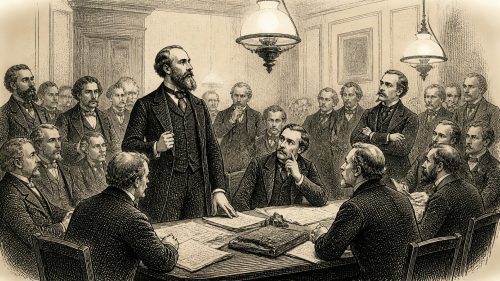
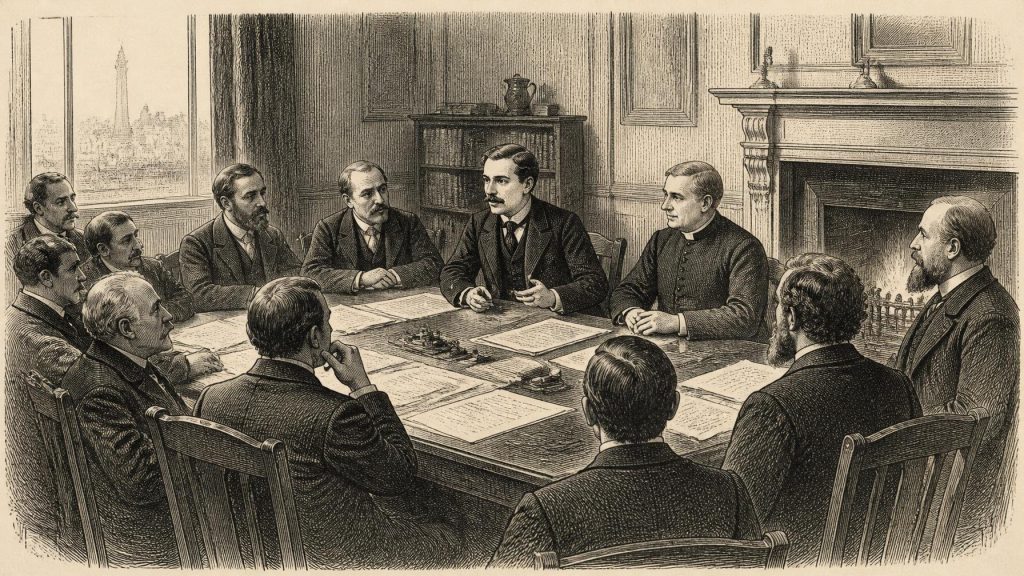
On 27 August Plunkett wrote to the Irish press proposing a body that could consider the country’s material welfare outside the ordinary bitterness of the Home Rule dispute. The proposal became known as the Recess Committee because it was to meet while Parliament was not sitting. His aim was ambitious: politicians from opposing camps would work with people experienced in commerce, industry and agriculture, examine Irish needs, and recommend constructive state support. It was not a non-political scheme in the sense of having no political implications. Plunkett remained opposed to Home Rule and believed economic development could alter the terms of the constitutional debate. Nationalists could reasonably suspect an attempt to divert attention from self-government.
Nonetheless, the initiative created a rare forum across entrenched divisions. Plunkett’s diary records the laborious work of October: letters to newspapers, discussions with Gerald Balfour, and efforts to secure John Redmond’s participation. On 21 October he noted that Redmond had accepted an invitation to the proposed round-table gathering. Justin McCarthy, leader of the anti-Parnellite nationalists, refused. That disagreement was itself instructive. Cooperation could not erase the Parnell split, yet the committee’s organisers were trying to make practical questions—technical education, agricultural improvement, transport, credit and industrial development—subjects on which Irish people with incompatible constitutional loyalties might still act together.
The committee should not be mistaken for an achievement already completed in 1895. Its report, and the institutional changes later associated with it, belonged to 1896 and after. But the year securely marks its launch and early negotiations. It also reveals an emerging alternative language of Irish public improvement, one carried by cooperative organisers, business figures, civil servants and reforming clergy as well as MPs. Father Thomas Finlay, the Jesuit economist and editor, was among the intellectual figures linked with this world. Economic modernisation was being discussed not simply as profit-making, but as a means of sustaining rural communities and giving farmers more control over their working lives.
Culture, Language and Punishment
Political division did not prevent cultural organisation. The Gaelic League, founded in 1893 to sustain and revive the Irish language, was still a young body, but surviving minutes begin on 22 November 1895. They are modest evidence of continuing committee work rather than proof of a mass breakthrough in that calendar year. Even so, they show the language movement acquiring administrative continuity in Dublin while its members sought to connect urban enthusiasts with Irish-speaking districts, particularly in the west. Cultural revival was becoming organised through subscriptions, branches, meetings and records as well as through speeches about national identity.
The year also brought a profoundly different cultural event with Irish consequences. Oscar Wilde, born and educated in Dublin, was tried in London after his unsuccessful criminal-libel prosecution of the Marquess of Queensberry. Following a first criminal trial that failed to reach a verdict, Wilde was convicted at the Old Bailey on 25 May of gross indecency and sentenced to two years’ hard labour. The prosecution rested upon laws and social assumptions that criminalised sexual relationships between men; its cruelty and exposure of private life were central to the catastrophe. Wilde’s imprisonment ended the public career of one of Ireland’s most celebrated writers at its height. His fall was a British legal event, but it was inseparable from Irish cultural history and from the restricted moral world in which Irish writers and readers lived.
By the end of 1895, then, Ireland had no immediate constitutional advance to celebrate. Westminster politics had hardened, nationalism was divided, and land grievances endured. Yet the first steps towards the Recess Committee, the steady organisation of the Gaelic League and the appearance of The Irish Homestead show that institutions of cultural and economic renewal were being built amid the impasse. Their later significance should not be projected backwards as certainty. In 1895 they were proposals, papers, meetings and fragile alliances—but they indicated that Irish public life was beginning to seek new forms of collective action.
Primary Sources
- 1895 Diary of Sir Horace Curzon Plunkett (1854–1932)
- Plunkett, Sir Horace Curzon
- Balfour, Gerald William
- Redmond, John Edward
- Daly, John
- Gill, Thomas Patrick
- The Machinery of the Irish Parliamentary Party in the General Election of 1895
- General Election Dates 1832–2024
- History of Archibald Primrose, 5th Earl of Rosebery
- Irish Land Legislation, House of Commons Debate, 26 August 1895
- Boards of Guardians (Ireland) Bill, House of Commons Debate, 13 March 1895
- Home Rule Bill, Historic Hansard Index
- Irish Statute Book: Acts of 1895
- Purchase of Land (Ireland) Amendment Act 1895
- Pre-1922 Reports
- Famine to 1916: Life in 1916 Ireland—Agriculture
- The Irish Homestead
- To All Interested in Irish Agriculture…
- Connradh na Gaeilge Papers, 1893–1970
- Connradh na Gaeilge: Minutes and Draft Minutes, 22 November 1895–5 June 1896
- Ireland in the New Century
- The Life and Court Trials of Oscar Wilde
- Wilde Trials International News Archive: Overview
- Wilde, Oscar Fingal O'Flahertie Wills (1854–1900), Writer