Archived: 10 October 2026
Abstract
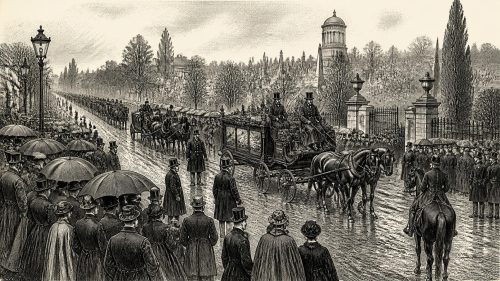
In 1891, the Parnell split dominated Irish politics as anti-Parnellites organised in the Irish National Federation, won North Sligo and Carlow, and gained episcopal support. Parnell defended Irish independence, married Katharine O’Shea, addressed his last major meeting at Creggs, and died in Brighton; his Glasnevin funeral drew vast crowds. The Purchase of Land Act strengthened tenant purchase and created the Congested Districts Board to address western poverty. The census recorded continuing population decline, driven by emigration and limited rural opportunity. Meanwhile, the Irish Daily Independent began publication, Wilde published Dorian Gray, Stephens returned, and Redmond’s Waterford victory preserved minority Parnellism.
Read Article
Archived: 11 October 2026
Abstract
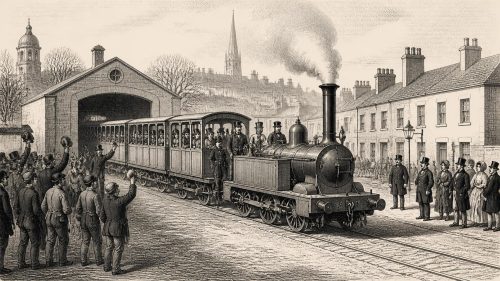
In 1834, Ireland’s contrasts were embodied by the opening of the Dublin and Kingstown Railway and the Rathcormac massacre at Gortroe, County Cork. The railway, Ireland’s first, linked Dublin’s commercial centre with its packet harbour, demonstrating private investment, engineering and growing passenger mobility. Next day, troops protecting tithe collection killed at least nine people resisting payments to the established Church of Ireland. The Tithe War exposed rural poverty, Catholic resentment and dependence on coercion. Westminster debated repeal, tithes and church reform amid ministerial instability. Population pressure, insecure labour, poor housing, disease and limited educational and health measures underscored persistent inequality.
Read Article
Archived: 11 October 2026
Abstract
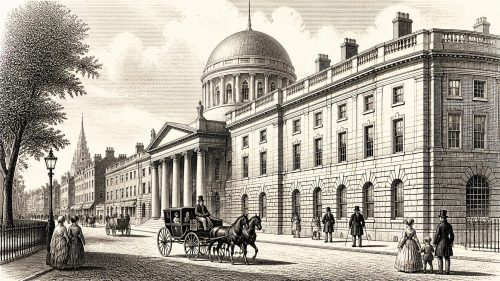
In 1808, seven years after the Union, Ireland experienced political subordination, wartime economic activity and Catholic institution-building. The Bank of Ireland opened in Dublin's former Parliament House, symbolising the loss of domestic legislature and the growing importance of finance and commerce. Catholic petitions, presented by Henry Grattan, sought equality but were overwhelmingly rejected at Westminster; controversy over a proposed royal veto on bishops deepened divisions. Meanwhile, the Patrician and Presentation Brothers were founded, and Cork's North Cathedral was dedicated. Cork Harbour dispatched Wellesley's expedition to Iberia, while Nelson's Pillar foundation and Mary Leadbeater's poetry reflected imperial commemoration and cultural life.
Read Article
Archived: 17 October 2026
Abstract
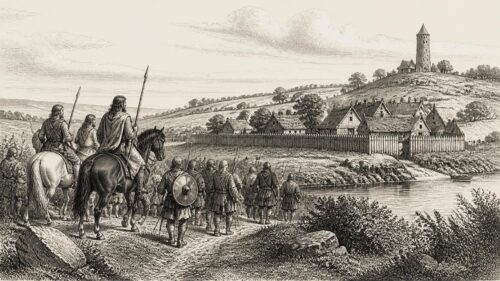
In 1569, Tudor government sought to extend Elizabeth I’s authority through parliament, military action, taxation reform and provincial administration. In Munster, James fitz Maurice Fitzgerald, Donal MacCarthy Mór and allies formed a Catholic confederacy, sought Spanish aid, and launched the first Desmond rebellion by attacking Kerrycurrihy. Religious aims overlapped with disputes over Desmond imprisonment, land, settlement and lordly power. Butler brothers raised south Leinster against government interference and Sir Peter Carew’s claims, but failed at Kilkenny. Sidney’s autumn campaign, supported by Ormond and Gilbert, broke the coalition’s momentum. Fitton’s Connacht presidency further expanded royal institutions amid widespread nationwide civilian disruption.
Read Article
Archived: 17 October 2026
Abstract
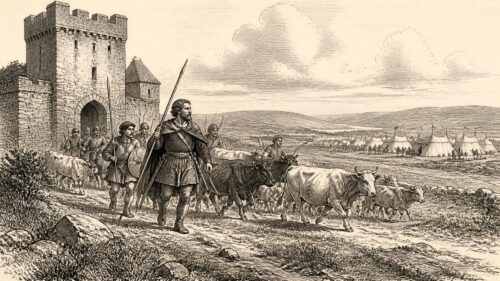
In 1568, Ireland experienced sharpening local conflicts as royal intervention, disputed land rights and absent lords weakened established authority. With the earl of Desmond imprisoned in England, James fitz Maurice unsuccessfully besieged Thomas Fitzmaurice at Lixnaw, where plunder, drought and shortages afflicted civilians and troops. Munster tensions grew through MacCarthy alliances and proposed English settlements. In Leinster, Sir Peter Carew’s successful Idrone claim and Edmund Butler’s estrangement foreshadowed revolt. Sir Henry Sidney pursued limited Ulster agreements, garrisons and transport schemes. Protestant church appointments likewise revealed the gap between crown ambition and practical control, anticipating conflicts in 1569 and subsequent upheavals.
Read Article
Archived: 18 October 2026
Abstract
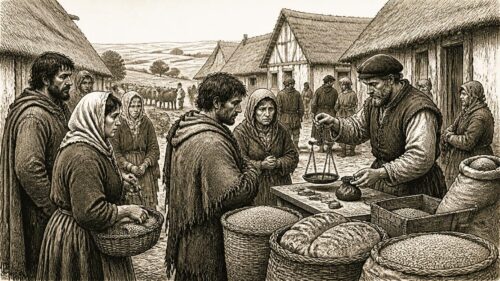
In 1545, Ireland experienced interconnected local conflicts, Tudor military demands, scarcity and religious complexity. Cathaoir MacMurrough Kavanagh defeated rivals near Hacketstown, while An Calbhach O’Donnell strengthened his position through dynastic violence in Tír Chonaill. Elsewhere, disputes involving Sligo, Moylurg and O’Rourke reflected fractured lordship. Henry VIII ordered Irish troops for Scotland under Ormond, exposing rivalry between Ormond and Lord Deputy St Leger. Annals recorded severe dearth and costly bread in Connacht and Meath amid debased currency. Papal appointment in Killala, changes at Christ Church, and the death of scholar Piers Ó Muirgheasa demonstrate enduring ecclesiastical and learned traditions across Ireland.
Read Article
Archived: 19 October 2026
Abstract
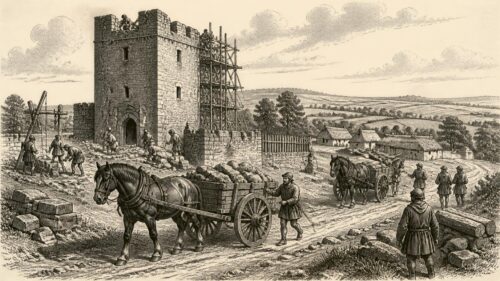
In 1485, Ireland comprised competing lordships, towns and ecclesiastical jurisdictions, while Kildare dominated the English administration. His Trim parliament defended corporate privileges, funded frontier defence, Castledermot’s construction and plague relief, anticipating England’s uncertain succession. Henry VII’s accession after Bosworth altered calculations without immediately displacing Kildare. In Connacht, Uilleag Burke succeeded violently, with annals differing over his campaign and Tulsk Castle’s destruction. Successions, killings and raids reshaped Connacht and Ulster, where O’Neill and O’Donnell forces fought then made peace. Breifne conflicts involved castles, cattle and Kildare’s intervention. Church appointments, chantries, scholarship, hospitality, disease and hardship reveal communities facing persistent insecurity throughout.
Read Article
Archived: 21 October 2026
Abstract
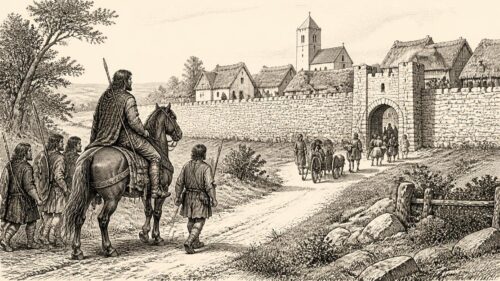
In 1405, Art Mór Mac Murchadha Caomhánach devastated County Wexford and burned Carlow and Tristledermot, demonstrating the vulnerability of English lordship towns and routes in Leinster. His campaign reflected conflicts over land, tribute, jurisdiction and authority, despite earlier interventions by Richard II. Government continued through appointments and James Butler, earl of Ormond’s deputyship, although his death added uncertainty. Elsewhere, warfare over dues in Moylurg killed Tadc Mac Diarmata and prompted succession. Annals also record local feuds, gallowglasses, learned men’s deaths, monastic burials and an early reference to uisce beatha. Ireland remained politically fragmented, culturally sophisticated and shaped by local power.
Read Article

Archived: 22 October 2026
Abstract
In 1361, Lionel of Antwerp, Edward III’s son and earl of Ulster, arrived in Ireland as royal lieutenant with troops to reinforce the threatened English lordship. Landing at Dublin in September, he campaigned in Leinster, where Gaelic rulers remained powerful. Irish annals recorded the deceptive seizure and subsequent custodial deaths of Art Mac Murchadha and Domnall Riabach, though details remain uncertain. Lionel transferred the Exchequer to fortified Carlow, creating a forward administrative and financial base without displacing Dublin’s importance. Meanwhile, the widespread epidemic Cluiche an Rí, probably pestis secunda, intensified economic and military pressures, demonstrating the limitations of royal intervention.
Read Article




