

Limerick Barringtons
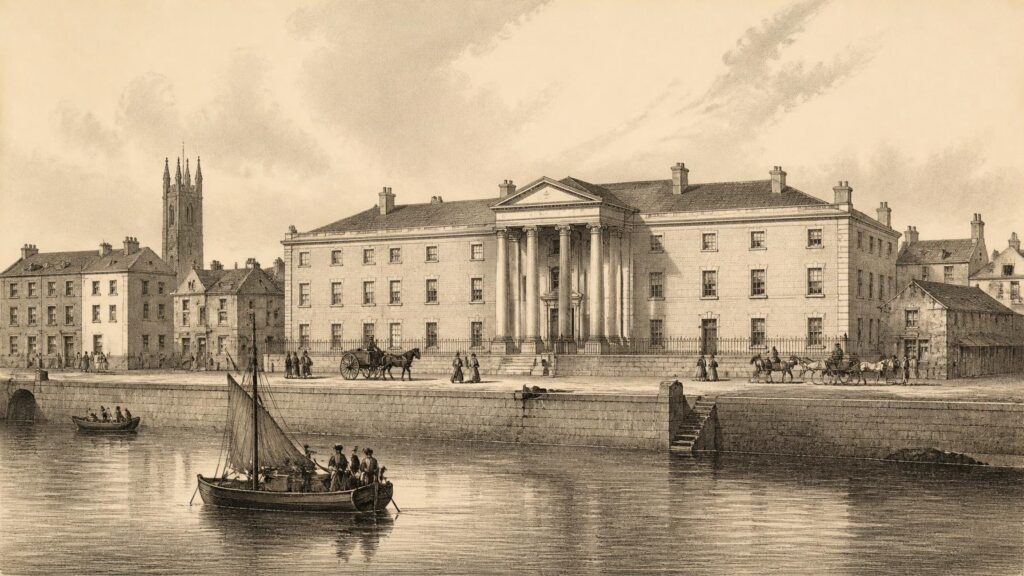
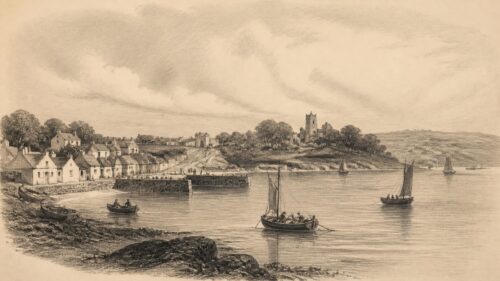
AI generated historical illustration, not a contemporary photograph.
At a Glance
For more than two centuries the Barrington name formed part of Limerick’s built landscape, charitable life and landed society. It survives in the riverfront hospital founded for the poor, in the former estate at Glenstal, in civic and ecclesiastical memorials, and in records of commerce, law, sport and local government. Yet the family history is not simply a story of benevolence or architectural legacy. It is also a history of wealth accumulated within the structures of eighteenth and nineteenth-century Ireland, of landlordism, social hierarchy and political change, and of a family whose public standing did not prevent its departure from Ireland amid the violence of the revolutionary years.
Family Origins
The Barringtons associated with Limerick were not the same thing as every family elsewhere bearing that surname, nor should their history be confused with the English and Irish peerage of Viscount Barrington. The line considered here was a Limerick family whose rise can be followed from skilled urban trades into mercantile success, property ownership and the baronetage. Its story is unusually visible because its leading members built institutions and houses which remain prominent, while later custodians preserved a substantial family archive at Glenstal.
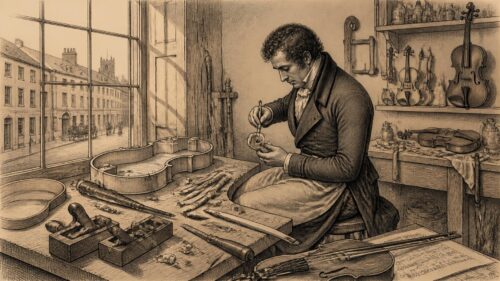
The earliest secure outline is necessarily cautious. The Dictionary of Irish Biography identifies Samuel Barrington, who died in 1693, as the best-known seventeenth-century Irish clockmaker. It states that he may have been the son of Francis Barrington, described as a Cromwellian settler who died in Limerick in 1683. The word “may” matters. It signals that the connection is a scholarly possibility rather than an established fact. Later family accounts and local tradition have sometimes treated an early English or Cromwellian origin as settled genealogy; the documentary record, as represented in the biographical evidence, is less categorical.
Samuel was working in Dublin between 1665 and 1674, where he held a contract connected with maintenance of the Tholsel clock. He later worked in Galway and moved to Limerick in 1691, at the close of a war which profoundly remade the city’s political and confessional order. Limerick had endured siege, military occupation and the Treaty of Limerick in 1691. To establish a craft business there in that period was to enter a city being reorganised under Protestant political ascendancy, but also one whose river trade, defensive position and regional markets continued to make it important.
A monument to Samuel in St Mary’s Cathedral provides a tangible connection between the craftsman and the city. Memorials are not neutral records: they express the resources and social aspirations of those able to commission and preserve them. Nevertheless, the cathedral tablet, along with later civic references, supports the conclusion that the Barringtons became rooted in Limerick rather than merely passing through it. The family’s subsequent standing rested in part on this urban continuity.
Samuel’s son Benjamin continued the clockmaking, watchmaking and copper-founding work. He was also mayor of Limerick in 1724, while another Benjamin Barrington served as sheriff in the earlier eighteenth century. These offices show a movement familiar in many Irish towns: successful Protestant craftsmen and merchants could enter municipal government, where commercial networks, property and civic authority reinforced one another. Such advancement should not be romanticised as open social mobility in a modern sense. The urban corporation was shaped by the restricted political arrangements of the period, and access to office reflected religious and economic power.
The family’s transition from artisanal skill to wider commerce is important. Clockmaking required technical knowledge, reliable materials, credit and customers able to purchase expensive goods. Copper founding similarly linked a maker to construction, shipping, domestic consumption and urban improvement. These activities could create capital, connections and a reputation for dependability. By the later eighteenth century the Barringtons had moved into the more lucrative world of mercantile activity, setting the conditions for Joseph Barrington’s rise.
Urban Commerce
Joseph Barrington was born in Limerick on 21 February 1764, the only son of Matthew Barrington and Jane Canter. He entered business in a city that was changing physically and commercially. Eighteenth-century Limerick had grown beyond its older core, while the Shannon and its quays remained fundamental to regional exchange. Agricultural produce, imported manufactures, shipping, finance and warehousing supported a merchant class whose prosperity was tied both to local hinterlands and to the wider British imperial economy.
Joseph established himself on Charlotte Quay. The Dictionary of Irish Biography calls him a merchant, while other accounts remember him as a pewterer. These descriptions need not be contradictory. Eighteenth-century business identities could be broad, and a person might work across manufacture, retailing, importation and property. What can safely be said is that Joseph’s success was commercial and urban before it became aristocratic. His later title should not obscure the fact that the family’s wealth was generated in Limerick’s business environment.
He married Mary Baggott in 1787. They had five sons and two daughters, creating the large family network through which commercial, professional and landed ambitions could be extended. Marriages among prosperous Catholic and Protestant families, professional circles and mercantile households were significant instruments of social consolidation in nineteenth-century Ireland. They brought dowries, property, introductions and shared public influence. Such ties help explain how the Barringtons could operate simultaneously in Limerick, Dublin and the countryside of east Limerick.
Joseph’s development activity illustrates the link between mercantile wealth and urban improvement. In 1830 he built Barrington’s Quay on the north bank of the Shannon. He also joined others in land reclamation and embankment works intended to enable the city’s expansion along the river. The language of improvement was central to the period. It implied order, usefulness and progress, but it also involved private investors shaping public space and profiting from altered land values. The creation of quays, embankments and new building plots had practical value for trade while projecting the authority of those financing them.
It would be simplistic to depict this work either as purely civic generosity or as naked speculation. It was both public-facing and financially meaningful. Quay construction improved access and altered the city’s riverfront; it also enhanced the standing of a merchant whose name became attached to it. In this respect Joseph Barrington was representative of a wider class of nineteenth-century urban improvers who treated commercial initiative, philanthropy and personal prestige as mutually compatible.
His baronetcy, created on 30 September 1831, marked the formal recognition of that status. A baronetcy was hereditary and carried social distinction, though not a seat in the House of Lords. The title of “of the City of Limerick” attached the honour explicitly to the place where Joseph had made his name. The timing is revealing. It came shortly after the establishment of the charitable hospital which became the best-known expression of Barrington philanthropy, and at a moment when the political climate of the United Kingdom was entering the era of Reform.
Hospital Foundation
Barrington’s Hospital remains the most enduring monument to the family’s public role. The institution was conceived in the late 1820s and was built on George’s Quay, near working districts and the older city. The surviving building itself bears the inscription “Barrington’s Hospital. Erected 1829.” The National Inventory of Architectural Heritage records that the hospital was built between 1829 and 1830, completed in 1830, and incorporated by Act of Parliament. It is therefore possible to distinguish the key stages: building began in 1829, legal incorporation followed in 1830, and the institution opened under its new arrangements in 1831.
Joseph Barrington did not act alone. Contemporary and later accounts identify his sons Matthew, Daniel, Croker and Samuel as fellow founders. This was a family undertaking, but it should also be understood within the established culture of voluntary hospitals. Before the modern welfare state, hospitals were commonly funded through endowments, subscriptions, gifts and some public support. Such institutions were charitable, but charity was conditional and structured. Governors and subscribers exercised influence; patients were often expected to conform to rules; and medical care was distributed within a society marked by severe inequalities.
The hospital was intended for the relief of the poor of Limerick. Its founders chose a site close to communities exposed to accidents, overcrowding and illness. The decision has a practical logic: proximity mattered where transport was slow and where many working people could not pay for private medical attendance. In the city’s early nineteenth-century health landscape, Barrington’s joined older and newer institutions including the county hospital, fever services, dispensaries and the lying-in hospital. It did not create healthcare in Limerick from nothing, but it added a conspicuous general institution at a time of rapid urban need.
Samuel Lewis’s 1837 Topographical Dictionary described the hospital under its statutory name, the City of Limerick Infirmary. He noted six large wards, accommodation for sixty beds, thirty-five beds then in use, voluntary subscriptions and government assistance. Lewis also recorded a cost of more than £4,000 for the building. These figures must be read as a contemporary snapshot rather than a complete account of the institution’s finances or clinical work. They nevertheless demonstrate that the hospital was built on a substantial scale and relied on a mixed voluntary and public funding model.
The building was designed in a restrained classical manner and faces the river. The National Inventory identifies Frederick Darley as the architect paid for the plans in July 1829. Its raised podium, arcaded portico and limestone façade made the hospital a deliberately impressive civic presence. Architecture here performed several tasks at once. It provided wards and administration, advertised respectability to subscribers and donors, and made charity visible to the city. The imposing exterior was not incidental to the enterprise: it translated the family’s philanthropy into stone.
Accounts of the hospital’s early operation indicate considerable activity. The Dictionary of Irish Biography states that it opened in 1831 with capacity for sixty patients and that between 1832 and 1840 it admitted 2,836 in-patients and treated more than 100,000 out-patients. Such totals suggest an institution with a wide reach, although they should be understood in the terms of nineteenth-century medical record keeping and not compared mechanically with modern hospital statistics. The figures do, however, explain why the hospital acquired a powerful place in Limerick memory.
The hospital’s value should not erase the limits of the voluntary system. Medical access depended upon charitable capacity, subscriptions, local administration and the changing policies of government. Care for the poor could be generous without being equal. The hospital was founded by wealthy men who possessed the authority to decide how benevolence would be organised. That fact does not make the relief it supplied unreal; rather, it explains the social framework in which it was delivered.
Charitable Limits
The Barringtons’ other charitable venture makes the ambiguities of nineteenth-century philanthropy particularly clear. In 1837 Sir Matthew Barrington founded a mont-de-piété, a charitable pawn office intended to offer loans at a lower interest rate than commercial pawnbrokers. The Dictionary of Irish Biography describes it as the first such institution in the British Isles. The objective was to assist poor borrowers while reducing what reformers perceived as exploitative lending practices.
The idea was paternalist but not necessarily insincere. Small loans against household goods could be crucial to people dealing with temporary unemployment, illness, seasonal work or funeral costs. A lower-cost alternative may have eased some immediate hardship. Yet a pawn office, even a charitable one, also reveals how precarious urban livelihoods were. It addressed the consequences of poverty through credit rather than altering wages, housing or employment. Its existence is evidence of concern, but also evidence of the severe need that charitable enterprise could not remove.
The venture failed financially. Anticipated profits did not materialise, it ceased trading in 1845, and Matthew Barrington met the debt. The former building was subsequently used as a fever convalescent hospital and later as a police barrack before demolition in 1892. This sequence is revealing. A site devised to moderate the distress of borrowers became associated with infectious disease and then with policing, each an aspect of nineteenth-century governance of poverty and urban order.
Contemporaries frequently praised the Barrington hospital for comfort and humane treatment, and such praise should be given due weight. At the same time, commemorative language can smooth away tensions. A hospital run through voluntary charity was not simply a gift from benefactors to a grateful public. It depended on doctors, nurses, servants, subscribers, administrators, patients and the taxes or grants that supplemented private donations. Its history is therefore a social history of Limerick as well as a family history.
The hospital survived Joseph and Matthew by many generations, becoming a familiar part of the city’s medical life before its public hospital role ended in 1988. Its later history extended far beyond the Barrington household. The name endured because the founders had endowed both an institution and a compelling civic narrative, but daily care was carried out by successive staffs and shaped by patients whose experiences are less visible in elite records. The survival of the building and name should encourage remembrance of those wider communities, not only of its benefactors.
Matthew Barrington
Sir Matthew Barrington, born in Limerick on 21 May 1788, was Joseph’s eldest son and the figure who most fully converted the family’s commercial inheritance into professional, landed and institutional power. He was educated in Limerick and at King’s Inns between 1804 and 1809. He developed a successful solicitor’s practice in Dublin and Limerick and, in 1814, secured the prestigious appointment of Crown Solicitor for Munster. He retained the office until his death in 1861.
The position placed Matthew close to the administration of law during decades of political agitation and agrarian unrest. A Crown Solicitor was not a detached observer of public life. The office linked him to the machinery of state at a time when Ireland was marked by campaigns for Catholic emancipation, repeal, tenant grievances and recurring rural violence. Biographical accounts praise his professional integrity and judgement, but it remains necessary to recognise the institutional role: he was an important legal servant of the British administration in Ireland.
Matthew’s correspondence with Daniel O’Connell illustrates the complexity of his public position. In June 1843 he allowed O’Connell to hold a meeting on his estate which reportedly drew 200,000 people. The scale of that claim derives from contemporary political culture and should be approached carefully; crowd estimates at mass meetings are notoriously difficult to verify. What is beyond doubt is that the gathering was associated with the Repeal movement and that Barrington’s land became a stage for one of the period’s great political demonstrations.
The episode should not be mistaken for simple political agreement. A landed Crown Solicitor could permit a gathering for reasons of local influence, personal respect, public order or political calculation without subscribing to every aim of its organisers. The event instead shows that the Barrington estate had become socially and geographically significant enough to accommodate national politics. It also shows how the authority of landlords could intersect with popular mobilisation.
Matthew was elected to the River Shannon Commission in 1839, charged with advising on use of the river in the public interest. From the 1840s he acted as solicitor and adviser to the Great Southern and Western Railway. He selected the site and name of Limerick Junction in 1848. These roles situate him in the age of infrastructure. Rivers, railways, roads and embankments were remaking the relationship between Limerick, Dublin, Cork and the surrounding countryside. Lawyers and landowners were vital to that process because routes, stations and improvements required contracts, land acquisition and political negotiation.
Matthew’s career demonstrates the close connection between law, land and transport. It would be misleading to imagine nineteenth-century improvement as a purely technical project directed by engineers. It also depended upon people such as Barrington, whose professional expertise and property interests gave them considerable influence. The railway could offer commercial opportunity and better travel, but it also shifted land values and power towards those able to negotiate its arrival.
Glenstal Estate
Matthew’s acquisition of land east of Limerick was central to the family’s transformation. He first acquired land in County Limerick through the dowry accompanying his marriage to Charlotte Hartigan on 1 January 1814. In 1818 he leased, and later bought, a large estate associated with Cappercullen. The University of Galway’s Landed Estates database notes that the Barringtons purchased the Cappercullen estate from the Misses Preston, relatives of the Barons Carbery, during the 1820s. This was the foundation of the Glenstal property.
The estate was not created from empty land. It was a working rural landscape of farms, tenants, woods, roads, labour and older settlement. To say that Matthew “acquired” it describes a legal transfer of ownership; it does not mean he created the place or its social world. The change placed a rising urban professional family in the role of landlord, with the rights and obligations, as well as the inequalities, that such a role entailed.
Glenstal Castle was built for the Barringtons in the nineteenth century, probably beginning in the later 1830s and continuing into the early 1850s. It was designed by the English architect William Bardwell in the Norman Revival style. Bardwell inscribed his name and the date 1839 on the watch tower in a manner intended to evoke an earlier medieval date. The gesture was knowingly theatrical. The castle did not claim to be genuinely twelfth-century; it used medieval imagery to give a modern family an aura of antiquity, continuity and territorial authority.
Such revival architecture was fashionable across Britain and Ireland. It should be read neither as mere whimsy nor as literal historical statement. A castellated house advertised lineage, security and command over a landscape. For a family elevated to a baronetcy only in 1831, it provided an especially potent visual language. Glenstal helped make the Barringtons look like an established landed dynasty, even though their wealth and title were comparatively recent.
The school at Glenstal preserves the traditional Irish meaning of the name as Gleann Stail, commonly rendered “the glen of the stallion”. The topography was dramatic enough to support the castle’s romantic conception: a deep valley, woodland and long views towards the Galtee Mountains. The family planted extensive woods, and the estate’s designed landscape was part of its public image. Landscaping was an expression of taste and improvement, but it also relied on labour and on control of land that had economic uses beyond picturesque scenery.
At the time of Griffith’s Valuation, Sir Matthew was recorded as owner of property in multiple townlands and parishes in County Limerick, as well as holdings in the city and Liberties. The valuation records identify occupiers, immediate lessors and values, making them exceptionally useful for mapping the material geography of landlordism. They also remind us that an estate consisted not only of a principal house but of many households whose tenancy and work sustained its income.
The University of Galway database records that Sir Croker Barrington, the fourth baronet, owned 9,485 acres in the 1870s. That scale gave the family substantial local influence. Yet acreage alone cannot tell the whole story. Estates could be profitable or indebted, well-managed or strained, and their social relations differed from townland to townland. Modern readers should resist both sentimental pictures of harmonious paternalism and blanket assumptions that every landlord relationship was identical. The available evidence establishes the extent of ownership more firmly than it reveals every tenant’s experience.
Estate Society
The Barrington estate belonged to a wider system of landed power in nineteenth-century Ireland. Landlords could set rents, grant leases, make improvements, employ agents and influence local institutions. Tenants and labourers, however, possessed their own strategies: negotiation, family networks, migration, political organisation and, at times, resistance. The family’s surviving papers are valuable sources, but like most estate archives they are likely to preserve the viewpoint of owners and managers more fully than those of the people who paid rent or worked the land.
The Great Famine altered the context in which the estate existed. The period after 1845 was one of mass mortality, disease, eviction, emigration and profound demographic change across Ireland. The present evidence does not justify detailed claims about the Barringtons’ conduct during every stage of the crisis. A responsible history should not fill that gap with either praise or accusation. What can be said is that the family held extensive land in a county affected by the catastrophe, and that their decisions about rents, relief, employment and tenancy would have mattered to people living within their estates.
The estate’s subsequent history also included sales. In June 1850, rentals of the Shouldham estate in County Limerick and the Annaghbeg estate in County Clare, held by Thomas Williams and Croker Barrington, were advertised for sale through the Encumbered Estates Court. The court was established in the famine era to facilitate the sale of indebted landed property. That record shows that even prosperous families could face financial pressure, complex inherited holdings or the need to restructure their property.
By the later nineteenth century, the land question transformed Irish politics. Land agitation, tenant-right campaigns and a succession of land acts increasingly weakened the old landlord system. Research on Protestant Limerick records that Sir Charles Barrington sold parts of the estate under land-purchase legislation. These transactions cannot be reduced to a single motive. Sales could reflect debt, political pressure, changing returns, a desire to withdraw from direct management or a recognition that the older landed order was ending. In practical terms, they helped shift ownership from estates towards occupying tenants.
The phrase “the Barrington tenants” can therefore conceal enormous variation. Some were substantial farmers, some smaller holders, some rural labourers without secure tenure. Their relations with the estate changed over time and were affected by harvests, prices, family circumstances and national politics. The family’s prominence makes it tempting to centre their intentions; a fuller history must also acknowledge the many less documented people whose labour and payments made estate life possible.
Public Presence
The Barringtons established their position through a combination of family alliances, philanthropy, public appointments and local sociability. Matthew’s daughters married into significant professional circles: Olivia married George Augustus Chichester May, later Lord Chief Justice of Ireland, while Henrietta Victorine married William Richard Le Fanu, Chief Commissioner of Public Works in Ireland. Such marriages linked the family to law, administration and elite networks beyond Limerick.
These connections were not merely private matters. In nineteenth-century Ireland, kinship often facilitated access to influence, office and information. It also strengthened the standing of a family that combined mercantile origins with landed aspiration. The Barrington story challenges any neat opposition between urban merchants and country gentry. Over successive generations, the family was both: Limerick business people, legal professionals, public benefactors and proprietors of a conspicuous rural estate.
The family’s Anglican identity was also relevant. The Dictionary of Irish Biography identifies Joseph and Matthew as Anglican. In the context of nineteenth-century Limerick, this placed them within the Protestant civic and professional milieu that held disproportionate influence in municipal life, property and administration. That identity did not prevent relationships across religious boundaries, as the O’Connell meeting demonstrates, but it shaped their institutional location in a city and county with a Catholic majority.
Commemoration has tended to focus on the hospital and castle because both are visually imposing. Other traces are less grand but equally revealing: burial vaults in St Mary’s Cathedral, records of civic office, estate valuations, legal appointments and family papers. Together, they make the Barringtons unusually well documented. They also show how local power becomes durable. A hospital façade, a named quay, an estate house and an archive can each carry a family reputation forward long after the family itself has left.
Sporting Generation
Sir Charles Burton Barrington, born at Glenstal Castle in 1848, represented a later generation whose interests extended from land and local office into sport. Educated at St Columba’s College, Rugby School and Trinity College Dublin, he was an accomplished rower and rugby player. His sporting career belonged to the culture of the Victorian elite, in which public schools, universities, clubs and imperial networks helped establish organised games as markers of character and social connection.
Charles has often been credited with an important role in the formalisation of rugby at Trinity and, by extension, in Ireland. The Dictionary of Irish Biography treats this claim with useful nuance. It reports that when he entered Trinity in 1867 there was already “a rugby of sorts”, while Barrington’s experience at Rugby School helped introduce rules, kit and more defined positions. It is more accurate to call him a significant organiser and transmitter of a particular rugby code than to describe him uncritically as the sole founder of Irish rugby.
He and his brothers also represented Ireland and Dublin University Boat Club at the Philadelphia International Centennial Regatta in 1876, where the Dublin University boat won. Sporting achievement enhanced the family’s public profile, but it also underlines the social conditions of participation. Travel, university education and leisure time were not distributed equally. The athletic culture associated with the Barringtons was part of a broader Anglo-Irish and professional world rather than a representative cross-section of Limerick society.
In County Limerick, Charles held the offices of deputy lieutenant, justice of the peace and high sheriff. He was politically unionist and failed to win election to the first Limerick County Council in 1899. That defeat is historically significant. It points to the changing political environment after local government reform, when old landed influence was increasingly challenged by new electoral structures and nationalist opinion. His reported support for a Catholic university demonstrates that political positions could contain complexities, but it did not dissolve the fundamental divide over the Union.
Charles remained involved with Barrington’s Hospital as a life governor and joint honorary secretary. This continuity linked the family’s Victorian public identity to Joseph and Matthew’s earlier philanthropy. It also made the hospital a hereditary civic commitment, reinforcing the association between the Barrington name and Limerick’s public welfare.
Revolutionary Violence
The final Irish phase of the family’s residence at Glenstal was shaped by the revolutionary conflict of the early 1920s. In 1921, Charles Barrington’s daughter, Winifred Frances Barrington, was accidentally shot dead by the IRA. Her death was a personal tragedy, but it occurred in a wider climate of ambushes, reprisals, fear and political transformation during the struggle for independence. Care is required with the language of responsibility and circumstance: the available biographical evidence identifies the shooting as accidental, and history should not convert grief into a simplistic moral fable.
Shortly afterwards the family left Ireland for Fairthorne Manor in Hampshire. The precise relationship between Winifred’s death, the family’s political position, economic conditions and the decision to leave should not be reduced to a single cause. The violence was clearly a major factor in later family memory, but the departure also belonged to a larger exodus of elements of the Protestant landed class during and after the revolutionary period. Some families left because of insecurity, others because of finances, changed political sovereignty, declining estate income or personal preference; often several pressures operated together.
In 1925 Charles offered Glenstal Castle to the Free State government as a possible residence for the governor-general. W. T. Cosgrave declined, owing to the property’s distance from Dublin and its cost of upkeep. The offer is striking because it suggests that the family still imagined a public role for the house even as their own attachment to it had weakened. It also demonstrates the practical judgement of the new state, which could not easily adopt an expensive rural castle as an official residence.
The following year Glenstal was sold to Monsignor James Ryan, a former president of St Patrick’s College, Thurles. Ryan then made it available to Benedictines from Maredsous Abbey in Belgium. The first monks arrived in 1927, and monastic life was formally established that December. Thus a house built to express the confidence of a nineteenth-century Protestant landlord family was transformed into a Catholic Benedictine foundation in the Irish Free State. Few changes better symbolise the altered religious and political landscape of twentieth-century Ireland.
Monastic Afterlife
Glenstal’s monastic afterlife should not be treated simply as an epilogue. It changed the meaning of the estate. The castle and grounds ceased to be a private baronet’s residence and became the setting for a religious community, later associated with a school. The physical fabric carried over from one era to another, but the institution, daily rhythm and public purpose were transformed.
The survival of the castle has made the Barrington legacy unusually visible. Visitors encounter Norman Revival architecture, planted landscape and rooms created for a family no longer resident. Yet the present character of Glenstal was shaped by Benedictine occupation, education, worship, conservation and adaptation. To speak of it only as “the Barrington estate” would be to overlook almost a century of subsequent history; to ignore the Barringtons would be equally misleading.
This layered history is a useful corrective to nostalgic accounts of the landed past. Buildings outlast the intentions of their builders. A castle erected to evoke ancient lineage became a monastery; a charitable hospital founded under voluntary philanthropy later served generations beyond the founders’ world; an estate shaped by landlordism became a place associated with religious life and education. The family’s legacy lies not in static preservation but in these changing uses.
Historical Balance
The Barrington family deserves attention because its association with Limerick is unusually concrete. The evidence includes named buildings, architectural surveys, estate records, biographical scholarship, cathedral memorials and archival descriptions. Joseph Barrington’s mercantile and developmental activity, the hospital created with his sons, Matthew’s legal and railway career, the acquisition of Glenstal, Charles’s sporting and local-government roles, and the family’s twentieth-century departure can all be documented.
Interpretation begins when these facts are assembled into a broader account. The family’s philanthropy was real and materially consequential, particularly in the foundation of a hospital for poor patients. Their wealth, however, was also bound to commercial privilege, landed ownership and the unequal structures of their time. Their castle and estate expressed aspiration as much as antiquity. Their public prominence rested on networks of religion, profession, property and office. To acknowledge this does not diminish the hospital’s importance; it places benefaction in its proper historical setting.
Folklore and family tradition have their place, particularly in local attachment to the hospital, stories of Glenstal and memories of the family’s public character. They can reveal how people made sense of places and names. But they should not replace evidence where dates, ownership, genealogy or political responsibility are concerned. The cautious phrasing around the family’s earliest ancestry is a useful model: some connections are probable, others possible, and some attractive stories remain unproven.
Perhaps the clearest conclusion is that the Barringtons became part of Limerick not merely because they lived there, but because they invested in institutions and landscapes that continued to shape the county after them. Their name remains attached to a hospital building and to Glenstal’s earlier history, but the larger legacy belongs also to patients, tenants, workers, medical staff, monks, pupils and local communities. Their lives turned a family history into a Limerick history.
The article presents Barrington’s Hospital as both relief for Limerick’s poor and a visible expression of elite authority, funded within a voluntary system shaped by subscriptions, rules and social hierarchy. This dual character seems especially significant because the family’s name endures through the building, whereas the experiences of patients, nurses, servants and staff are less prominent in surviving commemoration. The failed charitable pawn office similarly suggests philanthropy could alleviate distress without transforming its causes. How should Limerick interpret the Barrington legacy today: chiefly through benefaction and architectural survival, or through a broader account of care, dependence, labour and landlord power?